蓝牙音响

Search documents
沃客非凡 拟港股IPO
Zhong Guo Zheng Quan Bao· 2026-02-09 23:04
Core Viewpoint - WoKe FeiFan Technology Co., Ltd. is a cross-border new retail enterprise focusing on Southeast Asia, emphasizing full-chain digital capabilities and selling products in categories such as 3C accessories, small home appliances, and home improvement materials [1][2]. Group 1: Business Overview - The company aims to establish influential product brands and a supply chain ecosystem in Southeast Asia through an efficient cross-border retail platform and digital retail operations [2]. - WoKe FeiFan offers high-cost performance products to small and medium-sized retail enterprises and end consumers in the region through its own and partner brands [2]. - The core product range includes 3C accessories like power banks, charging cables, and Bluetooth speakers, as well as small appliances such as blenders, ovens, and air fryers [2]. Group 2: Market Position and Financial Performance - As of September 30, 2025, WoKe FeiFan's platform connects over 40,000 small and medium-sized retail enterprises, positioning it as a leading cross-border brand owner in Indonesia for 3C accessories and small home appliances [2]. - According to Frost & Sullivan, WoKe FeiFan ranks first among Chinese cross-border companies in the 3C accessories category and sixth in the small appliances category in Indonesia based on retail sales value for 2024 [2]. - The company reported revenues of 908 million yuan, 1.049 billion yuan, and 881 million yuan for the years 2023, 2024, and the first three quarters of 2025, with gross profits of 305 million yuan, 373 million yuan, and 325 million yuan, and gross margins of 33.6%, 35.6%, and 36.9% respectively [2]. Group 3: Market Dependency and Expansion Strategy - Indonesia is the largest and most strategically significant market for WoKe FeiFan, with sales from this market accounting for 95.9%, 95.8%, and 94.1% of total revenue in 2023, 2024, and the first three quarters of 2025 [3]. - The company acknowledges that its business operations and financial condition could be significantly adversely affected by any unfavorable changes in the Indonesian market due to its heavy reliance on this single market [3]. - Future growth is highly dependent on deepening market penetration in existing regions and expanding into new Southeast Asian markets, primarily through the expansion of sales and distribution networks [3].
沃客非凡,拟港股IPO
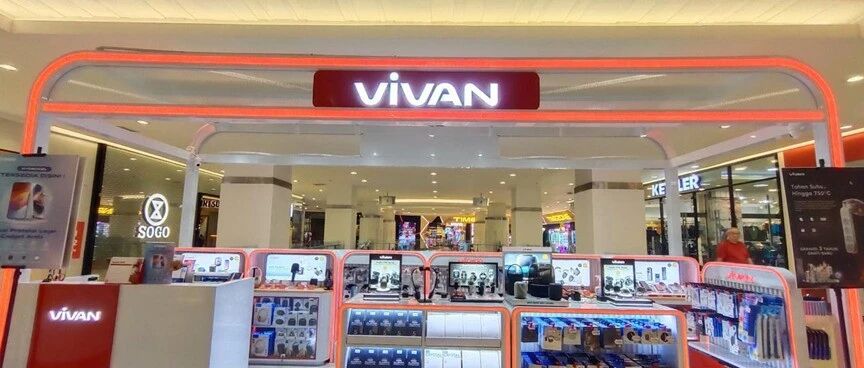
Zhong Guo Zheng Quan Bao· 2026-02-09 23:01
Core Viewpoint - WoKe FeiFan Technology Co., Ltd. has submitted its prospectus to the Hong Kong Stock Exchange, focusing on cross-border new retail in Southeast Asia, particularly in 3C accessories, small home appliances, and home improvement materials [1] Group 1: Business Overview - WoKe FeiFan is a cross-border new retail enterprise with a core focus on full-chain digital capabilities, targeting the Southeast Asian market [1] - The company aims to establish influential product brands and a supply chain ecosystem in Southeast Asia through an efficient cross-border retail platform and digital retail operations [2] - Core products include 3C accessories such as power banks, charging cables, and Bluetooth speakers, as well as small appliances like blenders, ovens, and air fryers [2] Group 2: Market Position and Financial Performance - As of September 30, 2025, WoKe FeiFan's platform connects over 40,000 small and medium-sized retail enterprises, positioning it as a leading cross-border brand owner in Indonesia for 3C accessories and small home appliances [2] - According to Frost & Sullivan, WoKe FeiFan ranks first among Chinese cross-border companies in the 3C accessories category and sixth in the small appliances category in Indonesia based on retail sales value for 2024 [2] - The company reported revenues of 908 million yuan, 1.049 billion yuan, and 881 million yuan for the years 2023, 2024, and the first three quarters of 2025, with gross profits of 305 million yuan, 373 million yuan, and 325 million yuan, respectively, and gross margins of 33.6%, 35.6%, and 36.9% [2] Group 3: Market Dependency and Growth Strategy - Indonesia is the largest and most strategically significant market for WoKe FeiFan, with sales from this market accounting for 95.9%, 95.8%, and 94.1% of total revenue in 2023, 2024, and the first three quarters of 2025, respectively [3] - The company acknowledges that its revenue is highly dependent on Indonesia, and any adverse changes in this market could significantly impact its business operations and financial condition [3] - Future growth is contingent on deepening market penetration in existing regions and expanding into new Southeast Asian markets, primarily through an expanded sales and distribution network [3]
在印尼排第一,阿里是股东,这家公司现要闯关IPO!
IPO日报· 2026-01-29 00:33
Core Viewpoint - WoKe FeiFan Technology Co., Ltd. is applying for an IPO on the Hong Kong Stock Exchange, with a focus on the Indonesian market as the largest Chinese cross-border 3C accessories company in the region, having raised approximately 257 million yuan and showing continuous growth in performance [1][10]. Group 1: Company Overview - WoKe FeiFan is a cross-border new retail enterprise with full-chain digital capabilities, primarily focused on Southeast Asia, particularly Indonesia, and also covering markets like Vietnam, Thailand, and the Philippines [4]. - The company provides high-cost performance products to small and medium-sized retail enterprises (SMEs) and end consumers in these regions [4]. - WoKe FeiFan has developed a series of well-known proprietary brands, including "VIVAN," "ROBOT," and "SAMONO," focusing on 3C accessories and small home appliances [6]. Group 2: Market Potential - The Southeast Asian retail market is experiencing structural growth, expanding from $693.4 billion in 2020 to an expected $879.9 billion by 2024, with a compound annual growth rate (CAGR) of approximately 6.3% from 2024 to 2029 [4]. - Indonesia's retail market is particularly strong, with the 3C accessories market projected to grow at a CAGR of 8.3% from 2024 to 2029 [5]. - Despite rapid growth, traditional retail still dominates in Indonesia, Vietnam, and the Philippines, accounting for 58.5%, 46.6%, and 55.4% of the market, respectively, indicating a significant demand for integrated digital transformation solutions [5]. Group 3: Financial Performance - For the first nine months of 2023, 2024, and 2025, WoKe FeiFan's revenues were approximately 908 million yuan, 1.049 billion yuan, and 880 million yuan, respectively, with a year-on-year growth of 15.5% expected in 2024 [9]. - Net profits for the same periods were approximately 18.32 million yuan, 20.35 million yuan, and 41.65 million yuan, with a year-on-year growth of about 11.1% in 2024 [9]. - The gross profit margins have shown a consistent increase, recorded at 33.6%, 35.6%, and 36.9% during the reporting period [9]. Group 4: IPO Use of Proceeds - The funds raised from the IPO will be used to enhance supply chain warehousing and logistics networks, expand marketing and channel networks, improve brand influence, upgrade digital capabilities, establish localized teams, and for general operational funds [9].


阿里投资的WOOK冲刺港交所:印尼最大的中国跨境3C配件公司,年营收超10亿元
3 6 Ke· 2026-01-22 01:31
Core Insights - WOOK, a cross-border new retail company based in China, is strategically expanding its market presence in Southeast Asia, particularly in Indonesia, Vietnam, Thailand, and the Philippines, with a focus on 3C accessories and small home appliances [1][3] Company Overview - Founded in 2014, WOOK specializes in full-chain digital capabilities and has established a significant brand and supply chain ecosystem in Southeast Asia [1] - The company has developed a comprehensive competitive advantage through its self-operated warehousing logistics network and localized operational teams, connecting over 40,000 small and medium retailers (SMR) as of September 30, 2025 [2] Market Position - According to Frost & Sullivan, WOOK ranks as the number one Chinese cross-border company in the 3C accessories category in Indonesia and sixth in the small home appliances category [3] - The Southeast Asian retail market is projected to grow from approximately $879.9 billion in 2024 to $1.2 trillion by 2029, driven by a large population and the expansion of emerging or mature middle classes [3] Financial Performance - WOOK's revenue for 2023 and 2024 is projected to be 908 million and 1.049 billion respectively, reflecting a year-on-year growth of 15.5% [4] - For the first three quarters of 2025, WOOK's revenue increased by 17.5% to 880 million compared to the same period in 2024 [4] - The gross profit margins for 2023, 2024, and the first three quarters of 2025 are 33.6%, 35.6%, and 36.9% respectively, with adjusted net profits of 47 million, 79 million, and 62 million [4] Investment and Funding - WOOK has attracted investments from notable institutions and industry players, including Alibaba and various venture capital firms [5] - The funds raised from the IPO will primarily be used to enhance supply chain warehousing and logistics networks, expand marketing and channel networks, improve brand influence, upgrade digital capabilities, and establish localized teams and training [5]
阿里投资的WOOK冲刺港交所:印尼最大的中国跨境3C配件公司,年营收超10亿元
IPO早知道· 2026-01-21 01:31
Core Viewpoint - WOOK is strategically expanding its market presence in Southeast Asia, focusing on Indonesia, Vietnam, Thailand, and the Philippines, leveraging its digital capabilities and supply chain integration to address local market challenges [2][3]. Group 1: Company Overview - WOOK, established in 2014, is a cross-border new retail enterprise based in China, specializing in 3C accessories and small home appliances [2]. - The company has developed a comprehensive digital platform that integrates the entire supply chain from factories to retail endpoints, effectively addressing challenges in the Southeast Asian market [2]. Group 2: Market Position and Performance - As of September 30, 2025, WOOK's platform connects over 40,000 small and medium retailers (SMR) [3]. - WOOK ranks as the number one Chinese cross-border company in the 3C accessories category in Indonesia and sixth in the small home appliances category, based on retail sales value in 2024 [3]. - Revenue from Vietnam, Thailand, and the Philippines increased by 68.5% in the first three quarters of 2025 compared to the same period in 2024 [3]. Group 3: Industry Insights - The Southeast Asian retail market is projected to reach approximately $879.9 billion in 2024 and grow to $1.2 trillion by 2029, driven by a large population and the expansion of emerging or mature middle classes [4]. - Despite rapid growth, traditional retail markets in Indonesia, Vietnam, and the Philippines still account for significant portions of the retail landscape, highlighting the need for integrated digital transformation solutions [4]. Group 4: Financial Performance - WOOK's revenue for 2023 and 2024 was 908 million yuan and 1.049 billion yuan, respectively, reflecting a year-on-year growth of 15.5% [4]. - For the first three quarters of 2025, WOOK's revenue increased by 17.5% to 880 million yuan compared to 749 million yuan in the same period of 2024 [4]. - The gross profit margins for 2023, 2024, and the first three quarters of 2025 were 33.6%, 35.6%, and 36.9%, respectively [4]. Group 5: Funding and Future Plans - WOOK has received investments from notable institutions and industry players, including Alibaba and various venture capital firms [5]. - The net proceeds from the IPO are intended for enhancing supply chain logistics, marketing, brand development, digital upgrades, and local team establishment [5].
从出海标杆到信任危机:安克创新赴港融资能否破局?
Sou Hu Cai Jing· 2025-12-11 09:27
Core Viewpoint - Anker Innovations, once a leader in the mobile power sector, faces multiple challenges including product recalls, overseas tariff impacts, and cash flow pressures, raising questions about its quality control and risk resilience as it pursues a Hong Kong listing amid ongoing operational difficulties [3][19]. Company Background - Founded in 2011 by former Google engineer Yang Meng, Anker Innovations started by addressing high prices of original laptop batteries through a private label distribution model [4]. - The company quickly rose to prominence on Amazon, becoming the top-selling charging brand globally, and later transitioned to self-research and development, establishing a strong brand presence [5]. - Anker went public on the Shenzhen Stock Exchange in 2020, focusing on "shallow sea" strategies to avoid highly competitive markets, leading to rapid product line expansion [5]. Recent Developments - In November 2025, Anker's board approved a plan for a Hong Kong listing, aiming to raise funds for product innovation, R&D, supply chain upgrades, and global market expansion [6]. - The company has faced significant product recalls due to quality control issues, including a major recall of 325,300 power banks in June 2025 due to overheating risks linked to battery suppliers [8][12]. Financial Performance - Anker's cash flow has deteriorated over several quarters, with a net cash flow from operating activities of -288 million yuan in Q1 2025, worsening to -1.132 billion yuan in Q2 [14]. - The company reported a net profit margin of 9.37% in the first three quarters of 2025, indicating profitability but still lagging behind industry leaders [16]. Market Challenges - Anker faces intensified competition from brands like Ugreen and Baseus in the domestic market, as the advantages of its "shallow sea" strategy diminish [17]. - The company's reliance on a "light manufacturing" model has led to quality control vulnerabilities, as production is fully outsourced, which has been highlighted in its ESG reports [12]. Future Outlook - The upcoming Hong Kong listing is seen as a potential lifeline for Anker, but investor confidence may be hindered by ongoing quality issues and cash flow challenges [19]. - The company's brand reputation has been significantly impacted by recent recalls, and its ability to manage supply chain risks will be crucial for future success [19].

向新向优韧性显现 区域外贸"上扬曲线"真提气!
Zhong Guo Chan Ye Jing Ji Xin Xi Wang· 2025-11-24 00:27
Core Insights - China's foreign trade shows a strong resilience with significant growth in various regions, indicating an upgrade trend towards quality and efficiency in foreign trade [1][2] Group 1: Regional Trade Performance - The Yangtze River Delta region's import and export volume reached 14 trillion yuan, a year-on-year increase of 6% [1] - The Guangdong-Hong Kong-Macao Greater Bay Area's nine cities achieved an import and export volume of 7.52 trillion yuan, growing by 4% year-on-year [1] - The Beijing-Tianjin-Hebei region's import and export volume reached 3.91 trillion yuan, with exports hitting a new high and maintaining growth for seven consecutive months [1] Group 2: Role of Private Enterprises - Private enterprises in the Yangtze River Delta accounted for 55.9% of the region's total import and export value, with a year-on-year growth of 9.7% [1] - The share of private enterprises in China's exports increased from 56% at the end of the 13th Five-Year Plan to 64.8% by 2024 [2] - Private enterprises are enhancing R&D investments and leveraging technological innovation to secure core technologies, thereby building global competitive advantages [2] Group 3: Export Structure Optimization - In the first ten months, the Greater Bay Area's export structure improved, with electromechanical products making up nearly 70% of total exports [2] - Exports of electronic components and "new three categories" products grew by 19.5% and 32.2% respectively [2] - The Beijing-Tianjin-Hebei region's exports reached 1.2 trillion yuan, a year-on-year increase of 5.6%, with significant growth in exports to emerging markets [3] Group 4: Strategic Development Initiatives - The Beijing-Tianjin-Hebei region is actively engaging in high-quality Belt and Road Initiative cooperation, enhancing economic and cultural exchanges with participating countries [4] - Future strategies should focus on regional strengths while aligning with major national initiatives to enhance international market access and economic integration [4]
亚马逊卫浴产品出口美国DOE能效认证
Sou Hu Cai Jing· 2025-11-05 08:39
Group 1: Core Concept - The DOE (Department of Energy) certification aims to promote energy efficiency and reduce energy consumption in electronic and electrical products, thereby contributing to lower energy demand and mitigating greenhouse gas emissions [1]. Group 2: Products Requiring DOE Certification - Products that require DOE certification include small battery charging systems (e.g., Bluetooth headphones, smartphones), power supplies (e.g., chargers), televisions, audio/video devices (e.g., DVD players), information devices (e.g., set-top boxes), transformers, household appliances (e.g., refrigerators, air conditioners), motors, and bathroom products (e.g., faucets, toilets) [4][5][6][7][8][9][10][12]. Group 3: Water Efficiency Requirements - The DOE mandates water efficiency standards for bathroom products, with specific flow rate limits: - Bathroom/kitchen faucets: maximum flow rate of 2.2 gallons per minute (approximately 8.3 liters per minute) at a pressure of 60 psi (414 kPa) [13]. - Showerheads: maximum flow rate of 2.5 gallons per minute (approximately 9.5 liters per minute) at a pressure of 80 psi (552 kPa) [13]. - Urinals: maximum water usage of 1.6 gallons (approximately 6.0 liters) per flush for trough urinals [14]. Group 4: DOE Certification Process - The certification process involves several steps: 1. Confirm if the product falls under DOE certification requirements. 2. Prepare necessary documentation and samples, including specifications and circuit diagrams. 3. Select a compliance organization and apply for certification services. 4. Conduct sample testing for energy efficiency. 5. Obtain a detailed energy efficiency test report from the laboratory. 6. Register with the DOE by submitting the test report and required information online. 7. Update the Amazon backend with certification documents and energy efficiency labels [16].