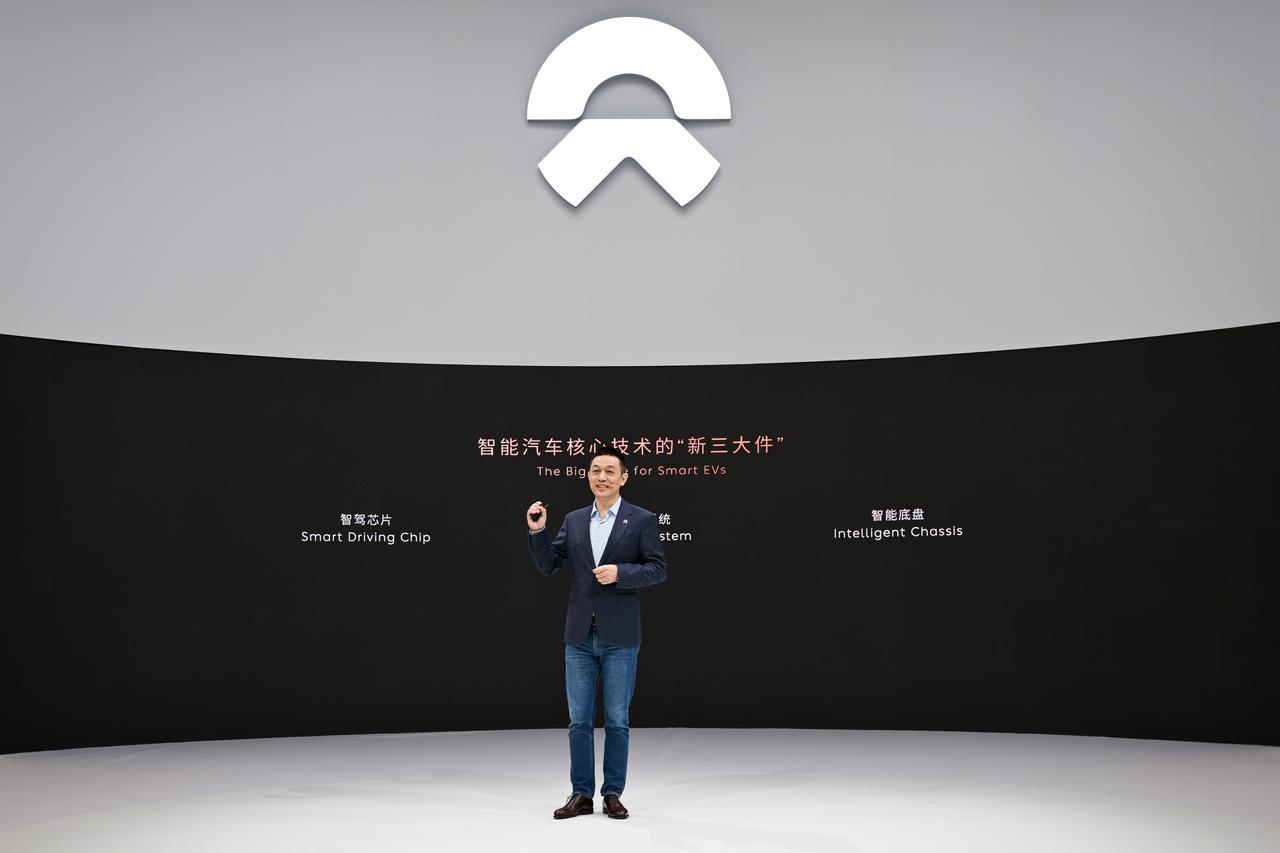
蔚来神玑芯片

Search documents
英伟达正在被中国车企抛弃
阿尔法工场研究院· 2026-01-20 00:08
Core Viewpoint - The automotive industry is shifting from reliance on NVIDIA's chips to self-developed solutions, as companies like Xiaopeng and NIO are moving towards their own chip development to reduce costs and enhance performance [2][5][20]. Group 1: Market Dynamics - Xiaopeng has released four new models equipped with its self-developed Turing driving chip, marking a complete departure from NVIDIA's chips [2]. - NIO is transitioning to its self-developed Shenqi chip, which is expected to significantly reduce costs compared to purchasing NVIDIA chips [2][8]. - NVIDIA's market share in China's high-end driving chip sector is projected to decline from 39% in 2024 to 25% in 2025, indicating a significant shift in the competitive landscape [2][9]. Group 2: Competitive Landscape - In 2024, NVIDIA's Orin-X chip held a 39.8% market share with 2.1 million units, but competitors like Horizon are gaining ground with lower-cost alternatives [5][6]. - Horizon's J5 chip has secured contracts with over nine automakers, including major brands like BYD and SAIC, highlighting the increasing competition in the market [6][9]. - By 2025, NVIDIA's partnerships with major clients like NIO and Xiaopeng have diminished, indicating a loss of influence in the market [6][8]. Group 3: Financial Performance - In the first three quarters of fiscal year 2025, NVIDIA reported $147.8 billion in total revenue, with only $1.7 billion (approximately 1%) coming from automotive business, underscoring the limited impact of automotive sales on overall performance [14][16]. - The automotive segment's revenue is significantly overshadowed by NVIDIA's data center business, which accounts for nearly 90% of its income [14][16]. Group 4: Future Outlook - NVIDIA is attempting to pivot from being a chip supplier to a comprehensive smart driving solution provider, but this transition faces challenges as competitors strengthen their positions [20]. - The launch of NVIDIA's open-source VLA model, aimed at assisting automakers lacking full-stack development capabilities, reflects its strategy to maintain relevance in the evolving market [20][21]. - However, the practical utility of the VLA model has been questioned, indicating potential hurdles in its adoption and effectiveness [21].



英伟达正在被中国车企抛弃
3 6 Ke· 2026-01-19 02:19
Core Viewpoint - The automotive industry is witnessing a significant shift towards self-developed chips, with companies like Xiaopeng and NIO moving away from NVIDIA's chips to their own solutions, indicating a trend where automakers prioritize self-sufficiency in technology [1][5][16]. Group 1: Market Dynamics - Xiaopeng has launched four new models equipped with its self-developed Turing chip, marking a complete transition from NVIDIA's chips [1]. - NIO is also transitioning to its self-developed Shenqi chip, which is expected to reduce costs significantly compared to purchasing NVIDIA chips [1][5]. - NVIDIA's market share in the high-end autonomous driving chip sector is projected to decline from 39% in 2024 to 25% in 2025, as more companies adopt self-developed solutions [1][5][8]. Group 2: Competitive Landscape - In 2024, NVIDIA's Orin-X chip held a 39.8% market share with 2.1 million units shipped, but its dominance is being challenged by Chinese companies like Horizon Robotics, which offers competitive chips at lower prices [3][4]. - Horizon's J5 chip has secured contracts with over nine automakers for more than 20 models, highlighting the growing competition in the mid-range chip market [4]. - By 2025, NVIDIA's partnerships with major clients like NIO and Xiaopeng have diminished, indicating a shift in the competitive landscape [5][8]. Group 3: Financial Performance - NVIDIA's automotive revenue for the first three quarters of fiscal 2025 was only $1.745 billion, accounting for just over 1% of its total revenue of $147.8 billion, with the majority coming from data center and AI-related products [12][14]. - The company has faced challenges with the delayed launch of its Thor chip, which has affected automakers' product timelines and market strategies [15][16]. Group 4: Strategic Shifts - NVIDIA is attempting to transition from a chip supplier to a comprehensive autonomous driving solution provider, as evidenced by its hiring of key personnel from Xiaopeng and the introduction of the open-source VLA model [17][18]. - The effectiveness of NVIDIA's open-source model, Alpamayo, has been questioned, with concerns about its practical application in the automotive sector [18].
大涨71.2%!蔚来顶住车市重压,三品牌打赢销量突围战
Zheng Quan Zhi Xing· 2025-07-01 10:59
Core Insights - NIO delivered 24,925 vehicles in June 2025, marking a 17.5% year-on-year increase, with a total of 72,056 vehicles delivered in Q2, representing a 71.2% quarter-on-quarter growth [1][2] Group 1: Sales Performance - NIO's multi-brand strategy has driven growth despite a competitive market, with the main model 5566 showing improved gross margins due to enhanced features and self-developed chips [2][4] - The sub-brands, Ladao and Firefly, achieved record sales, with L60 becoming the only stable growth model in the mid-size SUV market and Firefly making significant strides in the high-end electric vehicle segment [4] Group 2: Future Growth Drivers - NIO is expected to maintain its growth momentum in Q3, supported by several favorable factors, including the successful launch of the new 5566 model and the upcoming flagship models ES8 and L90 [5] - The introduction of the BaaS battery rental service has lowered the entry price for Firefly vehicles to 79,800 yuan, attracting a broader customer base [6] - The completion of the 1,000th battery swap station will enhance the charging network, alleviating user concerns and potentially boosting sales in Q3 [10]