西红柿炒鸡蛋

Search documents
家庭餐桌争夺战(上):早中晚黄金时段食饮图鉴
凯度消费者指数· 2025-08-12 03:53
Core Insights - The article emphasizes the importance of understanding consumer behavior in home dining to effectively meet their needs in the food and beverage industry [1][12] Group 1: Breakfast Consumption - Breakfast is a crucial time for efficiency, with nutrition being an essential factor; convenient foods that are quick and nutritious are preferred [4] - Frozen foods are the top choice for breakfast convenience, with dumplings and buns being the most popular items [4] - Consumer habits show that breakfast choices are often habitual, making it important for brands to secure a place in consumers' routines [4] Group 2: Dairy Consumption - Milk is predominantly consumed in the morning, but there is a potential growth ceiling; brands need to capture more market share by promoting milk consumption at other times [7] - Yogurt consumption is more evenly distributed throughout the day, particularly favored during afternoon tea and post-dinner snacks, highlighting its competitive edge in the snack category [7] - Yogurt brands need to focus on enhancing taste experiences to compete effectively with snack foods [7] Group 3: Dinner Consumption - Dinner is the primary time for prepared dishes, with common home-cooked meals like tomato and egg stir-fry being highly favored [9] - The article suggests that brands of condiments and cooking oils should focus on enhancing the flavor of everyday dishes rather than complex recipes [9] Group 4: Consumer Behavior Research - The "Home Dining Behavior Study" conducted by Worldpanel Consumer Index involved 18,506 consumers across various city tiers, providing a representative sample of home dining habits [13] - The study collected data on a wide range of food and beverage consumption, including packaged foods, fresh produce, and homemade dishes, to gain comprehensive insights into cross-category eating habits [13]


西红柿炒鸡蛋当“减脂餐”?小心事与愿违!
Yang Shi Xin Wen· 2025-05-27 16:31
Core Viewpoint - The article discusses the hidden high calorie content of the popular dish "Tomato and Egg Stir-fry," which is often perceived as a low-calorie, nutritious meal, especially among those looking to lose weight. It highlights that the actual calorie count can be significant, especially when combined with other foods like rice. Ingredient Analysis - The main ingredients contributing to the calorie count in Tomato and Egg Stir-fry are tomatoes, eggs, cooking oil, and sugar [2][3]. - Tomatoes: Approximately 300g of tomatoes yield about 45 kcal [3]. - Eggs: Two eggs (about 120g) contribute around 167 kcal [3]. - Cooking oil: A total of 30g of oil used in preparation adds about 270 kcal [3]. - Sugar: The addition of 15g of sugar results in an additional 60 kcal [3]. - The total calorie count for the dish is approximately 542 kcal, which can rise to 751 kcal when served with 180g of white rice [4]. Health Implications - The dish may lead to rapid blood sugar spikes due to the combination of high-GI ingredients like sugar and white rice, which can be detrimental for individuals sensitive to blood sugar fluctuations [8][12]. - Regular consumption of high-calorie Tomato and Egg Stir-fry can contribute to excessive energy intake, potentially leading to obesity, a significant risk factor for cardiovascular diseases [12][11]. - The addition of sugar can mask the salty flavor, leading to increased salt usage, which raises the risk of hypertension [13]. Recommendations for Healthier Preparation - Utilizing non-stick pans and oil spray can help reduce the amount of oil used, keeping the dish lower in calories [16]. - Reducing sugar and other seasonings, and opting for low-oil cooking methods can also help [17]. - Incorporating other low-calorie, nutrient-dense ingredients like bell peppers, mushrooms, and onions can enhance the dish's nutritional profile while lowering its energy density [18]. - Replacing white rice with whole grain options like brown rice or buckwheat can improve fiber content and help regulate blood sugar levels [19].

南城香,还是卷进了自选快餐!
3 6 Ke· 2025-05-25 05:06
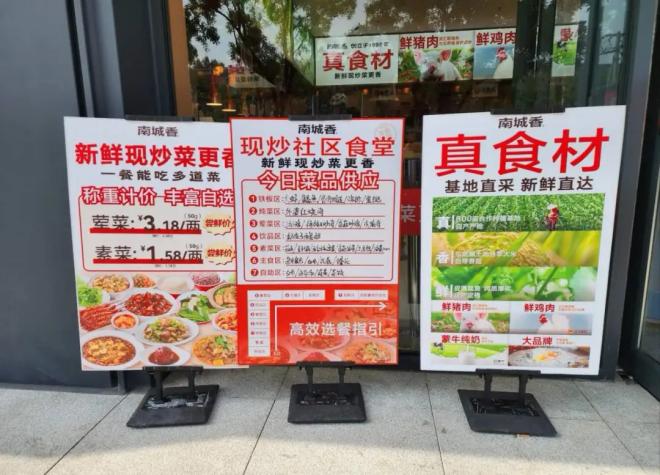
Core Viewpoint - The article discusses the launch of "Nanchengxiang Fresh Stir-Fry Community Canteen" in Beijing, highlighting its innovative approach to community dining through a self-service and fresh stir-fry model, which aims to attract consumers seeking quality and flavor in a competitive market [1][11][18]. Group 1: Business Model - The canteen adopts a "fresh stir-fry + self-service weighing" model, positioning itself as a "community stir-fry canteen" [1][5]. - The store features an open kitchen design, allowing customers to see the cooking process, enhancing the appeal of fresh stir-fry [1][5]. - The dining process is simplified into a clear sequence: cleaning hands, taking trays, selecting dishes, weighing for checkout, and returning utensils [5][9]. Group 2: Product Offering - The canteen offers over 20 types of dishes, with an average cost of 20 yuan per person [7][10]. - Dishes are categorized into five areas: single dishes, meat, vegetables, staple foods, and self-service [7][10]. - Pricing is based on weight for stir-fried dishes (3.18 yuan per 100g for meat, 1.58 yuan per 100g for vegetables) and fixed prices for single dishes (5 yuan for braised pork, 4.9 yuan for shrimp) [9][10]. Group 3: Market Context - The "stir-fry" model is a response to changing consumer preferences, with a growing demand for freshly cooked meals [11][18]. - The competitive landscape in Beijing's dining market is intensifying, with various brands entering the space, making the stir-fry model a strategic necessity for differentiation [14][15][18]. - Nanchengxiang's total revenue reached 1.6 billion yuan in 2024, a 9% increase year-on-year, but with a 14% decline in single-store revenue and a 35% drop in profit [16][20]. Group 4: Operational Adjustments - To cope with competition, Nanchengxiang is adjusting its operational strategies, including reducing costs by eliminating free fruit and modifying self-service options [21][22]. - The introduction of a small hot pot option for dinner aims to enhance profitability and meet consumer demand for variety [23][24]. - The shift towards a focus on "value cultivation" rather than mere expansion reflects a broader trend in the industry towards optimizing individual store profitability [24].