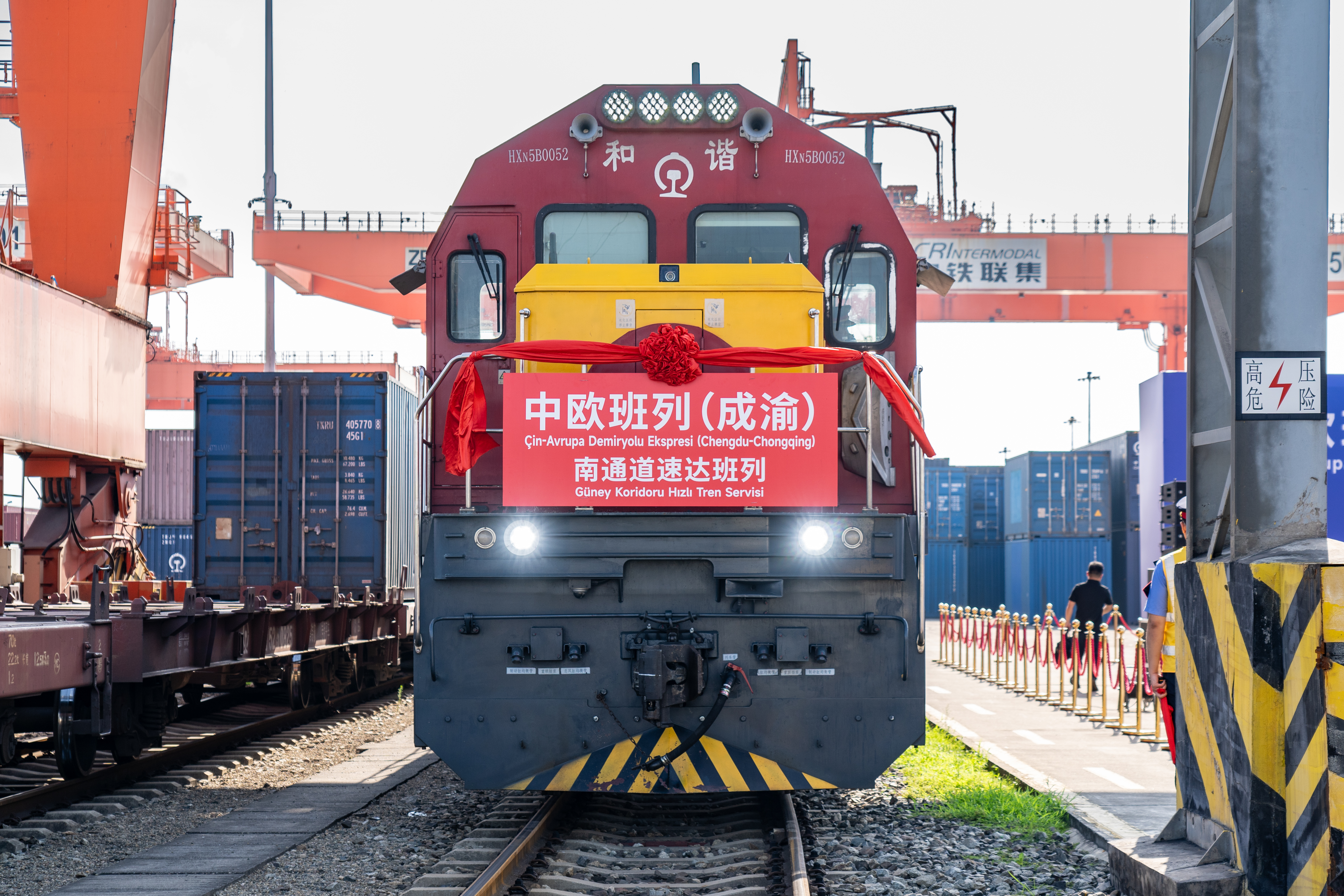
西部陆海新通道班列

Search documents
四川西部陆海新通道班列跑出“加速度”
Xin Lang Cai Jing· 2026-02-02 23:09
Core Viewpoint - The Sichuan Western Land-Sea New Corridor is experiencing significant growth in freight train operations, enhancing logistics efficiency and reshaping the inland open economy, with a record of 1,507 trains and over 6.5 million TEUs transported in 2025, valued at nearly 5 billion yuan [3][4][5]. Group 1: Operational Achievements - In 2025, the Sichuan Western Land-Sea New Corridor operated 1,507 trains, transporting over 6.5 million TEUs, achieving a historical high in freight value of nearly 5 billion yuan [3]. - The corridor has expanded from a single line to a comprehensive network, connecting various transportation modes including rail, road, and water, with over 5,000 trains operated since its inception [4][6]. - The "Chuan-Guang Line" was the busiest route, with nearly 1,000 trains operated in 2025, marking a 51% increase compared to 2024 [4]. Group 2: Market Demand and Policy Support - The strong growth in train operations is driven by robust market demand, with exports to ASEAN reaching 159.46 billion yuan in 2025, a 10.4% increase year-on-year [5][6]. - A public service information platform was launched in March 2025, enhancing digital management of train operations and contributing to a unified scheduling mechanism across 12 cities [5]. - Policy support has led to reduced railway logistics costs, saving over 85 million yuan for enterprises in 2025, with cost reductions of 2,000 to 5,000 yuan per container [6]. Group 3: Economic Impact and Future Developments - The corridor has contributed to an average annual growth rate of 16.9% in import and export volumes for the regions along the route since 2019 [7]. - The completion of the Long-Pu-Xu Railway in 2025 is expected to improve transportation efficiency by over 20% and reduce local railway freight costs by approximately 15% [7]. - The Sichuan Port Investment Group is expanding logistics hubs and enhancing cross-border trade, with over 20 logistics hubs established along key nodes [8][9].

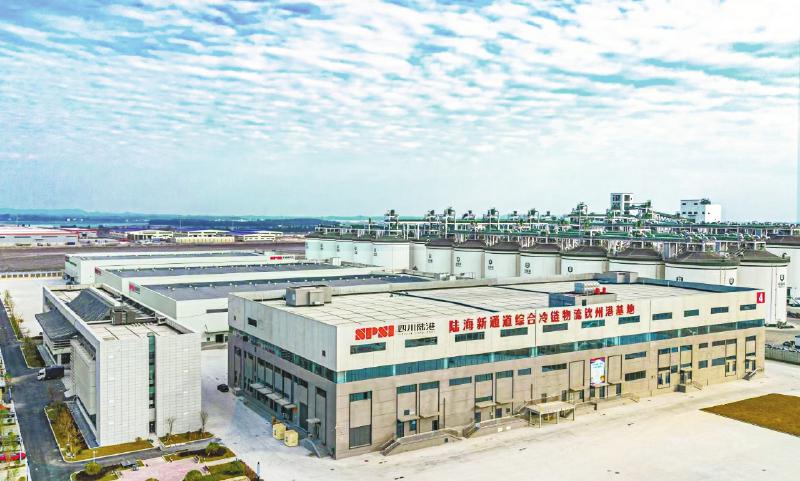
从“一条线”到“一张网”
Xin Lang Cai Jing· 2025-12-29 19:19
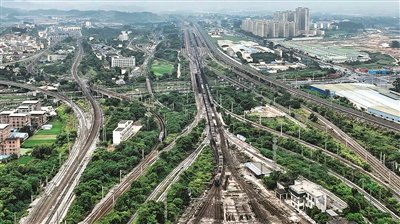
Core Viewpoint - The Western Land-Sea New Corridor has evolved from a single route to a comprehensive network, significantly enhancing trade connectivity between China's western provinces and ASEAN countries, with a notable increase in the number of scheduled train routes and container shipments since its inception [18]. Group 1: Development of the Corridor - The Western Land-Sea New Corridor was officially launched in September 2017, initially as the "Yugui New" southbound corridor, marking the beginning of a new international trade route [18]. - The number of scheduled train routes has expanded from 2 in 2019 to 26 by 2025, indicating robust growth and diversification in trade services [18]. - The corridor has seen a significant increase in its operational scale, with over 5 million TEUs (Twenty-foot Equivalent Units) of container cargo shipped since its launch, and more than 1.3 million TEUs shipped in the current year alone [18]. Group 2: Infrastructure and Operations - Recent infrastructure developments include the replacement of railway tracks and the expansion of key stations, which are crucial for maintaining the efficiency and reliability of the corridor [4][6][8]. - The operations at the Nanning South Marshalling Station and the Qinzhou Port are highlighted, showcasing the ongoing enhancements in logistics capabilities [2][14]. - The use of advanced machinery for track maintenance and construction is evident, indicating a commitment to improving the operational standards of the railway network [12].
高铁时代 四川为何要修一条“慢铁路”
Si Chuan Ri Bao· 2025-12-26 00:13
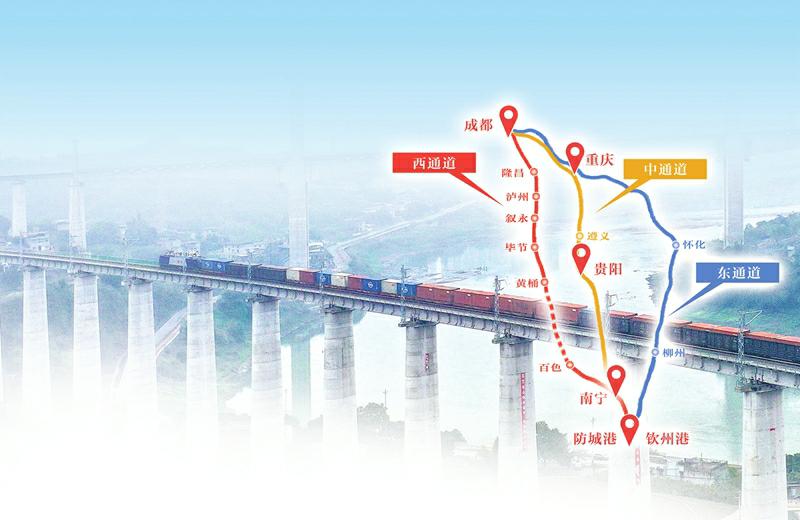
Core Viewpoint - The opening of the Long-Pu-Xu Railway marks a significant step in enhancing cargo transportation efficiency in Sichuan, facilitating faster access to Southeast Asian markets and integrating into the national open economy strategy [5][6][10]. Group 1: Railway Overview - The Long-Pu-Xu Railway officially commenced operations on December 25, with a design speed of 120 km/h, significantly faster than the previous line's 40 km/h [5][6]. - This railway is a crucial part of the Western Land-Sea New Corridor, connecting Sichuan to the Beibu Gulf and facilitating cargo transport to ASEAN countries [6][9]. - The railway's construction involved a total investment from Sichuan, aiming to create a direct rail-sea transport corridor to Southeast Asia, South Asia, Australia, and New Zealand [7][8]. Group 2: Economic Impact - The railway is expected to enhance the annual cargo capacity by over 20 million tons, allowing Sichuan's products, including minerals and fine chemicals, to reach ASEAN ports in 7-10 days, compared to the previous 20 days via the Yangtze River [9][10]. - The integration of the railway is projected to reduce logistics costs by approximately 30% for grain transport and improve transport efficiency by over 20% for goods heading to Kunming and the Beibu Gulf [8][9]. - Since 2019, the Western Land-Sea New Corridor has driven an average annual growth rate of 16.9% in import and export volumes for the provinces along the route [8]. Group 3: Strategic Development - The Long-Pu-Xu Railway is seen as a key element in transforming Sichuan's economic landscape, shifting from an "economic corridor" to a "corridor economy" [10][12]. - Experts suggest that the railway's opening presents a historic opportunity for Sichuan, emphasizing the need to develop a modern logistics network centered around Chengdu and key nodes like Luzhou and Yibin [10][12]. - The railway's infrastructure is designed to support high-value goods, with plans for a logistics park that includes cold chain and customs supervision facilities, aiming for a throughput capacity of 7.56 million tons [11][12].
前11月国家铁路发送货物37.27亿吨 旅客发送量42.8亿人次创同期新高
Chang Jiang Shang Bao· 2025-12-21 23:12
Core Insights - The China National Railway Group reported a total freight volume of 3.727 billion tons from January to November 2025, marking a year-on-year increase of 2.7% [1] - The number of passengers transported by rail reached 4.28 billion, a 6.6% increase year-on-year, setting a historical record for the same period [4] Freight Transportation - The China-Europe (Asia) freight trains operated a total of 31,200 trains, reflecting a 9.0% year-on-year growth [1][3] - The railway sector signed logistics contracts totaling 1.4 billion tons, with a significant increase in intermodal transport, sending 15.78 million TEUs, up 15.4% year-on-year [2] - Key commodities transported included 1.064 million tons of cotton, up 31.8%, and increases in smelting materials and grain by 8.5% and 10.0%, respectively [1] Passenger Transportation - The average daily operation of passenger trains was 11,258, a 7.1% increase year-on-year [4] - New services were introduced to cater to group travel needs, including themed trains for events and tourism [4] - Cross-border passenger services were enhanced, with significant numbers of travelers on international routes, including 28.94 million on the Guangzhou-Shenzhen-Hong Kong high-speed rail [4] Infrastructure Investment - The railway sector completed fixed asset investments of 753.8 billion yuan, a 5.9% increase year-on-year, contributing to economic development [5]
今年前11个月国家铁路 发送货物37.27亿吨
Xin Lang Cai Jing· 2025-12-19 20:27
Group 1 - The core viewpoint of the articles highlights the significant growth in China's railway logistics, with a total of 3.7 billion tons of goods transported from January to November, marking a 2.7% year-on-year increase [1][2] - The average daily loading of goods reached 187,000 cars, reflecting a 3.7% increase compared to the previous year, showcasing the enhanced efficiency of railway logistics [1] - The railway sector has been actively developing a modern logistics system, optimizing product offerings, and improving the functionality of the railway 95306 freight platform [1] Group 2 - In cross-border transportation, the railway department has improved communication with customs and foreign railway departments, enhancing port transportation efficiency [2] - The number of China-Europe (Asia) freight trains operated from January to November reached 31,200, a 9.0% increase year-on-year, with November alone seeing a record high of 1,852 trains [2] - The transportation of key materials such as smelting materials and grain has increased by 8.5% and 10.0% respectively, indicating a strong focus on ensuring the supply of essential goods [2]
西部陆海新通道班列累计发送货物突破500万标箱
Zhong Guo Xin Wen Wang· 2025-11-30 11:20
Core Insights - The Western Land-Sea New Corridor has achieved a significant milestone, with cumulative container cargo shipments exceeding 5 million TEUs as of November 29, 2023, marking a year-to-date increase of 130,000 TEUs, which is a 55.3% year-on-year growth [1][2] Group 1: Cargo Composition and Direction - The export cargo primarily consists of chemical products, machinery parts, and new energy vehicles, while the imports mainly include bauxite, coal, and grain [2] - Shipments from the port to the inland (upstream) totaled 657,000 TEUs, and shipments from the inland to the port (downstream) reached 651,000 TEUs, achieving a balanced two-way shipment with year-on-year increases of 58.9% and 57.1%, respectively [2] Group 2: Infrastructure and Capacity Enhancements - The company has completed electrification upgrades on key railways, enhancing mainline transport capacity by 6.5%, and has upgraded 28 freight yards, increasing handling capacity by 33 million tons annually [4] - The company has coordinated with port enterprises to expand dedicated lines at ports, adding 10 million tons of handling capacity each year [4] Group 3: Service Innovations and Operational Efficiency - To expand the reach of the Western Land-Sea New Corridor, the company has developed category-specific iron-sea express products and established a multi-modal transport service model in collaboration with logistics companies [4][7] - The number of cross-bureau scheduled train routes has increased from 2 in 2019 to 15 by 2025, with 57.7% of the current 26 cross-bureau scheduled train routes connecting major southwestern cities [6][7] Group 4: Economic Impact - In the first three quarters of the year, the Western region's imports and exports through the Western Land-Sea New Corridor reached 611.5 billion yuan, reflecting a 19.3% growth and contributing 3.4 percentage points to the region's foreign trade growth [7]
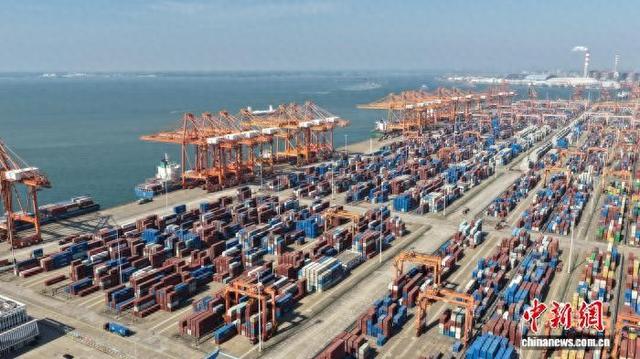
今年前10月国家铁路发送货物33.78亿吨
Ke Ji Ri Bao· 2025-11-24 00:41
Group 1 - The national railway has achieved a record high in cargo transportation, sending 3.378 billion tons from January to October, a year-on-year increase of 3% [1] - Daily loading averages 186,000 cars, reflecting a 4% increase year-on-year, supporting lower logistics costs and stable economic operations [1] - The railway sector is optimizing product supply by developing intercity express trains, bulk direct trains, specialized logistics, and cold chain logistics to meet diverse transportation needs [1] Group 2 - The railway has completed the transportation of 1,425.8 million standard containers through intermodal rail-water transport, marking a 16.2% year-on-year increase [1] - Cross-border cargo transport remains stable, with 28,000 China-Europe (Asia) trains operated, a 7.8% increase year-on-year, and 4.52 million tons of goods sent via the China-Laos railway, a 14% increase [1] - The Western Land-Sea New Corridor has sent 1.2 million standard containers, a significant 64% increase year-on-year, enhancing international trade [1] Group 3 - The railway sector has effectively ensured the transportation of key materials, including construction materials and smelting goods, by organizing the transport of essential goods like grain from Northeast China and coal from Xinjiang [2] - A green channel has been established to ensure efficient delivery, with coal transportation reaching 1.732 billion tons, including 1.178 billion tons of electricity coal [2] - The transportation of smelting materials and grain has seen year-on-year increases of 9.1% and 13.8%, respectively [2]
今年1至10月国家铁路发送货物33.78亿吨 同比增长3%
Zhong Guo Xin Wen Wang· 2025-11-22 06:42
Core Insights - The national railway has achieved a record high in freight volume, sending 3.378 billion tons from January to October, a 3% year-on-year increase, with an average of 186,000 cars loaded daily, up 4% year-on-year, supporting the national economy effectively [1] Group 1: Product Supply Optimization - Continuous optimization of product supply by aligning closely with market demand and integrating into enterprise supply chains, developing intercity express trains, bulk direct trains, specialized logistics, and cold chain logistics [1] - The total bookings for rail-water intermodal logistics products reached 30,000 standard containers, with 14.258 million standard containers sent via rail-water intermodal transport, marking a 16.2% year-on-year increase [1] Group 2: Service Quality Improvement - Significant development in logistics package services, transitioning from "station-to-station" to "door-to-door" full logistics services, with a total of 1.36 billion tons of logistics package contracts signed [2] - The railway logistics platform has onboarded 162,000 vehicles, providing efficient pick-up and delivery services, and promoting various logistics financial services with a total credit granted of 23.76 billion yuan [2] Group 3: Cross-Border Transportation - Enhanced communication with domestic customs and foreign railway departments to improve cross-border transportation efficiency, with 28,000 China-Europe (Asia) freight trains operated, a 7.8% year-on-year increase [2] - The China-Laos Railway has sent 4.52 million tons of goods, a 14% year-on-year increase, with the "Lancang-Mekong Express" operating 908 trains, sending 370,000 tons of cross-border goods [2] Group 4: Key Material Transportation - Strong assurance in the transportation of key materials such as construction materials and smelting materials, with 1.732 billion tons of coal transported, including 1.178 billion tons of electricity coal, and significant year-on-year increases in smelting materials and grain shipments [3] - The company plans to enhance the railway modern logistics system, focusing on market demand and improving cross-border transportation capabilities to better serve high-quality economic development and international trade [3]
繁荣通道经济见证中国西部加速迈向开放高地
Xin Hua Wang· 2025-10-04 10:15
Core Insights - The article highlights the rapid development of the Western Land-Sea New Corridor and the China-Europe Railway Express, showcasing their role in enhancing international trade and connectivity for China's western region [2][5][6]. Group 1: Trade Development - The Western Land-Sea New Corridor has expanded its cargo categories to 1,316 types, covering electronics, vehicles, machinery, and food, reaching 577 ports in 127 countries and regions, with a total volume nearing 5 million TEUs [5]. - From January to August, the Western Land-Sea New Corridor transported 215,800 TEUs from Chongqing, marking a year-on-year increase of 30% [5]. - The China-Europe Railway Express from Chongqing has cumulatively operated over 19,000 trains since its inception, transporting goods valued at nearly 620 billion RMB [2][5]. Group 2: Efficiency and Connectivity - The time required to operate 10,000 trains on the China-Europe Railway Express has decreased from 90 months to less than 7 months [3]. - The seamless connection between the Western Land-Sea New Corridor and the China-Europe Railway Express has improved transportation efficiency by over 50% compared to traditional sea freight [6]. - The Western Land-Sea New Corridor achieved a record of 1.09 million TEUs in container cargo shipments in the first three quarters of this year, reflecting a year-on-year growth of 70.3% [5]. Group 3: Future Prospects - By 2027, Chongqing aims to establish a comprehensive international logistics service system, positioning the region as a pivotal international logistics hub [6]. - The ongoing optimization and expansion of these trade corridors are expected to benefit more domestic and international enterprises, promoting trade across the Eurasian continent [6].
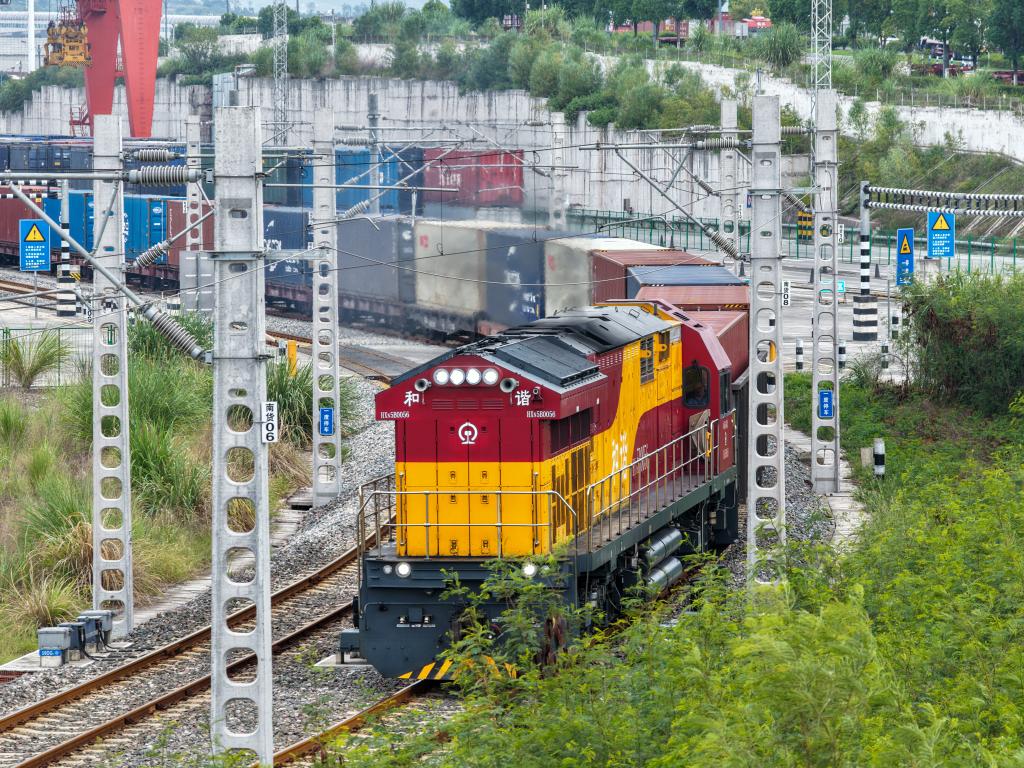
成都国际班列公司:已切换三条通道应对中欧班列中断
Di Yi Cai Jing· 2025-09-22 07:57
Core Viewpoint - Poland's interruption of the China-Europe Railway Express has garnered significant attention, prompting domestic operators to implement emergency measures [1] Group 1: China-Europe Railway Express Operations - The China-Europe Railway Express began operations in 2011 and has developed four main routes over the past decade, including the East, North, Central, and South corridors [1] - The most frequently used route is the Central corridor through Poland, but following the outbreak of the Russia-Ukraine conflict, Chinese railway companies have been actively expanding the South corridor [1] - On July 9, 2023, the Chengdu International Railway Port and Chongqing Tuanjie Village Central Station launched regular South corridor express trains [1] Group 2: Chengdu's Connectivity Initiatives - Chengdu operates three connecting corridors, with the South corridor utilizing a "rail-sea-rail" model, starting from Chengdu International Railway Port, passing through Kazakhstan, Azerbaijan, and Turkey, before reaching various locations in Europe [5] - Chengdu is also expanding the North corridor, which circumvents the conflict in Poland by using sea transport from Russia to Germany and Poland [5] - The city is leveraging the Rongou rail-sea intermodal corridor to offer direct rail transport from Chengdu to various ports in China, facilitating maritime shipping to Europe [5] Group 3: Future Projections - According to China National Railway Group, the China-Europe Railway Express is projected to operate 19,000 trains and send 2.07 million TEUs in 2024, representing year-on-year growth of 10% and 9% respectively [5] - The Central Asia Railway Express is expected to operate 12,000 trains and send 880,000 TEUs, with year-on-year growth of 10% and 12% respectively [5] - The Western Land-Sea New Corridor is anticipated to send 960,000 TEUs, reflecting an 11% increase year-on-year [5]