视觉识别

Search documents
上海精智深度分析:工业AI领军者的护城河与增长路径
Feng Huang Wang Cai Jing· 2026-01-27 05:13
Group 1 - The core viewpoint of the article highlights Shanghai Jingzhi's significant milestone in the industrial AI sector with its IPO application, showcasing its leadership in smart manufacturing solutions and its unique "data + manufacturing + AI" closed-loop ecosystem [1] - The global manufacturing industry is at a critical juncture of intelligent transformation, with China's industrial AI solutions market projected to grow from RMB 5.8 billion in 2024 to RMB 93.5 billion by 2030, reflecting a compound annual growth rate of 58.8% [2] - Shanghai Jingzhi has a first-mover advantage with nearly 20 years of data accumulation, serving leading clients in automotive, communication, and robotics sectors, which has resulted in a rich industrial data resource [2][3] Group 2 - The company has launched multiple commercial AI products that cover core manufacturing processes, significantly reducing production planning time and enhancing defect detection capabilities [3] - Shanghai Jingzhi's unique model of using its own factory for training AI algorithms sets it apart from traditional equipment manufacturers and pure software startups, allowing it to address real industrial needs effectively [4] - The company aims to deepen its core AI products and explore SaaS offerings, with a long-term vision of building an industrial AI ecosystem platform that leverages data feedback loops to enhance algorithm advantages [4] Group 3 - The IPO of Shanghai Jingzhi serves as an important window for observing the effectiveness of industrial AI implementation, with its value stemming from its data moat, productization capabilities, and industry positioning [5] - The company represents a stable and growth-oriented investment opportunity, benefiting from its manufacturing foundation and the growth potential brought by AI empowerment [5] - Shanghai Jingzhi's nearly two decades of manufacturing experience is a valuable intangible asset, establishing a barrier that is difficult to disrupt through short-term capital or algorithmic innovation [5]
禾赛科技三位创始人再创业,成立机器人公司;OpenAI或于2026年推出首款硬件设备;疯狂动物城2成全球影史好莱坞动画电影票房冠军丨邦早报
创业邦· 2026-01-20 00:10
Group 1 - Hesai Technology's co-founders have established a new robotics company, Sharpa, aimed at developing general-purpose robots and core components, with over 100 employees [1] - Porsche's global sales for 2025 are projected to be 279,400 units, a 10% decrease year-on-year, with a significant decline of 26.28% in the Chinese market [4] - UTree Technology is expected to ship over 5,500 humanoid robots in 2025, with mass production exceeding 6,000 units [9] - OpenAI's annual revenue for 2025 is projected to exceed $20 billion, a significant increase from $6 billion in 2024, driven by an expansion in computing power [13] - The UK government has announced a substantial subsidy plan for electric trucks, with a total budget of £318 million, aiming to boost the adoption of electric vehicles [19] Group 2 - The HuRun Research Institute's report on China's AI companies ranks Cambricon first with a valuation of 630 billion yuan, reflecting a 165% increase from the previous year [10] - Anker Innovations and Feishu have launched the AI hardware product "Anker AI Recording Bean," which features advanced recording capabilities and is priced at 899 yuan [21] - Alibaba Health has introduced the AI product "Hydrogen Ion," designed for medical professionals, which aims to minimize hallucination rates in AI responses [23] - Xiaopeng Motors has successfully developed the first robot based on automotive standards, marking a significant milestone in their robotics initiative [24] - Apple's iPhone shipments surged by 28% during the holiday season, regaining market leadership in China despite overall market declines [30]


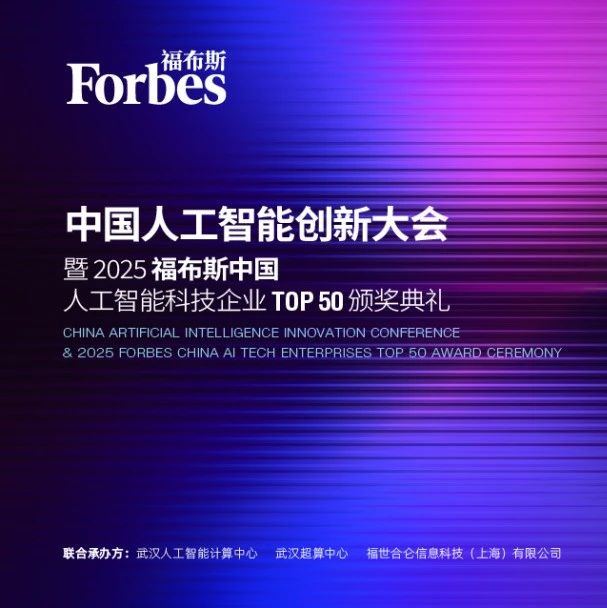
福布斯中国“人工智能科技企业TOP 50”发布,创新集群阶梯崛起
机器人圈· 2025-06-30 13:53
Core Viewpoint - The article highlights the emergence and growth of the artificial intelligence (AI) industry in China, particularly focusing on the 2025 Forbes China "Top 50 AI Technology Companies" list, which showcases a diverse range of technologies and applications across various sectors [3][4][6]. Group 1: Industry Overview - The 2025 Forbes China "Top 50 AI Technology Companies" list features a significant number of companies from Shanghai (21), followed by Beijing (14), and highlights the growing innovation in central regions like Wuhan, which has 9 companies on the list [4][5]. - Wuhan's AI industry has seen a compound annual growth rate of over 40% in the past five years, with a core industry scale exceeding 700 billion yuan [5]. - The AI industry in China is characterized by a pyramid structure, with major players like Baidu Cloud and Alibaba Cloud at the top, followed by "hidden champions" in specific fields, and a large base of emerging companies [6][7]. Group 2: Investment Trends - Approximately 25% of the listed companies are publicly traded, indicating a significant presence of non-listed companies that drive innovation through unique algorithms and specialized applications [7]. - The investment logic has shifted towards companies with clear commercialization pathways, as seen in the examples of companies like Yuanli Wuxian and Blue Technology, which have demonstrated substantial operational efficiencies and market leadership [7]. Group 3: Development Trends - The article identifies three key trends: the evolution of multi-modal large models towards lightweight and industry-specific applications, the integration of quantum computing with AI chips, and the rise of AI in healthcare and industrial robotics as potential investment hotspots [8]. - The AI industry in China is moving beyond mere technological catch-up to establish a unique industrial ecosystem, supported by the implementation of the "New Generation Artificial Intelligence Development Plan" [8].