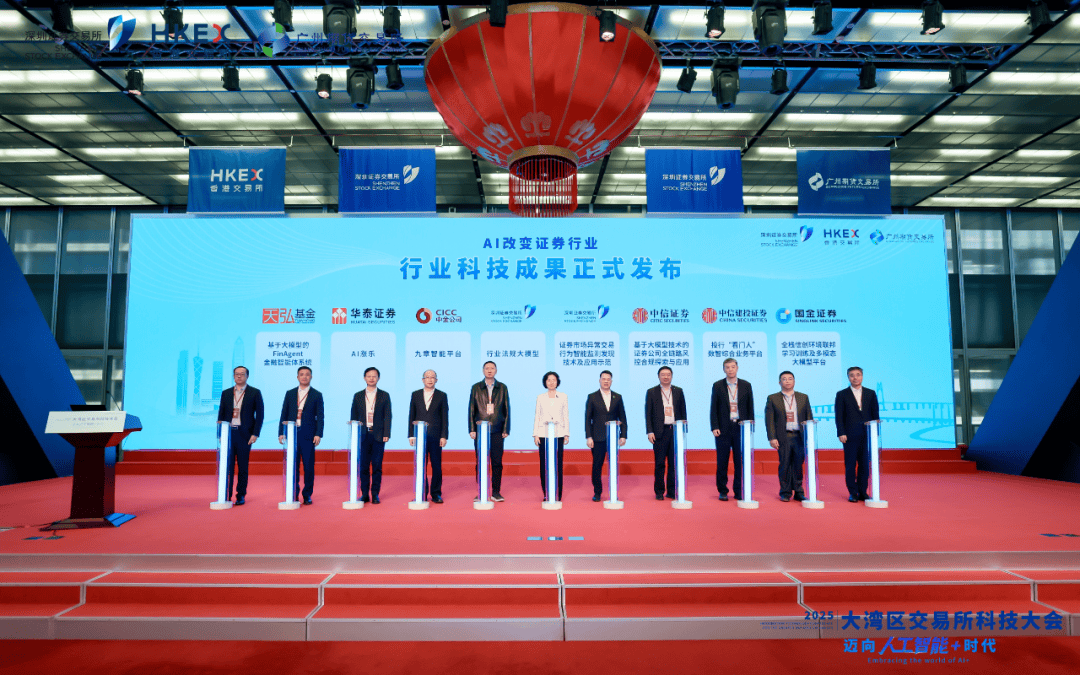
证券行业法规大模型

Search documents
田 轩:撬动更多金融资源流向创新前沿
Sou Hu Cai Jing· 2026-01-28 11:28
Core Viewpoint - The deep integration of technology and finance is essential for driving innovation and achieving high-level technological self-reliance in China, necessitating a financial ecosystem that aligns with innovation-driven development strategies [1][2]. Group 1: Technology and Financial Integration - The construction of a technology finance service system in China has begun to take shape, characterized by a multi-faceted approach involving policy support, market operations, and regulatory guidance [1]. - The new wave of technological revolution, represented by artificial intelligence, has restructured the operational logic and value creation models in the financial industry, forming a chain of "technology empowerment - efficiency improvement - ecological optimization" [1]. - The banking sector is witnessing a shift from "experience-driven" to "data-driven" financial services, exemplified by the China Construction Bank's "Tianyan" intelligent risk control system, which covers 98% of its retail credit business and has reduced credit card fraud loss rates by 52% year-on-year [1]. Group 2: Market Dynamics and Challenges - In the capital market, the collaboration between the Shenzhen Stock Exchange and Huawei has led to the development of a regulatory model that enhances information disclosure quality and audit efficiency, addressing information asymmetry in the capital market [2]. - There exists a mismatch between the operational logic of traditional financial systems and the inherent characteristics of technology innovation, as tech companies often have light assets, high risks, and long cycles, leading to low financing accessibility [2]. - The lack of risk-sharing mechanisms and differentiated risk pricing tools further suppresses the willingness of financial capital to enter the technology innovation sector [2]. Group 3: Recommendations for Financial Ecosystem Improvement - A multi-tiered financing service system should be established, including innovative intellectual property financing models and a national-level intellectual property assessment center to standardize patent valuation [3]. - A risk mitigation system should be developed, including innovative risk pricing tools and the establishment of a risk compensation fund for technology companies, supported by both central and local governments [3]. - Optimizing the technology finance development ecosystem requires a systematic approach involving policy guidance, market operations, and regulatory support, with a focus on institutional innovation and technology empowerment [4].
田轩:撬动更多金融资源流向创新前沿
Jing Ji Ri Bao· 2026-01-09 00:03
从银行业实践看,人工智能大模型广泛推动金融服务从"经验驱动"向"数据驱动"转型,如建设银 行"天眼"智能风控系统覆盖全行98%的零售信贷业务,信用卡欺诈损失率同比下降52%,印证了智能风 控对传统金融风险定价模型的优化升级。 从市场规模看,2024年我国智能投顾资产管理规模超190亿元。预计到"十五五"末,个性化资产配 置方案覆盖率将持续增加,反映出金融服务与创新需求的匹配度不断提升。 科技与金融的深度融合,是创新驱动发展的动力所在。作为联结资本与创新的纽带,科技金融体制 构建关系到我国高水平科技自立自强目标的实现。亟须以系统思维培育与创新驱动发展战略相匹配的金 融生态体系,推动"科技—产业—金融"良性循环。 我国科技金融服务体系已初步构建起政策支持、市场运作与监管引导协同发力的多元格局,科技金 融发展生态加速优化。在此进程中,以人工智能为代表的新一轮科技革命,通过技术赋能重构了金融业 态的运行逻辑与价值创造模式,形成了科技金融发展的"技术赋能—效率提升—生态优化"链条。 从资本市场领域看,技术赋能的效果同样显著。深交所与华为联合发布的证券行业法规大模型,提 升了信息披露质量与审核效率,利用技术手段有效破解了 ...
撬动更多金融资源流向创新前沿
Jing Ji Ri Bao· 2026-01-08 21:46
Core Insights - The integration of technology and finance is a driving force for innovation-driven development, essential for achieving high-level technological self-reliance in China [1] - The current financial ecosystem is evolving with a focus on creating a virtuous cycle among technology, industry, and finance, supported by a multi-faceted approach involving policy support, market operations, and regulatory guidance [1][2] Group 1: Technology-Driven Financial Innovations - The new wave of technological revolution, represented by artificial intelligence, is reshaping the operational logic and value creation models in the financial industry, forming a chain of "technology empowerment - efficiency enhancement - ecosystem optimization" [1] - AI-driven models, such as the "Tianyan" intelligent risk control system by China Construction Bank, have significantly improved financial services, evidenced by a 52% year-on-year reduction in credit card fraud loss rates [1] - The asset management scale of intelligent investment advisory services in China is expected to exceed 19 billion yuan by 2024, indicating a growing alignment between financial services and innovation demands [1] Group 2: Capital Market Enhancements - The collaboration between Shenzhen Stock Exchange and Huawei has led to the development of a regulatory model that improves information disclosure quality and audit efficiency, addressing information asymmetry in the capital market [2] - The traditional financial system's reliance on tangible asset collateral creates a mismatch with the characteristics of technology enterprises, which are often asset-light, high-risk, and long-cycle, leading to low financing accessibility for innovative firms [2] Group 3: Financing Service System Development - A multi-tiered financing service system is proposed, including innovative intellectual property financing models and the establishment of a national-level intellectual property assessment center [3] - The capital market is encouraged to undergo comprehensive reforms, with a focus on enhancing the identification of hard technology attributes and optimizing the listing review process [3] Group 4: Risk Mitigation Strategies - The development of innovative risk pricing tools and the establishment of risk compensation funds for technology enterprises are essential to enhance financing accessibility [4] - A systematic approach involving policy guidance, market operations, and regulatory support is necessary to optimize the technology finance ecosystem and ensure financial resources are directed towards innovation [4]
华为与深交所联合发布证券行业法规大模型
Sou Hu Cai Jing· 2025-11-29 09:11
Core Insights - Shenzhen Stock Exchange and Huawei Technologies jointly launched a regulatory model based on Huawei's Pangu large model at the "2025 Exchange Technology Conference" [1][3] - The initiative aims to leverage AI technology to enhance the intelligent transformation of compliance services in the capital market [1] Group 1: Model Development - The regulatory model utilizes Huawei's Pangu Reasoner 38B as its core technology, integrating the Shenzhen Stock Exchange's regulatory knowledge system [3] - The model combines Huawei's proprietary fine-tuning technology and scenario-based training capabilities to create an accurate, efficient, and scalable intelligent regulatory service platform [3] Group 2: Future Collaboration - Huawei's Vice President and CEO of Digital Finance, Cao Chong, emphasized the collaboration's validation of the Pangu model's potential in vertical fields [3] - There are plans for ongoing innovation exploration with the Shenzhen Stock Exchange in areas such as issuance review and regulatory technology, aiming to build a smart compliance ecosystem [3]