
谷歌搜索业务

Search documents
美联邦法院裁定Meta(META.US)不构成垄断 无需剥离两大核心应用Instagram与WhatsApp
Zhi Tong Cai Jing· 2025-11-18 22:33
Core Viewpoint - The U.S. District Court ruled that Meta Platforms did not constitute a monopoly and that its acquisitions of Instagram and WhatsApp in the 2010s did not violate antitrust laws, alleviating significant concerns about the forced divestiture of these applications [1][2] Group 1: Court Ruling and Implications - The ruling came from a lawsuit initiated by the Federal Trade Commission (FTC) in 2020, which accused Meta of employing a strategy to eliminate potential competitors by either acquiring them or driving them out of business [1] - Judge James Boasberg noted that the FTC's market definition relied upon was outdated due to rapid changes in the social media landscape, stating that the court has "never tried the same case twice" as conditions evolve [2] Group 2: Reactions from Meta and FTC - Meta welcomed the ruling, emphasizing the competitive environment in which it operates, with its Chief Legal Officer stating that the company's products create value for users and represent American innovation [2] - In contrast, the FTC expressed strong disappointment with the decision, criticizing Judge Boasberg and suggesting that the legal environment was unfavorable from the start, even mentioning potential impeachment articles against the judge [2] Group 3: Broader Industry Context - This ruling marks the second antitrust decision this year favoring tech giants due to rapid industry changes, following a similar case involving Google, where the court acknowledged the challenges to Google's dominance from emerging AI search tools [3] - The trend indicates that courts are increasingly considering dynamic competition in the tech industry rather than relying solely on static market share for their rulings [3]

AI概念股悉数走低 市场对AI高估值担忧加剧 机构称中长期看港股科技点位有吸引力
Zhi Tong Cai Jing· 2025-11-05 01:44
Core Viewpoint - The AI concept stocks are experiencing a decline due to increasing concerns over high valuations, exacerbated by a sell-off in U.S. tech stocks [1] Group 1: Market Performance - Kingsoft (03888) fell by 4.37%, trading at HKD 31.94 [1] - Hua Hong Semiconductor (01347) decreased by 4.09%, trading at HKD 72.7 [1] - Alibaba-W (09988) dropped by 2.58%, trading at HKD 155.1 [1] Group 2: Investor Sentiment - Investor Michael Burry is heavily shorting Nvidia and Palantir, with put options valued over USD 1 billion, representing 80% of his portfolio [1] - Burry previously issued a subtle warning about market euphoria to retail investors [1] Group 3: Analyst Insights - Dongwu Securities noted ongoing concerns about an AI bubble in the U.S. market, alongside mixed earnings reports from tech giants [1] - Google exceeded expectations in cloud computing and search, supporting the notion that AI tools are enhancing advertising revenue for tech giants [1] - In contrast, Meta's revenue beat expectations but raised concerns about future profits due to accelerated capital expenditures [1] - Investors in Hong Kong are adopting a cautious stance towards technology stocks, although the long-term outlook for Hong Kong tech valuations appears attractive [1] - The firm anticipates a marginal recovery in Hong Kong's EPS in Q1 of next year as the competitive landscape among tech leaders approaches its peak [1]
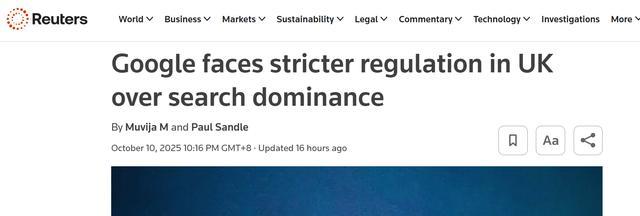
英国新监管机构首次介入,锁定谷歌搜索业务为监管铺路
Huan Qiu Wang Zi Xun· 2025-10-11 04:44
Group 1 - The UK Competition and Markets Authority (CMA) has officially recognized Google's search business as having a "strategic position" in the UK market, marking a significant step in regulating large tech companies [1][3] - The CMA's assessment indicates that Google holds a "significant and entrenched market dominance" in the general search sector, with no other search engine surpassing Google's market share in the past 15 years, despite competition from others like Microsoft Bing [3] - The recognition of Google's "strategic position" does not imply any illegal behavior or immediate operational requirements, but it provides a legal basis for potential regulatory interventions in the future [3] Group 2 - The CMA's findings may lead to further regulations on Google's commercial operations in the search service sector, potentially impacting Google's business model in the UK [3] - Google has expressed concern regarding the CMA's recognition and the possible regulatory measures, suggesting that improper implementation could harm the innovation landscape in the UK tech sector [3]


对外松绑、对内加压:特朗普政府对科技巨头为何持“双标”态度
第一财经· 2025-09-05 07:27
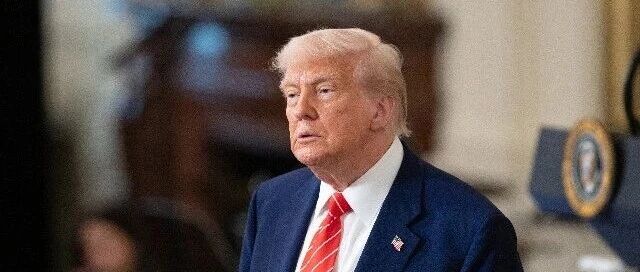
Core Viewpoint - The Trump administration is exerting pressure on other countries to relax regulations on American tech companies while maintaining a strong antitrust stance domestically against these giants [2][4]. Group 1: Antitrust Actions - A U.S. federal judge recently rejected the Department of Justice's request to break up Google's search business, but the DOJ plans to continue pursuing this case, indicating its historical significance [2][3]. - The DOJ and FTC have been actively identifying and proposing the removal of regulatory barriers that hinder competition, with a focus on various industries including technology [4][6]. - The Trump administration's antitrust enforcement is expected to continue, with a focus on labor market issues and stricter scrutiny of the tech sector [6][9]. Group 2: Regulatory Contradictions - The Trump administration's tough enforcement against tech giants contrasts with its broader policy of regulatory relaxation across multiple sectors [4][5]. - The administration has sought exemptions for U.S. multinational companies from international digital regulations, particularly criticizing the EU's Digital Services Act for its perceived restrictions on free speech [4][5]. Group 3: Tech Companies' Responses - Many tech leaders have shown support for Trump, hoping to benefit from regulatory rollbacks and government backing against foreign scrutiny [8]. - Despite showing a cooperative stance, major tech companies like Apple and Google are still facing significant antitrust lawsuits, indicating ongoing challenges in the regulatory landscape [9].


谷歌首席执行官皮查伊:美国(恢复竞争)的补救措施实际上是在分拆谷歌的搜索业务。
news flash· 2025-04-30 14:48
Group 1 - The core viewpoint of the article is that the measures taken by the U.S. to restore competition are effectively aimed at breaking up Google's search business [1] Group 2 - Google's CEO Sundar Pichai expressed concerns that the U.S. government's actions could lead to significant changes in the competitive landscape of the tech industry [1] - The article highlights the ongoing scrutiny and regulatory challenges faced by Google in the context of antitrust issues [1]