
美股AI泡沫

Search documents
杨德龙:不同板块轮番表现 马年行情值得期待
Xin Lang Cai Jing· 2026-02-09 02:38
Market Overview - The market is experiencing a phase of adjustment as it approaches the Spring Festival, following a "17 consecutive days of gains" [1][8] - This short-term pullback does not signify the end of the current slow bull market trend [1][8] - The primary reason for this adjustment is the significant prior increase in multiple sectors, which attracted a concentrated influx of investors [1][8] Trading Volume and Investor Behavior - The daily trading volume of the two markets once approached 4 trillion yuan, with margin financing balances exceeding 2.6 trillion yuan, reaching a historical high [1][8] - The recent market overheating has increased profit-taking pressure, serving as a risk reminder for investors [1][8] - The current adjustment is viewed as an opportunity to position quality stocks or funds rather than a panic-driven sell-off [11] Sector Rotation and Investment Opportunities - The adjustment has led to noticeable corrections in previously high-performing technology stocks, while the overall index has not declined significantly [9] - There is an emerging rotation among sectors, with the brand liquor sector benefiting from the upcoming consumption peak during the Spring Festival [9] - The anticipated rotation sequence may follow "small-cap stocks first, then mid-cap stocks, and finally large-cap stocks," with small-cap stocks primarily referring to technology stocks [9] Future Market Predictions - Investors who did not allocate to technology stocks last year may have experienced weaker returns, but there are expectations for better performance from mid-cap and large-cap stocks in the new year [2][9] - The potential for a more robust rotation among sectors is seen as beneficial for a more stable and lasting market [2][9] - Concerns regarding the U.S. stock market's peak and the potential for a bubble in AI stocks have been raised, with expectations that the U.S. market may enter a phase of adjustment rather than a significant downturn [10] Economic Context - Global debt risks are rising, with total global debt exceeding 300 trillion USD, approximately 2-3 times the global GDP [10] - The market is currently characterized by structural differentiation, with technology innovation sectors showing significant gains while traditional sectors remain relatively subdued [11] - A substantial amount of fixed deposits, approximately 50 trillion yuan, is set to mature in 2026, which may lead to a shift of funds from savings to higher-yielding assets [11]
美联储或将大幅降息+日元加息刺激,黄金2026年能否继续走牛?
Sou Hu Cai Jing· 2025-12-26 00:45
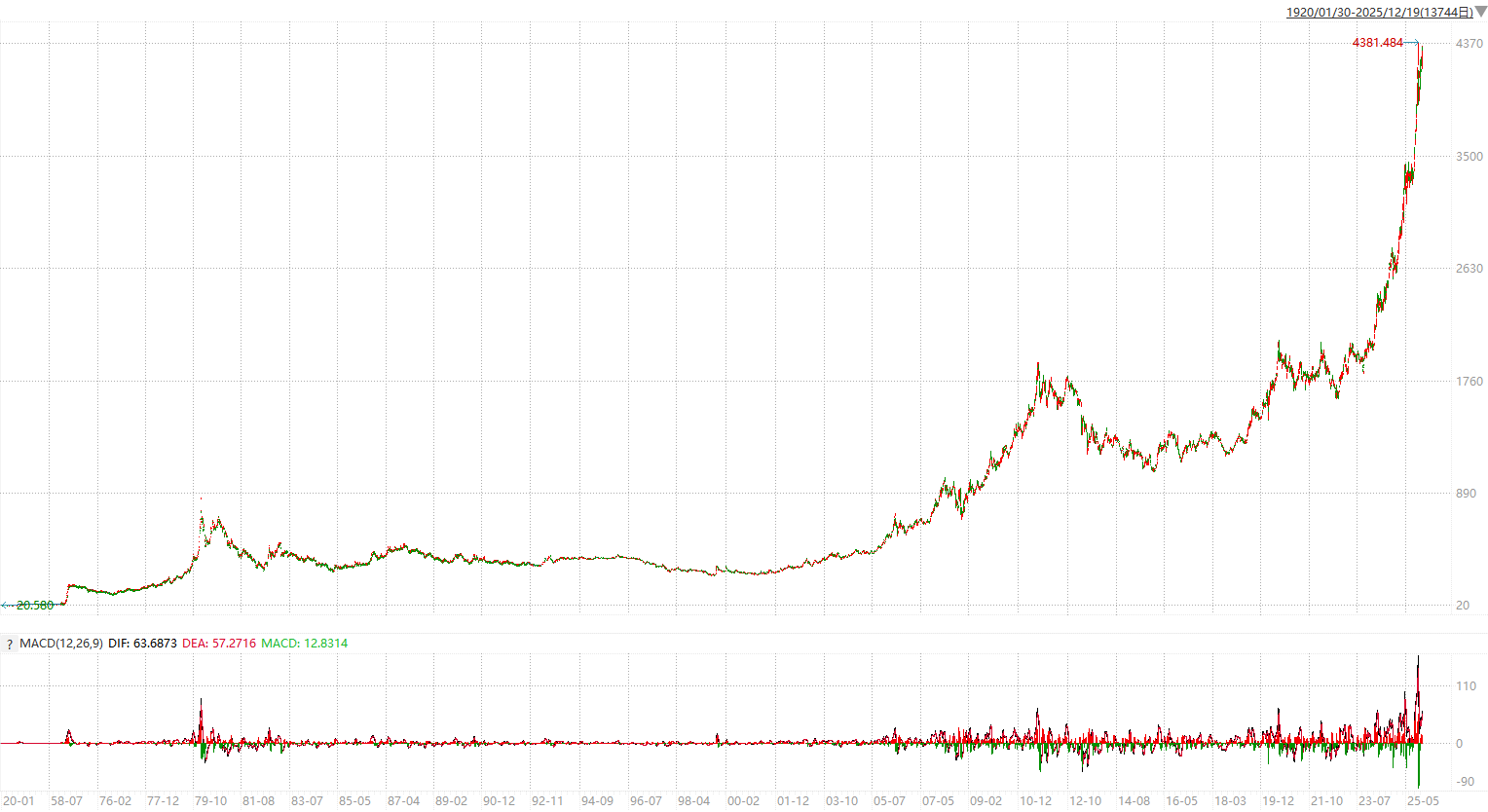
Group 1: Gold Market Overview - In 2025, gold has been one of the standout commodities, with spot gold challenging historical highs from October [1] - Since 1970, there have been three major bull markets for gold, with the current one starting in 2015 and prices rising from around $1,000/oz to over $4,300/oz by December 2025 [2] - Historical analysis shows that gold prices often have an inverse relationship with the US dollar index, influenced by US economic conditions and monetary policy [4] Group 2: Factors Favoring Gold in 2026 - The potential for significant interest rate cuts by the Federal Reserve due to high US government debt could lead to a depreciation of the dollar [5] - The unemployment rate in the US rose to 4.6% in November 2025, the highest level since September 2021, indicating economic challenges [6] - Major financial institutions, including Citibank and Morgan Stanley, recommend including gold in investment portfolios, with price targets for gold reaching $5,000/oz by 2026 [7][8] Group 3: Company Activities in Gold Mining - In 2025, several mining companies actively pursued acquisitions of gold mining projects, such as Luoyang Molybdenum's $1.015 billion acquisition of Equinox Gold's assets in Brazil [9] - Zijin Mining completed the acquisition of the Raygorodok gold mine in Kazakhstan, further expanding its gold asset portfolio [10] - The exploration success in China, including the discovery of a major gold deposit in Liaoning, indicates a growing domestic gold mining potential [10] Group 4: Industry Outlook and Performance - Companies are optimistic about the gold industry's future, with executives citing geopolitical factors and monetary policy as key drivers for gold's rising value [11] - The performance of gold mining stocks has been significantly influenced by rising gold prices and increased production, with some companies seeing stock price increases of up to 10 times [12] - Zijin Mining's resource holdings include 4,000 tons of gold, with a goal to exceed 100 tons of gold production by 2028 [13]


美国又要动手,黄金等待时机!
Sou Hu Cai Jing· 2025-12-18 09:38
Group 1: Gold Market - Gold prices continued to rise overnight, reaching a peak of $4,348.70 before closing around $4,338, marking an increase of nearly 1% [1] - Currently, gold is fluctuating around $4,326 during the European trading session [1] Group 2: U.S. Stock Market - U.S. stock indices collectively declined overnight, with the Dow Jones falling by 0.47%, the Nasdaq dropping by 418.14 points (1.81%), and the S&P 500 decreasing by 1.16% [2] Group 3: Federal Reserve Insights - Federal Reserve Governor Waller, a leading candidate for the next Fed chair, advocated for a moderate pace of interest rate cuts, citing concerns over a weak job market and indicating that there is still room for rate reductions [5] - Waller noted that inflation remains above target levels but is expected to decrease in the coming months, with a potential economic improvement by 2026 [5] - The recent Fed meeting saw the first dissenting votes since 2019, highlighting significant internal divisions within the committee regarding future rate cuts [5] Group 4: Inflation and Economic Indicators - Investors are focusing on President Trump's upcoming speech and the delayed release of the U.S. November CPI data, with expectations of a slight increase in both overall and core CPI [9] - The overall CPI is projected to rise from 3.0% to 3.1%, while core CPI is expected to stabilize at 3% [9] - Service prices, a major driver of inflation, have increased by 3.5% year-over-year, but this is the smallest increase since the pandemic began, suggesting a potential slowdown in inflation [9] Group 5: Market Sentiment and Risks - The U.S. stock market is experiencing a significant correction, particularly in the tech-heavy Nasdaq, which has seen a decline since reaching a historical high at the end of October [11] - Concerns about high valuations and the potential AI bubble are prevalent, with uncertainty surrounding the realization of AI's commercial applications [11] - Despite a weakening job market, there are no clear signs of an impending recession, and expectations of monetary easing may support the stock market [11] Group 6: International Relations - U.S. and Russian officials are expected to meet in Miami, with discussions focusing on security agreements related to Ukraine [12] - The U.S. has threatened retaliatory measures against the EU for perceived discriminatory practices against American service providers, which could escalate trade tensions [14]


中邮黄付生:市场三阶段演进,“强产业、起消费”引领2026
2 1 Shi Ji Jing Ji Bao Dao· 2025-12-17 09:20
Group 1 - The domestic market is undergoing three phases of evolution: the decline in bond market yields is driving the revaluation of dividend stocks; the "DeepSeek" moment is igniting the growth of technology stocks; and by 2026, there will be a recovery in manufacturing profits [1][2] - The first phase of value revaluation in the A-share market occurs from 2023 to 2024, characterized by a bull market in dividend stocks due to rapidly declining bond yields [2] - From the "9.24" event until 2025, the market will enter a growth stock boom, representing a repricing of China's technology industry [2] Group 2 - In 2026, the market will extend into a phase of recovery in manufacturing profits, driven by "anti-involution" policies that will restore industrial product prices and a "price for volume" inventory reduction phase for consumer goods [2] - The valuation of the "Seven Sisters" in the US stock market is approximately 35-40 times, which, while higher than the historical average, is significantly lower than the 80 times valuation seen during the 2000 internet bubble [2] - The ability to quickly build a self-controlled modern industrial system will directly impact the recovery of PPI and corporate profits, with 2026 being a critical year for the "14th Five-Year Plan" [3]
国联民生陶川:科技创新须“叫好又叫座”,三大动能驱动2026
2 1 Shi Ji Jing Ji Bao Dao· 2025-12-17 09:20
Core Insights - The core viewpoint emphasizes the necessity for technological innovation to be rooted in industrial applications, transitioning from theoretical concepts to practical implementations to drive solid economic growth [1][3]. Group 1: Economic and Market Outlook - The global economy is expected to enter a "tide receding" phase, with the end of the Russia-Ukraine conflict, a clear interest rate reduction path from the new Federal Reserve chair, and a significant decrease in trade policy uncertainty [1]. - Domestic economic growth will focus on three main drivers: enhancing industrial momentum through the establishment of a modern industrial system, boosting productivity via technological advancements, and increasing growth through consumer spending [1][2]. - These three aspects are interconnected and are anticipated to create more expectations for the capital market in 2026, opening up more space for value reassessment [1]. Group 2: Value Reassessment in A-shares - The three main sources of reassessment momentum for A-shares in 2026 include: the implementation of a modern industrial system leading to a rebound in PPI and recovery in manufacturing profits, the emphasis on practical technological applications to avoid "theoretical innovations," and the acceleration of consumer spending driven by changes in fiscal expenditure structure [2]. - The current discussions around the AI bubble in the US stock market highlight a "heavy burden" perspective, where US tech giants are expanding overseas to alleviate profit pressures, but potential triggers for a bubble burst could arise from unfulfilled commercial prospects or the Federal Reserve pausing interest rate cuts due to inflation concerns [2]. - The reassessment of A-shares this year is multifaceted, with macro-level factors such as the central government's elevated focus on the capital market and easing geopolitical tensions between the US and China contributing to the reassessment process [2]. Group 3: Key Economic Drivers - The three critical drivers for China's economy and capital market development in 2026 are: seeking momentum from industry, productivity from technology, and growth from consumer spending [3]. - It is essential for technological innovation to be effectively implemented to avoid value reassessment becoming unfounded, with investors advised to focus on the actual progress of technology transfer and industrial applications [3].

方正燕翔:2026增长稳、科技强、内需进 价格回升引盈利修复
2 1 Shi Ji Jing Ji Bao Dao· 2025-12-16 09:08
Core Insights - The success of the "anti-involution" policy in 2026 could lead to a re-inflation, similar to the successful logic of the supply-side structural reforms in 2016-2017, which may result in a rapid recovery of corporate profits and inject strong momentum into the market [1] Economic Outlook - The economic outlook for 2026 is analyzed through three dimensions: stable growth with GDP growth remaining in a stable range, strengthening technology with the "three new" economy's share continuing to rise, and improving domestic demand with significant recovery expected from the low base in 2025 [1] A-Share Market Insights - A-share profitability is highly correlated with PPI, with over 70% of the 5,400 A-share listed companies being manufacturing firms, indicating significant price elasticity [2] - As of October 2025, PPI was down 2.1% year-on-year, with corporate profits in a bottoming phase; if the "anti-involution" policy leads to a rebound in commodity prices, corporate profits could improve significantly, providing strong market support [2] U.S. Market Analysis - Concerns regarding the AI bubble in the U.S. stock market are noted, with the S&P 500 index showing significant valuation risks, as both PE and PB ratios are at the 99th percentile historically; however, the potential adjustment is expected to be relatively mild compared to the 2000 internet bubble [2] Risk Warnings - A key risk identified is the "policy expectation reversal risk," particularly if both PPI and CPI rise unexpectedly, which could conflict with the assumption of continued U.S. interest rate cuts [3] - The year 2026 is critical as it marks the beginning of the "14th Five-Year Plan," with the success of the "anti-involution" policy being pivotal for driving re-inflation and corporate profit recovery, which is essential for market momentum [3]
兴业王涵:大国复兴叙事推动A股价值重估新机遇
2 1 Shi Ji Jing Ji Bao Dao· 2025-12-16 05:17
Core Viewpoint - The narrative of national rejuvenation, the rise of capital market status, and the enhancement of policy discourse power are collectively driving the A-share market towards a value reassessment opportunity [1]. Group 1: Economic Outlook - In 2026, China's economy is expected to show a "low first, high later" trend, with weaker performance in the first half due to the inertia of demand from the conclusion of the 14th Five-Year Plan, followed by a recovery in investment in the second half [1]. - Consumer momentum in 2026 is anticipated to be stronger than in 2025, benefiting from policy support and the wealth effect from the financial market [1]. - External demand remains uncertain, largely dependent on the sustainability of the U.S. AI narrative [1]. Group 2: A-share Value Reassessment - The three solid pillars supporting the logic of A-share value reassessment are: 1. National rejuvenation narrative: The perception of Chinese enterprises' competitiveness has significantly improved compared to 2018 [2][3]. 2. Rise in capital market status: The importance of the capital market in macroeconomic regulation has been further elevated, leading to a systematic increase in overall valuation positioning [3]. 3. Enhanced policy discourse power: The ability to actively defend national interests has improved market risk appetite [3]. Group 3: Market Comparisons and Predictions - Key data indicates that the U.S. GDP accounts for 25% of the global total, with its stock market capitalization representing nearly 50%, while China's GDP accounts for 16% and the combined market capitalization of A-shares and Hong Kong stocks is only 14%, highlighting clear reassessment potential for A-shares [3]. - Regarding the AI bubble in the U.S. stock market, it is characterized as a monopoly pricing bubble, with current valuations of AI giants based on a "shovel monopoly" logic, which is being challenged by the emergence of open-source models [3]. - A potential trigger for a U.S. stock market crash could be the realization that the Federal Reserve's ability to rescue the market is limited, especially if inflation rebounds and forces the Fed to pause interest rate cuts [3]. Group 4: Long-term Investment Confidence - 2026 is identified as a critical year for the A-share value reassessment, with the three pillars remaining solid, indicating that the reassessment process will not be altered by short-term fluctuations [4]. - Investors are encouraged to maintain confidence and seize long-term value opportunities [4].

中国银河章俊:技术必须扎根产业土壤,方能避免沦为资本泡沫
2 1 Shi Ji Jing Ji Bao Dao· 2025-12-15 05:29
Group 1 - The core viewpoint emphasizes the need for technology innovation to be rooted in the industrial system to avoid becoming a capital bubble [1] - The Southern Finance Forum 2025 focused on the economic trends and capital market outlook for the "14th Five-Year Plan" period [1][2] - The forum gathered prominent representatives from finance, academia, and industry to discuss key issues [1] Group 2 - The consensus among experts indicates that domestic demand will be the main growth engine for China's economy in 2026, with consumption and investment driving growth [2] - Technology innovation is identified as a dual driving force for both the real economy and capital markets, with China's tech industry gaining global competitiveness [2] - A global economic rebalancing and moderate inflation are anticipated, with PPI expected to end its long-term negative growth trend, boosting market confidence [2] Group 3 - The discussion on A-share value reassessment highlighted the significant role of the capital market in economic transformation, moving beyond just a financing platform [3] - The potential for a "Davis Double Play" in A-shares hinges on PPI recovery and its correlation with corporate earnings [3][4] - A-shares are currently valued reasonably, aligned with the average nominal GDP growth rate over the past six years, and could transition to a profit-driven phase if inflation progresses smoothly [4] Group 4 - Concerns regarding the U.S. AI bubble were raised, with experts acknowledging its structural risks while noting that the timing and extent of adjustments depend on U.S. Federal Reserve policies and inflation trends [5] - China's advantages in AI applications were highlighted, with a strategic shift towards prioritizing technology implementation over capital narratives [5] - The resilience of A-shares is expected to remain intact even if a global AI bubble bursts, supported by solid fundamentals [5] Group 5 - Experts warned of potential systemic risks stemming from overlooked uncertainties, including the reversal of yen carry trade risks and pressures in constructing a self-sufficient modern industrial system [6][7] - Liquidity risks may arise from accumulated debt bubbles and shadow banking, potentially triggered by political uncertainties [7] - Geopolitical tensions could lead to unexpected global inflation, posing significant risks in 2026 [8] - The acceleration of technology replacing labor could transform youth unemployment from a potential risk to a real pressure [9]

港股异动 | AI概念股悉数走低 市场对AI高估值担忧加剧 机构称中长期看港股科技点位有吸引力
智通财经网· 2025-11-05 01:45
Core Viewpoint - AI concept stocks are experiencing a decline due to increasing concerns over high valuations, influenced by a sell-off in U.S. tech stocks [1] Group 1: Market Performance - As of the report, Kingsoft (03888) fell by 4.37% to HKD 31.94, Hua Hong Semiconductor (01347) dropped by 4.09% to HKD 72.7, and Alibaba-W (09988) decreased by 2.58% to HKD 155.1 [1] - The market is reacting to a significant short position taken by investor Michael Burry against Nvidia and Palantir, with the nominal value of put options exceeding USD 1 billion, representing 80% of his portfolio [1] Group 2: Analyst Insights - Dongwu Securities highlighted ongoing concerns in overseas markets regarding a potential AI bubble in U.S. stocks, alongside mixed earnings reports from major tech companies [1] - Google’s cloud computing and search business exceeded expectations, supporting the notion that AI tools are enhancing advertising revenue for tech giants [1] - In contrast, Meta's revenue beat expectations but raised concerns about future profits due to accelerated capital expenditures, leading to a cautious outlook among investors regarding tech stocks in Hong Kong [1] - Despite the influence of U.S. tech leaders on Hong Kong's AI tech trading pace, Dongwu Securities believes that current valuations in the Hong Kong tech sector are attractive, predicting a marginal recovery in EPS for the first quarter of next year [1]


AI概念股悉数走低 市场对AI高估值担忧加剧 机构称中长期看港股科技点位有吸引力
Zhi Tong Cai Jing· 2025-11-05 01:44
Core Viewpoint - The AI concept stocks are experiencing a decline due to increasing concerns over high valuations, exacerbated by a sell-off in U.S. tech stocks [1] Group 1: Market Performance - Kingsoft (03888) fell by 4.37%, trading at HKD 31.94 [1] - Hua Hong Semiconductor (01347) decreased by 4.09%, trading at HKD 72.7 [1] - Alibaba-W (09988) dropped by 2.58%, trading at HKD 155.1 [1] Group 2: Investor Sentiment - Investor Michael Burry is heavily shorting Nvidia and Palantir, with put options valued over USD 1 billion, representing 80% of his portfolio [1] - Burry previously issued a subtle warning about market euphoria to retail investors [1] Group 3: Analyst Insights - Dongwu Securities noted ongoing concerns about an AI bubble in the U.S. market, alongside mixed earnings reports from tech giants [1] - Google exceeded expectations in cloud computing and search, supporting the notion that AI tools are enhancing advertising revenue for tech giants [1] - In contrast, Meta's revenue beat expectations but raised concerns about future profits due to accelerated capital expenditures [1] - Investors in Hong Kong are adopting a cautious stance towards technology stocks, although the long-term outlook for Hong Kong tech valuations appears attractive [1] - The firm anticipates a marginal recovery in Hong Kong's EPS in Q1 of next year as the competitive landscape among tech leaders approaches its peak [1]