谷歌Gemma

Search documents
Meta闭源转向:巨头的求生与AI行业的范式重构
3 6 Ke· 2025-12-11 10:05
Core Insights - Meta's strategic shift from open-source to closed-source AI models, highlighted by the $14.3 billion acquisition and the development of the Avocado model, reflects the pressures of commercial realities and industry competition [2][3] - The transition signifies a critical moment in the commercialization challenges of open-source AI, as Meta's previous open-source efforts yielded over 30 million downloads but generated less than $1 billion in licensing revenue against over $70 billion in annual AI investments [2][3] - The closed-source model is seen as essential for capturing high-value markets, particularly in sectors like finance and healthcare, where data security and compliance are paramount [2][3] Meta's Strategic Shift - Meta's decision to adopt a "technology fusion" approach by integrating technologies from Google, OpenAI, and Alibaba aims to quickly address its shortcomings and meet industry demands [3] - The internal upheaval, including the departure of key personnel and layoffs at the FAIR lab, raises concerns about the compatibility of different model architectures and potential intellectual property disputes [3][4] - This shift marks the beginning of a new phase in the AI industry characterized by a coexistence of open-source and closed-source models, with open-source models still dominating academic research and smaller applications [3][4] Market Implications - Meta's transition to closed-source is expected to accelerate market consolidation, with leading companies likely to build commercial moats through closed-source models, while smaller players may find new opportunities in the open-source space [4] - The integration of Chinese models like Alibaba's Tongyi Qianwen into Meta's technology references indicates the growing global competitiveness of Chinese AI technologies [4] - The release of Avocado in Q1 2026 will be a pivotal moment, with the potential to replicate the success of the Microsoft-OpenAI partnership, creating a "model-hardware-advertising" business loop [4][5] Timeline of Key Events - February 2023: Launch of Llama 1, marking Meta's entry into large models with an open-source approach [5] - July 2023: Llama 2 becomes the most popular open-source large model with over 30 million downloads [5] - June 2025: Meta acquires a stake in Scale AI for $14.3 billion and appoints Alexandr Wang as Chief AI Officer, signaling a shift to closed-source [5][6] - October 2025: Announcement of a $27 billion Hyperion data center plan to support closed-source model capabilities [7] - Q1 2026: Expected launch of Avocado, focusing on complex reasoning and long video analysis, aiming to compete with GPT-5 and Gemini 3 Ultra [9] Strategic Differences in AI Models - U.S. giants primarily focus on closed-source models with clear commercial pathways, while Chinese players adopt a dual approach of open-source and closed-source to balance ecosystem development and monetization [11] - The U.S. strategy emphasizes closed-source to maintain competitive advantages, whereas China's approach leverages open-source to address specific industry needs and accelerate deployment [11][12] - The iteration pace differs, with U.S. companies releasing new versions semi-annually or annually, while Chinese firms adopt a more rapid release cycle driven by community engagement [12][13]


英伟达GPU被SpaceX送上太空,在天上训练卡帕西的NanoGPT
3 6 Ke· 2025-12-11 07:32
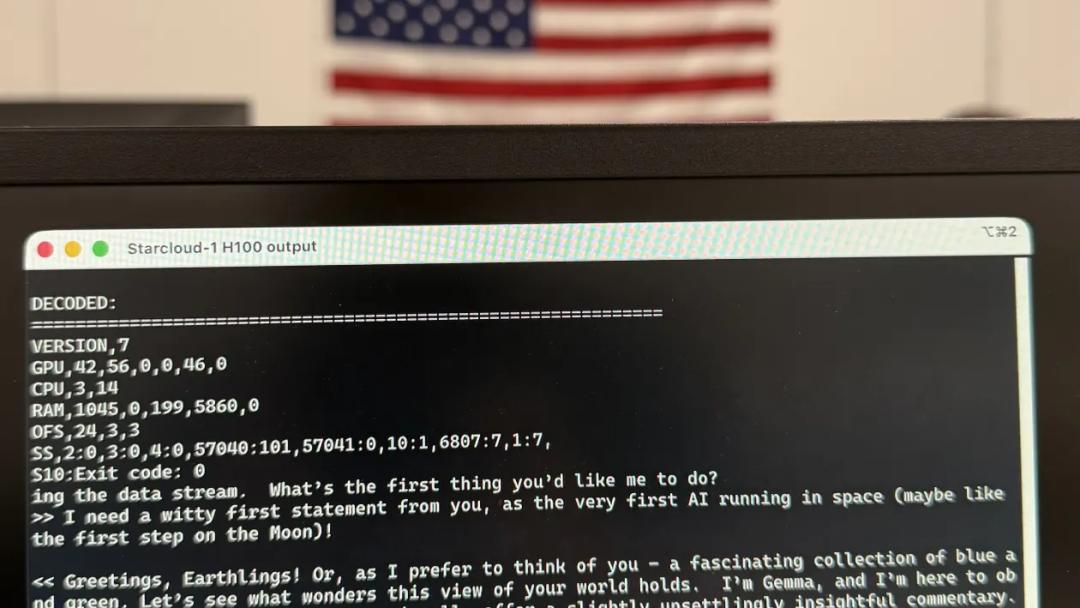
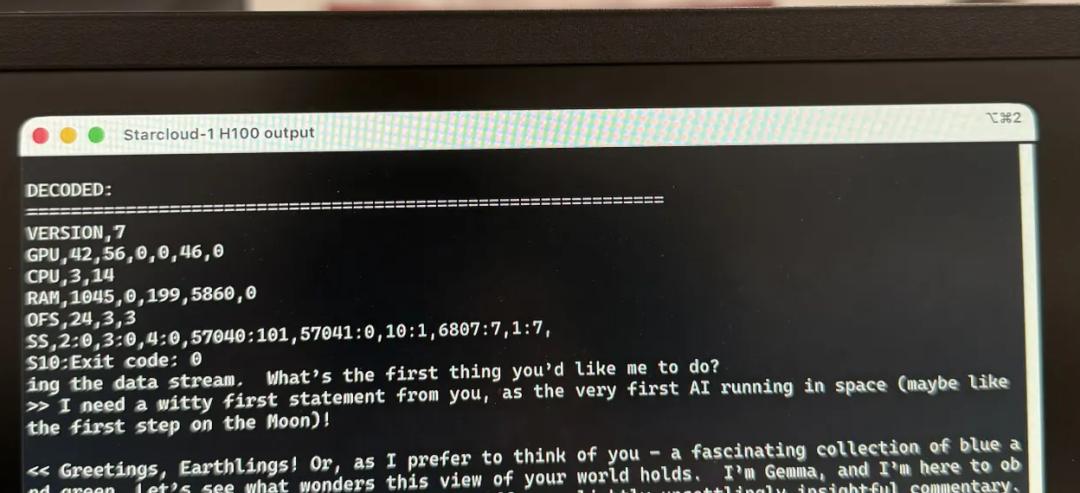
Core Insights - The article discusses the successful training and operation of AI models in space, marking a significant milestone in the integration of artificial intelligence and space technology. Key players include Nvidia, SpaceX, Google, and Andrej Karpathy's NanoGPT [1][5][10]. Group 1: AI in Space - The first AI model, Gemma, was successfully trained and operated in space using Nvidia's H100 chip aboard the Starcloud-1 satellite launched by SpaceX [5][10]. - The AI model Gemma greeted Earth with a message, showcasing its capabilities to analyze and provide insights [7]. - Another model, NanoGPT, was trained using the complete works of Shakespeare on the H100 chip [3]. Group 2: Future Plans and Infrastructure - Starcloud aims to build a solar-powered orbital data center with a capacity of 5GW, which is expected to have significantly lower costs compared to terrestrial counterparts [8][10]. - The CEO of Starcloud, Philip Johnston, emphasized the potential of space to overcome energy limitations faced on Earth, allowing for larger AI models to be trained without the constraints of land and cooling [10]. - Starcloud plans to launch more Nvidia H100 chips and the Blackwell platform in a satellite mission scheduled for October 2026 [9]. Group 3: Global Developments in Space Computing - Chinese research institutions have been exploring space-based intelligent computing since 2019, focusing on key technological advancements [12][13]. - The "Three-Body Computing Constellation," consisting of 12 satellites, was launched by Guoxing Aerospace and Zhijiang Laboratory, achieving commercial operation in September [14]. - The "Tiansuan Plan" was announced by the Tiansuan team, aiming to establish a superintelligent cluster with a computing power of 10 EOPS in near-Earth orbit [15].

全球首个太空AI诞生,H100在轨炼出,马斯克爆赞
3 6 Ke· 2025-12-11 03:46
Core Insights - The first AI model trained in space using NVIDIA's H100 GPU has been successfully developed, marking a significant milestone in technology [1][3][9] - Google's Gemma model has also successfully operated in space, sending its first greeting message to Earth [1][11] Group 1: Space AI Development - The Starcloud-1 satellite, equipped with an H100 GPU, achieved a computational power 100 times stronger than any previous GPU sent to space [9] - The AI model trained in space is based on Karpathy's nanoGPT and utilizes Shakespearean texts for its training, allowing it to converse in a Renaissance language style [12][4] - The satellite has demonstrated real-time intelligence analysis capabilities, such as identifying wildfire signals and providing situational updates [16] Group 2: Industry Implications - Starcloud aims to establish space as a viable location for data centers, addressing the increasing pressure on Earth's data infrastructure [17][19] - The company plans to leverage solar energy to significantly reduce operational costs, projecting costs to be one-tenth of terrestrial data centers [20] - Starcloud's long-term vision includes creating a 5GW orbital data center with extensive solar panels and cooling systems [20][22] Group 3: Competitive Landscape - The space computing race is intensifying, with major players like Google, SpaceX, and Blue Origin entering the field [25][26] - Google's Project Suncatcher aims to deploy solar-powered GPU satellites, with plans for early testing by 2027 [26] - Musk's Starlink V3 satellites are expected to form a backbone for orbital computing infrastructure, potentially exceeding the average U.S. electricity consumption within two years [30]