货轮

Search documents
“中国速度”!法媒使用“惊人”一词
Xin Lang Cai Jing· 2025-12-25 06:40
Core Viewpoint - China's shipbuilding industry is rapidly advancing, with significant market shares and production capabilities, showcasing its dominance in the global shipbuilding sector [2][5][6]. Group 1: Industry Performance - In 2024, China's shipbuilding completion volume, new orders, and backlog orders are projected to account for 55.7%, 74.1%, and 63.1% of the global market, respectively [2][5]. - The city of Nantong alone is expected to assemble or repair over 300 ships in 2024, contributing to approximately 10% of China's total shipbuilding output [2][5]. - The shipbuilding industry in Nantong is projected to generate a value of €11 billion (approximately ¥911 billion) from January to May 2025 [2][5]. Group 2: Production Efficiency - The average time to build a 100-meter ship from start to first water testing is four to five months [2][5]. - Workers in Nantong indicate that they can produce at least four ships within two years, with most orders coming from overseas [2][5]. Group 3: Competitive Landscape - China's shipbuilding prices are 5% to 10% lower than international prices, and repair services are 50% cheaper [5][6]. - An industry insider predicts that China aims to surpass South Korea, which currently holds a 30% market share, targeting an 80% market share in the future [5][6]. Group 4: Historical Context and Future Outlook - Since the early 2000s, China has replicated its success in battery and electric vehicle manufacturing within the shipbuilding sector, starting with simpler ship types [6]. - The 2008-2009 financial crisis led to the consolidation of the industry around large state-owned enterprises, enabling China to become the world's largest shipbuilder by 2010 [6]. - China's effective pandemic response allowed it to capture international orders that could not be fulfilled by local shipyards, leading to significant wealth accumulation and reinvestment in technology and capacity expansion [6].
中国能建(601868.SH):葛洲坝船厂属于本公司资产
Ge Long Hui· 2025-12-18 07:37
Core Viewpoint - China Energy Engineering Corporation (中国能建) confirmed that the Gezhouba Shipyard is an asset of the company, indicating its strategic importance in the company's operations [1] Group 1: Company Overview - The Gezhouba Shipyard was originally the Yichang Gezhouba Shipbuilding Company and was restructured into China Gezhouba Group Machinery Shipbuilding Co., Ltd. in September 2004 [1] - The company has built over 200 vessels for both domestic and international clients, including passenger ships, cargo ships, oil tankers, chemical tankers, roll-on/roll-off ships, asphalt ships, LPG carriers, and ocean-going vessels [1] Group 2: Business Focus - Due to changes in the market environment and adjustments in the company's business structure, the primary focus has shifted to differentiated ship processing services [1]

“路”,越走越宽广
Guang Xi Ri Bao· 2025-11-25 03:13
Group 1: High-Speed Rail Development - The Nanning-Yulin high-speed railway significantly reduces travel time, connecting the Beibu Gulf Economic Zone and the Guangdong-Hong Kong-Macao Greater Bay Area, enhancing business convenience for frequent travelers [1] - The high-speed rail network in Guangxi has expanded to over 2406 kilometers, with all 14 prefecture-level cities now connected, marking a significant achievement in regional transportation [1] Group 2: Infrastructure Impact on Tourism and Economy - The completion of the Lianhe Expressway has boosted tourism in Nanshang Town, with a 50% increase in visitors during the Spring Festival and a peak daily traffic of over 20,000 during the Dragon Boat Festival [3] - The expressway has facilitated agricultural logistics, reducing costs by 40% and doubling order volumes for local products, thus enhancing the economic prospects for local farmers [3] Group 3: Comprehensive Transportation Network - Guangxi's transportation strategy during the 14th Five-Year Plan aims to create a comprehensive network that connects rivers, seas, and borders, with the total length of highways exceeding 10,000 kilometers [4] - The region is experiencing a significant increase in cargo transport efficiency, with waterway transport times reduced from 30 days to 4 days, leading to substantial cost savings [5] Group 4: Investment and Future Prospects - The projected investment in Guangxi's transportation infrastructure during the 14th Five-Year Plan is 1.1 trillion yuan, 1.5 times that of the previous five years, indicating a strong commitment to enhancing regional connectivity [6] - Ongoing projects like the Pinglu Canal and Huangbai Railway are set to further improve transportation links, positioning Guangxi as a leading transportation hub in the western region of China [6]
京东集团沈建光:中国发展游艇经济的五大带动效应
Di Yi Cai Jing· 2025-10-10 07:25
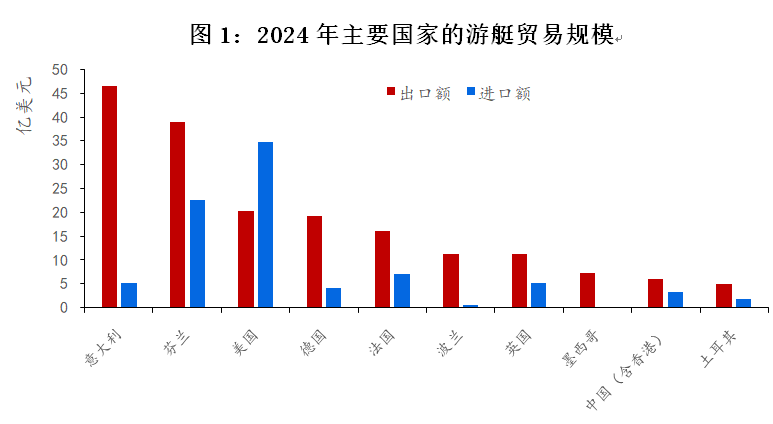
Core Insights - The development of China's yacht economy is still in its early stage characterized by "supply not meeting demand" despite favorable conditions such as a per capita income of approximately $13,500 and good port infrastructure [2][3] - The yacht industry has a long supply chain involving design, manufacturing, sales, consumption, supporting services, and infrastructure, which can significantly contribute to economic growth and job creation [1][2] Industry Overview - China's shipbuilding industry has a dominant global position in oil tankers, cargo ships, and container ships, accounting for over 50% of the global shipbuilding market in terms of completed and ordered vessels [2][3] - In contrast, the yacht manufacturing sector is lagging, with a projected output value of only 12.8 billion yuan ($1.9 billion) in 2024 and exports of merely $600 million, significantly lower than Italy, the Netherlands, and Germany [2][3][4] Economic Impact - The yacht economy can drive service consumption, which has been increasingly important for China's GDP growth, with service consumption currently at only 17.9% compared to the U.S. at 45.8% [9][10] - The yacht economy can stimulate various sectors, including high-end tourism, professional services, and training industries, thereby enhancing overall economic activity [10][12] Employment Opportunities - The yacht economy has the potential to create numerous job opportunities across manufacturing, maintenance, and service sectors, with examples from regions like Zhuhai and Sanya demonstrating significant employment generation [16][17] - In comparison, the U.S. yacht industry saw employment rise from 691,000 in 2018 to 812,000 in 2023, while Italy's yacht economy created 157,000 jobs in 2022 [16][17] Infrastructure Development - The growth of the yacht economy necessitates upgrades to infrastructure, including ports, waterways, and public facilities, which can enhance regional economic attractiveness [17][18] - Successful yacht economies, such as those in Monaco and Cannes, serve as international symbols, attracting investment and talent while improving local infrastructure [17][18] Policy Recommendations - To fully realize the potential of the yacht economy, targeted policies should be implemented during the 14th Five-Year Plan period, focusing on top-level design, market access, and innovation encouragement [2][18]