
走地鸡

Search documents
新春走基层丨搭上慢火车,跟着吴姐去卖菜
Ren Min Ri Bao· 2026-02-09 07:07
Core Viewpoint - The article highlights the role of the "slow train" in facilitating local farmers like Wu Jie in selling their produce, thereby improving their livelihoods and connecting them to markets more efficiently [1][3]. Group 1: Slow Train Service - The slow train service, specifically the 5639/5640 route, connects Guiyang and Yuping, stopping at 16 stations with a low ticket price, making it accessible for local farmers [3][4]. - The train has been modified to accommodate local farmers by removing some seats and adding long benches for displaying vegetables and other products, creating a mobile market environment [4][5]. Group 2: Economic Impact on Local Farmers - Wu Jie, a local farmer, can now transport over 100 pounds of produce to market without the previous burden of a long hike, which often resulted in spoiled goods [3][6]. - The train service has allowed Wu Jie to earn over 200 yuan in a single day by selling fresh produce, which is well-received by customers due to its quality [6][7]. Group 3: Community and Personal Benefits - The convenience of the slow train has enabled Wu Jie to spend more time with her family, as she no longer needs to travel far for work [9]. - The article illustrates the sense of community among local farmers, who share their market experiences and support each other in selling their goods [8][10].

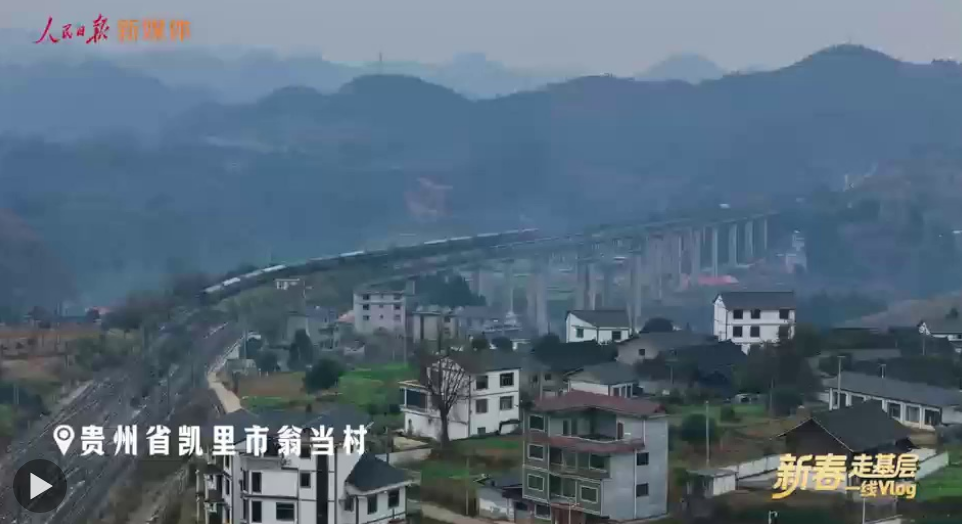
吴姐卖菜,搭上慢火车(新春走基层)
Ren Min Ri Bao· 2026-02-09 00:10
Core Viewpoint - The article highlights the innovative use of slow trains in rural areas of Guizhou, China, to facilitate local farmers like Wu Shoufen in selling their produce, thereby improving their livelihoods and community engagement [1][4]. Group 1: Transportation and Accessibility - The slow train service, specifically the 5639/5640 route between Guiyang and Yuping, plays a crucial role in connecting farmers to markets, allowing them to transport goods easily at a low fare [1][2]. - The train has been modified to accommodate local farmers by removing some seats and adding long benches for displaying agricultural products, effectively turning it into a mobile market [2][3]. Group 2: Economic Impact on Local Farmers - Farmers like Wu Shoufen can now sell their produce directly on the train, which has led to increased sales and better prices for their goods, with Wu earning over 200 yuan in a single day [3]. - The convenience of the slow train has encouraged farmers to return to their hometowns for selling produce instead of seeking work in distant cities, thus fostering community ties [3]. Group 3: Community Engagement and Support - Train staff, such as conductor Hu Guichuan, actively assist farmers in selling their products, enhancing the overall experience for both sellers and buyers [2][3]. - The initiative not only supports local agriculture but also strengthens community bonds as farmers share their experiences and goods with each other during the journey [3][4].
把“白云”养在沙漠边 把“金子”装进口袋里
Zhong Guo Xin Wen Wang· 2026-01-07 06:04
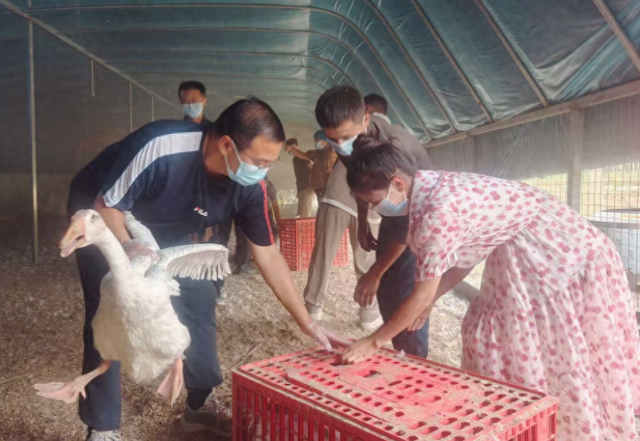
Core Insights - The annual report of the Southern Airlines Xinjiang Village Work Team shows a collective income increase of 2.98 million yuan for three designated assistance villages, marking a significant achievement in agricultural development and community support [1][4]. Group 1: Agricultural Development - The initiative to raise geese in the arid region near the Taklamakan Desert faced initial skepticism from local villagers, but the team led by Gao Yun emphasized the importance of trying new methods to improve livelihoods [3]. - The successful operation of a feed machine, which had previously faced technical difficulties, marked a turning point in the project, leading to a steady supply of feed for the geese [3][4]. - The project has not only succeeded in raising geese but has also opened up opportunities for other agricultural ventures, such as the cultivation of black goji berries and colorful peanuts, with the latter yielding an impressive 600 kilograms per mu, surpassing the national average [4][5]. Group 2: Community Impact - The successful goose farming project has revitalized the local economy, leading to a collective income increase of 2.98 million yuan and creating 235 local job opportunities [5]. - Villagers have reported a transformation in their lives, with individuals like university graduate Gu Zaili Nur returning to contribute to local e-commerce, reflecting a shift towards sustainable livelihoods [5]. - The project has fostered a sense of pride and hope among villagers, as evidenced by their emotional response during the goose shipment, symbolizing the awakening of the land's potential [4][5].
琼中:广袤绿荫下绘出“经济带”
Hai Nan Ri Bao· 2025-05-25 01:44
Core Insights - The development of the under-forest economy in Qiongzhong has led to an annual output value exceeding 500 million yuan, with a total area of 235,200 acres by the end of 2024, making it the highest in the province [1][6] - The integration of various industries such as planting, breeding, and landscape utilization has transformed green resources into tangible economic benefits [1][6] Group 1: Under-Forest Economy Development - The villagers of Luodan have successfully cultivated Yizhi fruit under ecological forests, generating an income of 6.405 million yuan [1][2] - The under-forest economy leverages natural products like Yizhi, Wujiao pig, and wild honey, requiring low startup costs and maintenance, thus effectively increasing farmers' income [2][6] - The cooperative model in Liemushan has expanded the scale of Zongye (sticky rice dumpling leaves) cultivation to over 5,300 acres, becoming the main production area in Hainan [5][6] Group 2: Agricultural and Cultural Integration - The "mountain-sea co-construction" project with Hainan University has transformed the tourism potential of villages, significantly increasing visitor numbers [7][8] - The integration of tourism, culture, and transportation is enhancing the economic potential of the region, with new tourism routes and experiences being developed [8] - Future plans include extending the industrial chain and promoting the integration of cultural, sports, and tourism industries to create new growth points [8]
田里没鸡跑,还是农村吗?
Hu Xiu· 2025-04-23 06:02
Core Insights - The article highlights the conflict between agricultural modernization policies and traditional farming practices, particularly focusing on the challenges faced by free-range poultry farming in rural areas [2][3][11] Group 1: Economic Resilience and Traditional Practices - Free-range chickens are known for their firm meat, rich flavor, and high nutritional value, contributing to a micro-circulation system in rural areas where chickens control pests and provide organic fertilizer, reducing pesticide costs by approximately 200 yuan per acre [1] - Farmers can earn between 80 to 150 yuan per chicken sold, creating a resilient economic model that is deeply rooted in local traditions [1] Group 2: Policy Conflicts and Agricultural Practices - The push for agricultural modernization through land consolidation and large-scale farming has led to conflicts with local practices, as seen in Y Village where land was consolidated for pepper cultivation, forcing villagers to abandon free-range poultry [2][3] - The forced confinement of poultry in D Village, aimed at improving living conditions, resulted in a 37% increase in pesticide expenses due to heightened pest issues, contradicting the intended ecological benefits of free-range farming [2] Group 3: Land Transfer and Livelihood Security - Land transfer policies, while addressing issues of abandoned land, have increased the vulnerability of small farmers by disrupting their traditional production methods [3] - In Y Village, the rental income from land transfer (300 yuan per acre per year) does not compensate for the income lost from free-range chickens, which can yield up to 240 yuan per chicken [3] Group 4: Governance and Community Autonomy - The top-down assessment systems limit grassroots negotiation, leading to conflicts between local governance and agricultural practices, as seen in D Village where local rules for free-range farming were rejected due to higher-level health standards [6] - Community empowerment mechanisms in S Village have allowed for the revision of free-range regulations, ensuring sustainable practices while respecting local farming habits [9][10] Group 5: Balancing Efficiency and Fairness - The article discusses the need for a balance between efficiency-driven agricultural policies and the protective functions of small-scale farming, emphasizing the importance of recognizing local knowledge in governance [7][11] - Innovative practices, such as the establishment of flexible buffer zones for free-range farming and ecological service payment systems, are suggested as potential solutions to reconcile modern agricultural demands with traditional practices [8][9]