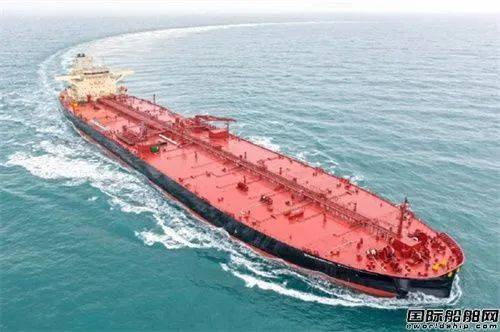
超大型乙烷运输船(VLEC)

Search documents
◆DNV:2025年全球替代燃料船舶订单减少47%◆马士基再度试航红海◆巴尔的摩港将新建一座集装箱码头
Xin Lang Cai Jing· 2026-01-15 14:09
Group 1: Singapore Port Performance - In 2025, Singapore Port's total ship tonnage reached approximately 3.2 billion tons, a year-on-year increase of 3.5% [1][10] - The container throughput was about 44.7 million TEU, showing a significant year-on-year growth of 8.6% [1][10] - The sales volume of marine fuel increased by 3.4% to approximately 56.8 million tons, with alternative marine fuel sales reaching 2 million tons, up from 1.4 million tons in 2024 [1][10] - The total registered tonnage of Singaporean ships grew by 27% to 137.5 million tons, marking a rise to the fourth position globally [1][10] Group 2: Global Shipping Orders - In 2025, global new ship orders decreased from 4,405 in 2024 to 2,403, with alternative fuel ships accounting for 38% of the total tonnage, totaling 275 ships, a 47% decrease [2] - Container ship orders increased from 447 in 2024 to 547 in 2025, representing about 49% of the global new ship tonnage [2] - LNG fuel ships maintained a leading position in the alternative fuel market with 188 orders, accounting for 31% of the global new ship tonnage [2] Group 3: Maersk Operations - Maersk confirmed that one of its cargo ships successfully completed a trial passage through the Red Sea from January 11 to 12 [3][11] - The company emphasized the implementation of necessary safety measures during the passage, although specific details were not disclosed [3][11] Group 4: COSCO Shipping and Peru Post Cooperation - COSCO Shipping and Peru Post signed a memorandum of cooperation to enhance cross-border e-commerce logistics between China and Peru [4][12] - The collaboration aims to improve international transport, postal clearance, and last-mile delivery, thereby boosting the efficiency of cross-border logistics services [4][12] Group 5: Beijing-Xiong'an International Smart Port - The Beijing-Xiong'an International Smart Port's three major train routes have achieved regular operations, facilitating the export of Hebei manufacturing to the world [5][13] - The "Baoding-Qingdao" train route has entered a mature operational phase, maintaining two regular weekly departures [5][13] Group 6: COSCO Shipping's New Vessel Orders - COSCO Shipping announced the order of 12 LNG dual-fuel container ships, each with a capacity of 18,000 TEU, expected to be delivered between 2028 and 2029 [6][14] - The new vessels will replace older ships, optimizing the fleet structure and reducing costs per container [6][14] Group 7: ONGC and Mitsui Partnership - ONGC and Mitsui have signed an agreement to establish a joint venture for the ownership and operation of very large ethane carriers (VLEC), with a total investment of approximately $370 million [7][14] - The new ships are planned to be flagged in India and are expected to be operational by mid-2028 [7][14] Group 8: Baltimore Port Development - The U.S. Army Corps of Engineers has approved the construction of a new container terminal at the former steel mill site in Baltimore [8][15] - The project, named Sparrows Point Container Terminal (SPCT), involves an investment of approximately $1 billion and aims to double the container throughput of Baltimore Port [8][15]
ONGC与MOL组建乙烷运输公司
Zhong Guo Hua Gong Bao· 2026-01-12 03:37
Core Viewpoint - The partnership between ONGC and MOL aims to enhance energy transportation and overall value chain efficiency through the establishment of two joint ventures focused on ethane transportation in India [1] Group 1: Joint Venture Details - ONGC and MOL have signed a joint venture agreement to establish two new entities, Bharat Ethane One IFSC and Bharat Ethane Two IFSC, in India [1] - Each joint venture will be owned 50% by ONGC and 50% by MOL, with ONGC subscribing to 200,000 shares at 100 Indian Rupees per share [1] Group 2: Operational Aspects - The joint ventures will operate one Very Large Ethane Carrier (VLEC) each, flagged under India, specifically for transporting ethane from the United States to India [1] - The transported ethane will supply ONGC's subsidiary, ONGC Petro additions Ltd., which operates a mixed feed steam cracking facility with an annual capacity of 1.1 million tons of ethylene and 400,000 tons of propylene [1] Group 3: Strategic Implications - The collaboration leverages MOL's global shipping expertise and ONGC's regional operational strengths, aiming to improve energy logistics and transportation efficiency [1] - The project has received guidance and support from India's Ministry of Petroleum and Natural Gas and the public asset management department of the Ministry of Finance, indicating strategic governmental backing for ONGC's expansion into energy logistics and specialized shipping [1]
交付新船72艘!上海三大船企年度成绩单
Xin Lang Cai Jing· 2026-01-08 11:44
Core Insights - In 2025, China's shipbuilding industry, represented by China Shipbuilding Group's three major companies, delivered a total of 72 new ships, reinforcing its leading position in the global high-end ship market and facilitating a transition from "scale leadership" to "quality and scale co-leadership" [1][12]. Group 1: High-End Ship Delivery and Structural Optimization - The three major shipbuilding companies in Shanghai achieved batch deliveries in the high-end ship sector, optimizing their product structure towards high technology and high added value, characterized by "stable quantity, improved quality, and structural optimization" [5][16]. - Jiangnan Shipyard delivered 28 ships, including 6 large container ships, 10 very large ethane carriers (VLEC), 3 LNG carriers, and 4 PCTCs, showcasing its dominance in large container and high-end gas transport vessels [5][16]. - Hudong-Zhonghua delivered 15 ships, including 11 LNG carriers and 4 dual-fuel container ships, achieving the highest construction efficiency for NO96-type LNG carriers globally [6][17]. - Waigaoqiao Shipbuilding delivered 29 ships, exceeding its annual target by 7 vessels, with a significant portion of its deliveries being Aframax tankers, which are expected to account for 9.98% of the global fleet [6][17]. Group 2: Technological Innovation and Green Development - The three major shipbuilding companies prioritized technological innovation, aligning with global trends towards green and low-carbon development, and increased R&D investments [7][18]. - Jiangnan Shipyard developed several new ship types that received approval from major international classification societies, including a 19,200 cubic meter LNG carrier and a 19,000 TEU LNG & battery hybrid container ship [8][19]. - Hudong-Zhonghua and Waigaoqiao Shipbuilding also achieved significant certifications for their innovative vessels, enhancing their competitive edge in the market [8][19]. Group 3: Supply Chain and Localization - The companies focused on enhancing the localization of key components in their supply chains, with Jiangnan Shipyard taking on significant projects to ensure core technologies are domestically controlled [9][20]. - Hudong-Zhonghua expanded its supply chain ecosystem, increasing the number of domestic LNG supporting enterprises from over 20 to more than 130, creating a market worth hundreds of billions [9][20]. Group 4: Digital Transformation and Smart Manufacturing - Digital transformation and smart upgrades became strategic foundations for enhancing core competitiveness, with the companies integrating digital technologies across all processes [10][21]. - Jiangnan Shipyard and Hudong-Zhonghua were recognized for their advanced smart factory projects, while Waigaoqiao Shipbuilding achieved a high-level certification for its digital transformation efforts [10][21]. - The shift towards digital and intelligent manufacturing is expected to significantly improve production efficiency and product quality, marking a transition to an "intelligent shipbuilding" era [10][21]. Group 5: Overall Industry Outlook - 2025 marked a year of significant achievements for the three major shipbuilding companies, reflecting the robust strength and responsibility of China's shipbuilding industry [11][22]. - The companies are committed to continuing their focus on technological innovation and digital transformation to support China's transition from a major shipbuilding nation to a strong shipbuilding power [11][22].


创11年新高!三星重工单季盈利超10亿
Sou Hu Cai Jing· 2025-07-26 11:31
Core Viewpoint - Samsung Heavy Industries reported significant growth in Q2 2023, achieving an operating profit of 204.8 billion KRW (approximately 1.5 billion USD), marking a 56.7% year-on-year increase, and the first time in 11 years that quarterly operating profit exceeded 200 billion KRW [2][3] Financial Performance - Q2 2023 revenue reached 26,830 billion KRW (approximately 19 billion USD), a 6% increase year-on-year [2] - Operating profit margin improved from 5.2% in Q2 2022 to 7.6% in Q2 2023, a 2.4 percentage point increase [2] - For the first half of 2023, total revenue was 51,773 billion KRW (approximately 36.7 billion USD), with an operating profit of 327.9 billion KRW (approximately 2.3 billion USD), reflecting a 57.2% increase year-on-year [3] Order Intake and Future Outlook - As of now, Samsung Heavy Industries has secured new ship orders totaling 19 vessels worth 3.3 billion USD, achieving 34% of its annual order target of 9.8 billion USD [3] - The company anticipates strong demand for LNG carriers and large ethane carriers (VLEC) in the medium to long term, alongside a growing need for new orders in container ships and oil tankers due to aging fleets [4] - Samsung Heavy Industries is focusing on high-value ship orders and plans to enhance management and production efficiency to maintain performance improvement [5] Strategic Goals - The company aims to achieve an operating profit of 630 billion KRW (approximately 0.47 billion USD) and total revenue of 10.5 trillion KRW (approximately 8.1 billion USD) for the year [5] - By 2025, Samsung Heavy Industries targets a 6% operating profit margin, with projections of 2.9% in 2023 and 5.1% in 2024 [6]
13亿!造船巨头再获希腊船东油船订单
Sou Hu Cai Jing· 2025-05-08 07:14
Group 1 - HD Hyundai Heavy Industries announced a contract for the construction of two Suezmax oil tankers with a total value of 251.1 billion KRW (approximately 180 million USD) [2] - The unit price for each tanker is approximately 90 million USD, which has increased by 2 million USD compared to a previous contract due to the appreciation of the Korean won against the US dollar [2] - The company has secured a total of 53 new ship orders worth 6.49 billion USD (approximately 47.2 billion RMB) this year, achieving about 36% of its annual order target of 18.05 billion USD (approximately 132 billion RMB) [3] Group 2 - The global oil tanker market is expected to strengthen by 2025, with a projected 2.7% increase in global seaborne oil trade volume [3] - The demand for oil tanker capacity is anticipated to grow by 3.2% due to factors such as increased oil exports from the Atlantic region to Asia and ongoing shipping reroutes caused by geopolitical events [3] - HD Hyundai Heavy Industries has extensive experience in building oil tankers, with its Suezmax tankers recognized as "world-class products" in South Korea since 2007 [3]