智能造船

Search documents
交付新船72艘!上海三大船企年度成绩单
Xin Lang Cai Jing· 2026-01-08 11:44
Core Insights - In 2025, China's shipbuilding industry, represented by China Shipbuilding Group's three major companies, delivered a total of 72 new ships, reinforcing its leading position in the global high-end ship market and facilitating a transition from "scale leadership" to "quality and scale co-leadership" [1][12]. Group 1: High-End Ship Delivery and Structural Optimization - The three major shipbuilding companies in Shanghai achieved batch deliveries in the high-end ship sector, optimizing their product structure towards high technology and high added value, characterized by "stable quantity, improved quality, and structural optimization" [5][16]. - Jiangnan Shipyard delivered 28 ships, including 6 large container ships, 10 very large ethane carriers (VLEC), 3 LNG carriers, and 4 PCTCs, showcasing its dominance in large container and high-end gas transport vessels [5][16]. - Hudong-Zhonghua delivered 15 ships, including 11 LNG carriers and 4 dual-fuel container ships, achieving the highest construction efficiency for NO96-type LNG carriers globally [6][17]. - Waigaoqiao Shipbuilding delivered 29 ships, exceeding its annual target by 7 vessels, with a significant portion of its deliveries being Aframax tankers, which are expected to account for 9.98% of the global fleet [6][17]. Group 2: Technological Innovation and Green Development - The three major shipbuilding companies prioritized technological innovation, aligning with global trends towards green and low-carbon development, and increased R&D investments [7][18]. - Jiangnan Shipyard developed several new ship types that received approval from major international classification societies, including a 19,200 cubic meter LNG carrier and a 19,000 TEU LNG & battery hybrid container ship [8][19]. - Hudong-Zhonghua and Waigaoqiao Shipbuilding also achieved significant certifications for their innovative vessels, enhancing their competitive edge in the market [8][19]. Group 3: Supply Chain and Localization - The companies focused on enhancing the localization of key components in their supply chains, with Jiangnan Shipyard taking on significant projects to ensure core technologies are domestically controlled [9][20]. - Hudong-Zhonghua expanded its supply chain ecosystem, increasing the number of domestic LNG supporting enterprises from over 20 to more than 130, creating a market worth hundreds of billions [9][20]. Group 4: Digital Transformation and Smart Manufacturing - Digital transformation and smart upgrades became strategic foundations for enhancing core competitiveness, with the companies integrating digital technologies across all processes [10][21]. - Jiangnan Shipyard and Hudong-Zhonghua were recognized for their advanced smart factory projects, while Waigaoqiao Shipbuilding achieved a high-level certification for its digital transformation efforts [10][21]. - The shift towards digital and intelligent manufacturing is expected to significantly improve production efficiency and product quality, marking a transition to an "intelligent shipbuilding" era [10][21]. Group 5: Overall Industry Outlook - 2025 marked a year of significant achievements for the three major shipbuilding companies, reflecting the robust strength and responsibility of China's shipbuilding industry [11][22]. - The companies are committed to continuing their focus on technological innovation and digital transformation to support China's transition from a major shipbuilding nation to a strong shipbuilding power [11][22].


广船国际全球合作伙伴大会在广州南沙举行
Xin Lang Cai Jing· 2025-12-24 10:32
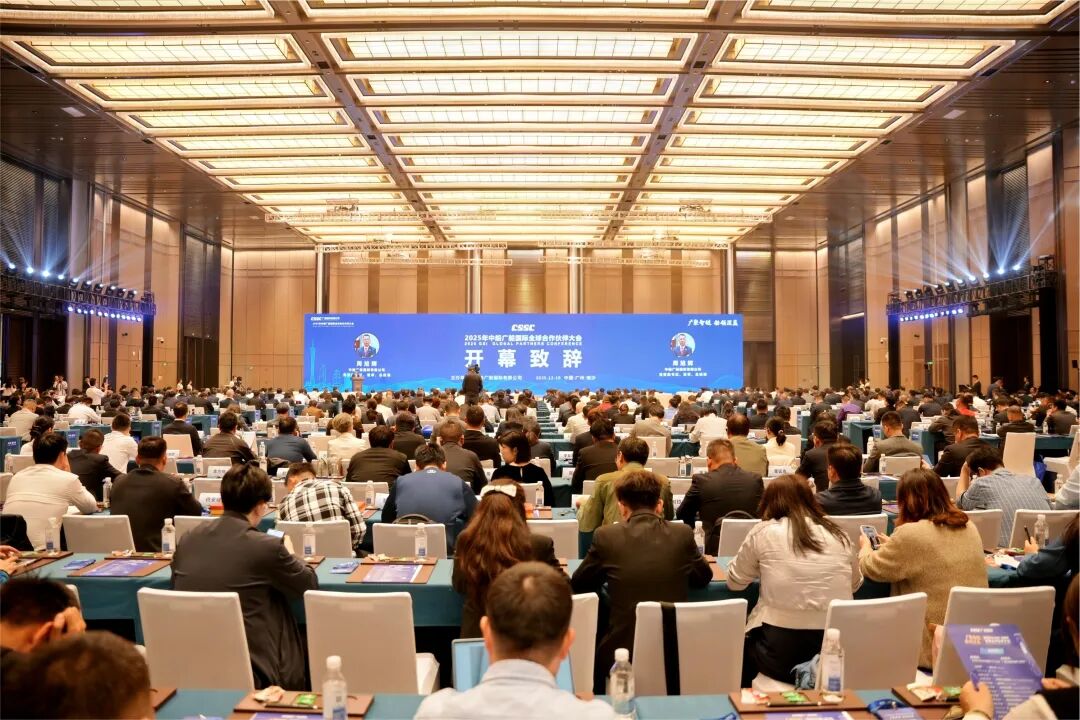
Core Insights - The 2025 Global Partner Conference held by China Shipbuilding Group's Guangzhou Shipyard International focused on themes of green shipping, intelligent shipbuilding, and industrial chain construction, gathering nearly 700 industry elites to contribute to the high-quality development of the shipbuilding industry [1][7]. Group 1: Conference Highlights - Keynote speeches were delivered by representatives from various institutions, including the China Shipbuilding Group's Economic Operation Department and the Guangzhou Nansha Development Zone Management Committee, discussing market trends, supply chain construction, and new shipbuilding market outlooks [3][9]. - The conference emphasized that the green transition has evolved from a "mandatory question" to a "race question," with the answer being "cooperation and win-win" [3][9]. - The conference called for companies to focus on building a smart supply chain for marine equipment and to create a new high ground for talent aggregation in the marine equipment sector [3][9]. Group 2: Awards and Recognition - Guangzhou Shipyard International awarded titles such as "Outstanding Channel Partner," "Strategic Cooperation Partner for Talent Cultivation," and recognized "Outstanding Suppliers" and "Outstanding Service Engineers" during the conference [4][10]. - As a key modern shipbuilding enterprise in South China, Guangzhou Shipyard International aims to be a "leader in high-end ships" and has developed a diversified industrial structure under the "Marine Power" strategy, establishing an international brand pattern with various ship types [4][10]. - The company is projected to achieve record highs in its main operating indicators by 2025 [4][10].
全球造船业“向东看” 长三角船厂成“引力场”
Zhong Guo Xin Wen Wang· 2025-12-08 09:21
Core Insights - The global shipbuilding industry is increasingly shifting towards China, with Chinese shipyards capturing 64.2% of new global ship orders as of mid-2023, maintaining the world's largest market share for 16 consecutive years [1] - The three major shipyards in Shanghai—Waigaoqiao Shipbuilding, China State Shipbuilding Corporation Jiangnan Shipyard, and Hudong-Zhonghua Shipbuilding—are projected to deliver 69 ships and receive 128 new orders in 2024, marking a year-on-year increase of 19% and 70% respectively [1] - The focus on high-value ship types is evident, with over 95% of the orders held by these shipyards being high-value vessels [1] Industry Trends - The shift of the shipbuilding industry towards the East is attributed to a reordering of industrial competitiveness, with European shipbuilding facing challenges due to labor shortages and rising costs [1] - Chinese shipbuilding is leveraging breakthroughs in smart transformation, which have created key opportunities for capturing global market share [1][2] - Traditional shipyards are struggling with low production efficiency due to a lack of R&D capabilities and outdated operational models, prompting a transformation towards digitalization and AI integration [2] Technological Advancements - Several shipyards in the Yangtze River Delta are innovating by integrating industrial internet and AI into the shipbuilding process, enhancing efficiency and quality [2] - Waigaoqiao Shipbuilding utilizes AI for logistics management, while Jiangnan Shipyard employs machine vision and AI algorithms to detect welding defects, reducing manual labor by approximately 50% [2] - The introduction of AI in design and production is expected to significantly shorten project cycles, exemplified by the second large cruise ship project, which is anticipated to be completed over six months faster than the first [2] Market Dynamics - "Green" and "smart" are emerging as key factors influencing shipowners' order decisions, with Yangtze River Delta shipyards focusing on high-end categories such as large container ships and energy transport vessels [3] - By mid-2023, China had secured nearly 70% of global green ship orders, achieving full coverage of mainstream ship types [4] - Hudong-Zhonghua has developed a series of green ship design solutions and showcased advanced products at the recent maritime exhibition, including the world's largest LNG ship [4] - The shipbuilding quality from Chinese manufacturers is improving, enhancing their reputation in the global shipping industry [4]


手持订单排到2029年!这家船企何以赢得全球客户青睐?|活力中国调研行
Di Yi Cai Jing· 2025-09-23 10:47
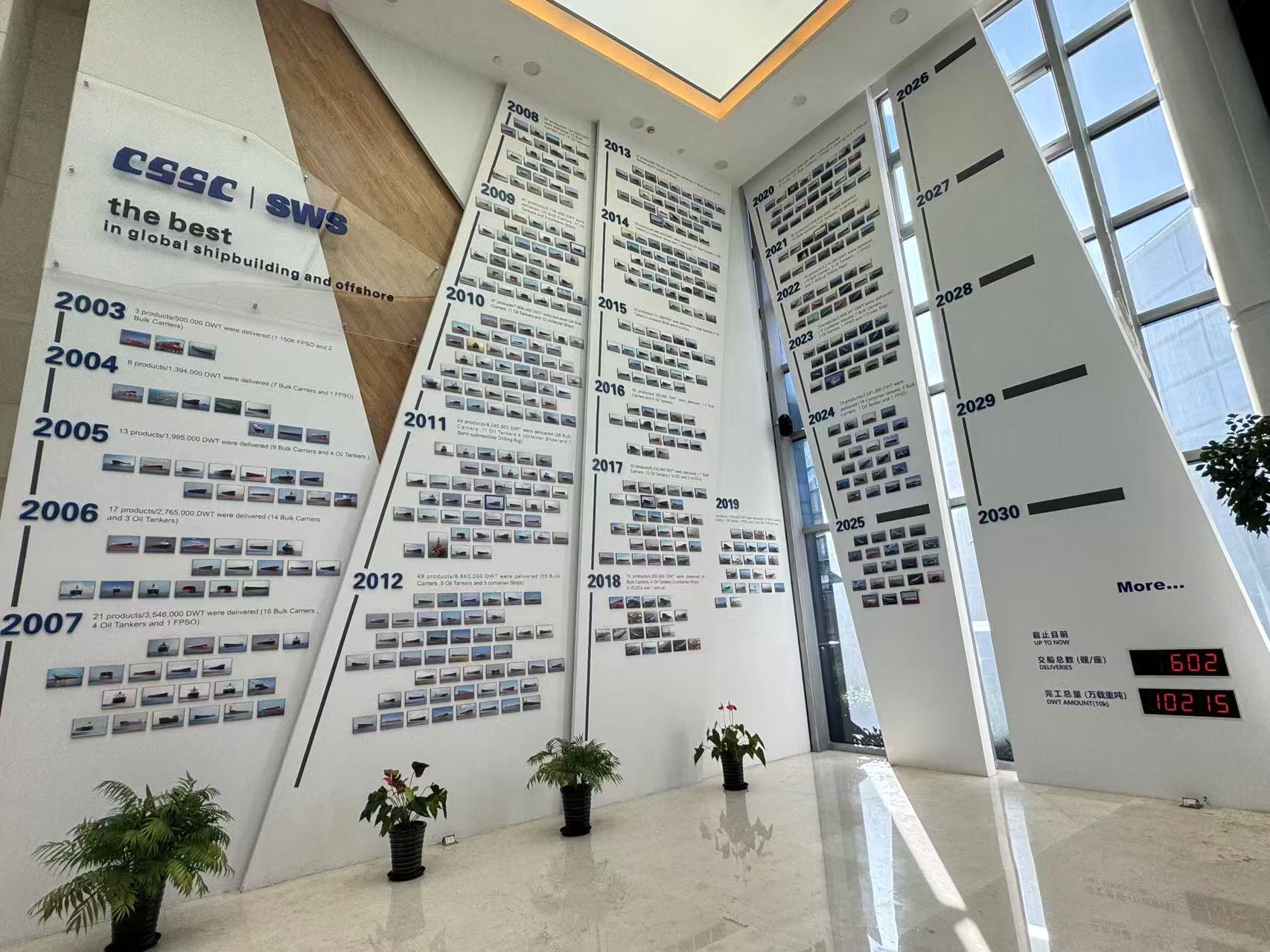
Core Viewpoint - The company is undergoing a transformation in its product structure, focusing on green and intelligent shipbuilding, while expanding its product offerings to include high-value vessels such as luxury cruise ships and large container ships [1][3][5]. Group 1: Product Structure Transformation - The company has evolved from primarily building bulk carriers and oil tankers to a diversified product range that includes luxury cruise ships, large container ships, and specialized vessels [3][5]. - The first domestically built large cruise ship, "Aida·Magic City," was successfully delivered on November 4, 2023, marking a significant milestone in China's cruise ship construction technology [3][5]. - The company has delivered a total of 602 vessels, amounting to 10.12 million deadweight tons [1]. Group 2: Green and Intelligent Shipbuilding - The company is transitioning from traditional single-fuel diesel engines to dual-fuel systems, incorporating ammonia and methanol fuels to meet stricter carbon emission regulations [5][6]. - The company has developed the "SWS-TIME" digital shipbuilding platform, which integrates various management processes and allows employees to track their tasks and progress via mobile devices [6][7]. Group 3: Export and Market Opportunities - The company's foreign trade export volume has exceeded $40 billion, with projections of $2 billion in annual exports for 2023, 2024, and 2025 [7]. - The current order book is heavily weighted towards container ships, which account for about half of the orders, alongside oil tankers and car carriers [7]. Group 4: Smart Warehouse Management - The company has implemented an intelligent warehouse system that automates the storage and retrieval of heavy materials, significantly improving efficiency [10][12]. - The intelligent warehouse, operational since October 2023, covers an area of 6,000 square meters and utilizes advanced technologies for real-time inventory management [10][12]. - The "cloud unpacking" method allows for remote inspection of materials, enhancing flexibility and efficiency in the verification process [11].