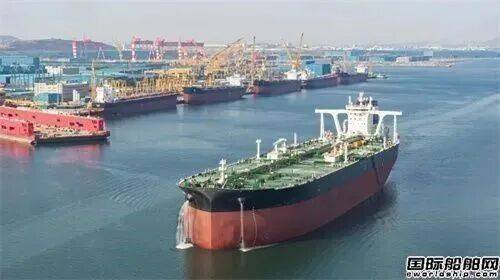
超大型原油运输船(VLCC)

Search documents
神秘韩国富二代,成伊朗战争大赢家?战前扫货全球近40%超大油轮
华尔街见闻· 2026-03-15 10:37
Core Viewpoint - The article highlights how Ga-Hyun Chung's Sinokor Group has emerged as a significant winner in the global energy market amidst the ongoing Iran conflict, primarily due to its strategic acquisition of a large fleet of Very Large Crude Carriers (VLCCs) before the outbreak of war [1][4]. Group 1: Strategic Moves and Market Impact - Sinokor rapidly acquired or leased a substantial number of VLCCs, controlling approximately 150 vessels by the end of February, which accounted for nearly 40% of the global VLCC fleet that was not under sanctions or occupied [1][5]. - The daily rental rate for Sinokor's supertankers in the Persian Gulf surged to $500,000, marking a nearly tenfold increase compared to the same period last year [2]. - The average one-year rental rate for VLCCs exceeded $100,000 per day, reaching a historical high since records began in 1988 [3]. Group 2: Acquisition Details and Market Conditions - Sinokor's aggressive purchasing strategy involved acquiring VLCCs at an average price of $88 million per vessel, which stirred significant market speculation regarding the financial backing behind these acquisitions [6]. - The timing of Sinokor's fleet expansion was particularly astute, as the global tanker market was already tightening due to sanctions and increased oil transport demand [6]. Group 3: Leadership and Company Background - Ga-Hyun Chung, the low-profile heir of a prominent shipping family, has taken a more aggressive approach compared to his father, who was well-known in the industry [7][12]. - Chung is known for making key decisions personally and prefers to communicate through WhatsApp groups, indicating a hands-on management style [9][10]. Group 4: Financial Gains from the Conflict - Following the outbreak of war, Sinokor's preemptive positioning allowed it to capitalize on the demand for floating storage, with its VLCCs becoming highly sought-after assets [14][15]. - The company quoted rates of approximately $20 per barrel for transporting oil from the region to China, a significant increase from last year's average of about $2.5 per barrel [15]. - Sinokor's vessels are projected to recoup their acquisition costs in less than six months based on current rental rates [15]. Group 5: Future Outlook and Uncertainties - Despite the short-term financial success, the long-term sustainability of Sinokor's strategy is uncertain due to potential declines in global oil transport volumes as the conflict evolves [18]. - The ongoing situation in the Strait of Hormuz and the need for time to adjust shipping routes may continue to support high freight rates, benefiting Sinokor and similar shipowners [19].

一代人仅见的油轮豪赌,让这家韩国船企掌控了定价权
Sou Hu Cai Jing· 2026-02-27 03:50
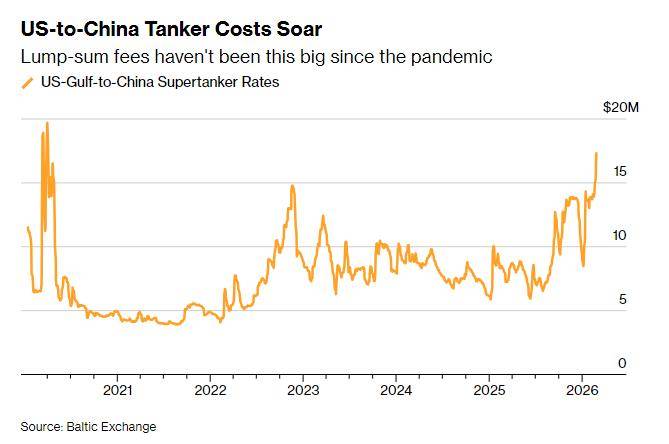
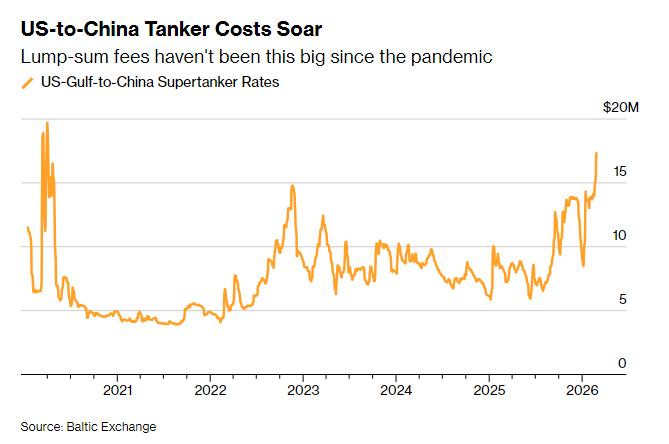
Core Viewpoint - A shipping magnate's significant investment in the oil tanker market has led to unprecedented control over the fleet of very large crude carriers (VLCCs), significantly impacting rental rates and market dynamics [1]. Group 1: Market Control - Sinokor, supported by Mediterranean Shipping Company (MSC), has acquired a substantial number of VLCCs, dominating the available fleet for immediate rental [1]. - In the Gulf of Mexico, nearly all VLCCs available for charter are now under Sinokor's control, indicating a clear market dominance [1]. - Signal Ocean's data shows that Sinokor controls approximately 40% of the global fleet of unregulated and uncontracted VLCCs, further solidifying its market position [4]. Group 2: Rental Rates - The rental rate for VLCCs from the Gulf of Mexico to China has surged to over $17.3 million, marking a new high since 2020 [1]. - As Sinokor holds a significant portion of the available capacity, it has greater leverage in setting rental prices [1]. - A recent transaction involved a VLCC being chartered for $18 million for a journey from the Gulf of Mexico to China, indicating ongoing upward pressure on rates [5]. Group 3: Market Dynamics - The current market situation is characterized by a lack of alternative vessels, making it challenging for clients seeking to rent empty ships [2]. - The tight supply of VLCCs has led to discussions about using smaller vessels for transporting the same volume of oil, as costs may be lower than using a single large tanker [5]. - The CEO of International Seaways noted that Sinokor's acquisitions represent a fundamental shift in the structure of shipowners, suggesting long-term implications for the industry [5].
一代人仅见的油轮豪赌 让这家韩国船企掌控了定价权
Zhi Tong Cai Jing· 2026-02-27 03:33
Core Viewpoint - A significant bet by a shipping tycoon has led to unprecedented control over the oil tanker market, with the majority of supertankers available for loading in the U.S. next month under their command [1] Market Dynamics - Sinokor, supported by Mediterranean Shipping Company (MSC), has acquired a substantial number of Very Large Crude Carriers (VLCCs), disrupting the global charter market and driving tanker rental rates to multi-year highs [1] - The Gulf of Mexico, a major U.S. oil export region, has seen nearly all available supertankers fall under Sinokor's control, indicating a dominant market position [1] - Current estimates suggest that Sinokor controls approximately 150 tankers, nearly 40% of the global fleet of unregulated and uncontracted available tankers [4] - The rental rate for supertankers from the Gulf of Mexico to China has surpassed $17.3 million, marking a new high since 2020, reflecting Sinokor's significant influence on pricing [1][4] Industry Implications - The current market situation is characterized by a lack of alternative vessels, making it challenging for clients seeking to charter empty tankers [2] - As tanker capacity tightens, there is a potential shift towards using two smaller vessels for transporting the same cargo, which may be more cost-effective than a single large tanker [5] - Industry experts anticipate that freight rates will continue to rise, with reports of a recent charter at $18 million for a supertanker from the Gulf to China [5] - The acquisition strategy of Sinokor represents a fundamental shift in the structure of shipowners, indicating a lasting change in the market landscape [5]
未知机构:中金交运油运市场更新VLCC现货运价保持20万美元天沙特Bahri租船-20260227
未知机构· 2026-02-27 02:20
Summary of Conference Call Notes Industry Overview - The notes focus on the oil shipping market, specifically the Very Large Crude Carriers (VLCC) segment, highlighting recent developments in shipping rates and demand dynamics [1][2]. Key Points - The latest TCE (Time Charter Equivalent) for the VLCC route from the Middle East to China (TD3C) has increased by 5% to $206,000 per day [1]. - The Saudi Arabian national oil shipping company, Bahri, has preliminarily chartered at least five super tankers, indicating a strong demand for these large vessels amid rising charter costs [1][2]. - Bahri has completed the chartering of two of the five VLCCs, with additional vessels confirmed through broker reports, expected to transport crude oil from the region to Asia in the coming weeks [2]. - Typically, shipping companies only charter external vessels when their own fleet is insufficient to meet cargo demands, suggesting a strategic response to increased shipping needs [3]. - Saudi Arabia has initiated a large new natural gas project, which may lead to an increase in crude oil exports, as there are already signs of rising oil shipment volumes from the country [3]. Additional Insights - The rising charter costs and Bahri's actions are closely monitored by the oil market for insights into Saudi oil flow [2]. - There is a positive outlook for specific shipping segments, including oil shipping, dry bulk, and small container shipping, with particular interest in companies such as COSCO Shipping Energy Transportation, China Merchants Energy Shipping, Seaspan Corporation, and Zhonggu Logistics [3].
美伊冲突风险叠加“有人垄断1/3运力”,全球油轮费率飙升创六年新高
Hua Er Jie Jian Wen· 2026-02-26 03:01
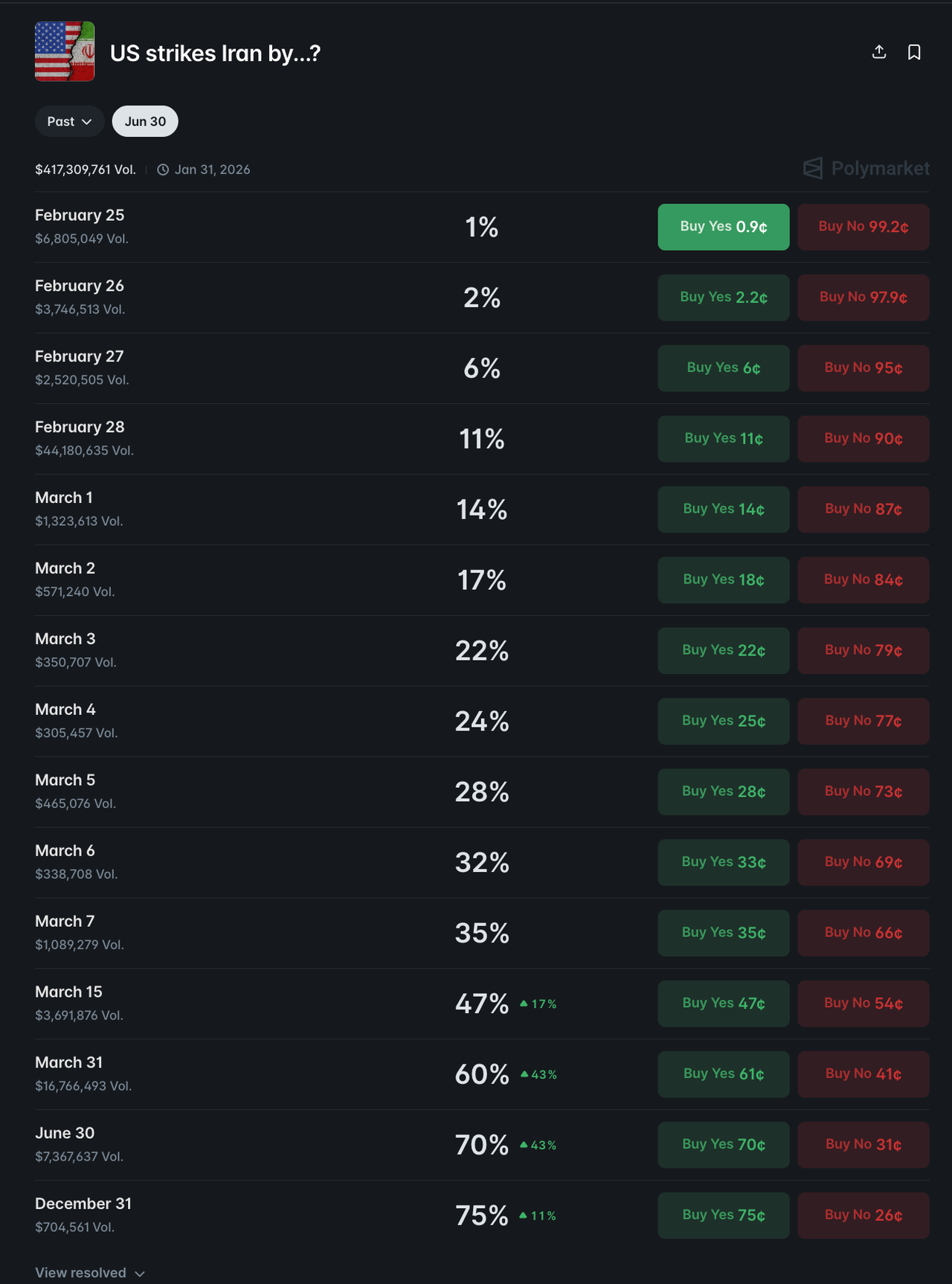
Core Viewpoint - The global Very Large Crude Carrier (VLCC) market is experiencing its most severe rate shock in six years, driven by a combination of war risk premiums and an unprecedented wave of fleet consolidation, pushing freight rates to historical highs and impacting physical crude oil prices and the entire tanker market [1]. Group 1: Freight Rate Surge - Saudi Arabia's national shipping company Bahri recently chartered five VLCCs at a daily rate of $200,000, marking the highest level recorded in six years, with one vessel, DHT Jaguar, achieving a rate of $208,000 per day [1]. - The market is pricing in a 47% probability of the U.S. striking Iran before March 15, reflecting heightened concerns over the risk of closure of the Strait of Hormuz, which is being factored into freight rates and Brent crude futures, currently above $70 per barrel [1][7]. Group 2: Market Concentration - The South Korean Sinokor Group has rapidly acquired or chartered a significant number of vessels, controlling approximately 120 VLCCs, which represents about one-third of the global tradable VLCC fleet [3][9]. - This concentration of control is reshaping the global tanker pricing mechanism, as noted by SFL Corp's CEO, who highlighted that a single entity or group controls a substantial portion of the available VLCC fleet [3]. Group 3: Geopolitical Risks - The Strait of Hormuz has re-emerged as a critical geopolitical risk factor in the global energy market, with the potential for military action by the U.S. against Iran contributing to the war risk premium being incorporated into VLCC rental quotes [4][6]. - The expectation of military action has led to a rapid increase in war risk insurance premiums, which are now reflected in VLCC rental prices [6]. Group 4: Supply and Demand Dynamics - Multiple fundamental drivers are contributing to the rising VLCC freight rates, including the shift of Venezuelan oil from "dark fleet" transport to compliant vessels, increased OPEC+ production, and Indian refineries' demand for Middle Eastern crude over Russian oil [10]. - VLCC benchmark daily earnings have surpassed $120,000, increasing more than fourfold in the past month, marking the strongest start to a year for oil tanker earnings in over 30 years [10].
中东出口激增遇上美伊对峙:油运成本飙升至17万美元,创六年新高
Zhi Tong Cai Jing· 2026-02-24 11:48
Core Viewpoint - The surge in oil exports from the Middle East, coupled with the potential military conflict risks between the U.S. and Iran, has led to a significant increase in oil transportation costs, reaching a six-year high of over $170,000 per day for Very Large Crude Carriers (VLCC) [1] Group 1: Oil Transportation Costs - The cost of chartering a VLCC to transport up to 2 million barrels of oil from the Middle East to China has more than doubled since the beginning of the year, now exceeding $170,000 per day, the highest level since April 2020 [1] - The increase in shipping costs is attributed to a combination of rising oil export volumes from the Middle East and heightened demand from refiners, particularly in India, which has shifted from Russian to Middle Eastern oil [1] Group 2: Market Dynamics - The VLCC freight rates are influenced by various positive fundamental factors, including the transition of Venezuelan oil transport from shadow fleets to legitimate shipping, OPEC+ production increases, and strong demand from Indian refineries [1] - The Suezmax and Aframax tanker markets are expected to be impacted by spillover effects from the black oil transportation market, which involves smaller tankers [2] Group 3: War Risk and Insurance - The potential for U.S. military action against Iran could lead to increased transportation costs due to heightened war risk insurance premiums, especially if Iran retaliates by disrupting the Strait of Hormuz [3] - The perception of risk can lead to rapid re-pricing of freight rates, with shipowners demanding compensation before docking in the region and charterers accelerating bookings to mitigate uncertainties [3] Group 4: Fleet Dynamics - The global VLCC fleet is shrinking as hundreds of older vessels are sold to shadow fleets, which transport oil from sanctioned countries like Iran and Russia [3] - South Korean shipping group Sinokor has recently become a major buyer of VLCCs, reducing the overall supply in the open market and allowing shipowners to increase typical 30-day charter rates [4] Group 5: Market Concentration - Sinokor currently controls approximately 78 VLCCs in the active spot market, with expectations to increase this number to at least 88 within the quarter, potentially exceeding 100 vessels [6] - At 88 vessels, Sinokor would become the largest commercial operator in the VLCC sector, accounting for 24% of the spot trading fleet and 12% of the global VLCC fleet, indicating unprecedented market concentration for a single entity [6] Group 6: Future Outlook - The overall VLCC market is expected to remain strong, enabling operators to charge higher freight rates [7] - However, high freight rates may impact refining profitability, potentially triggering a reduction in fleet demand [7]
豪赌超级油轮,震动全球石油市场
Xin Lang Cai Jing· 2026-02-16 16:57
Core Viewpoint - The oil tanker market is experiencing significant disruption due to aggressive acquisitions by South Korea's Sinokor Group, which has rapidly gained control of approximately 120 Very Large Crude Carriers (VLCCs) [1][7][9] Group 1: Market Dynamics - Sinokor's acquisitions have led to a surge in freight rates, causing panic among charterers who fear that concentrated ownership will lead to further price increases [2][9] - The global oil tanker market is characterized by a limited supply of available vessels due to long-term charters and sanctions on ships involved in illegal oil trades [2][8] - The demand for non-sanctioned oil tankers has surged due to an influx of crude oil into the global market, further tightening supply and driving up usage rates and earnings [4][11] Group 2: Financial Implications - The benchmark earnings for VLCCs have exceeded $120,000 per day, a more than fourfold increase from a month ago, largely attributed to Sinokor's activities [5][11] - Sinokor's recent acquisitions are estimated to have cost between $1.5 billion and $3 billion, indicating a substantial financial commitment to expanding its fleet [14] - The consolidation of ownership in the tanker market is changing pricing mechanisms and creating pressure on the availability of vessels [11][12] Group 3: Industry Trends - The current market is witnessing a "fundamental shift" in ownership consolidation, with a significant portion of the global VLCC fleet now controlled by a few entities [4][11] - The rise in tanker orders has reached a ten-year high, driven by the recent increase in freight rates [13] - Sinokor's focus on acquiring older vessels (aged 10 years and above) has led to rising resale prices for these supertankers, which may support long-term charter rates [12]
“有组织控制了全球三分之一的超级油轮”
Hua Er Jie Jian Wen· 2026-02-16 13:31
Core Insights - A historic acquisition spree by South Korea's Sinokor Group is shaking the global oil transportation market, with the company rapidly acquiring or leasing around 120 Very Large Crude Carriers (VLCCs) [1][2] - The acquisition is reportedly backed by global shipping giant Gianluigi Aponte, founder of Mediterranean Shipping Company (MSC), although the exact relationship between Sinokor and MSC remains unclear [1][4] - This aggressive acquisition has led to market panic, with charterers rushing to book space to avoid rising costs, resulting in a significant spike in freight rates [1][2] Market Concentration - The oil tanker market, crucial yet niche in global oil trade, has historically been dominated by shipowners from Greece, Norway, and major oil-producing countries like Saudi Arabia [2] - Sinokor, traditionally known for container shipping, is now seen as a major player, with its current acquisition activity surpassing any previous efforts [2] - The scale of the acquisitions is difficult to quantify, but it is described as a fundamental shift in global fleet ownership, impacting spot market freight rates and the availability of vessels [2][3] Freight Rate Surge - The acquisition wave has caused VLCC benchmark earnings to exceed $120,000 per day, a more than fourfold increase in the past month, attributed in part to Sinokor's transactions [2][3] - Older vessels, particularly those over 10 years old, are seeing rising resale prices, which in turn is pushing up long-term charter costs [3] Strategic Moves by Shipping Giants - Gianluigi Aponte's acquisition strategy is part of a broader expansion of his global shipping empire, having previously outpaced Maersk to become the largest container shipping company [4] - Aponte's financial backing is crucial in this unprecedented market consolidation, occurring amid tightening market fundamentals [5] Financial Implications - The estimated cost of Sinokor's acquisition spree is around $1.5 billion, with some market participants suggesting it could be close to $3 billion [5] - The current high freight rates are beginning to drive an increase in tanker orders, with the percentage of orders relative to the current fleet reaching a ten-year high [5]
钢材&铁矿石日报:产业矛盾累积,钢矿偏弱运行-20260213
Bao Cheng Qi Huo· 2026-02-13 08:55
1. Report Industry Investment Rating - No information provided regarding the report industry investment rating 2. Core Views - **螺纹钢**: The main contract price fluctuated and recorded a daily increase of 0.13%. The pre - holiday situation of weak supply and demand remained unchanged. The fundamental contradictions of rebar continued to accumulate, inventory increased significantly, and steel prices continued to be under pressure. The positive factors were policy expectations and cost support. It was expected to continue the weak bottom - seeking trend. Attention should be paid to the inventory accumulation during the holiday and the resumption rhythm of short - process steel mills after the holiday [5]. - **热轧卷板**: The main contract price fluctuated and recorded a daily decline of 0%. The supply pressure of hot - rolled coils did not subside, while demand continued to weaken seasonally. The fundamentals were weak, and prices continued to be under pressure. The positive factor was the post - holiday policy expectation. It was expected to continue the weak and volatile operation. Attention should be paid to the inventory accumulation during the holiday and the demand recovery after the holiday [5]. - **铁矿石**: The main contract price declined weakly, recording a daily decline of 2.36%. Currently, iron ore demand improved, while supply contracted in the short term. The fundamentals of ore changed, but the sustainability of the improvement was questionable. Under the weak reality, ore prices continued to decline under pressure. Attention should be paid to the inventory accumulation of finished products during the holiday and the shipping situation of mines [5]. 3. Summary by Directory 3.1 Industry Dynamics - **Real Estate**: In January, the month - on - month decline in the sales prices of new commercial residential buildings in first - tier cities was 0.3%, the same as last month; the decline in second - tier cities was 0.3%, narrowing by 0.1 percentage points; the decline in third - tier cities was 0.4%, the same as last month. The month - on - month decline in second - hand residential sales prices in first - tier cities was 0.5%, narrowing by 0.4 percentage points; the declines in second - and third - tier cities were 0.5% and 0.6% respectively, narrowing by 0.2 and 0.1 percentage points [7]. - **Shipbuilding**: Hengli Shipbuilding (Dalian) Co., Ltd., a subsidiary of Guangdong Songfa Ceramics Co., Ltd., signed contracts for 17 ships, with a contract value of approximately 1.6 - 1.8 billion US dollars (about 11.041 - 12.421 billion RMB) [8]. - **Steel**: Fujian Province announced the list of restricted smelting equipment of steel enterprises subject to differential electricity prices in 2026 [9]. 3.2 Spot Market - **Steel Products**: The national average prices of rebar (HRB400E, 20mm) and hot - rolled coils (4.75mm) were 3,304 yuan and 3,279 yuan respectively. The price of Tangshan billets was 2,900 yuan, and the price of Zhangjiagang heavy scrap was 2,160 yuan. The spread between hot - rolled coils and rebar was 50 yuan, and the spread between rebar and scrap was 1,030 yuan [10]. - **Iron Ore**: The price of PB powder at Shandong ports was 746 yuan, and the price of Tangshan iron concentrate was 767 yuan. The sea freight from Australia and Brazil was 8.81 yuan and 23.39 yuan respectively. The SGX swap price was 100.05, and the iron ore price index (61% FE, CFR) was 99.60 [10]. 3.3 Futures Market | Variety | Closing Price | Change (%) | Volume | Open Interest | | --- | --- | --- | --- | --- | | Rebar | 3,055 | 0.13 | 555,957 | 1,942,442 | | Hot - Rolled Coils | 3,222 | 0.00 | 277,887 | 1,482,223 | | Iron Ore | 746.0 | - 2.36 | 239,453 | 494,550 | [12] 3.4 Related Charts - **Steel Inventory**: The report presented the weekly changes and total inventory (steel mills + social inventory) of rebar and hot - rolled coils [14][15][20]. - **Iron Ore Inventory**: It showed the inventory of 45 ports, 247 steel mills, and domestic mines, including inventory and its seasonal changes and month - on - month changes [24][25][26]. - **Steel Mill Production**: The report included the blast furnace operating rate, capacity utilization rate, profitability ratio of 247 steel mills, and the operating rate and profitability of 94 independent electric - arc furnace steel mills [29][31][33]. 3.5 Market Outlook - **螺纹钢**: Supply and demand continued to weaken, inventory increased significantly, and short - process steel mills significantly reduced production. The weekly output of rebar decreased by 22.52 tons. Demand was also weak, and the high - frequency demand index was at the lowest level in the same lunar calendar period in recent years. It was expected to continue the weak bottom - seeking trend [37]. - **热轧卷板**: Supply and demand continued to weaken seasonally, inventory increased, and the weekly output of hot - rolled coils decreased by 1.40 tons. Demand continued to weaken, and the weekly apparent consumption decreased by 9.35 tons. It was expected to continue the weak and volatile operation [38]. - **铁矿石**: The supply - demand pattern changed. Steel mills resumed production before the holiday, and ore terminal consumption continued to rise. However, steel mill profitability was poor, and the increase in ore demand was limited. Overseas supply contracted in the short term, but the sustainability was weak. Ore prices continued to decline under pressure [39].
两型4艘!民营造船新巨头再获油船订单
Sou Hu Cai Jing· 2026-02-07 13:30
Group 1 - Guangdong Songfa Ceramics Co., Ltd. announced that its subsidiary, Henglai Shipbuilding (Dalian) Co., Ltd., signed contracts for the construction of 2 VLCCs and 2 Suezmax oil tankers, with a total contract value of approximately $2-3 billion (RMB 13.88-20.81 billion) [2] - The 2 VLCCs, each with a deadweight tonnage of 306,000 tons, are ordered by a well-known shipowner from Singapore, with specific details about the shipowner exempted from disclosure [2] - The 2 Suezmax oil tankers, each with a deadweight tonnage of 158,000 tons, are ordered by Greek shipowner Minerva Marine, with a total contract value of approximately $1.6-2 billion (RMB 11.10-13.88 billion) [2] Group 2 - Minerva Marine, founded in 1996 in Athens, Greece, is a family-owned private shipping company focusing on oil tanker operations and has recently ordered 6 LR2 product oil tankers from Henglai Heavy Industry [3] - Henglai Heavy Industry has received over 20 new ship orders this year, including 12 VLCCs and 2 Suezmax oil tankers, marking a significant increase in its order book [3] Group 3 - Henglai Heavy Industry, formerly STX Dalian, was established to create a world-class high-end shipbuilding base, having invested RMB 2.11 billion to acquire the assets of the former STX Dalian shipyard [4] - The company aims to achieve an annual production capacity of 150 large vessels and 180 marine engines, becoming the largest and most comprehensive shipbuilding base globally upon full production [4] - As of now, Henglai Heavy Industry holds a total of 219 ships with a deadweight tonnage of 35.69 million tons in its order book, with delivery schedules extending to 2029 [4]