
超极合生汇

Search documents
城市更新昌平实践:从“心”开始 向“新”而行
Bei Jing Ri Bao Ke Hu Duan· 2026-02-07 07:19
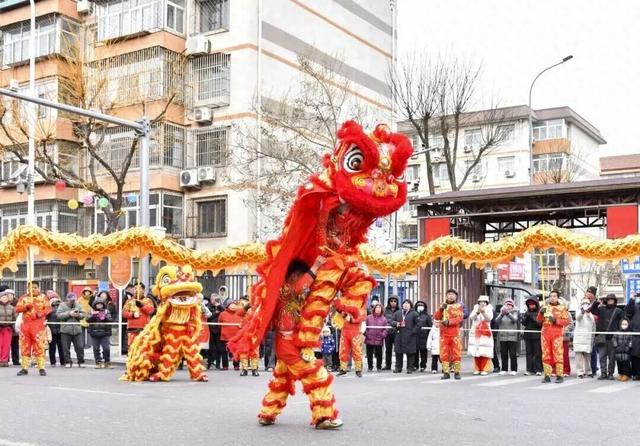
2月6日,城南街道"烟火昌盛"小街年货大集热闹开市。舞龙舞狮、魔术表演,55个小吃摊位烟火气十 足,市民漫步小街,感受浓浓年味儿。在兴寿辛庄村,村民和创客们正在紧锣密鼓地进行"村晚"彩排, 歌声、欢笑声不绝于耳。 春节前夕,昌平大地涌动着看得见、摸得着的新气象,而这也是昌平城市更新成果最生动的注脚。 近年来,昌平以建设创新、宜居、美丽、韧性、文明、智慧的"现代化人民城市"为目标,从群众需求出 发,不断探索城市更新的新理论、新方法、新模式,让老城焕发生机、为新城增添活力,在打造科教引 领、宜业宜居的国际一流现代化新城进程中迈出坚实步伐。 传"古韵" 展"新颜" 冬日的昌平寒意袭人,但永安古城城市更新项目现场却是一番热火朝天的景象:皇城粮油片区办公楼加 固施工建设正酣、文化馆改造提升工程同步推进…… 作为老城焕新的重头戏,永安古城城市更新项目将现代设计巧妙融入历史地标,在严守城市肌理的基础 上推动功能升级,三角地公园、角楼、文庙、小南门等一批地标节点相继亮相,其余片区项目加速推 进,让老城区既有"古韵"更有"新颜",既延续了千年文脉,又实现了城市功能质的提升,让承载千年记 忆的永安古城在文脉延续中焕发新生。 近日 ...

环球房产周报:房地产融资协调机制调整,万科郁亮退休,多家房企发布2025年销售业绩……
Huan Qiu Wang· 2026-01-12 02:10
Policy News - The State Council held a meeting on January 9 to implement a package policy for fiscal and financial coordination to boost domestic demand, emphasizing the need to guide social capital in promoting consumption and expanding investment, particularly in supporting resident consumption upgrades and private investment development [1] - The People's Bank of China emphasized the continuation of moderately loose monetary policy during its 2026 work meeting, aiming to support stable growth in the real economy and financial market, while also addressing financial risks in key areas [1] - Recent adjustments to the real estate financing coordination mechanism allow projects on the "white list" to extend loans for up to five years, compared to the previous maximum of two and a half years [1] Market News - In 2025, the total land transfer fees for residential land in 300 cities decreased by 10.6% year-on-year, with a total of 2.3 trillion yuan, and the planned building area for residential land transactions fell by 13.5% to 620 million square meters [4] - The top 20 cities accounted for 52% of the national residential land transfer fees, indicating a concentration of land acquisition by major enterprises in core cities [4] Real Estate Company News - Vanke announced that Yu Liang has retired due to age, resigning from his positions as director and executive vice president, with no impact on the board's operation [8] - Country Garden's four bonds resumed trading on January 9 after early cash repayment was completed on December 26, 2025 [12] - Sunac China reported three new overdue debts totaling approximately 640 million yuan, with the main reasons being unpaid principal [13] - R&F Properties disclosed that as of November 30, 2025, the total overdue debt reached 38.7 billion yuan, primarily due to various financial obligations not being repaid [14] - Several real estate companies reported their 2025 sales performance, with Poly Developments achieving a signed sales amount of 253.03 billion yuan and China Overseas Development reaching 251.23 billion yuan [15]



合生商业:从“开发”到“运营” 多业态协同韧性生长
Zheng Quan Ri Bao Wang· 2026-01-07 08:13
Core Insights - The commercial real estate industry in 2025 is characterized by the rise of the experience economy, revitalization of existing assets, and deepening ecological collaboration, with the company’s commercial operations serving as a strategic pillar providing stable cash flow and profit support [1] Group 1: Business Performance - The company demonstrates robust growth across multiple business lines, including shopping centers, office buildings, hotels, and apartments, achieving a high-quality development performance [2] - The shopping center segment, as the core engine, shows strong brand value with significant sales figures, such as nearly 8.5 billion yuan in sales and over 41 million visitors at the Beijing Chaoyang shopping center, making it the top shopping center in Beijing [2] - The company has introduced over 265 new brands in its shopping centers, focusing on matching regional consumer demands and enhancing the "first store economy" [5] Group 2: Operational Strategy - The company emphasizes sustainable commercial vitality by focusing on customer value extraction and ecological collaboration, aligning with the industry trend of transitioning from developers to operators [1][5] - In the office and commercial property sector, the company achieved over 90% leasing rates and 100% occupancy in key projects, reflecting excellent asset management and customer service capabilities [3] - The company’s hotel and apartment business has gained market recognition through service quality upgrades and meticulous operations, exemplified by the successful hosting of a national sports event [3] Group 3: Innovative Practices - The company is committed to creating unique commercial scenes by integrating local culture and ecology, enhancing cultural recognition and consumer emotional resonance [4] - The operational strategy includes over 20 upgrades in hardware and services, focusing on enhancing customer experience through detailed and emotional engagement [5] - The company’s light-asset expansion model has shown stability and value-adding capabilities, acquiring seven light-asset projects in high-potential cities, which is expected to generate stable management fees and performance-sharing income [6] Group 4: Long-term Vision - The company’s approach to deepening operations with a long-term perspective and user-centric innovation in scenes and content is key to building lasting competitiveness [6] - By creating meaningful connections and vibrant commercial spaces, the company is actively contributing to urban consumption vitality and cultural richness, embodying the evolution of modern commercial spaces from transaction venues to lifestyle hubs [6]
北京新开28家商场,谁最出圈?
3 6 Ke· 2026-01-07 02:50
Group 1 - The core viewpoint of the article highlights that Beijing's commercial landscape is transitioning from "incremental development" to "stock renewal and experience upgrade" driven by policies and market forces, with 28 new retail projects expected to open in 2025, totaling over 1.5 million square meters [1] - In 2025, Beijing's commercial market is experiencing a rapid reshuffle with new projects and renovations, supported by strong policy backing, leading to a vibrant commercial atmosphere [1][2] - The new projects entering the market include major operators such as China Overseas, Poly, and JD, alongside local enterprises, creating a synergistic effect [1] Group 2 - The distribution of new commercial projects in Beijing shows a trend towards smaller-scale developments, with two-thirds of new openings being under 50,000 square meters, which helps optimize regional consumption supply [2] - The article identifies three major trends in Beijing's commercial landscape for 2025: the unstoppable wave of urban renewal, the introduction of innovative new projects, and a strong local cultural identity embedded in the commercial offerings [3] - The transformation of existing commercial properties into vibrant spaces is gaining momentum, with significant renovations leading to successful new openings, such as the Super Extreme He Shenghui [4] Group 3 - The Beijing Friendship Store has undergone a significant renovation, blending historical architecture with modern commercial elements, becoming a new cultural landmark [5] - New commercial projects are emerging in previously underserved areas, enhancing the overall commercial supply and reducing regional disparities [8] - The "Bayli" international commercial entertainment complex, with an investment exceeding 10 billion yuan and a total development scale of nearly 500,000 square meters, is set to become a new consumption hub [11] Group 4 - The article emphasizes the importance of local culture in new commercial projects, with many developments integrating Beijing's cultural heritage into their design and offerings [14] - The second phase of the Longfu Temple Street project has expanded its offerings to include a diverse range of brands and experiences, enhancing the cultural experience of the area [16] - The second phase of Beijing Fang continues to focus on creating a "Chinese lifestyle experience area," catering to the preferences of younger consumers [18] Group 5 - In 2025, various favorable policies have been introduced to stimulate consumption and support the renewal and innovation of urban commercial spaces, including financial subsidies for quality improvement projects [20] - A series of promotional activities are planned for the New Year to enhance consumer engagement and showcase the unique cultural characteristics of Beijing [21] - The ongoing policy support is expected to drive quality upgrades in commercial spaces, injecting vitality into the urban commercial economy [21]
合生创展上半年毛利率升至39% 高端产品压舱与轻资产转型构筑护城河
Zheng Quan Ri Bao Wang· 2025-08-29 10:31
Core Viewpoint - The company achieved a core profit of approximately 790 million HKD by focusing on high-end markets in core cities, optimizing its debt structure, and accelerating the transformation of its light asset business [1] Financial Performance - As of mid-2025, the company's total assets were approximately 256.7 billion HKD, with current assets totaling about 148.4 billion HKD, and a debt-to-asset ratio of 57% after excluding contract liabilities, indicating a reasonable level [2] - The company has reduced its total debt by approximately 44.9 billion HKD over the past three and a half years, achieving a cumulative reduction of about 39% [2] - The average financial cost decreased to 5.41% in the first half of 2025, down 0.58 percentage points from 2024, with expectations for further declines in 2025 [2] Debt Management - The company has eliminated its offshore public market debt, with only one remaining domestic public market debt backed by commercial property assets, significantly lower than its peers [3] - The management emphasized a prudent financial policy to enhance financial risk control and ensure stable operations [3] Business Strategy - The company is increasingly relying on operational drivers and internal growth to enhance performance quality, with a focus on developing its light asset business [4] - As of mid-2025, the company managed a total of 1.89 million square meters in its commercial sector, with plans for further expansion in cities like Shanghai and Jinan [4] - The company’s light asset strategy has led to significant sales contributions, with notable projects achieving high sales figures and price increases [4] Competitive Advantage - The company's light asset development model combines high-end product lines with light asset strategies, creating a differentiated competitive barrier [5] - This shift from traditional scale expansion to improving profitability and internal growth is seen as a crucial insight for real estate companies navigating market cycles [5]
今年上半年北京新开大型商业设施面积约75万平方米
Zhong Guo Xin Wen Wang· 2025-07-10 16:06
Core Viewpoint - Beijing is experiencing a significant expansion in high-quality commercial projects, with over 4.5 million square meters of new large commercial facilities set to open from 2022 to 2024, enhancing the city's commercial landscape and meeting consumer demand [1] Group 1: Commercial Development - A total of approximately 750,000 square meters of new large commercial facilities are expected to open in the first half of 2025, including notable projects in various districts such as Changping, Haidian, Fengtai, Chaoyang, and Xicheng [1] - The Beijing Municipal Bureau of Commerce emphasizes a dual approach of upgrading existing facilities and developing new ones to create a comprehensive commercial consumption space system [1] Group 2: Trends in Commercial Projects - The trend of creating "urban third spaces" is evident, with projects like Zhonghai Dajixiang and Zhongguancun ART PARK transforming into public gathering places for leisure, socializing, and cultural activities, rather than just shopping venues [2] - Many projects are breaking traditional retail boundaries by significantly increasing the proportion of dining, entertainment, cultural experiences, and social spaces, thus creating a diverse and integrated commercial environment [2] Group 3: Cultural Integration and Market Focus - Projects are incorporating local historical elements into modern consumer symbols, such as Dajixiang's "urban cultural reception hall" concept, blending tradition with contemporary styles [3] - A focus on niche markets is evident, with developments like THE BOX targeting younger demographics (ages 15 to 29) and hosting numerous events to attract significant foot traffic, showcasing a differentiated market strategy [3]