
车规级安全芯片

Search documents
大市场“中”力量丨新能源汽车“链”变记——“大市场‘中’力量”系列报道之五
He Nan Ri Bao· 2025-12-21 23:48
Core Insights - The article highlights the rapid transformation of Henan's new energy vehicle (NEV) industry, showcasing its significant growth in production and exports, positioning it as a key player in China's NEV landscape [1][2][3][4][5][6][7][8][11] Production Capacity - Henan's NEV production reached 681,000 units in 2024, marking a more than tenfold increase compared to three years ago [11] - The province's NEV exports amounted to 8.85 billion yuan, reflecting a year-on-year growth of 91.4% [11] - In the first eleven months of the year, Henan exported 102,000 NEVs, a staggering increase of 25 times compared to the previous year [11] Industry Development - The establishment of major production bases, such as BYD's facility in Zhengzhou, has led to high levels of automation, with a production line efficiency of 98% [2] - BYD's Zhengzhou base produced over 200,000 vehicles in 2023, contributing to a total output value exceeding 20 billion yuan [2][3] - SAIC Motor's Zhengzhou base has also seen significant production, surpassing 2 million vehicles since its inception [3] Supply Chain and Ecosystem - Henan is moving beyond being merely an "assembly factory" to creating a robust, collaborative industrial ecosystem [4][5] - The region has developed a comprehensive supply chain involving key local companies, enhancing the overall competitiveness of the NEV sector [4][5][6] - The establishment of a specialized racing test track for NEVs in Zhengzhou signifies the commitment to innovation and development in the sector [4] Export and Global Reach - The international logistics capabilities of Henan, including the Zhengzhou International Land Port, facilitate efficient export of NEVs to global markets [7] - The province's NEV exports have expanded to over 60 countries, with significant deliveries to markets like Chile, Morocco, and Pakistan [3][8] - The shift from product output to technology and solution exports is evident, as seen in partnerships with countries for localized production [8] Future Potential - The NEV industry in Henan is not just about current production but also about future potential, with investments in high-end models and advanced manufacturing capabilities [7][8] - The establishment of a comprehensive automotive ecosystem, including data centers and battery production facilities, positions Henan as a leading hub for NEV manufacturing [8]



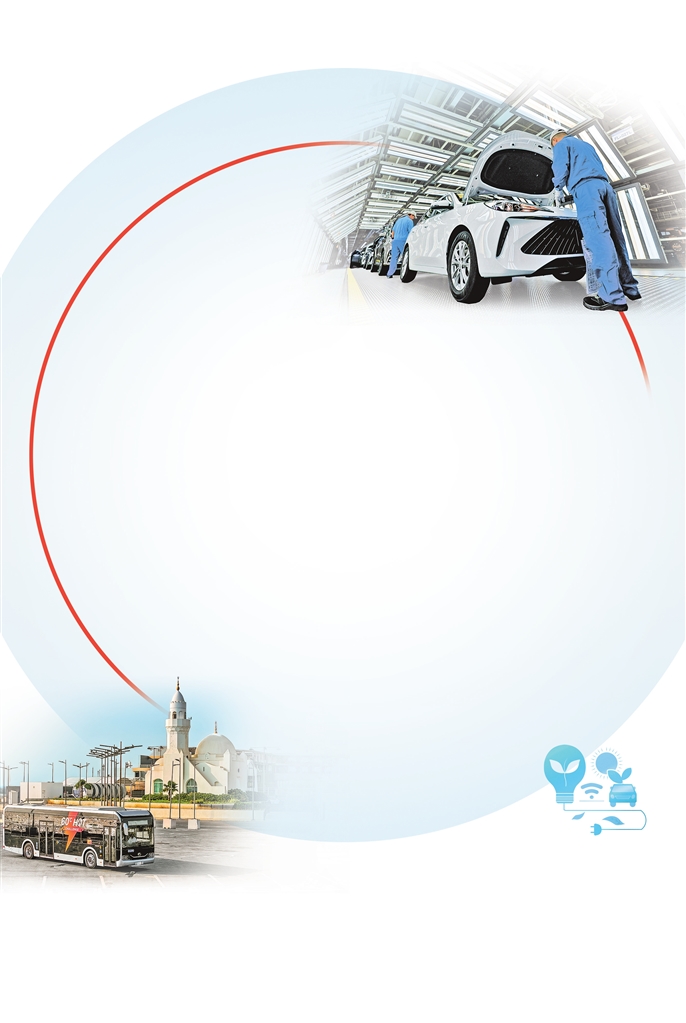
新能源汽车“链”变记(大市场“中”力量)
He Nan Ri Bao· 2025-12-21 22:17
Core Viewpoint - The article highlights the rapid transformation of Henan's automotive industry, particularly in the electric vehicle (EV) sector, showcasing significant growth in production and exports, driven by strategic initiatives and a robust industrial ecosystem [2][11]. Production Capacity Leap - Henan's new energy vehicle (NEV) production reached 681,000 units in 2024, a tenfold increase compared to three years ago [12] - The province's NEV exports amounted to 8.85 billion yuan, reflecting a year-on-year growth of 91.4% [12] - In the first eleven months of this year, Henan exported 102,000 NEVs, marking a staggering 25-fold increase [12] Industry Ecosystem Development - The establishment of a highly collaborative and self-sustaining industrial ecosystem is a key focus for Henan, moving beyond merely being an "assembly factory" [6] - The integration of various supply chain enterprises, including local and international firms, has strengthened the overall industrial chain [7] - The presence of over 600 large-scale enterprises across the entire NEV value chain has become evident, covering upstream materials to downstream services [8] Strategic Partnerships and Investments - A strategic partnership between the Henan provincial government and BYD has led to the establishment of a major production base, which has achieved a production value of 33.47 billion yuan and over 200,000 vehicles produced in its first year [4] - The local automotive industry has seen significant contributions from companies like Yutong, which has expanded its export capabilities, delivering electric buses to multiple countries [5] Future Potential and Market Expansion - The logistics capabilities of the Zhengzhou International Land Port facilitate the export of NEVs to broader markets, enhancing Henan's position in international trade [9] - The development of high-end models, such as the IM LS9 by SAIC, is expected to further elevate Henan's manufacturing capabilities and smart ecosystem [9][10] - The article emphasizes that Henan's rise in the NEV sector serves as a model for other industries aiming for similar upgrades and breakthroughs [11]

电科网安(002268.SZ):具备成熟的芯片研制能力
Ge Long Hui· 2025-09-22 07:04
Core Viewpoint - The company, 电科网安 (002268.SZ), has demonstrated its capability in chip development, offering a range of products including embedded security SE, 40G high-performance security chips, ultra-low power security chips for IoT, and automotive-grade security chips [1] Group 1 - The company possesses mature chip development capabilities [1] - The product lineup includes embedded security SE, 40G high-performance security chips, ultra-low power security chips for IoT, and automotive-grade security chips [1]

绘制自动驾驶“零事故”的安全线路图
Ke Ji Ri Bao· 2025-09-15 23:32
Core Insights - The rapid development of intelligent connected vehicles in China has raised concerns about traffic safety incidents caused by intelligent driving systems, highlighting safety "pain points" in the process of automotive intelligence and connectivity [1] - The Ministry of Industry and Information Technology and eight other departments issued the "Automotive Industry Stabilization and Growth Work Plan (2025-2026)", which conditionally approves the production access of L3-level vehicles [1] - The 2025 World Intelligent Safety Conference held in Xi'an focused on the trends and safety challenges of autonomous driving technology, with experts emphasizing the need for collaboration in the industry to continuously improve the safety roadmap towards "zero accidents" [1] Group 1: Safety and Testing - The ultimate goal of autonomous driving systems is to achieve "zero traffic accidents," which can be guided by the evolution path of achieving "near-zero emissions" in automotive emissions [2] - Key points of safety testing differ from environmental testing, as some autonomous driving systems may function well during the day but fail at night due to a lack of necessary environmental factor testing and calibration during training [2] - A team from Tsinghua University has collaborated with companies like Changan Automobile and FAW Group since 2020 to develop a scene collection that includes 100 types of scenarios and evaluation standards, forming a Safety of the Intended Functionality (SOTIF) index [2] Group 2: Technological Innovations - To train AI effectively, a laboratory has been established using virtual simulation technology to simulate extreme sudden situations, helping AI accumulate experience and promote system iteration towards the "zero traffic accident" goal [3] - The evaluation system developed is expected to be adopted as a standard for production access in China, contributing to the improvement of international safety assessment regulations for autonomous driving systems [3] Group 3: Industry Development and Collaboration - The penetration rate of L2-level assisted driving in China's passenger vehicles reached 62.1% in the first half of the year, while the approval and testing trials for L3/L4-level autonomous driving are steadily advancing [4] - There is a need to promote the development of policies and regulations that adapt to industry safety requirements, strengthen safety testing and evaluation technology research, and build a global collaborative industrial ecosystem [4] - The development of safety chips and network security for intelligent connected vehicles is crucial, with efforts in Shaanxi focusing on the autonomous research and development of vehicle-grade safety chips and the commercialization of L4-level intelligent heavy trucks [4]
广汽集团首款L3级别汽车计划于2025年内上市,与滴滴合作有新进展
第一财经网· 2025-04-13 01:12
Group 1 - GAC Aion and Didi are collaborating to develop the first L4 autonomous vehicle, which is planned for mass production and delivery by the end of 2025 [1][2] - GAC Group is one of the first passenger car companies in China to obtain L3 autonomous driving pilot qualification, with L3 models expected to be launched in Q4 2025 [1] - The penetration rate of L2 and above autonomous driving in new passenger cars in China is expected to reach 65% by 2025, while the penetration rate of intelligent cockpits is projected to reach 76% [1] Group 2 - GAC Group plans to deliver L4 autonomous vehicles in 2025, scale up operations in 2026, and launch L4 models for individual users in 2027 [2] - In 2023, GAC strategically invested in Didi Autonomous Driving, and in 2024, they established a joint venture called Andi Technology [2] - Didi's CEO outlined a three-phase five-year plan for L4 autonomous driving, focusing on technology development, market validation, and global expansion [2] Group 3 - The importance of safe and controllable automotive-grade chips is increasing alongside the rapid development of intelligent driving [3] - GAC Group has launched 12 automotive-grade safety chips in collaboration with multiple companies, targeting various applications such as power management and chassis [3] - GAC initiated an "Automotive Chip Application Ecosystem Co-construction Plan" to enhance the integration of vehicle, controller, and chip verification [3]
