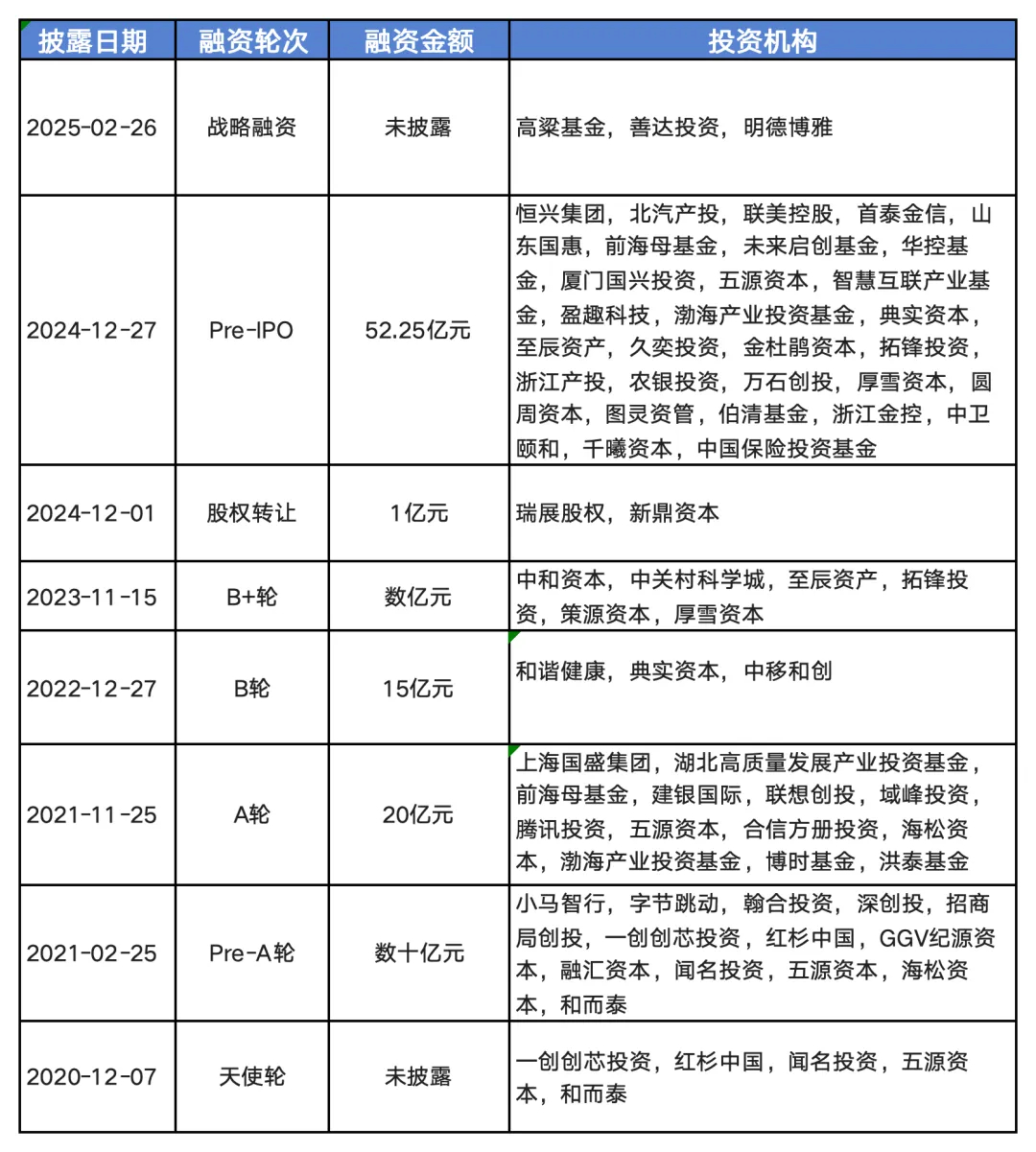
邃思2.0

Search documents
国产GPU“四小龙”的“老大哥”,也要IPO了
Xin Lang Cai Jing· 2026-02-01 13:40
Core Viewpoint - Shanghai Suiruan Technology Co., Ltd. has received acceptance for its IPO application on the Sci-Tech Innovation Board, marking a significant step for domestic GPU companies in the capital market [22][23] Group 1: IPO Details - The company plans to issue no less than 43.0352 million shares and no more than 68.35 million shares, accounting for 10% to 15% of the total share capital post-issue, with a fundraising target of 6 billion yuan [22][24] - This fundraising amount is considered reasonable compared to peers, with Moer Thread aiming to raise 8 billion yuan and Muxi Co., Ltd. targeting 4.197 billion yuan during their respective IPOs [22] Group 2: Use of Proceeds - The raised funds will primarily be used for the R&D and industrialization of the fifth and sixth generation AI chip series, as well as advanced AI hardware and software collaborative innovation projects [24] Group 3: Founders and Team Background - The founders of Suiruan Technology, including CEO Zhao Lidong and COO Zhang Yalin, have extensive backgrounds in semiconductor giants like AMD and Nvidia, contributing to the company's strong technical foundation [25][26][28] - The core team is composed of members from major international chip companies and domestic leaders, ensuring a well-rounded expertise in chip design, algorithm development, and market sales [28] Group 4: Product Development and Strategy - Suiruan Technology has chosen a challenging path by developing dedicated accelerators for AI training and inference, creating a fully autonomous hardware and software ecosystem, unlike many peers who opt for CUDA compatibility [29][30] - The company has developed four generations of cloud AI chips, with a notable product release schedule, including the "Yunsui T10" training accelerator card in December 2019 and the "Suiruan S60" inference accelerator card in 2024 [31] Group 5: Financial Performance - The company has shown rapid revenue growth, with revenues of 90.1 million yuan in 2022, 301 million yuan in 2023, and 722 million yuan in 2024, reflecting a compound annual growth rate of 183.15% [32] - Despite the growth, the company has incurred significant losses, totaling 4.29 billion yuan over three years due to high R&D expenditures, which accounted for over 300% of revenue during that period [12][33] Group 6: Market Position and Competition - The domestic GPU market is projected to exceed 80 billion yuan by 2025, with a growth rate of over 60%, and Suiruan Technology is positioned as a representative of the ASIC route, focusing on deep customization for major clients like Tencent [41] - The company faces competition from Nvidia, which holds a dominant 70% market share in the Chinese AI accelerator card market, while domestic manufacturers have increased their share from 8.3% in 2022 to 17.4% in 2024 [42]

燧原IPO闯关,国产GPU四小龙为何集体“亏损上市”?
Sou Hu Cai Jing· 2026-01-28 03:34
Core Viewpoint - Suirian Technology, a domestic GPU company, has submitted its prospectus to apply for an IPO on the Sci-Tech Innovation Board, aiming to raise 6 billion yuan despite not achieving profitability in its 8 years of operation [2][4]. Group 1: Financial Performance - Suirian Technology's revenue is projected to reach 722 million yuan in 2024, representing an almost 8-fold increase from 2022 to 2024 [4]. - The company reported a revenue of 90.1 million yuan in 2022, with a net loss of 1.116 billion yuan, and a revenue of 301 million yuan in 2023, with a net loss of 1.665 billion yuan [9]. - For the first three quarters of 2025, the company expects a revenue of 540 million yuan but still anticipates a loss of 888 million yuan [10]. Group 2: R&D and Investment - Suirian Technology has invested a total of 3.529 billion yuan in R&D from 2022 to 2024, with R&D personnel accounting for 78.41% of its workforce [10][11]. - The company follows a Fabless model, focusing on design and sales while outsourcing manufacturing and testing [11]. - The IPO proceeds will be allocated as follows: 55% for advanced AI hardware and software innovation, 25% for the fifth-generation AI chip development, and 20% for the sixth-generation chip industrialization [20]. Group 3: Market Position and Competition - The domestic GPU sector is characterized by high investment and long development cycles, with Suirian Technology facing significant competition from both domestic and international players [16][19]. - The company relies heavily on a few major clients, with over 71.84% of its revenue coming from Tencent in the first three quarters of 2025 [12][22]. - The global AI accelerator card market is expected to grow from over 100 billion USD in 2024 to over 500 billion USD by 2028, with a compound annual growth rate exceeding 40% [18]. Group 4: Challenges Ahead - The high dependency on a limited customer base poses risks, as major clients may switch suppliers or develop in-house capabilities [24]. - The need for continuous investment in ecosystem development and technology iteration creates a cycle of high expenditure and potential profit erosion [25][27]. - The path to profitability is expected to be long, with companies in the GPU sector needing to navigate significant challenges related to customer structure and ecosystem building [22][26].
国产“英伟达”们集体冲刺IPO
Tai Mei Ti A P P· 2025-10-29 12:17
Core Insights - A significant trend is emerging as leading domestic GPU companies are rapidly pursuing IPOs, with notable examples including Moer Thread and Muxi Co., which have set records for the speed of their listing processes [1][3][10] - This capital frenzy is driven by the expectation for self-controlled computing power and the exit demands of numerous VCPEs during their fund lifecycle [2] Group 1: Moer Thread and Muxi Co. - Moer Thread's IPO process is remarkable, with its application accepted on June 30, 2025, and approval granted on September 26, 2025, taking only 88 days. The IPO aims to raise 8 billion yuan [3][7] - Founded in 2020 by Zhang Jianzhong, a former NVIDIA executive, Moer Thread focuses on full-function GPUs and has developed the MUSA architecture to support AI computing and graphics rendering on a single chip [3][4] - Moer Thread's revenue figures show a growth trajectory, with revenues of 46.09 million yuan in 2022, projected to reach 438 million yuan in 2024, and 702 million yuan in the first half of 2025, marking a compound annual growth rate of 208% [7][9] - Muxi Co. followed closely, with its IPO approved on October 24, 2025, after 116 days of review, aiming to raise 3.904 billion yuan for the development of next-generation GPU chips [10][12] - Muxi, also founded in 2020, focuses on high-performance general-purpose GPUs and has established a complete domestic supply chain for design, manufacturing, and testing [10][12] Group 2: Other Companies and Market Dynamics - Suiruan Technology is taking a more cautious approach to its IPO, currently in the counseling phase, with a complex shareholder structure potentially affecting its progress [13][17] - Suiruan's products include the domestic cloud training chip "Suis 1.0" and the fourth-generation training and inference chip "Suiruan L600," which features significant advancements in computing power and storage [14][15] - Wallran Technology's IPO path remains uncertain, with reports suggesting it has submitted a confidential listing application to the Hong Kong Stock Exchange [19][24] - Tian Shu Zhixin is also rumored to be pursuing a listing, focusing on GPGPU products that have already achieved commercial success [25][27] Group 3: Industry Trends and Challenges - The market for AI computing power is expanding rapidly, with national strategies emphasizing self-sufficiency in computing capabilities, and the Sci-Tech Innovation Board providing a pathway for unprofitable but technologically critical companies to go public [28][30] - Companies are seizing the historic opportunity for domestic substitution, particularly in light of supply constraints from NVIDIA, creating a significant market gap [29][30] - The collective IPO rush signals a broader industry trend where national interests and capital markets are aligning to promote high-end computing autonomy [30][31] - The limited capacity of the capital market means that the first companies to successfully list will gain a competitive financing advantage, potentially leading to a "Matthew effect" in the industry [31][32]