
酸茶

Search documents
讲好“一带一路”故事 共绘美好生活画卷
Ren Min Ri Bao· 2026-02-05 00:46
Group 1: Economic Development and Opportunities - The transformation of Niulian Village in Kunming, Yunnan, showcases the integration of agriculture, culture, and tourism, leading to local employment and entrepreneurship opportunities [1][2] - The Dou Nan Flower Trading Center in Yunnan is the largest in Asia, with a trading volume exceeding 15.4 billion stems and a transaction value of over 13.4 billion yuan in 2025, maintaining its position as the national leader for over 20 years [2] - Yunnan has applied for 1,280 new flower varieties, with over 800 receiving national authorization, both ranking first in the country, indicating a strong focus on high-quality flower industry development [2] Group 2: Cultural Heritage and Tourism - The ecological corridor around Erhai Lake has improved local tourism, with increased visitor engagement and a focus on environmental protection, leading to a better quality of life for residents [4][5] - The Dali region has implemented comprehensive lake management strategies, resulting in a 100% water quality rate for 27 major inflow rivers and significant ecological restoration efforts [6] - The cultural richness of Dehong Prefecture is highlighted through its diverse ethnic heritage, with over 1,000 historical and cultural artifacts displayed in the local museum, promoting cultural tourism [7][8] Group 3: Rural Revitalization and Economic Growth - Yulhu Village in Lijiang has seen a significant increase in collective economic income, projected to reach 3.8 million yuan by 2025, with per capita income rising from 13,000 yuan in 2019 to 35,000 yuan by 2025 [10][11] - The village has embraced tourism through the establishment of a cooperative, offering horseback riding and homestay experiences, which has led to a projected 120 million visitors and 75 million yuan in tourism revenue by 2025 [10] - The integration of traditional culture and modern tourism in Yulhu Village reflects a successful model of rural revitalization, balancing development and preservation [11]
云南芒市芒晃村:从“失地村”到“旅居村” 把流量变留量
Xin Lang Cai Jing· 2026-01-27 12:39
Core Insights - The article highlights the transformation of Manghuang Village in Yunnan from a "lost village" with limited agricultural land to a thriving travel destination that attracts long-term visitors [3][6]. Group 1: Village Transformation - Manghuang Village, located in the Dehong Dai and Jingpo Autonomous Prefecture, has shifted its focus from agriculture to service-oriented industries due to limited land resources [3]. - The village began its transformation in 2017 by introducing policies to develop the restaurant sector, leading to the establishment of the first dining establishments [3][6]. - As of now, the village has diversified its economy with 23 restaurants, 13 guesthouses, 4 photography studios, and 3 e-commerce businesses, significantly increasing the average annual income of villagers [6]. Group 2: Investment and Development - The village's appeal has attracted investors, such as Yang Junbao, who opened a themed guesthouse capitalizing on the area's cultural and geographical advantages [5]. - Local residents are adapting to the growing demand for long-term stays by enhancing their guesthouse facilities and services [5][6]. - Future plans for the village include establishing a property management company, expanding agricultural tourism, and promoting inter-village collaboration to explore further development opportunities [6].


德宏芒市:和美边境,民族共生
人民网-国际频道 原创稿· 2025-09-24 03:32
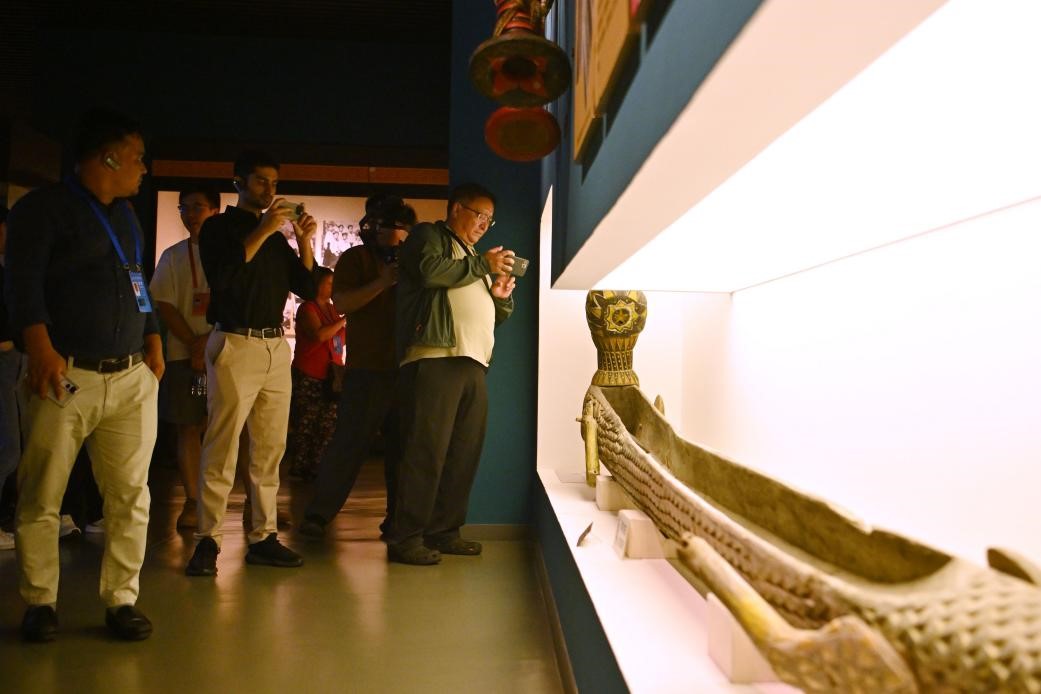
Core Points - The article highlights the cultural and ethnic diversity of Mangshi, located in Dehong Dai and Jingpo Autonomous Prefecture, which is home to over 40 ethnic minorities, with a significant population of 627,300, accounting for 46.92% of the total population [2] - The De'ang ethnic group is noted for its ancient tea cultivation and unique sour tea-making techniques, which were recognized as a national intangible cultural heritage in 2021 [4] - The iconic landmark of Mangshi, the Menghuan Golden and Silver Pagodas, symbolizes the integration of ethnic culture and natural scenery, attracting numerous tourists and fostering friendly relations between China and Myanmar [4] Summary by Sections Cultural Significance - Mangshi, known as "Menghuan" in Dai language, translates to "land of dawn," reflecting its historical significance as a border area with a long-standing tradition of cross-border trade and cultural exchange [2] - The harmonious coexistence of various ethnic groups is emphasized, with a shared lifestyle and cultural practices [2] Tea Culture - The De'ang people are recognized as "ancient tea farmers," with a deep-rooted history in tea cultivation and consumption, which is integral to their cultural identity [4] - The phrase "Tea is the life of the tea tree" illustrates the cultural importance of tea within the De'ang community [4] Tourism and Landmarks - The Menghuan Golden Pagoda, standing at 73 meters, is a significant representation of South Asian Dai palace style and an important symbol of Southern Buddhism in China [4] - The Silver Pagoda, located on the peak of Leiyajian Mountain, complements the Golden Pagoda and embodies the traditional culture of the Dai people [4] - The pagodas serve as a bridge for enhancing friendship and communication between neighboring countries, particularly in the context of the Belt and Road Initiative [4]
助力非遗传承发展(履职故事)
Ren Min Ri Bao· 2025-07-23 22:11
Core Viewpoint - The article highlights the challenges and opportunities in preserving and innovating traditional cultural practices in ethnic minority regions of Yunnan, particularly through the integration of cultural heritage into tourism and education [1][2]. Group 1: Cultural Heritage and Tourism - The integration of unique intangible cultural heritage (ICH) elements into tourism is seen as a way to enhance visitor experiences and promote cultural appreciation [1]. - There is a growing trend of innovation in traditional skills within the context of cultural tourism, allowing for a dual empowerment of culture and tourism [1]. Group 2: Challenges in Cultural Transmission - Key challenges identified include a lack of interest among younger generations in traditional crafts and significant financial barriers related to material procurement and market expansion [1]. - The limited promotion channels for traditional crafts hinder their market reach and sustainability [1]. Group 3: Recommendations for Cultural Preservation - Suggestions include creating deep cultural experience projects to attract tourists and establishing partnerships with educational institutions to integrate ICH into school curricula [2]. - The proposal emphasizes the need for a top-level design to enhance cultural exchange and cooperation, particularly in minority regions [2].