
里掂D1

Search documents
广东机器人“进阶”:B端应用场景与C端需求共振
2 1 Shi Ji Jing Ji Bao Dao· 2025-12-16 07:49
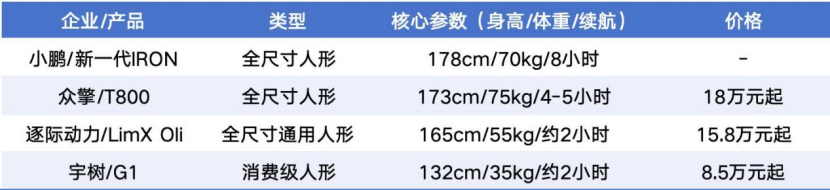
Core Insights - The 2025 Guangdong-Hong Kong-Macao Greater Bay Area Artificial Intelligence and Robotics Industry Conference showcased the LimX Oli humanoid robot, highlighting advancements in robotics technology and its applications in various sectors [1][2] Industry Overview - The Guangdong robotics industry is characterized by a "B-end first" approach, focusing on industrial applications such as production, service, and training, with a clear trend towards practical implementation in real-world scenarios [2][3] - The "AIR Pearl River Index Report (2025)" indicates that Guangdong ranks first nationally in AI and robotics, with a projected core industry scale of 220 billion yuan in 2024, reflecting a 22% year-on-year growth [4] Product Developments - Companies like Zhujidongli and Guangzhou Ligong are developing humanoid robots for specific industrial applications, with products like LimX Oli and Lidian F1 demonstrating capabilities in research, assembly, and logistics [3][4] - The LimX Oli robot is designed for research and cultural tourism, while the TRON1 robot features a modular design for various applications, including security and industrial patrols [2][3] Market Trends - Consumer-level humanoid robots are beginning to enter the market, with products like the T800, LimX Oli, and G1 listed on e-commerce platforms, indicating a shift towards market acceptance [5][6] - The pricing strategy for these robots shows a clear tiered structure, with the T800 starting at 180,000 yuan and the G1 at 85,000 yuan, targeting both industrial and educational applications [5][6] Consumer Insights - The acceptance of consumer-level robots is crucial for the industry's transition from technology to market penetration, with mixed feedback observed at the conference regarding the practicality of current robots for household tasks [8] - Innovations in assistive technology and rehabilitation robots were also showcased, indicating a growing focus on enhancing quality of life through robotics [8] Youth Innovation - The conference featured a section dedicated to young entrepreneurs, highlighting innovative AI-driven products that cater to emerging consumer needs, showcasing the potential for fresh ideas in the robotics market [9]


孙志洋调研督导市政协重点提案办理工作
Guang Zhou Ri Bao· 2025-08-12 01:52
广州里工实业有限公司是我国复合移动机器人头部企业,其产品"里掂D1"可广泛应用于模具制造、实 验室科研、3C电子制造等领域。孙志洋走进企业展厅和生产车间,仔细了解"里掂D1"等机器人的研发 制造、升级迭代和场景应用等情况,勉励企业深耕广州、专注所长,在细分领域深度探索更多新产品、 新方案。在随后召开的座谈会上,市有关部门汇报了重点提案办理情况,提案单位、政协委员和多家行 业企业代表就促进人形机器人产业发展开展热烈讨论。孙志洋对大家积极建言献策表示感谢,要求各部 门认真研究吸纳,切实把提案办实办好,助力产业发展。 孙志洋指出,发展人形机器人产业,是广州构建"12218"现代化产业体系的重点任务之一。要坚持有为 政府和有效市场相结合,探索完善全生命周期监管路径,引导要素资源精准高效配置,支持企业大胆创 新、快速迭代,促进创新链产业链资金链人才链深度融合,为全市机器人产业发展营造良好环境。要充 分发挥广州装备工业实力强、产业链完备的优势,进一步强链补链延链,培育更多龙头企业、单项冠军 和专精特新企业,发展壮大机器人产业集群。要构建企业主导的产学研用协同创新体系,加强关键核心 技术攻关,加快解决产业链"卡脖子"环节, ...
爆了!广东机器人狂揽offer,“入职”富士康、奥迪一汽、极氪等大工厂
21世纪经济报道· 2025-04-09 03:58
Core Viewpoint - The article highlights the rapid development and differentiation of the robotics industry in Guangdong, emphasizing the region's unique approach of leveraging real-world application scenarios to drive innovation and scale in humanoid robotics [2][12]. Group 1: Development Trends - The humanoid robotics sector in Guangdong is characterized by a focus on practical applications, with companies like UBTECH and Leju Robotics successfully deploying humanoid robots in factories, showcasing a shift from traditional robotic applications [2][4]. - The Guangdong government's policy measures aim to promote the integration of artificial intelligence and robotics across various sectors, including industrial, agricultural, and healthcare applications, thereby creating value through widespread adoption [2][6]. Group 2: Competitive Landscape - The new humanoid robotics landscape is divided into three main factions: automotive manufacturers, industrial robotics companies, and home appliance firms, each targeting specific applications and leveraging their existing strengths [9][10]. - Companies like GAC Group and Xiaopeng Motors are utilizing humanoid robots for tasks such as sorting and assembly, while home appliance giants like Midea are exploring service robots for smart home integration [9][10]. Group 3: Innovation and Iteration - The development model of humanoid robots in Guangdong is described as "growing from the production line," where real-world demands drive innovation and iteration, leading to a sustainable and mutually beneficial ecosystem for traditional industries and robotics firms [3][12]. - Successful case studies from companies like BYD and UBTECH demonstrate significant improvements in efficiency and stability through practical training and real-world application, validating the effectiveness of this approach [12][15]. Group 4: Policy Support and Incentives - The Guangdong government is implementing a "robotics+" initiative to encourage local governments to identify and develop application scenarios, providing financial incentives for successful case studies [6][17]. - The policy framework includes rewards for exemplary projects, with up to 8 million yuan allocated for selected cases, fostering an environment conducive to technological transformation and application [16][17].
近半数工业机器人广东造 赋能千行百业渐入佳境
Zheng Quan Shi Bao Wang· 2025-02-26 18:04
Core Viewpoint - Guangdong is rapidly building a modern industrial system with unique advantages, particularly in the robotics industry, which is expanding its application across various sectors and driving new development trends [1][2]. Group 1: Industry Development - The Midea KUKA Intelligent Manufacturing Technology Park has become the largest industrial robot production base in China, producing over 80,000 industrial robots to date [2]. - Guangdong's industrial robot production is projected to reach 246,800 units in 2024, a year-on-year increase of 31.2%, accounting for 44% of the national total [3]. - The province has a complete industrial chain advantage in robotics, supported by its strong manufacturing base across all 31 categories of manufacturing industries [3]. Group 2: Technological and Market Potential - Guangdong ranks first in national innovation capability for eight consecutive years, leading in R&D expenditure, personnel, high-tech enterprises, and patent applications [3]. - The province's GDP is expected to reach 14.16 trillion yuan in 2024, contributing 10.5% to the national GDP, providing a vast market for the robotics industry [3]. - There are over 155,000 robotics-related enterprises in Guangdong, forming a collaborative cluster in Shenzhen, Guangzhou, and Foshan [4]. Group 3: Application Scenarios - Robotics applications are expanding from traditional manufacturing to sectors like furniture, food and beverage, and smart manufacturing [5][6]. - The introduction of AI-powered robots, such as the "Kua Fu" robot, showcases the versatility of robotics in various fields, including journalism [4][5]. - The number of intelligent manufacturing partners in Guangdong has grown to 534, with significant increases in national-level pilot factories and exemplary scenarios [5]. Group 4: Industry High Ground Development - Guangdong is focusing on artificial intelligence and robotics as key areas for high-quality development, with government initiatives to support these sectors [8][9]. - The "2025 Action Plan for Building a Modern Industrial System in Guangdong" emphasizes the development of intelligent robots and the integration of AI into various applications [9]. - Midea Group is committed to developing products tailored to the Chinese market, enhancing the reliability and flexibility of automation solutions across multiple industries [9][10].

