重组胶原蛋白敷贴

Search documents
“科兴”分家30年:疫苗王者陨落美股,干扰素老兵转战医美
Guan Cha Zhe Wang· 2025-12-25 08:34
Group 1: Core Insights - Kexing Pharmaceutical is entering the rapidly growing recombinant collagen market, with a clinical trial for its type III humanized collagen product officially launched [1][2] - The recombinant collagen market in China is projected to reach 108.3 billion yuan by 2027, with a compound annual growth rate of 44.93% [1][2] - Kexing Pharmaceutical's revenue has stagnated around 1.2 billion yuan for several years, making this strategic shift a necessary move for growth [1][6] Group 2: Industry Trends - The recombinant collagen is becoming a new favorite in the medical aesthetics sector, with its market share expected to grow significantly, while hyaluronic acid's market share is declining [2][4] - Currently, only Jinbo Biotech has received approval for two type III medical devices in this space, indicating a competitive landscape that is likely to change as more companies enter [2][4] Group 3: Company Challenges - Kexing Pharmaceutical faces challenges in cash flow, with net cash flow being negative from 2022 to mid-2025, and cash reserves decreasing from 784 million yuan to 446 million yuan [4][11] - The company is also under pressure from increasing competition, with several firms, including major beauty brands, entering the recombinant collagen market [4][11] Group 4: Historical Context - Kexing Pharmaceutical and Kexing Biology share a common origin, having been established from the same foundational institutions, but have diverged significantly in their paths over the past 30 years [7][8] - Kexing Biology has faced governance issues and financial struggles, while Kexing Pharmaceutical has been criticized for its stagnant revenue and reliance on legacy products [8][11]



科兴医疗重组Ⅲ型胶原蛋白医疗器械临床试验首例受试者入组 开启抗衰领域新征程
Zheng Quan Shi Bao Wang· 2025-12-17 11:09
Core Viewpoint - Kexing Pharmaceutical's subsidiary has made significant progress in the field of recombinant type III collagen, with its product entering clinical trials, indicating a strong potential in the aesthetic medicine market [1][4]. Group 1: Product Development and Clinical Trials - Kexing Medical's recombinant type III humanized collagen product has passed clinical trial registration and has begun enrolling participants for its first trial [1]. - The product aims to treat dynamic wrinkles on the forehead through a clinical study designed to evaluate its effectiveness and safety [1][2]. - The company has also submitted a registration application for its second-class medical device, a collagen dressing [1]. Group 2: Technological Advantages and Market Potential - The recombinant type III collagen is derived from advanced biotechnology, ensuring high biocompatibility and bioactivity, which mitigates the risk of immune rejection associated with traditional animal-derived collagen [2]. - This collagen type is crucial for youthful skin and addresses aging signs such as wrinkles, making it a focal point in aesthetic medicine [2]. - The market for recombinant type III collagen in aesthetic applications is expanding rapidly, with a projected retail market size for aesthetic injectables in China expected to grow from 309 billion yuan in 2019 to 670 billion yuan in 2023, reflecting a compound annual growth rate (CAGR) of 21.4% [3]. Group 3: Strategic Positioning and Future Outlook - Kexing Medical has previously launched products in the consumer sector, including collagen masks and serums, which have gained popularity in Southeast Asia [4]. - The entry into clinical trials for the recombinant collagen product marks a significant milestone in the company's R&D and commercialization efforts in the aesthetic field [4]. - The company plans to continue focusing on the aesthetic medicine sector, emphasizing technological innovation and the development of high-quality products to meet market demands [5].
国货彩妆做面膜年销8亿,跨界“打劫者”上位
Xin Lang Cai Jing· 2025-06-24 03:45
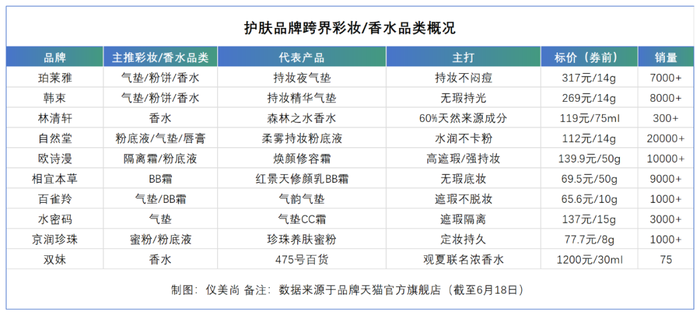
Core Viewpoint - The acquisition of the functional skincare brand Baizhicui by the makeup brand Judo's parent company, Juyi Group, marks its official entry into the skincare sector, reflecting a broader trend of multi-brand and cross-category development in the beauty industry [1][2]. Category Expansion: Skincare/Makeup/Medical Devices - Skincare brands are primarily venturing into makeup and fragrance, while makeup brands are increasingly extending their reach into skincare [3][4]. - The mainstream choice for skincare brands entering the makeup market is to launch base makeup products, followed by fragrances [5]. Skincare Brands Entering Makeup Market - Notable brands like Proya, Han Shu, and Baique Ling have launched cushion products, while others like Natural Hall and Oushiman have introduced foundation products [5][6]. Skincare Brands Focusing on Medical Devices - Skincare brands are showing a strong interest in the medical device category, primarily launching products featuring recombinant collagen [6][7]. Makeup Brands Entering Skincare Market - Makeup brands are primarily focusing on masks as their first choice for skincare products, followed by serums and creams [8][9]. - The low technical requirements and acceptance of masks make them an attractive entry point for makeup brands [10]. Product Pricing Strategies - Skincare brands typically price their makeup products below 200 yuan, with many under 100 yuan, while makeup brands entering skincare tend to target mid to high-end price ranges [13][14]. - Medical device products from skincare brands have a wider pricing range, with some products priced as high as 300 yuan [13]. Market Performance - Sales figures for newly launched products vary significantly, with some brands achieving over 10,000 units sold, while others struggle to reach even 100 [15][16]. - For instance, the luxury caviar mask from Mao Ge Ping has sold over 100,000 units, contributing significantly to the brand's revenue [17]. Challenges in Cross-Category Development - The drive for cross-category development is largely due to rising traffic and customer acquisition costs, as well as the saturation of single-category growth [18]. - Successful cross-category ventures depend on the ability to transfer existing consumer perceptions to new product categories [19].