
金虎斑

Search documents
视频丨沙漠里如何养海鲜?解锁塔克拉玛干沙漠的水产养殖密码
Yang Shi Xin Wen Ke Hu Duan· 2025-11-29 13:30
Core Insights - The article discusses the innovative practice of seafood farming in the Taklamakan Desert, specifically in Qemai County, Xinjiang, where a 25-acre aquaculture base has successfully raised 230,000 marine fish in a desert environment [3][9]. Group 1: Aquaculture Development - The aquaculture base features an indoor ecological farming greenhouse, outdoor fish ponds, and a breeding pool, demonstrating the feasibility of seafood farming in arid conditions [3]. - The facility utilizes 68 breeding barrels with a diameter of 5 meters, equipped with an electric heating system to maintain a stable temperature for the fish [5]. - Monthly fish sorting is conducted to prevent larger fish from preying on smaller ones, ensuring optimal growth conditions [5][7]. Group 2: Water Management Technology - The primary challenge of seafood farming in the desert is water availability, with the aquaculture relying on underground saline-alkaline water sourced from 2 meters below the surface [9]. - The pH level of the original saline-alkaline water is high (9 to 9.5), but through a 45-day water conditioning process, it is adjusted to below 8.6, mimicking the natural water quality of the South China Sea [11]. - The aquaculture employs a zero-emission, fully-circulating ecological farming model, utilizing smart farming technology for efficient water management and waste recycling [13]. Group 3: Growth and Production - The aquaculture base has successfully cultivated various fish species, including Gold Tiger Grouper and Pearl Grouper, which are set to be marketed in the coming month [7]. - The use of specific lighting in the farming greenhouses has been shown to enhance fish growth and health by simulating natural marine conditions [15]. - In addition to marine fish, efforts are being made to adapt marine shrimp to freshwater environments, expanding the diversity of aquaculture in the region [17]. Group 4: Regional Impact - The aquaculture industry in Xinjiang has seen significant growth, with a reported total aquatic product output of 192,500 tons last year, establishing it as a vital industry for local economic development [17]. - The surrounding areas of the Taklamakan Desert, such as Aral City and Hetian County, have also reported substantial increases in aquaculture production, contributing to local food supply and economic prosperity [17].

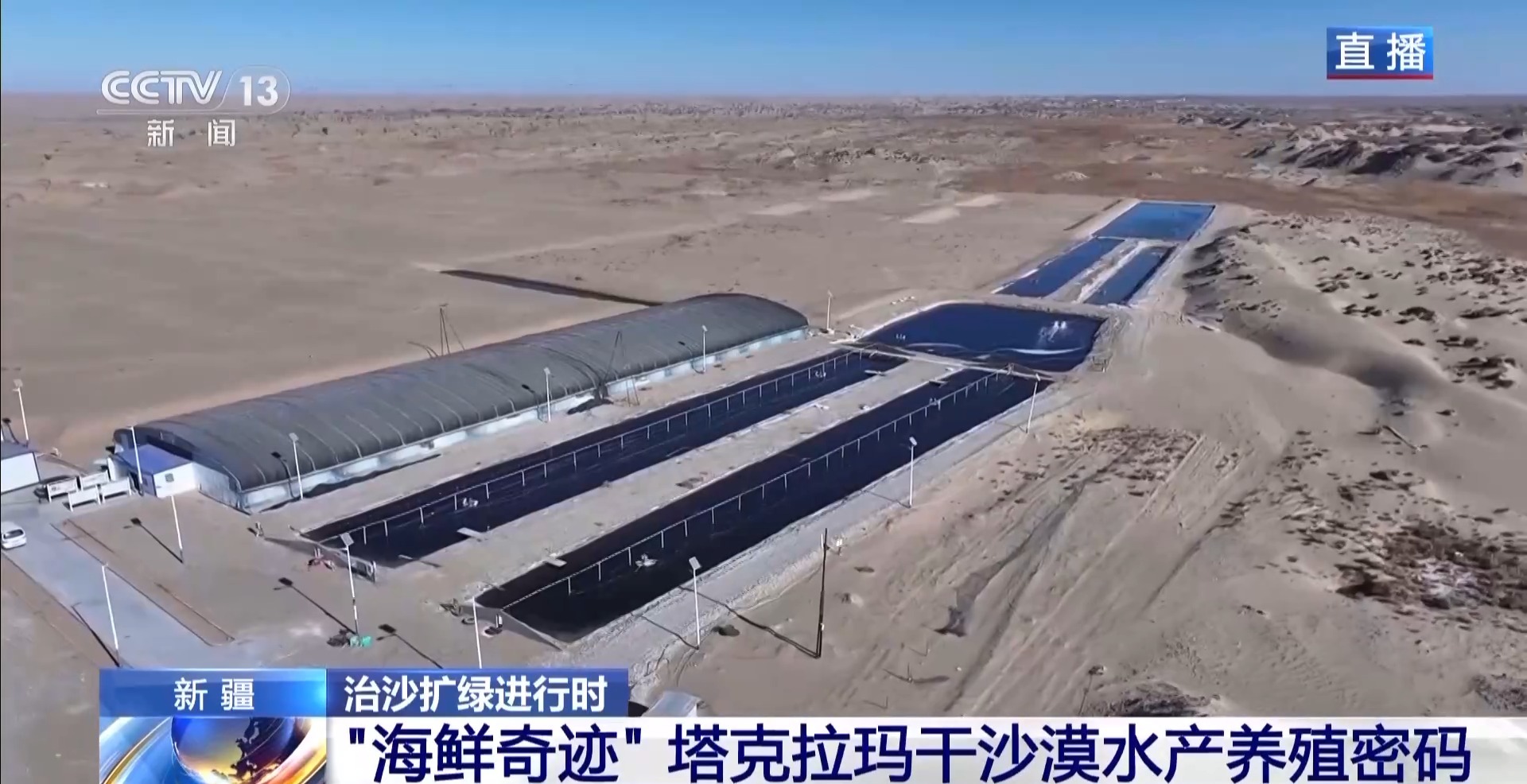
沙漠里如何养海鲜?解锁塔克拉玛干沙漠的水产养殖密码
Yang Shi Xin Wen Ke Hu Duan· 2025-11-29 12:29
Core Viewpoint - The article highlights the innovative seafood farming practices in the desert region of Xinjiang, specifically in Qemai County, where a successful aquaculture operation has been established despite the harsh desert environment [1][3]. Group 1: Aquaculture Development - A 25-acre aquaculture base has been developed in the Taklamakan Desert, successfully raising 230,000 sea fish over two years [1][3]. - The facility includes an indoor ecological farming greenhouse, outdoor fish ponds, and a breeding pool, demonstrating adaptability to the desert climate [3]. - The use of 68 circular tanks with a diameter of 5 meters and an electric heating system provides a stable temperature for the seafood [5]. Group 2: Fish Management Practices - Monthly manual fish sorting is conducted to prevent larger fish from preying on smaller ones, ensuring optimal growth conditions [5][7]. - The star species, including tiger grouper and pearl grouper, are set to be marketed soon, with distribution planned across various regions [7]. Group 3: Water Management Technology - The aquaculture relies on underground saline-alkaline water, which is treated to mimic seawater conditions, achieving a pH level similar to that of natural seawater [9][11]. - The water treatment process involves a 45-day adjustment period using specific microorganisms to create a suitable ecological environment for the fish [11]. Group 4: Sustainable Practices - The facility employs smart aquaculture technology, allowing for efficient management of water, feeding, and waste recycling, achieving a zero-emission, fully circular farming model [14]. - Special lighting in the greenhouses promotes fish growth and provides disinfection, enhancing the overall health of the seafood [16]. Group 5: Regional Aquaculture Expansion - The surrounding areas of the Taklamakan Desert are also seeing increased aquaculture activities, with significant areas dedicated to the farming of various seafood species [18]. - In the first half of this year, local water product output exceeded 1,000 tons, contributing to the economic development of the region [18]. - Xinjiang's total aquatic product output reached 192,500 tons last year, establishing aquaculture as a vital industry for local prosperity [18].
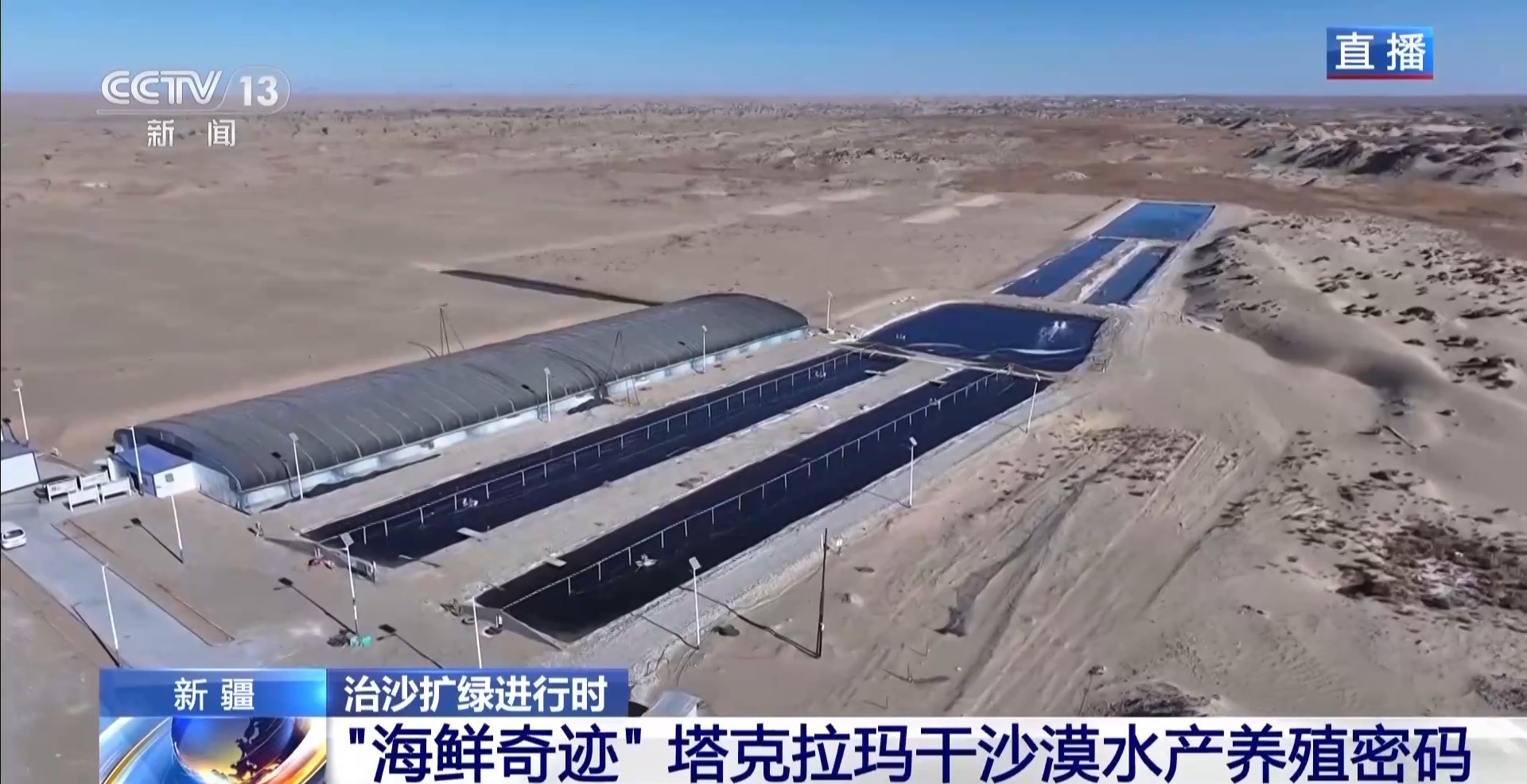
没有海怎么养“海鲜”?看新疆如何书写“水产奇迹”
Yang Shi Wang· 2025-11-29 08:37
Core Viewpoint - The article highlights the innovative practice of seafood farming in the arid environment of the Taklamakan Desert in Xinjiang, showcasing how technology and ecological methods have made it possible to cultivate marine species in a desert setting [1][9]. Group 1: Farming Techniques - A 25-acre aquaculture base has been established in the desert, successfully raising 230,000 marine fish over a year and a half [3][5]. - The indoor ecological farming greenhouse maintains a stable temperature, essential for the growth of seafood, utilizing a heating system and oxygenation equipment [5][11]. - The aquaculture employs smart farming technology, allowing for automated processes such as water drainage and feeding through mobile apps, requiring only two technicians for a 2,800 square meter area [11]. Group 2: Water Management - The primary challenge of water sourcing is addressed by utilizing underground saline-alkaline water, which is treated to mimic the natural seawater environment, achieving a pH level similar to that of the South China Sea [9][13]. - The water treatment process involves a 45-day adjustment period, incorporating specific microorganisms to restore the saline-alkaline water to a suitable condition for marine life [9]. Group 3: Growth Enhancement - Special purple lights are used in the farming process, which not only simulate the natural growth environment of seafood but also promote faster and healthier growth through specific light spectrums [13]. - The article mentions the ongoing experimentation with "brackish shrimp farming," indicating a broader approach to aquaculture in the region [15]. Group 4: Economic Impact - The aquaculture industry in Xinjiang has become a significant source of income, with a reported total aquatic product output of 192,500 tons last year, contributing to local economic development [15]. - The transformation of the region from a "death sea" to a "water product oasis" illustrates the successful application of innovative agricultural practices in challenging environments [15].
