
金融支付

Search documents
10亿元红包开路 马化腾押注下一个10年
Mei Ri Jing Ji Xin Wen· 2026-01-27 13:10
Core Insights - Tencent's President, Liu Chiping, symbolically wrapped a red scarf with the classic penguin logo around CEO Ma Huateng, marking a significant moment in the company's AI strategy and social media identity [1] - The distribution of 1 billion yuan in cash red envelopes during the Spring Festival is seen as a strategic move to reinforce Tencent's position in the AI landscape and social media domain [2][4] Group 1: AI Strategy - The 1 billion yuan red envelope initiative is viewed as a substantial "bet" on AI strategy, aiming to address collective anxieties regarding technological advancements and competition from disruptive products like ChatGPT [3] - Ma Huateng emphasizes a strategic choice of a "slow" approach to AI development, focusing on foundational investments rather than aggressive expansion, which he believes aligns with Tencent's unique corporate rhythm [3] Group 2: Social Media and User Engagement - The red envelope distribution serves as a declaration of Tencent's "social sovereignty," aiming to attract users back to its platform rather than allowing them to drift towards search engines and productivity tools [4] - Ma Huateng's actions during the annual meeting, including throwing penguin dolls and singing, symbolize Tencent's commitment to maintaining a warm social environment for AI interactions [4] Group 3: Business Performance and Future Outlook - Tencent's cloud business is projected to achieve scalable profitability by 2025, which is a significant milestone for the company and a reassuring signal for the capital market [6] - The year 2026 is defined by Ma Huateng as a "year of struggle," indicating a focus on resilience and adaptability in the face of evolving technological landscapes [7]

富友支付第四次向港交所递表,十年IPO之路能否圆梦?
Guo Ji Jin Rong Bao· 2026-01-21 15:10
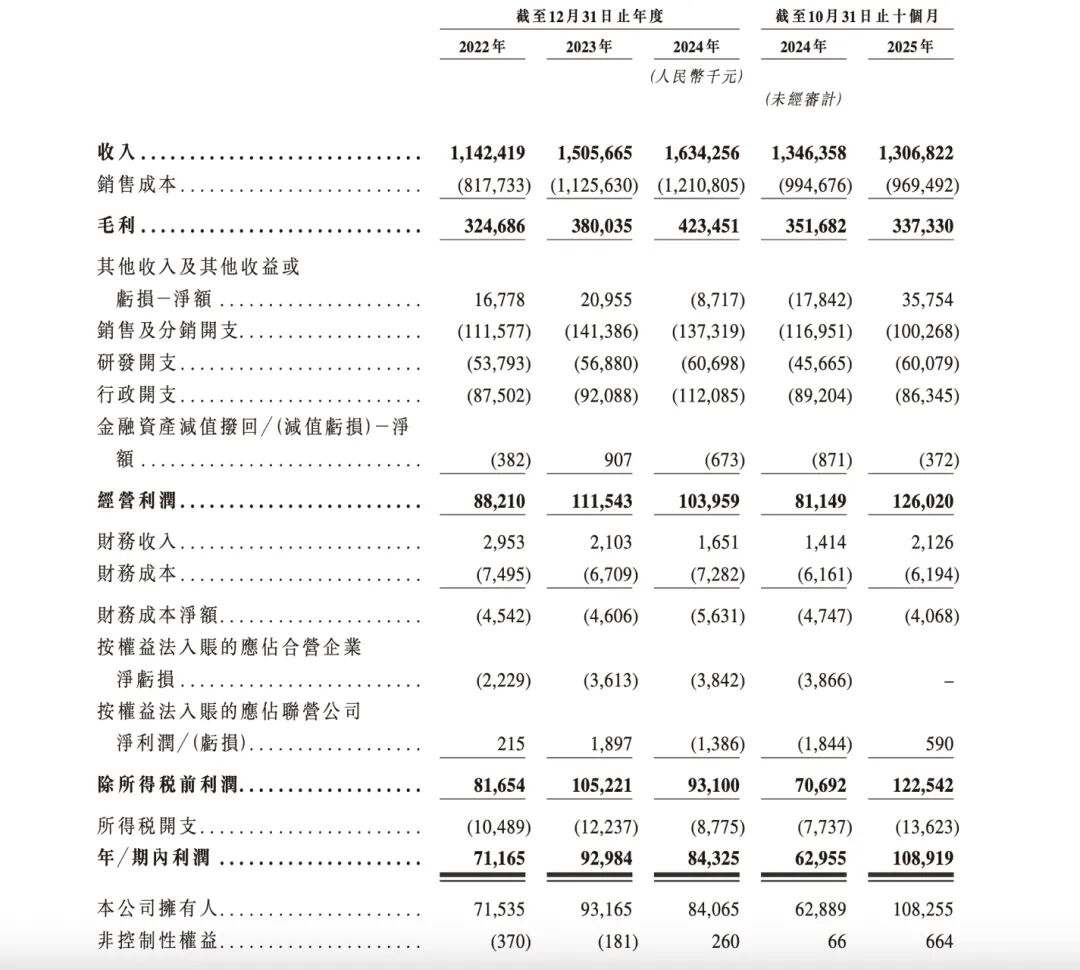
Core Viewpoint - Fuyou Payment has submitted its listing application to the Hong Kong Stock Exchange (HKEX) for the fourth time, indicating ongoing efforts to secure a public listing despite previous failures [1][2]. Group 1: Listing Attempts - Fuyou Payment has attempted to list on the HKEX multiple times since 2024, following unsuccessful attempts to go public in the A-share market since 2015 [2][4]. - The company has faced three previous failures of its IPO prospectus due to not completing hearings or listings within the required six-month period [4]. - The company emphasizes that multiple submissions to the HKEX are common and that it is following relevant laws and regulations in its listing process [2][5]. Group 2: Financial Performance - Fuyou Payment's revenue has shown a steady increase from RMB 1.14 billion in 2022 to RMB 1.63 billion in 2024, with a projected revenue of RMB 1.31 billion for the first ten months of 2025 [3][7]. - The gross profit for the same periods has also increased, from RMB 324.7 million in 2022 to RMB 423.5 million in 2024, with a gross profit of RMB 337.3 million reported for the first ten months of 2025 [3][7]. - The adjusted net profit has remained stable, with a net profit margin fluctuating between 7.1% and 9.5% in recent years [7][8]. Group 3: Business Challenges - Fuyou Payment's cross-border payment service has seen a decline in total payment volume (TPV), dropping from RMB 84.9 billion in 2022 to RMB 53.9 billion in the first ten months of 2025 [7]. - The company faces significant compliance pressures due to its involvement in prepaid card issuance and bank card acquiring services, which have led to multiple regulatory penalties over the years [10][11]. - The competitive landscape in the domestic payment service market has resulted in a decrease in gross margins, with the gross margin dropping from 28.4% in 2022 to 25.2% in 2023 [8][9]. Group 4: Future Outlook - The company aims to enhance its technology platform, expand cross-border business, and improve its ecosystem, which requires sufficient funding that could be obtained through the IPO [6][9]. - Analysts suggest that Fuyou Payment's ongoing listing efforts reflect a dual need for shareholder returns and business development, especially in a competitive industry environment [5][9]. - The company must address its compliance issues and improve its risk management capabilities to alleviate concerns from the HKEX regarding its operational stability and future growth potential [12].

富友支付递表港交所 联席保荐人为中信证券和申万宏源香港
Zheng Quan Shi Bao Wang· 2026-01-19 00:36
Core Viewpoint - Fuyou Payment has submitted an application for listing on the Hong Kong Stock Exchange, with CITIC Securities and Shenwan Hongyuan Hong Kong as joint sponsors [1] Group 1: Company Overview - Fuyou Payment provides multi-channel payment and digital business solutions, including commercial payments (online and offline acquiring, QR code payments), financial payments (credit card repayments, fund payments), and cross-border digital payment services (B2C, B2B) [1] - The company holds a comprehensive range of payment licenses in China, as well as licenses in Hong Kong and the United States, making it a pilot supplier of multi-channel digital payment and digital business solutions in China [1] - Fuyou Payment is one of the early companies authorized to conduct cross-border foreign exchange payment services [1] Group 2: Performance Metrics - As of October 31, 2025, Fuyou Payment has processed a total payment volume (TPV) of RMB 16.34 trillion, handling over 67.9 billion payment transactions and serving 6.2 million customers [1] - Based on 2024 TPV, the company ranks eighth among comprehensive digital payment service providers in China, with a market share of 0.8% [1] - As an independent comprehensive digital payment service provider, Fuyou Payment ranks fourth in China by 2024 TPV, with a market share of 4.5% [1] - In terms of transaction volume for acquiring services, the company ranks first among independent comprehensive digital payment service providers in China [1]

【西街观察】大厂出海不讲老故事
Bei Jing Shang Bao· 2025-10-19 14:28
Core Insights - The trend of Chinese companies expanding overseas is becoming a standard business model, focusing on digital services like cloud computing, financial payments, personal credit, and food delivery [1] - The approach of these companies has shifted from manufacturing to branding and ecosystem development, aiming to provide comprehensive systems and solutions rather than just individual products [1] - The overseas expansion is seen as a way to enhance core business ceilings and as an opportunity for growth in untapped markets, especially in light of increasing domestic competition [1] Group 1 - The overseas market is viewed as a new opportunity for Chinese companies to achieve globalization and overcome domestic market pressures [1] - Despite the potential for high revenue, the overseas market presents challenges such as intense competition and complex regulations [2] - Chinese enterprises are evolving from traditional manufacturing to "smart manufacturing," requiring innovation and adaptation to local markets [3] Group 2 - The transformation of large companies, digital infrastructure, and service ecosystems marks a new phase in the overseas expansion of Chinese enterprises [4] - Companies must prepare for unexpected challenges and develop strategies to build user trust and navigate local competition [4] - The search for the next successful Chinese company in the vast overseas market is intensifying, with global competitors and capital markets closely monitoring developments [4]