钠新

Search documents
“锂钠互补”有望促进全球能源转型
Zheng Quan Ri Bao· 2025-11-30 16:06
Core Insights - The combination of lithium and sodium batteries creates a complementary ecosystem that enhances operational efficiency and reduces costs in energy storage systems [1][9] - Sodium batteries are gaining attention due to their lower raw material costs, high safety, and adaptability to extreme environments, positioning them as a promising alternative to lithium batteries [1][2] Industry Developments - Sodium batteries are transitioning from laboratory research to industrial production, with significant milestones expected by 2025, including the mass production of sodium-ion batteries by companies like CATL [2][3] - The number of companies involved in sodium battery production has surged to hundreds, with major lithium battery manufacturers also entering the sodium battery space [3][6] Market Potential - The market for sodium batteries is projected to reach a scale of hundreds of gigawatt-hours by 2028, driven by advancements in technology and supportive policies [3][6] - Sodium batteries are expected to find applications in various sectors, including energy storage for 5G base stations and data centers, due to their cost advantages and performance characteristics [6][7] Technological Advancements - The production of sodium battery materials is ramping up, with companies like Supower and Tianqi Lithium achieving significant milestones in material production [7] - The ongoing development of sodium batteries is supported by government initiatives aimed at enhancing energy storage technologies and addressing resource constraints in the lithium supply chain [8][9] Competitive Landscape - The relationship between lithium and sodium batteries is characterized by mutual complementarity rather than direct competition, allowing both technologies to thrive in their respective niches [9] - Traditional energy giants are also entering the sodium battery market, indicating a broader recognition of its potential [3][6]

新能源车ETF(159806)跌超5%,锂电需求与钠电替代引关注,把握回调布局机会
Mei Ri Jing Ji Xin Wen· 2025-11-21 05:33
Core Viewpoint - The recent significant increase in lithium carbonate prices has raised market concerns, particularly with predictions of potential price surges due to rising demand for lithium batteries and the emergence of sodium-ion batteries as a viable alternative [1]. Group 1: Lithium Market Dynamics - Lithium carbonate prices have surged over 30% since October 9, prompting attention from market analysts [1]. - The chairman of Ganfeng Lithium predicts that if lithium carbonate demand grows over 30% by 2026, prices could exceed 150,000 yuan/ton or even reach 200,000 yuan/ton [1]. Group 2: Sodium-Ion Battery Development - The sodium-ion battery industry has completed its initial phase, with expectations for significant expansion driven by rising lithium material prices and leading companies advancing sodium battery initiatives [1]. - Sodium batteries are expected to have competitive advantages in energy storage, two-wheeled vehicles, and A0-class passenger cars, positioning them as effective supplements to lithium batteries [1]. - CATL has launched its sodium-ion battery brand "Sodium New," achieving an energy density of 175 Wh/kg, while companies like Contemporary Amperex Technology Co. are accelerating production capacity for sodium battery cathode materials [1]. Group 3: New Energy Vehicle ETF Overview - The New Energy Vehicle ETF (159806) tracks the CS New Energy Vehicle Index (399976), which selects listed companies involved in lithium batteries, intelligent driving technology, and new energy vehicle manufacturing from the Shanghai and Shenzhen markets [1]. - The index comprehensively covers the entire new energy vehicle industry chain, including upstream materials, midstream components, and downstream applications, focusing on green energy and advanced manufacturing sectors [1].
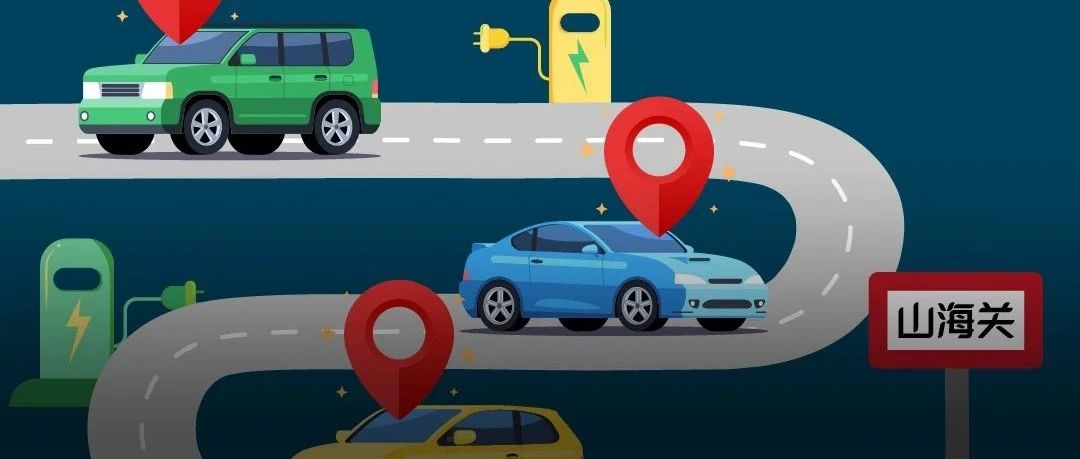
电车已过山海关
汽车商业评论· 2025-05-25 14:55
Core Viewpoint - The development of new energy vehicles (NEVs) in China has significantly progressed, overcoming previous limitations in cold and high-altitude regions, leading to increased market penetration and technological advancements [4][22]. Group 1: Technological Breakthroughs - Major advancements in battery technology have been achieved, allowing NEVs to perform effectively in low-temperature environments, with new systems maintaining up to 68% of their range at -7°C and functioning at -40°C [6][8]. - The introduction of innovative heating technologies, such as the wide-temperature micro-nuclear high-frequency pulse heating technology, enables rapid battery heating and efficient operation in extreme cold [9][20]. - Companies like BYD and Geely have developed advanced battery systems that enhance charging efficiency and reduce energy loss in low temperatures, with some batteries maintaining over 90% capacity at -40°C [18][19]. Group 2: Market Trends and Adoption - The market share of plug-in hybrid electric vehicles (PHEVs) in northern regions has exceeded 70%, driven by their ability to alleviate range anxiety and their lower dependency on charging infrastructure [12][14]. - In high-altitude areas like Tibet, NEVs are gaining traction due to the high cost of fuel and the availability of clean energy resources, making them more economically viable [14][15]. - The penetration rate of NEVs in regions such as Jilin and Inner Mongolia is increasing, with projections indicating significant growth in production and sales by 2026 [21][22]. Group 3: Infrastructure Development - The Chinese government is actively promoting the construction of charging infrastructure, aiming for a balanced and advanced network by 2025, particularly in remote areas [15][22]. - Recent initiatives have led to the establishment of numerous charging stations along key routes, enhancing the convenience of using NEVs in previously underserved regions [15][22].