钢镚L1

Search documents
具身智能赛道迎来开门红!智身科技完成数亿元连续融资,智元领投
机器人圈· 2026-01-06 12:06
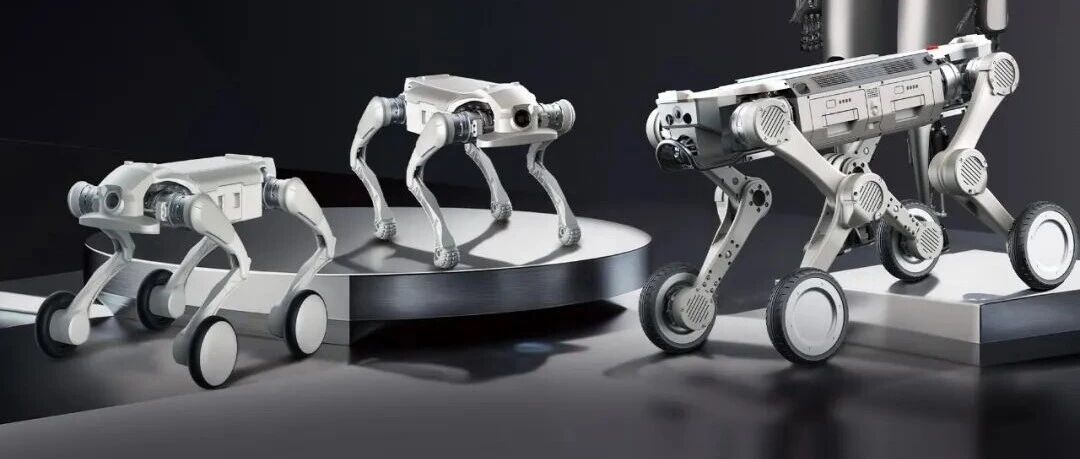
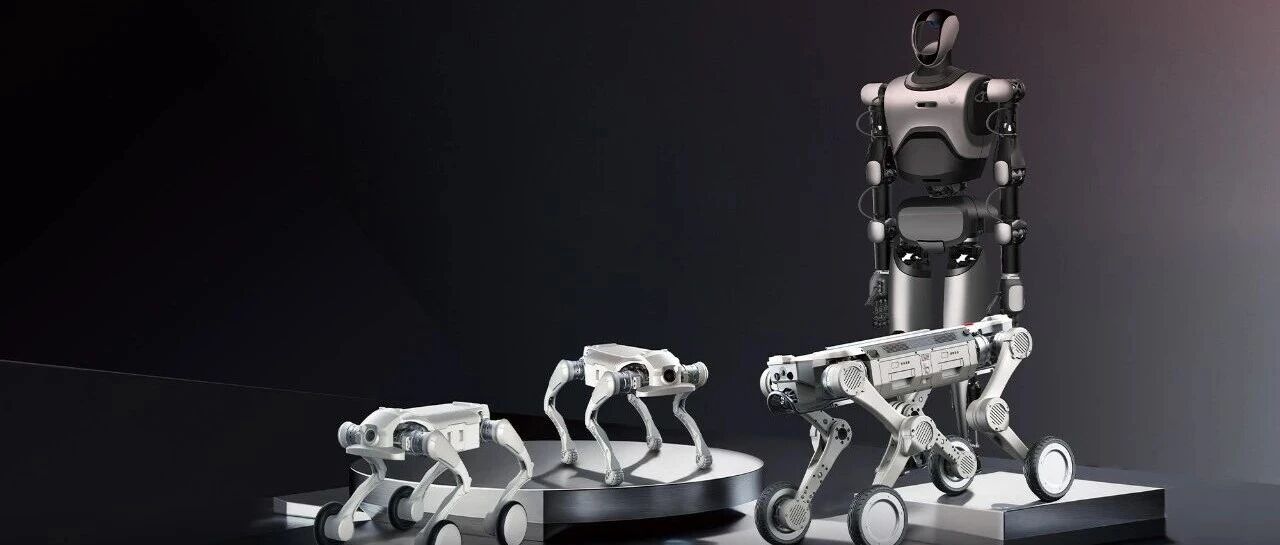
Core Insights - The article highlights the significant financing achievement of Genisom AI, a key player in the embodied intelligence sector, which has raised several hundred million yuan, marking the first major funding disclosure in this field for 2026 [1] - The funding will accelerate product scaling and ecosystem development, focusing on mass production, new product expansion, channel strengthening, supply chain construction, and partner empowerment to promote the large-scale application of embodied intelligence technology [1] Group 1: Product Scaling and Matrix - Genisom AI's product matrix includes humanoid and quadruped robots, leveraging comprehensive self-research and full-chain manufacturing capabilities to create a compatible and adaptable product line [5] - The company has achieved mass production of its two main models, delivering the 5,000th robot by the end of December 2025 [5] - The "Steel Coin L1" weighs 15 kg and is designed for security and inspection scenarios, featuring IP54 protection and a 20 cm obstacle-crossing capability [7] - The "Copper Hammer M1" weighs 35 kg, has a near 1:1 load ratio, and is suitable for heavy-duty scenarios with IP67 protection and a working temperature range of -20℃ to 55℃, achieving "first launch and mass production" [9] Group 2: Core Technology and Open Ecosystem - The rapid development of Genisom AI is rooted in its solid core technology and open empowerment system, with a fully self-developed integrated joint module that has been series-produced and platformized [11] - The company has launched the open-source MATRiX simulation platform, addressing high costs, low efficiency, and data iteration challenges in the transition from virtual simulation to real deployment [13] - The technology has been validated in international competitions, with the "Steel Coin L1" winning a robotics competition for its stable performance in confined spaces [15] Group 3: Comprehensive Ecosystem Layout - Genisom AI is driving value creation through a dual approach of "technology products + scene ecology," collaborating with manufacturers, integrators, and operators to build solutions [18] - In the power inspection sector, the company's quadruped robots are utilized for power inspection tasks at the Jiuquan Satellite Launch Center, achieving unmanned and intelligent operations [20] - In the firefighting sector, Genisom AI has developed rescue application solutions in collaboration with partners, enabling ground-air coordination for high-risk environment rescues [20] - The company has also created a family entertainment project, "Steel Coin Challenge," exploring new business models that integrate technology with entertainment and education [20] Group 4: Market Recognition and Future Outlook - This financing round signifies market recognition of Genisom AI's mass production capabilities, technological depth, and ecological strategy [22] - As the robotics industry undergoes deep integration and the need for large-scale implementation of embodied intelligence grows, Genisom AI is positioned to become a key enabler in the era of human-robot coexistence [22] - The company plans to continue collaborating with upstream and downstream partners to promote the deep integration of embodied intelligence technology across various industries [23]

半年交付5000台!这家公司开启了26年具身领域的首笔融资~
具身智能之心· 2026-01-05 01:03
Core Viewpoint - The article highlights the rapid growth and technological advancements of Zhishen Technology, a startup in the field of embodied intelligence, which has successfully completed multiple rounds of financing and achieved significant product delivery milestones within a short time frame [3][30]. Financing and Investment - Zhishen Technology announced the completion of several financing rounds, accumulating several hundred million yuan, with investments from industry-related capital, indicating strong recognition from the industrial ecosystem [3][4]. - The financing round focuses on supporting industrial upgrades and technological innovation to enhance overall competitiveness [4]. Product Development and Production - In just two years, Zhishen Technology has completed product design, core component research and development, and established its own factory, achieving mass production of 6,000 units within six months of starting production in June 2025, with revenue exceeding 100 million yuan [4][30]. - The company has developed two main models: the Steel Coin L1 and the Copper Hammer M1, with the former weighing 15 kg and designed for security and inspection applications, and the latter weighing 35 kg, suitable for heavy-duty scenarios [13][15]. Technological Innovation - Zhishen Technology has achieved breakthroughs in key technologies, including high-power joint modules and bionic quadrupeds, covering the entire process from core components to complete machines [8][19]. - The company has established a quality assurance system for mass production, ensuring that each product can withstand extreme conditions and long-term use [12]. Market Position and Competitive Advantage - The company's competitive edge lies in its ability to provide clear value to the industry through a closed-loop system encompassing components, hardware, software algorithms, and solutions [18]. - Zhishen Technology has launched the MATRiX simulation platform, which addresses high costs and inefficiencies in the deployment process, significantly improving development and implementation efficiency for partners [21]. Industry Impact and Future Outlook - The year 2025 has been particularly busy for Zhishen Technology, with multiple product launches and participation in competitions, including winning the IROS 2025 quadruped robot challenge [25][27]. - The company is actively applying its robots in various scenarios, including power inspection and firefighting, and is exploring new business models in the entertainment sector [33][34]. - The recent financing reflects market recognition of Zhishen Technology's production capabilities, technological depth, and ecological strategy, positioning it as a key player in the advancement of human-machine coexistence [36].

2026年首个具身智能融资诞生!智元投了!
机器人大讲堂· 2026-01-04 14:31
Core Insights - GENISOM AI (智身科技) has completed multiple rounds of financing, raising several hundred million yuan, with investments from industry capital partners, aimed at scaling product deployment and ecosystem development [1][3]. Group 1: Financing and Investment - The recent financing round is notable as it is the first billion-level financing case in the embodiment field this year, attracting significant industry attention [3]. - The investment structure, primarily led by industry capital, fosters a deeply integrated industrial chain cooperation ecosystem, enhancing GENISOM AI's competitive advantage in the embodiment intelligence sector [3]. - Key investors include Zhiyuan Robotics, Guian Kunpeng Fund, Jinma Leisure, and others, focusing on various sectors such as new energy vehicles and equipment manufacturing [4]. Group 2: Product Development and Production - GENISOM AI has established a high-standard production line and digital factory in Suzhou, ensuring a closed-loop capability from R&D to production and delivery [10]. - By the end of December 2025, the company had delivered 5,000 units of its two main models, "Steel Coin L1" and "Copper Hammer M1," marking it as one of the few companies in the industry to achieve mass production upon launch [12]. - The "Steel Coin L1" is designed for light to medium load scenarios, while the "Copper Hammer M1" is suitable for heavy-duty applications, showcasing the company's focus on practical solutions rather than mere technological showcases [14][16]. Group 3: Technological Advancements and Applications - GENISOM AI has developed core hardware components in-house and launched the MATRiX simulation platform, addressing the industry's challenges in transitioning from virtual simulation to real-world deployment [21]. - The company participated in the Shenzhou 21 manned spacecraft launch, where its robotic dog performed critical power inspection tasks, demonstrating its capabilities in national-level aerospace support [24]. - The "Steel Coin L1" has also been utilized in a family entertainment project, showcasing the integration of technology with cultural and entertainment applications [26]. Group 4: Future Outlook - 2026 is anticipated to be a pivotal year for embodiment intelligence, with a shift in investment logic from chasing technological trends to focusing on practical mass production and application [29].
“吴中造”机器人阔步而来
Xin Hua Ri Bao· 2025-11-17 22:01
Group 1 - The core viewpoint of the articles highlights the rapid development and innovation in the robotics industry in Suzhou's Wuzhong District, showcasing significant achievements in competitions and technological advancements [1][2][3][4][5] - Suzhou's Wuzhong District aims to become the leading national robotics industry cluster, with over 1,600 related enterprises and an industry scale exceeding 160 billion yuan, projected to reach 200 billion yuan this year [1][4] - The "Wuzhong Eight Heroes" represent a complete industrial chain from core components to intelligent applications, emphasizing the region's comprehensive capabilities in robotics and artificial intelligence [1][2] Group 2 - Leading companies in Wuzhong, such as Ecovacs and Magic Atom, are driving innovation, with Ecovacs winning the prestigious "Nobel Prize" in robotics and Magic Atom achieving mass production of bipedal and quadrupedal robots [2][3] - The collaboration between companies like Magic Atom and Chasing Technology demonstrates the integration of robotics into smart manufacturing, enhancing operational efficiency through real-world data collection [2][3] - The establishment of innovation platforms, such as the Jiangsu Province Intelligent Robot Technology Innovation Center, supports the development of humanoid robots and other advanced technologies, fostering a robust innovation ecosystem [4][5] Group 3 - Wuzhong District has attracted significant investment, with 39 robot cooperation funds totaling 16.3 billion yuan, and companies like Lexiang Technology and Xingmai Innovation securing substantial financing rounds [5] - The district's strategic focus on transforming research into production and daily life aims to position Wuzhong as a global hub for embodied intelligence innovation [5]


苏州跑出的这只机器狗,在IROS拿了冠军
具身智能之心· 2025-11-05 00:02
Core Viewpoint - The article highlights the rapid development and strategic pivot of Zhishen Technology, which has shifted its focus from humanoid robots to quadruped robotic dogs, achieving significant success in competitions and positioning itself as a comprehensive technology service provider in the field of embodied intelligence [5][28]. Group 1: Company Overview - Zhishen Technology was founded in 2023 and quickly gained attention by winning the IROS 2025 quadruped robot competition with its "Steel Coin L1" model, marking a significant achievement for a newly established startup [5][8]. - The company initially aimed to develop heavy-load humanoid robots but realized the market potential and technological maturity of quadruped robots, leading to a strategic shift that has fueled its rapid growth [5][6]. Group 2: Technological Development - The quadruped robot market is becoming increasingly competitive, with a convergence of technical routes among various manufacturers, making stability a crucial factor for success [9][10]. - Zhishen Technology emphasizes the importance of creating a reliable and stable platform for its robots, which is essential for executing advanced algorithms effectively [12][13]. - The company has developed a high-power density integrated joint, CHAMP P65, which offers a peak torque output of 48N·m and a torque density of 92.3 Nm/kg, positioning it at the forefront of the industry [24]. Group 3: Market Positioning and Strategy - Zhishen Technology positions itself as a "full-chain technology service provider" in embodied intelligence, focusing on the development and manufacturing of robotic platforms while avoiding direct involvement in end-user applications [28][32]. - The company aims to bridge the gap between experimental prototypes and commercially viable products, addressing the engineering challenges that arise in the transition from lab to market [16][30]. - By maintaining a focus on core competencies and avoiding distractions from diverse application scenarios, Zhishen Technology seeks to optimize its resources and enhance product quality [33][34]. Group 4: Future Outlook - The company plans to continue enhancing its motion control capabilities and explore the integration of visual perception and intelligent task execution in its robotic dogs [41][42]. - Zhishen Technology aims to build a technology flywheel that leverages cutting-edge research from universities to iterate on its products and create value in various industry applications [42].

机器狗 “奥运会” 再传捷报!智身科技钢镚 L1 助力曼彻斯特大学 ZsiMan 战队获IROS 2025 四足挑战赛冠军!
机器人大讲堂· 2025-10-24 07:30
Core Viewpoint - The IROS 2025 Quadruped Robot Challenge showcased the capabilities of the "Steel Coin L1" robot developed by Chinese company ZhiShen Technology, which won the competition against top global universities, marking a significant achievement for domestic robotics in a field traditionally dominated by foreign brands [1][15][17]. Group 1: Competition Overview - The Quadruped Robot Challenge (QRC) is recognized as the "Olympics" of robotic dogs, initiated by the IEEE Robotics and Automation Society, with its first event held in London in 2023, attracting 15 global teams [4][6]. - The 2025 event featured approximately 7 top university teams, with a unique competition format allowing both 15 kg and 50 kg quadruped robots to compete simultaneously, challenging the notion that larger size equates to better performance [8][17]. Group 2: Performance and Technology - The "Steel Coin L1" robot, despite its lighter weight, excelled in the competition, overcoming increasingly complex obstacles and terrain, demonstrating that design optimization and technical adaptation are crucial for performance [9][10][17]. - The robot is equipped with advanced hardware, including a self-developed joint module with a peak torque of 48 N·m, and a high-performance suite integrating Intel RealSense cameras, Livox Mid360 LiDAR, and NVIDIA Orin NX computing units, enabling superior multi-modal perception and edge computing capabilities [10][12]. Group 3: Industry Impact - The victory of the "Steel Coin L1" not only fills a gap for domestic small quadruped robots in international competitions but also highlights the rapid rise of China's embodied intelligence technology [15][18]. - The Chinese quadruped robot market is projected to grow from 470 million yuan in 2023 to 660 million yuan in 2024, and further to 850 million yuan in 2025, with China currently holding over 50% of the global market share [18].

IROS现场高光:傅利叶、智元、越疆、逐际动力、青瞳视觉、灵心巧手等17家头部企业精彩盘点
机器人大讲堂· 2025-10-22 16:43
Core Insights - The 2025 IEEE/RSJ International Conference on Intelligent Robots and Systems (IROS 2025) in Hangzhou focuses on the deep integration of artificial intelligence and robotics, showcasing China's advancements in the robotics industry [1] - The conference highlights a shift from isolated breakthroughs to a systematic and ecological development stage in China's robotics technology [1] Humanoid Robots: From Technical Marvels to Practical Applications - Humanoid robots are a focal point, with companies showcasing diverse technological paths and commercialization strategies [2] - Companies like Fourier Intelligence and ZhiYuan Robotics are exploring emotional interaction and open-source strategies, while others like Magic Atom and ZhuJi Dynamics are enhancing humanoid robot movement through imitation and reinforcement learning [2] ZhiYuan Robotics - ZhiYuan Robotics presented a comprehensive display of its full product range and scene layout, emphasizing its all-stack technology and open-source ecosystem [3] - The company showcased its "Expedition," "Lingxi," and "Spirit" product families, highlighting their capabilities in commercial, interactive, and industrial applications [5] PNDbotics - PNDbotics aims to simplify the development, simulation, and deployment of humanoid robots, focusing on model-based gait planning and embodied intelligence algorithms [7][9] - The company has established a self-owned manufacturing center, achieving complete autonomy in the development and production of core components [9] Magic Atom - Magic Atom demonstrated its strong capabilities with a high self-research rate of 90%, showcasing a complete product matrix of humanoid and quadruped robots [10][12] - The company has rapidly launched multiple new products since June 2025, indicating a fast-paced commercialization process [12] Fourier Intelligence - Fourier showcased its "Care-bot" concept and the N1 robot, emphasizing its open-source strategy and collaboration with global developers [13][15] - The company aims to transition from a manufacturer to a foundational player in the embodied intelligence ecosystem [15] Zero Point Robotics - Zero Point Robotics highlighted its milestone in achieving long-sequence multi-task operations, establishing itself as a leader in the commercialization of embodied intelligence [16][18] ZhuJi Dynamics - ZhuJi Dynamics presented its humanoid robot Oli and the TRON 1, showcasing advanced capabilities in movement and stability [19][21] - The company has achieved a commercial closed-loop process for its products, which are now being delivered globally [22] ZhiShen Technology - ZhiShen Technology displayed its comprehensive technology service capabilities across the entire robotics industry chain, emphasizing its confidence in driving industrialization [23][25] LingYu Intelligent - LingYu Intelligent introduced its TeleAvatar remote operation robot system, integrating VR technology for immersive control experiences [28][30] Core Components: Precision Breakthroughs - The conference highlighted the importance of core components in robotics, with companies focusing on breakthroughs in joint modules, end-effectors, and sensors [31] - Modular and standardized designs are becoming mainstream, reducing R&D costs and accelerating product iterations [31] QingTong Vision - QingTong Vision showcased its intelligent data collection platform, addressing the industry's need for high-quality training data for humanoid robots [32][34] LingXin QiaoShou - LingXin QiaoShou presented its bionic dexterous hand products, demonstrating the capabilities of embodied intelligence in precise and flexible operations [35][37] Kunwei Motion Technology - Kunwei Motion Technology showcased its digital three-dimensional force measurement platform, providing critical data for optimizing robot control algorithms [39][41] YinShi Robotics - YinShi Robotics presented its micro servo cylinders and bionic dexterous hands, redefining the capabilities of robotic end-effectors [43][45] Oak Fruit Robotics - Oak Fruit Robotics focused on high-precision tactile perception, showcasing its Tac3D multi-modal tactile sensor for fine autonomous operations [47][49] LingZu Era - LingZu Era demonstrated its integrated joint modules, achieving significant growth in shipments and showcasing its competitive edge in the global market [50][52] Industrial Robots: AI Integration Driving Innovation - The conference revealed a new paradigm in industrial robots, where AI is becoming a core driving force, enabling robots to handle complex tasks previously reliant on human expertise [53] - Companies like Faao Robotics showcased their comprehensive solutions from core components to industry applications, emphasizing their role in automating complex processes [54][56]

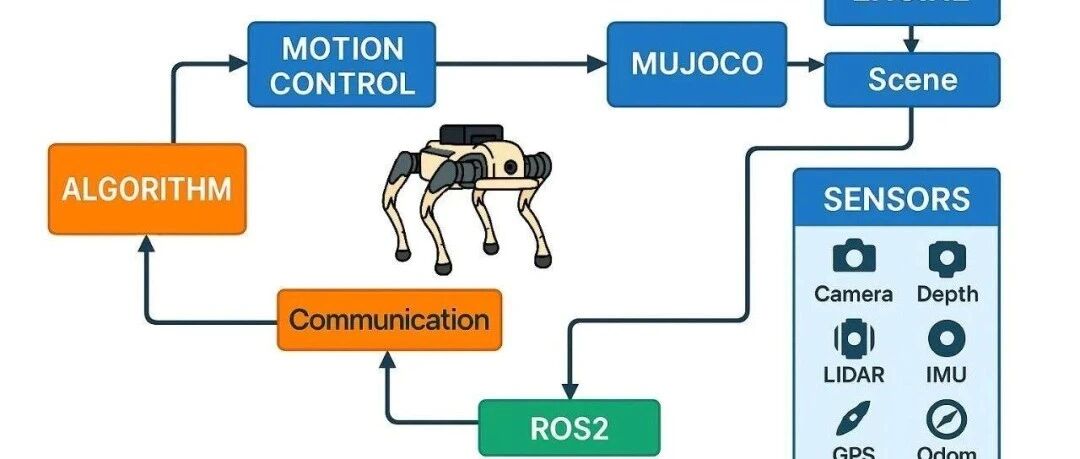
全球首个MuJoCo+UE5组合!MATRiX 仿真平台开源!成功打破机器人研发“虚实壁垒”!
机器人大讲堂· 2025-10-22 00:00
Core Insights - The article highlights the significance of the MATRiX simulation platform developed by ZhiShen Technology, which integrates high-fidelity physics and visual rendering to enhance robot development processes [1][3][27]. Group 1: MATRiX Simulation Platform Features - MATRiX is the world's first simulation training platform that combines the MuJoCo high-precision physics engine with Unreal Engine 5 for high-fidelity visual rendering [3][5]. - The platform supports large-scale parallel simulation and GPU-accelerated training, significantly improving training efficiency and enabling rapid algorithm iteration in virtual environments [6][8]. - It utilizes UE5 for visual rendering, providing realistic dynamic weather and material properties, while allowing users to leverage existing high-quality scene resources from the UE community [9][11]. Group 2: Sensor and Deployment Capabilities - MATRiX supports various sensor types, including RGB cameras, depth cameras, and LiDAR, with seamless compatibility with ROS 2, simplifying integration into existing workflows [12][14]. - The platform offers two deployment methods: a precompiled binary for quick experiments and source code for deep customization, making it accessible for both beginners and advanced users [15][17]. Group 3: Cost Reduction and R&D Efficiency - MATRiX covers core processes in robot development, providing high-precision and high-efficiency simulation environments for algorithm debugging, motion control, and reinforcement learning training [18][20]. - By simulating complex scenarios, the platform reduces the need for extensive real-world testing, thereby lowering equipment costs and testing risks, leading to a significant decrease in R&D expenses [22][27]. Group 4: Open Source and Community Engagement - The MATRiX platform has been open-sourced, allowing developers to expand robot models, sensor plugins, and custom scenes, fostering a collaborative ecosystem for simulation technology advancement [25][39]. - The article encourages participation in the open-source community, highlighting the potential for users to contribute to the development of new features and improvements [27][28].