MATRiX仿真平台

Search documents
具身智能赛道迎来开门红!智身科技完成数亿元连续融资,智元领投
机器人圈· 2026-01-06 12:06
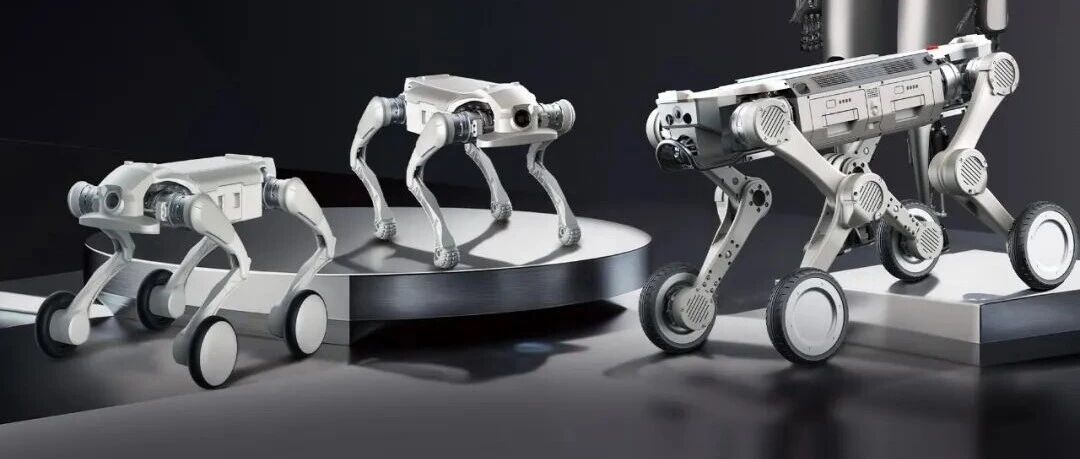
Core Insights - The article highlights the significant financing achievement of Genisom AI, a key player in the embodied intelligence sector, which has raised several hundred million yuan, marking the first major funding disclosure in this field for 2026 [1] - The funding will accelerate product scaling and ecosystem development, focusing on mass production, new product expansion, channel strengthening, supply chain construction, and partner empowerment to promote the large-scale application of embodied intelligence technology [1] Group 1: Product Scaling and Matrix - Genisom AI's product matrix includes humanoid and quadruped robots, leveraging comprehensive self-research and full-chain manufacturing capabilities to create a compatible and adaptable product line [5] - The company has achieved mass production of its two main models, delivering the 5,000th robot by the end of December 2025 [5] - The "Steel Coin L1" weighs 15 kg and is designed for security and inspection scenarios, featuring IP54 protection and a 20 cm obstacle-crossing capability [7] - The "Copper Hammer M1" weighs 35 kg, has a near 1:1 load ratio, and is suitable for heavy-duty scenarios with IP67 protection and a working temperature range of -20℃ to 55℃, achieving "first launch and mass production" [9] Group 2: Core Technology and Open Ecosystem - The rapid development of Genisom AI is rooted in its solid core technology and open empowerment system, with a fully self-developed integrated joint module that has been series-produced and platformized [11] - The company has launched the open-source MATRiX simulation platform, addressing high costs, low efficiency, and data iteration challenges in the transition from virtual simulation to real deployment [13] - The technology has been validated in international competitions, with the "Steel Coin L1" winning a robotics competition for its stable performance in confined spaces [15] Group 3: Comprehensive Ecosystem Layout - Genisom AI is driving value creation through a dual approach of "technology products + scene ecology," collaborating with manufacturers, integrators, and operators to build solutions [18] - In the power inspection sector, the company's quadruped robots are utilized for power inspection tasks at the Jiuquan Satellite Launch Center, achieving unmanned and intelligent operations [20] - In the firefighting sector, Genisom AI has developed rescue application solutions in collaboration with partners, enabling ground-air coordination for high-risk environment rescues [20] - The company has also created a family entertainment project, "Steel Coin Challenge," exploring new business models that integrate technology with entertainment and education [20] Group 4: Market Recognition and Future Outlook - This financing round signifies market recognition of Genisom AI's mass production capabilities, technological depth, and ecological strategy [22] - As the robotics industry undergoes deep integration and the need for large-scale implementation of embodied intelligence grows, Genisom AI is positioned to become a key enabler in the era of human-robot coexistence [22] - The company plans to continue collaborating with upstream and downstream partners to promote the deep integration of embodied intelligence technology across various industries [23]

半年交付5000台!这家公司开启了26年具身领域的首笔融资~
具身智能之心· 2026-01-05 01:03
Core Viewpoint - The article highlights the rapid growth and technological advancements of Zhishen Technology, a startup in the field of embodied intelligence, which has successfully completed multiple rounds of financing and achieved significant product delivery milestones within a short time frame [3][30]. Financing and Investment - Zhishen Technology announced the completion of several financing rounds, accumulating several hundred million yuan, with investments from industry-related capital, indicating strong recognition from the industrial ecosystem [3][4]. - The financing round focuses on supporting industrial upgrades and technological innovation to enhance overall competitiveness [4]. Product Development and Production - In just two years, Zhishen Technology has completed product design, core component research and development, and established its own factory, achieving mass production of 6,000 units within six months of starting production in June 2025, with revenue exceeding 100 million yuan [4][30]. - The company has developed two main models: the Steel Coin L1 and the Copper Hammer M1, with the former weighing 15 kg and designed for security and inspection applications, and the latter weighing 35 kg, suitable for heavy-duty scenarios [13][15]. Technological Innovation - Zhishen Technology has achieved breakthroughs in key technologies, including high-power joint modules and bionic quadrupeds, covering the entire process from core components to complete machines [8][19]. - The company has established a quality assurance system for mass production, ensuring that each product can withstand extreme conditions and long-term use [12]. Market Position and Competitive Advantage - The company's competitive edge lies in its ability to provide clear value to the industry through a closed-loop system encompassing components, hardware, software algorithms, and solutions [18]. - Zhishen Technology has launched the MATRiX simulation platform, which addresses high costs and inefficiencies in the deployment process, significantly improving development and implementation efficiency for partners [21]. Industry Impact and Future Outlook - The year 2025 has been particularly busy for Zhishen Technology, with multiple product launches and participation in competitions, including winning the IROS 2025 quadruped robot challenge [25][27]. - The company is actively applying its robots in various scenarios, including power inspection and firefighting, and is exploring new business models in the entertainment sector [33][34]. - The recent financing reflects market recognition of Zhishen Technology's production capabilities, technological depth, and ecological strategy, positioning it as a key player in the advancement of human-machine coexistence [36].

2026年首个具身智能融资诞生!智元投了!
机器人大讲堂· 2026-01-04 14:31
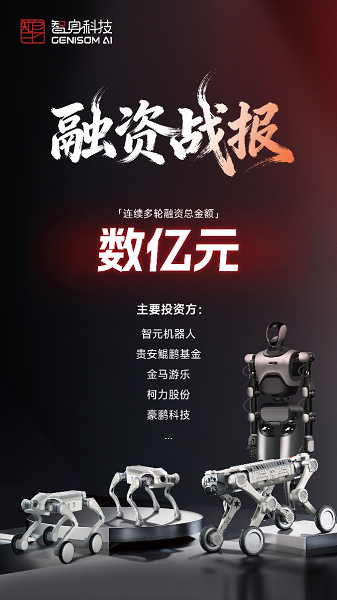
Core Insights - GENISOM AI (智身科技) has completed multiple rounds of financing, raising several hundred million yuan, with investments from industry capital partners, aimed at scaling product deployment and ecosystem development [1][3]. Group 1: Financing and Investment - The recent financing round is notable as it is the first billion-level financing case in the embodiment field this year, attracting significant industry attention [3]. - The investment structure, primarily led by industry capital, fosters a deeply integrated industrial chain cooperation ecosystem, enhancing GENISOM AI's competitive advantage in the embodiment intelligence sector [3]. - Key investors include Zhiyuan Robotics, Guian Kunpeng Fund, Jinma Leisure, and others, focusing on various sectors such as new energy vehicles and equipment manufacturing [4]. Group 2: Product Development and Production - GENISOM AI has established a high-standard production line and digital factory in Suzhou, ensuring a closed-loop capability from R&D to production and delivery [10]. - By the end of December 2025, the company had delivered 5,000 units of its two main models, "Steel Coin L1" and "Copper Hammer M1," marking it as one of the few companies in the industry to achieve mass production upon launch [12]. - The "Steel Coin L1" is designed for light to medium load scenarios, while the "Copper Hammer M1" is suitable for heavy-duty applications, showcasing the company's focus on practical solutions rather than mere technological showcases [14][16]. Group 3: Technological Advancements and Applications - GENISOM AI has developed core hardware components in-house and launched the MATRiX simulation platform, addressing the industry's challenges in transitioning from virtual simulation to real-world deployment [21]. - The company participated in the Shenzhou 21 manned spacecraft launch, where its robotic dog performed critical power inspection tasks, demonstrating its capabilities in national-level aerospace support [24]. - The "Steel Coin L1" has also been utilized in a family entertainment project, showcasing the integration of technology with cultural and entertainment applications [26]. Group 4: Future Outlook - 2026 is anticipated to be a pivotal year for embodiment intelligence, with a shift in investment logic from chasing technological trends to focusing on practical mass production and application [29].

具身智能2026“开年第一融”落定,智身科技获数亿元资金加速规模落地与生态构建
Cai Fu Zai Xian· 2026-01-04 10:14
Core Insights - GENISOM AI has successfully completed multiple rounds of financing, accumulating several hundred million yuan, marking the first significant funding disclosure in the field for 2026 [1] - The funding round was led by Zhiyuan Robotics and Gui'an Kunpeng Fund, with participation from various industry capital and partners, indicating strong recognition of the company's technology path, mass production capabilities, and commercialization progress [1] Funding Utilization - The funds raised will be primarily allocated to three areas: scaling production and market promotion of key models "Steel Coin L1" and "Copper Hammer M1"; expanding the product matrix and enhancing supply chain and channel construction; and upgrading the partner empowerment system to promote the penetration and large-scale implementation of embodied intelligence solutions across various industries [3] Product Capabilities - GENISOM AI's core advantage lies in its ability to rapidly convert technology into scalable products, with a fully self-developed integrated joint module as the technical foundation [5] - The company has achieved mass production of its small quadruped robot "Steel Coin L1" and medium quadruped robot "Copper Hammer M1," with a monthly production capacity reaching thousands [5] - As of December 31, 2025, the cumulative delivery of quadruped robots exceeded 5,000 units, successfully applied in security, electricity, firefighting, entertainment, and research fields [5] Ecosystem Development - Beyond hardware products, GENISOM AI is actively building an ecosystem through technology openness, lowering the development threshold for robots by selling its integrated joint module [7] - The company has fully open-sourced its self-developed MATRiX simulation platform to address core pain points in robot development, enhancing R&D efficiency across the industry [7] - In 2025, a team equipped with GENISOM AI robots won a top international competition, further validating the technical leadership and reliability of its products [7] Industry Trends - The concentrated investment in GENISOM AI at the beginning of the year signals a shift in focus from capital and industry towards embodied intelligence companies with comprehensive technical capabilities, verified mass production strength, and clear ecosystem empowerment models [9] - The company's differentiated strategy of "solid products + full-scenario layout + ecosystem empowerment" has successfully closed the loop from R&D to large-scale delivery, providing critical momentum for industry competition and ecosystem expansion in 2026 [9]
智身科技机器狗助力曼彻斯特大学,勇夺IROS 2025四足机器人挑战赛冠军
Cai Jing Wang· 2025-10-24 06:48
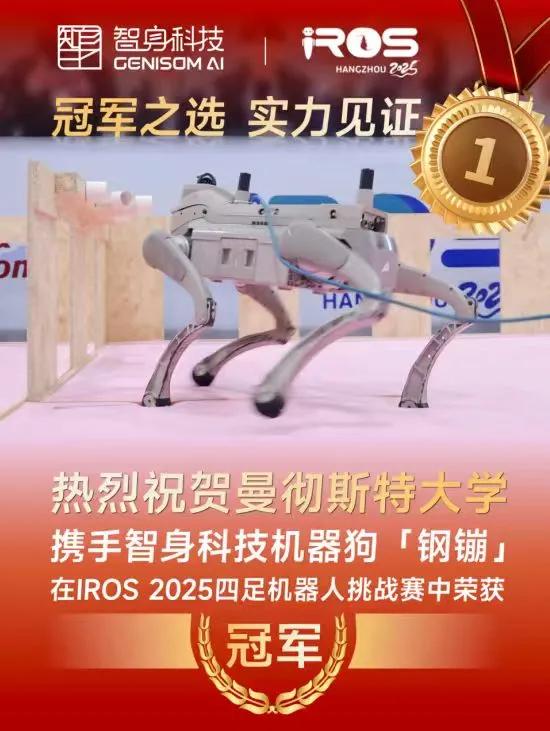
Core Insights - The ZsiMan team from the University of Manchester won the championship at the IROS 2025 Quadruped Robot Challenge using the Zhishen Technology's Gangbeng L1 robot dog platform, marking a significant achievement in their first participation [1][9]. Group 1: Event Overview - IROS is one of the top international conferences in robotics, alongside ICRA, serving as a platform for showcasing cutting-edge research in the field [3]. - The Quadruped Robot Challenge is known for its challenging course design and strict scoring criteria, likened to the "Olympics" of robot dogs [3][5]. - The competition attracted approximately seven top university teams, featuring a range of robot sizes from 15 kg to 50 kg [7]. Group 2: Technical Performance - The Gangbeng L1 robot dog demonstrated exceptional performance, overcoming various obstacles and complex terrains, which included stairs, ramps, and K-shaped barriers [7][9]. - The robot's lightweight design posed challenges, but its advanced capabilities allowed it to progress through all competition stages and ultimately win [9]. Group 3: Technological Advancements - The Gangbeng L1 is equipped with a powerful hardware architecture, featuring a peak torque of 48 N·m, making it competitive with larger robot dogs [10]. - It utilizes Zhishen Technology's high-performance suite, including Intel RealSense cameras, Livox Mid360 LiDAR, and NVIDIA Orin NX computing units, enabling multi-modal perception and edge computing [10]. - The robot boasts an AI computing performance of 100 TOPS, allowing it to process complex sensor data in real-time [10]. Group 4: Research and Development - Zhishen Technology's open-source high-fidelity simulation platform, MATRiX, supports various research tasks and significantly shortens algorithm iteration cycles by 70% [12]. - The collaboration between Professor Wei Pan and the ZsiMan team facilitated the integration of advanced algorithms into the Gangbeng L1's motion control, showcasing the team's technical prowess [16].

全球首个MuJoCo+UE5组合!MATRiX 仿真平台开源!成功打破机器人研发“虚实壁垒”!
机器人大讲堂· 2025-10-22 00:00
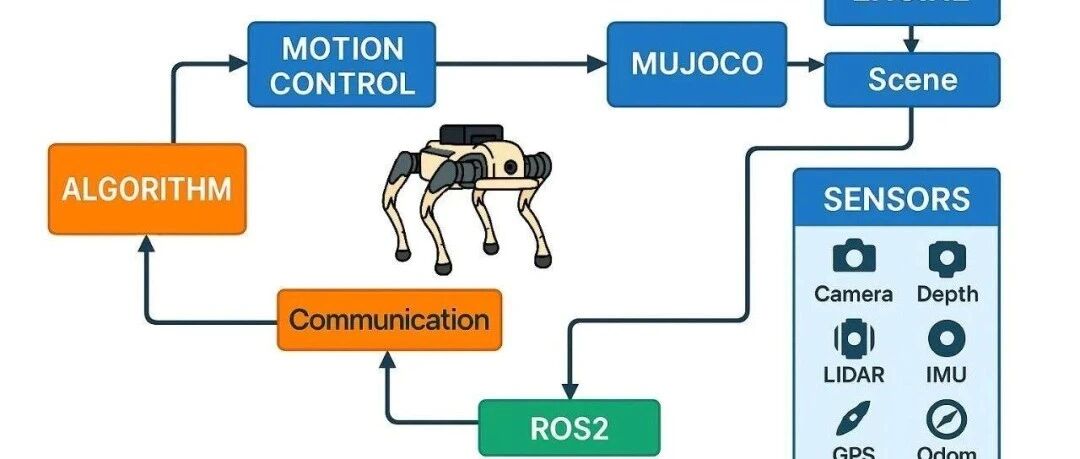
Core Insights - The article highlights the significance of the MATRiX simulation platform developed by ZhiShen Technology, which integrates high-fidelity physics and visual rendering to enhance robot development processes [1][3][27]. Group 1: MATRiX Simulation Platform Features - MATRiX is the world's first simulation training platform that combines the MuJoCo high-precision physics engine with Unreal Engine 5 for high-fidelity visual rendering [3][5]. - The platform supports large-scale parallel simulation and GPU-accelerated training, significantly improving training efficiency and enabling rapid algorithm iteration in virtual environments [6][8]. - It utilizes UE5 for visual rendering, providing realistic dynamic weather and material properties, while allowing users to leverage existing high-quality scene resources from the UE community [9][11]. Group 2: Sensor and Deployment Capabilities - MATRiX supports various sensor types, including RGB cameras, depth cameras, and LiDAR, with seamless compatibility with ROS 2, simplifying integration into existing workflows [12][14]. - The platform offers two deployment methods: a precompiled binary for quick experiments and source code for deep customization, making it accessible for both beginners and advanced users [15][17]. Group 3: Cost Reduction and R&D Efficiency - MATRiX covers core processes in robot development, providing high-precision and high-efficiency simulation environments for algorithm debugging, motion control, and reinforcement learning training [18][20]. - By simulating complex scenarios, the platform reduces the need for extensive real-world testing, thereby lowering equipment costs and testing risks, leading to a significant decrease in R&D expenses [22][27]. Group 4: Open Source and Community Engagement - The MATRiX platform has been open-sourced, allowing developers to expand robot models, sensor plugins, and custom scenes, fostering a collaborative ecosystem for simulation technology advancement [25][39]. - The article encourages participation in the open-source community, highlighting the potential for users to contribute to the development of new features and improvements [27][28].