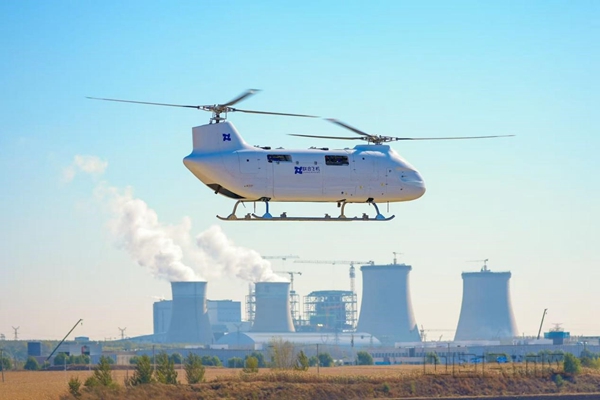
铂影T1400纵列式无人直升机

Search documents
“龙江造”铂影无人直升机亮相新加坡航展
Xin Lang Cai Jing· 2026-02-06 21:59
Core Insights - The "Longjiang-made" Platinum Shadow T1400 coaxial unmanned helicopter made its overseas debut at the 2026 Singapore Airshow, showcasing China's technological advancements and industrial ambitions in the heavy-lift drone sector [3][4] - The T1400 features a maximum takeoff weight of 1.4 tons and a payload capacity of 650 kilograms, with an operational ceiling of 6,500 meters and an impressive endurance of 8 hours, indicating a significant leap in drone capabilities [3] - The helicopter's innovative design allows for cost-effective procurement and operation, comparable to that of a family car, thus balancing excellent performance with large-scale application potential [3] Industry Implications - The introduction of the T1400 is expected to herald a new efficiency revolution in the global low-altitude economy and special operations market, driven by its advanced capabilities and cost advantages [3] - The T1400's all-weather operational range of -40°C to 55°C, along with its ability to operate in complex terrains and withstand winds of up to 8 levels, positions it as a versatile aerial work platform for various applications [4] - The showcased multi-scenario solutions at the airshow highlight the extensive market potential for the T1400, indicating a broad applicability across different sectors [4]

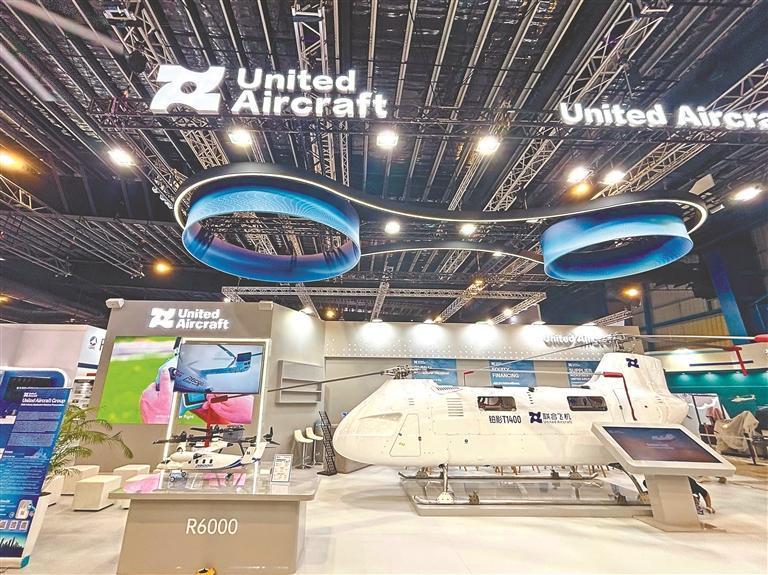
新加坡航展:千余家企业参展 中国制造引发关注
Xin Lang Cai Jing· 2026-02-05 12:03
Core Insights - The 10th Singapore Airshow is taking place at Changi Exhibition Centre, featuring over 1,000 companies from more than 50 countries, with a significant focus on "Made in China" products [1] Group 1: Chinese Aviation Industry - COMAC's C919 and C909 are highlighted for their fuel efficiency and advanced structural design, attracting considerable attention at the event [1] - Chinese aviation companies are expanding into Southeast Asian markets, driven by the Belt and Road Initiative, with countries like Vietnam, Cambodia, and Brunei developing their aviation sectors [1] Group 2: Military and Drone Technology - AVIC's J-35A model is prominently displayed, indicating the company's extensive product range and significant investment in drone technology, attracting interest from various aviation enterprises for potential collaborations [1] - The privately-owned China United Aircraft Corporation showcased the T1400 vertical take-off and landing drone, which is noted for its high payload capacity and long endurance, appealing to island nations [1] - The T1400 is positioned as a cost-effective solution for air transport, offering efficiency advantages over traditional shipping methods, with operational costs comparable to that of a family car [1]
云衢启章,鹏翼展卷——低空经济绘就万亿新图景
Zhong Guo Zheng Quan Bao· 2025-11-25 00:13
Core Viewpoint - The low-altitude economy in China is projected to reach a market size of 1.5 trillion yuan by 2025 and is expected to exceed 2 trillion yuan by 2030, indicating a strong growth trend in the industry [1] Group 1: Market Demand and Growth - The surge in orders reflects a high market demand, with Meituan's drone delivery surpassing 670,000 commercial orders by September 2025, and 150,000 orders in the first half of 2025 alone [2] - The industry anticipates that by 2035, the value of drone logistics in China could exceed 1 trillion yuan, with an average annual growth rate of around 20% [2] - Numerous low-altitude aircraft manufacturers have received substantial orders, with companies like Wolt and Yihang securing hundreds of aircraft orders and significant financing to support production [3][4] Group 2: Infrastructure and Safety - The development of the low-altitude economy requires a robust infrastructure network and comprehensive safety regulations to ensure smooth operations [1][6] - Safety is recognized as a top priority in the industry, with calls for unified regulatory systems to manage low-altitude flight activities effectively [7] - Companies are working towards creating a multi-network integration of air, sky, and ground services to enhance regulatory and service models for the low-altitude industry [8] Group 3: Policy Support and Strategic Development - The Chinese government predicts that the low-altitude economy will reach a market size of 3.5 trillion yuan by 2035, emphasizing the importance of policy support for industry stability [9] - The establishment of the Low Altitude Economic Development Department by the National Development and Reform Commission aims to formulate and implement strategies for the sector [10] - Local governments are increasingly incorporating low-altitude economic development into their work reports, indicating a multi-layered regulatory framework is being established [11]
云衢启章,鹏翼展卷
Zhong Guo Zheng Quan Bao· 2025-11-24 20:13
Core Insights - The low-altitude economy in China is projected to reach a market size of 1.5 trillion yuan by 2025 and is expected to exceed 2 trillion yuan by 2030, indicating strong growth trends in the industry [1][7] - The development of low-altitude applications is rapidly expanding, with increasing orders, active financing, and technological advancements contributing to a vibrant market landscape [1][2] Market Demand and Orders - As of September 2025, Meituan's drone delivery service has completed over 670,000 commercial orders, with 150,000 orders in the first half of 2025 alone, highlighting the growing demand for drone logistics [1] - The industry anticipates over 140 new low-altitude logistics routes to be opened in 2024, with drone logistics revenue expected to surpass 1 trillion yuan by 2035, maintaining an annual growth rate of around 20% [1][2] Application Scenarios - Low-altitude economic applications are categorized into four main areas: production operations, transportation, cultural tourism experiences, and security [2] - The demand for low-altitude flying vehicles is increasing, with companies like Zero Gravity Aircraft and Yufeng Future securing significant orders for various aircraft models, indicating a robust market response [2][3] Safety and Infrastructure - Safety is emphasized as a critical priority for the healthy development of the low-altitude economy, with calls for comprehensive monitoring and regulatory systems to ensure safe operations [5][6] - The establishment of a new infrastructure and flight control system is necessary to support the smooth operation of low-altitude activities, with ongoing efforts to develop integrated solutions for urban air mobility [4][6] Policy Support - The Chinese government is actively promoting the low-altitude economy through strategic planning and policy initiatives, including the establishment of a dedicated department for low-altitude economic development [7][8] - Recent government measures encourage private investment in low-altitude infrastructure, aiming to foster a collaborative environment for industry growth [7][8]
低空经济迈向“吨级”时代 重载长航程产品成竞争新焦点
Zhong Guo Zheng Quan Bao· 2025-11-03 20:31
Core Viewpoint - The competition in the low-altitude economy is shifting from merely achieving flight to focusing on long-distance and heavy-load capabilities, with the market experiencing a growth rate exceeding 30% annually [1][2]. Group 1: Market Development - The low-altitude economy in China is rapidly developing, with a market growth rate exceeding 30% annually as highlighted in the "Low Altitude Economy Blue Book: Development Report (2025)" [1]. - The introduction of heavy-load drones and long-range aircraft is marking the transition to a "ton-level" era in the low-altitude economy, with several products being launched and delivered [2]. Group 2: Product Innovations - The Platinum T1400 drone, developed by United Aircraft Group, has a maximum takeoff weight of 1,400 kg and a payload capacity of 650 kg, showcasing impressive endurance of over 8 hours [2]. - The AR-E800 eVTOL, developed by China Aviation Industry Group, has secured 20 confirmed orders and 140 intended orders, indicating strong market interest [2]. - The VT35, launched by EHang, has a maximum takeoff weight of 950 kg and aims to create an "air traffic one-hour" living circle in major urban areas [4]. Group 3: Application Scenarios - Current low-altitude aircraft are increasingly being designed for practical applications in logistics and inspection, particularly in extreme environments [3][4]. - The AR-E800 features a modular cargo bay and can operate in various environments, including scenic area support and short-distance cargo transport [3]. Group 4: Industry Support and Policy - The semiconductor industry is experiencing growth in design orders for specialized SoC chips due to the demand for lightweight and low-power drones [6]. - Policies from local governments, such as those in Guangzhou and Chongqing, are supporting the development of the low-altitude economy through financial incentives and strategic planning [7].
低空经济迈向“吨级”时代重载长航程产品成竞争新焦点
Zhong Guo Zheng Quan Bao· 2025-11-03 20:11
Core Viewpoint - The competition in the low-altitude economy is shifting from merely achieving flight to focusing on long-distance and heavy-load capabilities, with the market experiencing a growth rate exceeding 30% annually [1] Group 1: Market Development - The low-altitude economy in China is rapidly developing, with a market scale growth rate exceeding 30% annually [1] - The introduction of heavy-load drones, such as the T1400 with a maximum takeoff weight of 1400 kg and a payload capacity of 650 kg, signifies a transition to a "ton-level" era in the low-altitude economy [2] - The recent launch of various long-distance, heavy-load products indicates a competitive landscape where companies are focusing on logistics and inspection applications that require higher payload and range [2] Group 2: Technological Advancements - The AR-E800 drone features a distributed six-rotor design and can operate in various modes, making it suitable for complex terrain and short-distance cargo transport [3] - The T1400 drone is designed to withstand extreme temperatures and has a high operational capacity, simplifying complex flight operations [3] - The VT35 drone from EHang has a range exceeding 200 km, aiming to create "one-hour air traffic" living circles in major urban areas [3] Group 3: Industry Impact - The launch of heavy-load drones is expected to drive technological upgrades in low-altitude manufacturing and expand product application scenarios [4] - The demand for lightweight and low-power solutions in drones is increasing orders for specialized SoC chips in the semiconductor industry [4] - Companies in the cybersecurity sector are focusing on new applications related to the low-altitude economy, indicating a broader industry impact [4] Group 4: Policy Support - The Guangzhou Tianhe District has issued policies to support the development of the low-altitude economy, with subsidies up to 20 million yuan for various initiatives [5] - The Chongqing Yuzhong District has outlined a three-year action plan to establish a high-quality low-altitude economy, focusing on infrastructure and application scenarios [6]


中航机载营收与利润双增!航空航天ETF天弘(159241)完美契合“空天一体”的战略方向,中国吨级无人机突破技术壁垒
Xin Lang Cai Jing· 2025-10-31 01:25
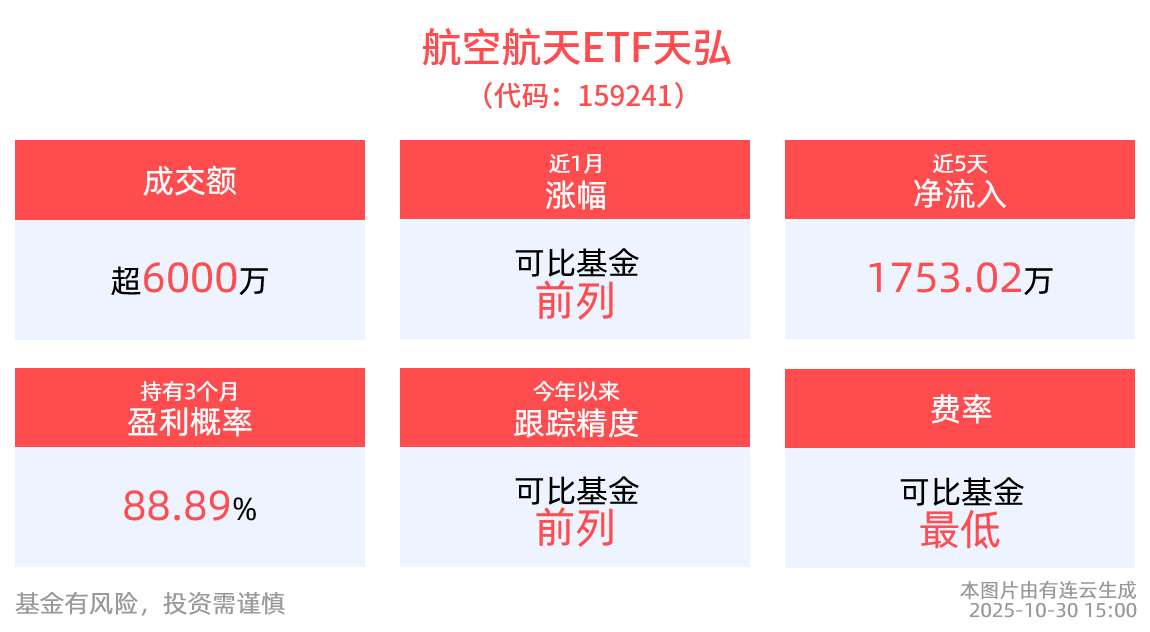
Core Insights - The aerospace ETF Tianhong (159241) has seen significant trading activity, with a turnover of 14.57% and a transaction volume of 67.25 million yuan as of October 30, 2025, indicating a vibrant market engagement [3] - The fund has attracted substantial capital inflow, with a net subscription of 13 million shares and a total net inflow of 15.27 million yuan on the same day, reflecting strong investor interest [4] - Over the past five trading days, the fund has recorded net inflows on four occasions, totaling 17.53 million yuan, showcasing a consistent demand for aerospace-related investments [4] Company Performance - AVIC Aircraft's third-quarter net profit reached 348 million yuan, marking a year-on-year increase of 16.06%. The company's revenue for the same period was 5.594 billion yuan, up 9.92% year-on-year, indicating robust growth in both revenue and profit [5] - The company's net profit excluding non-recurring gains surged by 51.91% year-on-year to 327 million yuan, highlighting an improvement in core profitability [5] Industry Developments - The successful maiden flight of the large-load, long-endurance T1400 vertical unmanned helicopter by the United Aircraft Group on October 30, 2025, signifies a breakthrough in technology and the potential to reshape the global low-altitude industry [5] - China Galaxy Securities emphasizes the strong demand for military equipment driven by increasing military budgets, with expectations for active procurement in the upcoming quarters, particularly as the 2027 centenary of the military approaches [5] - The military industry is anticipated to benefit from enhanced asset securitization and improved management capabilities, which could lead to a more efficient and collaborative industrial chain [5]

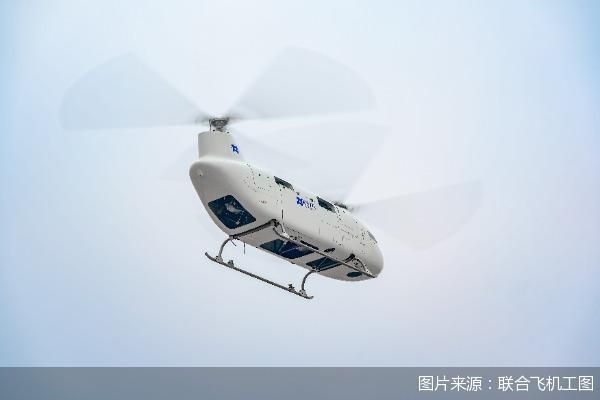
联合飞机铂影T1400成功首航
Bei Jing Shang Bao· 2025-10-30 09:24
Core Viewpoint - The successful maiden flight of the Platinum Shadow T1400 coaxial unmanned helicopter marks a significant achievement for the company in the field of autonomous aviation technology [2] Company Summary - The Platinum Shadow T1400 is an independently developed coaxial unmanned helicopter by the company [2] - The helicopter has a maximum takeoff weight of 1400 kilograms [2] - It features a maximum endurance of 8 hours and can operate at an altitude of 6500 meters [2] - The maximum cruising speed of the helicopter is 180 kilometers per hour [2]
T1400无人直升机首航 应用前景广阔
Xin Hua She· 2025-10-30 08:21
Core Viewpoint - The T1400 unmanned helicopter, developed by Harbin United Aircraft Technology Co., has successfully completed its maiden flight, showcasing its advanced capabilities and potential applications in various fields such as agriculture, logistics, and forest fire prevention [2][9]. Group 1 - The T1400 unmanned helicopter has a maximum takeoff weight of 1400 kilograms, a maximum endurance of 8 hours, a service ceiling of 6500 meters, and a maximum cruising speed of 180 kilometers per hour [2][9]. - The helicopter features a dual-engine design, a redundant flight control system, and a high-strength composite material structure, which contribute to its large payload capacity and spacious design [2][9]. - The T1400 is equipped with intelligent and autonomous operational capabilities, making it suitable for a wide range of applications [2][9].
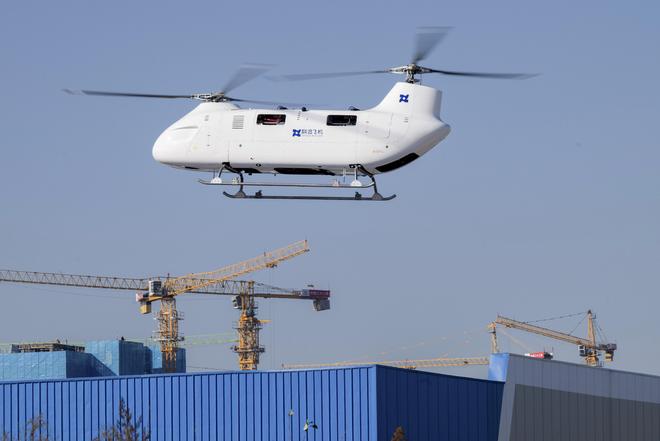
联合飞机铂影T1400首航 开启中国重载无人直升机时代
Zhong Guo Min Hang Wang· 2025-10-30 07:05
Core Insights - The successful maiden flight of the T1400 unmanned helicopter marks a significant technological breakthrough for China's heavy-lift UAV capabilities, moving towards engineering and application [1][3]. Group 1: Product Specifications - The T1400 has a maximum takeoff weight of 1400 kilograms, an endurance of 8 hours, a flight altitude of 6500 meters, and a maximum cruising speed of 180 km/h [3]. - It features a dual-engine, redundant flight control system, and a high-strength composite material structure, enabling it to operate in various challenging environments, including high winds and extreme temperatures ranging from -40°C to 55°C [3]. - The helicopter's design allows for both internal cargo and external sling transport capabilities, enhancing its versatility for different operational needs [3]. Group 2: Applications and Efficiency - The T1400 is expected to revolutionize efficiency in sectors such as agricultural protection, emergency rescue, firefighting, low-altitude logistics, and energy [6]. - In agricultural applications, it can cover 2000 acres per hour, significantly outperforming traditional methods and multi-rotor drones, which can only manage 2-3 acres and 300-400 acres per hour, respectively [6]. - The helicopter can also serve as an emergency response vehicle, capable of extinguishing fires over an area exceeding 1000 square meters and transporting medical personnel and patients during emergencies [6]. - It can deliver three tons of supplies to disaster areas at a distance of 5 kilometers at a speed of 3 kilometers per hour, thus opening new avenues in smart logistics [6].