铜钴矿

Search documents
中国中铁:目前在境内外全资、控股或参股投资建成5座现代化矿山
Zheng Quan Ri Bao Wang· 2026-01-30 10:39
Core Viewpoint - China Railway (601390) has confirmed its focus on resource utilization through the development of modern mining operations, with investments in both domestic and international projects [1] Group 1: Company Operations - The company primarily engages in the development of mining entities, with a total of five modern mines established through wholly-owned, controlling, or joint ventures [1] - The five modern mines include: - Luming Molybdenum Mine in Heilongjiang, China - Green Sand Copper-Cobalt Mine in the Democratic Republic of the Congo - MKM Copper-Cobalt Mine in the Democratic Republic of the Congo - Huagang SICOMINES Copper-Cobalt Mine in the Democratic Republic of the Congo - Ulan Lead-Zinc Mine in Mongolia [1] Group 2: Mining Focus - Among the established mines, the Green Sand, MKM, and Huagang SICOMINES are specifically copper mines, indicating a strategic focus on copper and cobalt resources [1]

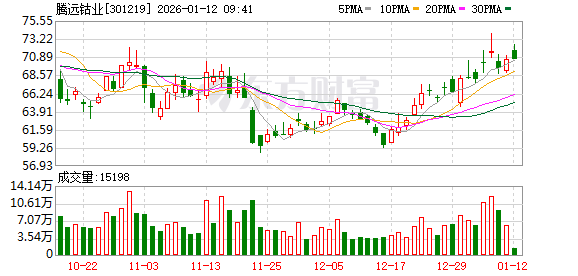
腾远钴业:刚果腾远在刚果(金)已取得两项探矿权和一项采矿权
Mei Ri Jing Ji Xin Wen· 2026-01-12 01:40
Group 1 - The company has obtained two exploration rights and one mining right in the Democratic Republic of the Congo (DRC) [2] - The company is engaged in joint development and exploration cooperation with other holders of quality mining rights in the region [2]

洛阳钼业TFM铜钴矿交付2025年度第二批《社会责任书》项目成果
Xin Lang Cai Jing· 2025-12-26 12:49
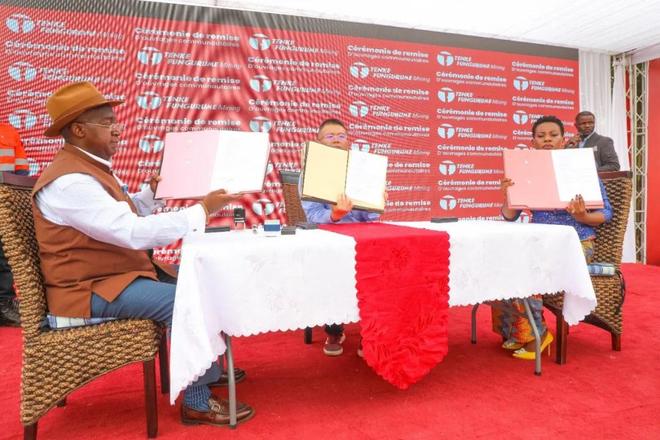
Core Viewpoint - TFM Copper-Cobalt Mine, a subsidiary of Luoyang Luanchuan Molybdenum Group, has officially handed over the second batch of 2025 Social Responsibility Book construction achievements to the local community, covering various livelihood areas such as education, health, environment, and agriculture [1]. Group 1: Education Infrastructure - TFM Copper-Cobalt Mine has built and handed over 5 well-equipped primary schools and 2 kindergartens, and completed the comprehensive renovation and upgrade of Lukotola Vocational School, enhancing the education system around the mining area to provide quality learning conditions for local residents [3]. Group 2: Health and Environmental Management - The mine has introduced modern waste management equipment to the local area, handing over 7 new garbage collection trucks and 28 metal garbage bins, effectively filling the gap in local basic sanitation services and establishing a clean and healthy living environment for the community [4]. Group 3: Agricultural Support - TFM Copper-Cobalt Mine has constructed a 450-ton capacity agricultural product warehouse and a tractor shed, simultaneously providing agricultural materials that can cover 1,500 hectares of maize fields, thereby supporting regional food security and enhancing community economic resilience [6]. Group 4: Community Development Commitment - During the handover ceremony, TFM Copper-Cobalt Mine's CEO Li Leizhong emphasized that after four years of dedicated efforts, the results of the Social Responsibility Book project are substantial and far-reaching, driving profound changes in the community. The mine committed over $31 million to community projects covering various priority needs since signing the Social Responsibility Book with the local community in 2021 [8].

重磅预告:从大湾区到好望角,中非矿业合作新纪
Zhong Guo Ji Jin Bao· 2025-12-22 09:40
Group 1 - The G20 summit in Johannesburg, South Africa, in November 2025, highlights the deepening cooperation between China and Africa in the mining sector, emphasizing themes of unity, equality, and sustainability [1][2] - Chinese mining companies are increasingly localizing their operations in Africa, transforming from perceived outsiders to co-builders, as seen in the successful local management of previously abandoned mines [1][2] - The "Green Mineral International Trade Cooperation Initiative" announced by Premier Li Qiang at the G20 summit outlines seven key areas for cooperation, aimed at promoting sustainable development and a new type of partnership in mineral resource cooperation [2] Group 2 - Chinese companies like Luoyang Molybdenum and Huayou Cobalt are setting examples of successful local engagement and resource utilization in Africa, establishing mechanisms for shared benefits with local communities [2] - The shift from "resource-for-infrastructure" to a "mining symbiosis" model reflects a new chapter in China-Africa cooperation, fostering a more systematic and institutionalized framework for collaboration [2] - Beyond minerals like gold, copper, and lithium, Chinese mining enterprises are contributing to the development confidence of the Global South and the concept of a shared human destiny [3]
中金 • 全球研究 | 国别研究系列之非洲篇:那一片“热土”
中金点睛· 2025-03-06 23:31
Core Viewpoint - Africa is poised for significant growth opportunities driven by the African Continental Free Trade Area (AfCFTA), which is expected to enhance regional integration and boost demand for consumer goods, industrial products, and infrastructure [4][6]. Economic Overview - Africa's GDP growth from 2018 to 2023 has been stagnant at a compound annual growth rate (CAGR) of 2.4%, matching global growth rates [5]. - The economic structure remains largely unchanged, with agriculture, industry, and services contributing 15%, 39%, and 46% to GDP respectively in 2023 [5]. - Africa's integration into the global value chain is low, with merchandise trade accounting for only 2.8% of global trade in 2022, down from 3.5% in 2012 [5]. Trade and Industry - AfCFTA has led to a CAGR of 11.8% in intra-African trade from 2021 to 2023, but intra-African trade still only accounts for 15% of total trade, significantly lower than Europe and Asia [6]. - The internal trade of Africa is characterized by a high proportion of intermediate and manufactured goods, which could foster industrial development and regional capacity integration [6]. - Africa's foreign direct investment (FDI) inflow in 2023 was only 4.0% of global FDI, indicating a need for improvement in attracting investment [20]. Resource Potential - Africa possesses vast mineral resources, holding approximately 8% of the world's oil reserves and over 90% of platinum group metals [7][41]. - The reliance on resource extraction can lead to economic vulnerabilities, as seen in countries like the Democratic Republic of the Congo, which has become overly dependent on mining [49][50]. - Botswana serves as a positive example, successfully utilizing diamond revenues to diversify its economy and improve social welfare [52]. Infrastructure Challenges - Africa faces significant infrastructure deficits, with an estimated investment gap of $1.7 trillion by 2040, representing 1.2% of cumulative GDP [8][59]. - Transportation costs in Africa are high, accounting for about 40% of final goods prices, due to inadequate road networks and high logistics costs [8][63]. - The energy infrastructure is also lacking, with nearly half of the population lacking access to electricity, despite Africa having 60% of the world's solar resources [8][60]. China-Africa Relations - China's direct investment in Africa reached approximately $4 billion in 2023, accounting for 2.2% of China's total outbound investment and 7.6% of Africa's FDI [9][10]. - China is Africa's largest trading partner, with trade volume expected to reach about $295.6 billion in 2024, reflecting a growing economic relationship [10][37]. - The trade pattern continues to be characterized by Africa exporting primary products in exchange for manufactured goods from China [39].