工业化

Search documents
TechnipFMC(FTI) - 2025 Q4 - Earnings Call Transcript
2026-02-19 14:32
Financial Data and Key Metrics Changes - Total company inbound for the year was $11.2 billion, with a backlog ending at $16.6 billion, representing a 15% increase from the prior year [5][23] - Total company revenue for the year grew 9% to $9.9 billion, with Adjusted EBITDA improving to $1.8 billion, an increase of 33% compared to the prior year [5][22] - Full-year free cash flow increased to $1.4 billion, and shareholder distributions grew to $1 billion, both more than double the levels achieved in the prior year [5][22] Business Line Data and Key Metrics Changes - In Subsea, revenue was $2.2 billion, a decrease of 5% versus the third quarter, but full-year revenue grew 11% compared to the prior period [16] - Adjusted EBITDA for Subsea was $416 million, down 18% sequentially, but the full-year adjusted EBITDA margin improved by 340 basis points to 20.1% [16] - Surface Technologies revenue was $323 million, a decrease of 2% from the third quarter, with adjusted EBITDA increasing by 8% sequentially to $58 million [17] Market Data and Key Metrics Changes - The Subsea Opportunities List reflects approximately $29 billion of opportunities for future development, marking the highest level ever recorded [11] - The company expects a greater share of capital spending to move offshore, with improved project economics [11] Company Strategy and Development Direction - The company is focused on expanding its configure-to-order offerings and enhancing integrated execution to drive further advancements [14] - A shift in customer behavior towards a portfolio approach for offshore development is noted, allowing for simultaneous project execution [9][10] - The company aims to reduce cycle times and improve project returns, which is seen as a key differentiator in the market [15][64] Management's Comments on Operating Environment and Future Outlook - Management expressed confidence in continued strength in offshore activity through the end of the decade, driven by a growing Subsea Opportunities List and increased customer confidence [11][12] - The company anticipates further growth in backlog and revenue, with a focus on high-quality projects and operational efficiencies [19][23] Other Important Information - The company repurchased $168 million of stock in the fourth quarter, with total shareholder distributions exceeding $1 billion for the year [18][22] - The company is committed to a disciplined, asset-light approach to capital management, with anticipated capital expenditures of approximately $340 million for the full year [21] Q&A Session Summary Question: Can you elaborate on margin expansion potential from industrializing the SURF process? - Management indicated that industrialization and configure-to-order product architecture are expected to drive significant efficiency gains and improved project certainty [27][28] Question: How much visibility do you have on further margin expansion in Subsea? - Management confirmed that the company is inbounding at a level that is accretive to backlog margin, indicating a positive outlook for revenue and EBITDA [30] Question: Can you discuss the renewed interest in Greenfield developments? - Management noted that there is substantial interest in Greenfield developments, with many projects that had been on hold now moving forward due to improved project economics and confidence [36][37] Question: What is the expected revenue from Subsea services in 2026? - Management expects Subsea services to grow in line with top-line growth, estimating around $2 billion for the year [56] Question: How does the portfolio approach impact your sales funnel? - Management stated that while the portfolio approach is still a smaller portion of discussions, it is gaining traction as customers respond positively to this strategy [90][91]

钛储量世界第一,供应中国70%高铁钢轨,这座西部荒滩仍然神秘
Sou Hu Cai Jing· 2026-02-18 07:31
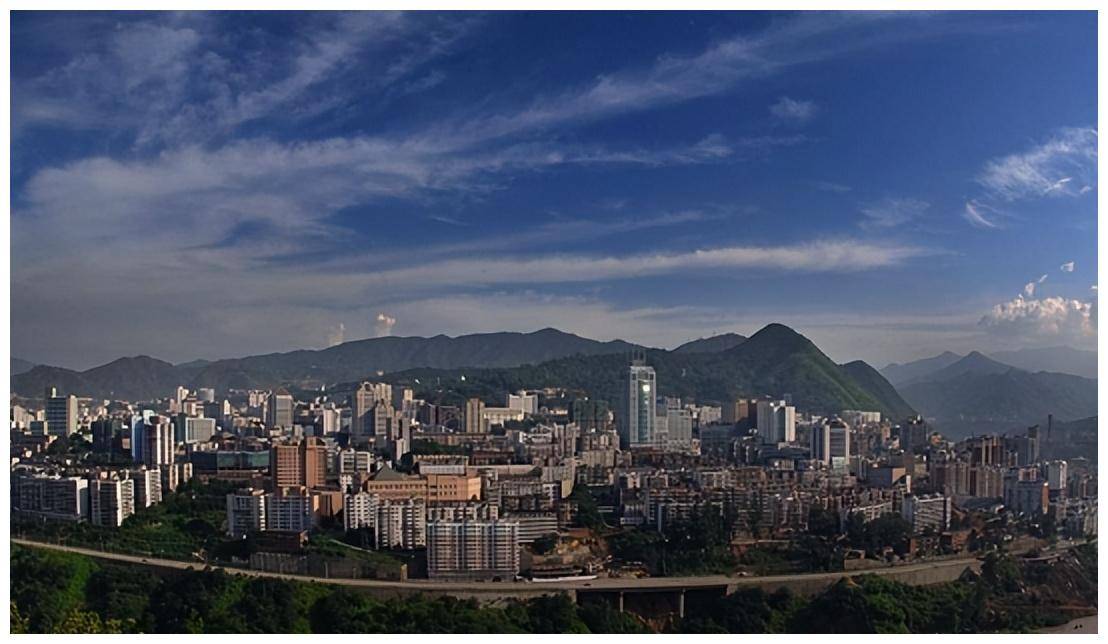
Core Insights - Panzhihua, located in Sichuan, is crucial for China's industrialization due to its rich mineral resources, particularly in steel production [1][3] - The city has emerged as a significant player in the steel industry, contributing approximately 70% of China's high-speed rail tracks and holding 93% of the country's titanium reserves [3][9] Group 1: Resource Advantages - Panzhihua's iron ore resources have allowed it to stand out among smaller cities, despite its inland location [3] - The city is home to the Southwest Steel Giant, Panzhihua Steel Group Co., Ltd., and is recognized as the largest vanadium-titanium production base in China [3][9] - Panzhihua's per capita GDP ranks second in Sichuan Province, only behind Chengdu, showcasing its economic growth driven by mineral resources [3] Group 2: Development History - Panzhihua transformed from a remote area with minimal population to a steel hub within five years, following the discovery of its vast mineral resources in the 1960s [7] - The city was designated as a key construction site during the Third Front Movement in 1964, leading to significant investments and infrastructure development [7][9] - Major projects include the largest open-pit vanadium-titanium magnetite mine and the largest independent coal mine in the country, which have contributed to its rapid industrial growth [9] Group 3: Technological Advancements - Panzhihua faced technological challenges, particularly with the EB furnace technology, but successfully overcame these issues by 2019, reducing reliance on imports [10][12] - The city continues to attract research talent, with new applications for titanium materials being developed, indicating a positive outlook for future advancements [12] - The establishment of Sichuan Anning Iron Titanium Co., Ltd. in Panzhihua signifies ongoing innovation in the energy titanium sector [12]

伟隆股份(002871):“小而美”的水阀领先供应商,将受益中东城市化、工业化与IDC液冷系统需求提升
Soochow Securities· 2026-02-12 07:07
Investment Rating - The report assigns an "Accumulate" rating for the company, marking its first coverage [4]. Core Views - The company, Weilon Co., Ltd., is recognized as a leading supplier of water valves, benefiting from urbanization and industrialization in the Middle East, as well as the rising demand for IDC liquid cooling systems [1][2]. - The company has maintained a steady growth trajectory, with a compound annual growth rate (CAGR) of 10.6% in total revenue from 2017 to 2024, and a CAGR of 11.5% in net profit during the same period [1][24]. - The water treatment valve market is projected to reach approximately 120 billion yuan in 2024, driven by urban construction and industrial infrastructure investments [2][50]. - The company has a significant first-mover advantage in overseas markets, with established production capabilities in Thailand and Saudi Arabia, which will support long-term growth [3][37]. Summary by Sections Company Overview - Weilon Co., Ltd. has been deeply engaged in the water valve industry for over 30 years, with around 75% of its revenue coming from overseas markets, primarily in Europe and North America [1][14]. - The company has successfully expanded its product offerings to include valves for data center infrastructure since 2018, and it became the only qualified supplier of fire valves for Saudi Aramco in Asia by the end of 2021 [1][13]. Market Analysis - The water treatment valve market is the second-largest downstream sector in the industrial valve market, with a stable demand due to ongoing urbanization and infrastructure projects [2][50]. - The Middle East and North Africa are expected to contribute significantly to the water valve market, with an estimated 250 billion USD in water and wastewater treatment projects by the end of 2025 [2][64]. Growth Drivers - The demand for liquid cooling solutions is expected to surge due to the explosion of AI server computing power, with the liquid cooling valve market projected to reach approximately 8.4 billion yuan by 2026 [2][3]. - The company is well-positioned to capitalize on the growth in emerging markets, particularly in the Middle East and North Africa, where urbanization and industrialization are accelerating [2][64]. Financial Projections - The company is projected to achieve net profits of 1.3 billion yuan in 2025, 1.7 billion yuan in 2026, and 2.2 billion yuan in 2027, with corresponding price-to-earnings ratios of 37, 28, and 22 times [4][39]. - The company's gross margin has remained stable at around 40%, with a net profit margin consistently above 20% [28][32].

2025印度工业发展探索:从服务业路径依赖转向路径重塑研究报告
Sou Hu Cai Jing· 2026-02-12 05:51
Core Insights - The report focuses on India's industrial development transition from a service-oriented path dependency to a path reconfiguration, analyzing the causes of deviation from traditional industrialization, the effectiveness and constraints of industrial development, and proposing policy recommendations for industrialization opportunities [1][6]. Group 1: Historical Context of India's Industrialization - India's industrialization has undergone two major phases: the state-led phase (1948-1991) and the market economy phase (1991-present), influenced by global dynamics and domestic strategic shifts [14][23]. - During the state-led phase, India adopted a planned economy model, focusing on heavy industry, which led to an initial industrial growth peak with an average GDP growth rate of 3.6% from 1960-1967 [15]. - The liberalization period starting in 1991 marked a shift towards a more market-oriented economy, with significant reforms in finance, infrastructure, and information technology, resulting in a rise in service sector GDP share from 32% to 42% [22]. Group 2: Drivers of Service-Oriented Path Dependency - The service-oriented growth path in India is driven by institutional, technological, and weak inter-industry linkages [24]. - Institutional factors include a risk-averse regulatory environment and low efficiency in governance, which have constrained industrialization while allowing the service sector to thrive due to lower dependency on traditional institutions [25]. - Technological dependency is characterized by low R&D investment in manufacturing, leading to a reliance on external resources for complex technologies, while the IT sector attracts skilled labor due to higher wages [26]. Group 3: Achievements and Constraints in Industrial Development - India has made progress in manufacturing, becoming the fifth-largest manufacturing economy globally, with a shift from labor-intensive to knowledge-intensive industries, particularly in pharmaceuticals and automotive sectors [2][29]. - Despite these advancements, significant gaps remain compared to leading countries, with manufacturing's GDP contribution stagnating around 15% and foreign investment levels being relatively low [30]. - The manufacturing sector faces challenges such as informal employment issues and limited job creation, with existing competitive advantages in pharmaceuticals and automotive industries hindered by insufficient R&D and a narrow export structure [2][29]. Group 4: Opportunities and Policy Recommendations for Industrialization - Current opportunities for India's industrialization include leveraging digital advancements and diversifying the industrial base to enhance manufacturing growth [7]. - The report suggests six key areas for path reconfiguration: advancing existing competitive industries, fostering high-value emerging sectors like semiconductors and green technologies, empowering manufacturing through digital technologies, restructuring the industrial base for sustainable growth, expanding domestic demand through government procurement and rural infrastructure, and enhancing international cooperation [7][10].

人民币升值破7,中国GDP能达到日本的5倍吗?
Sou Hu Cai Jing· 2026-01-27 23:06
Core Viewpoint - The rapid appreciation of the Chinese yuan, breaking the 7 mark, will significantly impact China's economy, particularly in the re-evaluation of its dollar-denominated GDP, enhancing its economic strength relative to other countries [1] Group 1: Economic Comparison between China and Japan - The re-evaluation of China's dollar GDP is crucial for comparing economic strengths with Japan, especially during China's period of rejuvenation [3] - Historically, China has had a larger population and land area than Japan, but Japan surpassed China in modern times, particularly after the First Sino-Japanese War [5] - Japan's industrialization was accelerated by war reparations and national efforts, leading to a significant increase in its industrial output [5][7] Group 2: Industrialization and Economic Growth - China's industrialization efforts were interrupted by the First Sino-Japanese War, resulting in a prolonged agricultural status compared to Japan's industrial advancements [5] - By 1973, Japan's steel production peaked at 119 million tons, while China's was only 25 million tons, highlighting the industrial gap [9] - Post-reform, China's economic growth surged, but the depreciation of the yuan caused its dollar GDP to lag behind its RMB GDP growth [11] Group 3: GDP Milestones and Projections - In 1998, China's GDP first exceeded $1 trillion, and by 2010, it surpassed Japan's GDP, marking a significant shift in economic power [13] - By 2020, China's GDP reached $15 trillion, three times that of Japan, with steel production also showing a significant lead [15] - Projections indicate that by 2025, China's GDP could reach $20 trillion, while Japan's GDP may only be around $4 trillion, potentially widening the gap to five times [17][18]
2025年云南红河州GDP迈上3000亿元台阶
Zhong Guo Xin Wen Wang· 2026-01-23 12:49
Core Viewpoint - The GDP of Honghe Hani and Yi Autonomous Prefecture in Yunnan is projected to reach 315.45 billion yuan in 2025, with a year-on-year growth rate of 5.5%, surpassing both national and provincial averages [1] Economic Performance - In 2022, the primary industry added value was 40.93 billion yuan, growing by 2.7% [1] - The secondary industry added value was 110.47 billion yuan, with a growth rate of 4.7% [1] - The tertiary industry added value was 164.05 billion yuan, experiencing a growth of 6.8% [1] Industrial Development - The industrialization in Honghe Prefecture accelerated, with the value added of designated industrial enterprises increasing by 7% [1] - Fixed asset investment grew by 6.6%, driven by high growth in energy, transportation, and ecological protection industries [1]
美国人意识到:贸易战之后,不会再有中国外的大规模工业化国家了
Sou Hu Cai Jing· 2026-01-18 02:49
Core Insights - The trade war initiated by the US in 2018 aimed to reshape global supply chains by imposing tariffs to limit China's manufacturing expansion and encourage production relocation to other regions [2] - The actual process of relocating manufacturing has faced multiple obstacles, with countries like Vietnam and India receiving some orders but overall scale falling short of expectations [4][5] - The US decision-making circles have reached a consensus that no other country will replicate China's large-scale industrialization post-trade war, reflecting on historical industrialization patterns [9] Group 1: Manufacturing Challenges - Vietnam's manufacturing growth relies heavily on foreign investment but lacks a complete supply chain ecosystem [4] - India's push for localized production is hindered by infrastructure and policy stability issues, leading to inefficiencies [5] - The US manufacturing revival plan is progressing slowly, with a capacity utilization rate of only 78% in 2025, significantly lower than China's 95% [7] Group 2: Global Industrialization Landscape - Countries like Germany have strong industrial foundations but face limitations due to aging populations and energy transition pressures [13] - Japan and South Korea have completed their industrialization but are unable to achieve high growth rates due to market saturation [13] - Emerging markets in Africa and Latin America have potential but are impeded by political instability and investment environment challenges [13] Group 3: China's Industrial Resilience - Despite initial expectations of a significant decline in exports, China's total goods trade reached $6.3 trillion in 2025, maintaining its position as the world's largest exporter [15] - China's investment in high-tech sectors, such as semiconductors and renewable energy, exceeded 1 trillion yuan, facilitating a shift towards internal circulation and regional cooperation [17] - The dual circulation strategy allows China to balance internal and external markets, contrasting with traditional industrialization paths reliant on external demand [17] Group 4: Digital Infrastructure and Industrialization - China's data factor market reached 8 trillion yuan, supporting production efficiency through algorithm optimization, while India's data infrastructure coverage is only 60% [24] - Vietnam's digital transformation is heavily dependent on foreign investment, with low participation from local enterprises [24] - Latin American countries are lagging in digitalization, with internet penetration rates below 70%, making it difficult for them to catch up in industrialization [26] Group 5: Global Investment Trends - The trade war has increased geopolitical risks, leading to a further dispersion of investment focus, with global FDI flows expected to grow only 2% by 2025 [27] - The trade war has exacerbated global inequality, with developed countries consolidating technological advantages while emerging markets struggle at foundational stages [29] - The UNCTAD report in 2025 indicated that China scored 90 points on the industrialization index, while India and Vietnam scored 60 and 50 points, respectively, supporting the conclusion of the article [31]
曾经就业率100%的王牌职业,年轻人舍不得它落寞
3 6 Ke· 2026-01-14 02:39
Group 1 - The core idea of the articles revolves around the evolving landscape of the culinary industry, highlighting the tension between industrialized food production and the artisanal craftsmanship of chefs [1][36] - The rise of pre-prepared meals and standardized cooking processes contrasts with consumers' increasing desire for fresh, handmade dishes, indicating a shift in dining preferences [1][36] - Culinary shows and social media have rekindled interest in traditional cooking methods and the stories behind chefs, suggesting that the culinary profession is not disappearing but transforming [1][2] Group 2 - High-end private dining and fusion cuisine are emerging trends, reflecting a blend of traditional and modern culinary practices that cater to diverse consumer tastes [2] - The experiences of chefs from various backgrounds illustrate the diverse pathways into the culinary profession, emphasizing the importance of passion and dedication in mastering culinary skills [3][20] - The culinary industry is witnessing a shift towards more flexible and innovative cooking environments, with chefs increasingly operating outside traditional restaurant settings [36][37] Group 3 - The role of chefs is evolving, with positions like "head cutter" becoming crucial in kitchen operations, impacting restaurant profitability and food quality [11][12] - The culinary profession is characterized by rigorous training and apprenticeship, where skills are honed through years of practice and mentorship [8][12] - The integration of technology and pre-prepared ingredients in the culinary industry is changing the skill set required for chefs, emphasizing food safety and management over traditional cooking techniques [29][31]

光大证券:短剧与漫剧向“精品化、工业化”转型 建议关注行业产能释放
智通财经网· 2026-01-13 04:00
Core Viewpoint - The short drama and comic drama industry is at a key transformation point towards "quality and industrialization" by 2026, with AI video models like Kexin maturing, leading to comic dramas becoming the main content growth driver for platforms [1] Group 1: Short Drama Market - The domestic short drama market is expected to reach 63.43 billion RMB in 2025, growing by 26% year-on-year, with a projected compound annual growth rate (CAGR) of 19.2% from 2025 to 2027 [2] - The supply of short dramas is increasing, with new releases expected to rise from 34,600 in 2024 to 39,600 in the first half of 2025, although competition for high-quality productions is intensifying [2] - The overseas short drama market is anticipated to see significant growth, with revenues expected to soar to 2.38 billion USD in 2025, marking a year-on-year increase of 263% [2] Group 2: Comic Drama Market - The year 2025 is projected to be the inaugural year for AI comic dramas in China, with a market size expected to exceed 20 billion RMB, and the number of comic dramas launched reaching 46,931 [3] - Major companies are increasingly investing in comic dramas, with the launch of the Hongguo free comic drama app marking a significant event in 2025, prompting platforms like Douyin and iQIYI to enhance communication with content producers [4] - AI technology is expected to enhance production capacity significantly, allowing for the production of 60 episodes in 20 days with a reduced cost of 400 RMB per minute [4]

“非中友谊在共同迈向现代化的进程中历久弥坚”(新时代中非合作)
Ren Min Wang· 2026-01-11 22:44
Group 1 - The Uganda-China Mbale Industrial Park has over 70 enterprises and employs more than 10,000 local workers, becoming a significant industrial hub in East Africa since its establishment in 2018 [2][4] - The park's success is highlighted by Ugandan President Museveni, who emphasized its role in Uganda's economic modernization and the enduring friendship between China and Uganda [2][5] - The introduction of products like the "crawling mat" has transformed local consumer habits, making previously unavailable products accessible to Ugandan families [2][3] Group 2 - The industrial park has diversified into various sectors, including home appliances, daily chemicals, textiles, building materials, pharmaceuticals, and automotive manufacturing, directly impacting local livelihoods [3][4] - The establishment of factories like Lin's Wood Industry and the United Steel Plant has enhanced Uganda's manufacturing capabilities, moving from simple processing to a complete industrial chain [4][5] - The park's strategic location near major transport routes facilitates exports to neighboring countries, with companies like Grace Factory and Tianao Furniture exporting significant portions of their products [5][6] Group 3 - The park is recognized as a model for attracting foreign investment and developing local skills, contributing to the training of over 1,200 skilled workers through initiatives like the Luban Workshop [5][6] - Local government officials acknowledge the park's role in creating job opportunities and enhancing the value of local industries, which is crucial for Uganda's modern industrial system [5][6]