
隔热膜

Search documents
在一座绿色建筑里上班,是什么体验?
Ren Min Ri Bao· 2025-12-26 05:12
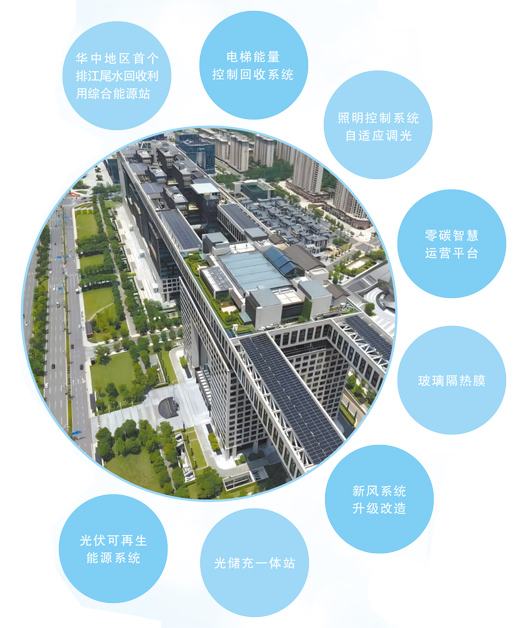
Core Insights - The article highlights the transformation of the China State Construction Engineering Corporation's headquarters into a green building, showcasing various energy-saving technologies and improvements that enhance user comfort and reduce carbon emissions [1][3][4]. Group 1: Building Improvements - The headquarters has installed energy recovery devices in elevators, resulting in smoother operation and energy savings by converting potential energy into electricity [1]. - A special heat-insulating film has been applied to the glass curtain walls, achieving a heat insulation rate of 72%, which can save approximately 252,000 kWh annually and reduce CO2 emissions by about 126 tons [1]. - The building's lobby underwent a "comfort improvement" with the addition of air curtains and optimized management, increasing the temperature by approximately 9 degrees Celsius during winter while minimizing energy loss [2]. Group 2: Smart Energy Management - The development of a self-developed "zero-carbon smart operation platform" integrates over 3,000 device parameters, allowing real-time adjustments to indoor air quality and reducing carbon emissions by approximately 87.6 tons annually [2]. - The installation of a comprehensive energy station utilizing wastewater heat pump technology is expected to reduce carbon emissions by 2,300 tons annually by replacing traditional heating methods [3]. Group 3: Overall Carbon Reduction - The overall carbon reduction for the industrial park is 30%, while the headquarters building has achieved a 45% reduction in carbon emissions through various upgrades and energy-saving measures [3]. - The photovoltaic system installed has a capacity of 2.1 MW, contributing 2,156,000 kWh of electricity per year, equivalent to a reduction of 1,078.2 tons of CO2 emissions [3]. Group 4: Benefits of Green Buildings - Green buildings not only focus on energy-saving metrics but also enhance the user experience by providing healthier and more comfortable living and working environments [3][6]. - The promotion of green buildings supports the achievement of carbon neutrality goals and offers sustainable living spaces for individuals [6].
在一座绿色建筑里上班,是什么体验(美丽中国·身边的绿色故事)
Ren Min Ri Bao· 2025-12-23 22:31
Core Viewpoint - The article highlights the advancements in green building technologies implemented by China State Construction Engineering Corporation (CSCEC), showcasing their efforts in energy efficiency and carbon reduction through innovative solutions in their headquarters and the surrounding industrial park [2][4]. Group 1: Building Innovations - The headquarters building in Wuhan features 14,000 square meters of monocrystalline silicon photovoltaic panels, contributing to energy generation [2]. - The installation of energy recovery devices in elevators has improved operational smoothness and allowed for energy regeneration, enhancing overall energy efficiency [2]. - The building's glass curtain wall has been treated with a special heat-insulating film, achieving a heat insulation rate of 72%, which results in an annual energy saving of 252,000 kWh and a reduction of approximately 126 tons of CO2 emissions [2]. Group 2: Smart Operations - The development of a "zero-carbon smart operation platform" integrates over 3,000 device parameters, utilizing IoT and AI technologies to optimize indoor air quality and energy use, leading to an annual carbon reduction of about 87.6 tons [3]. - The building's comfort has been enhanced through modifications such as the installation of air curtains and adjustments to heating systems, resulting in a temperature increase of approximately 9 degrees Celsius in the lobby during winter while minimizing energy loss [3]. Group 3: Energy Management - A newly constructed underground comprehensive energy station utilizes wastewater heat pump technology, converting effluent from a nearby treatment plant into a secondary energy source, which is expected to reduce carbon emissions by 2,300 tons annually [4]. - The industrial park features a photovoltaic system with a capacity of 2.1 MW, generating 2,156,000 kWh of electricity per year, equivalent to a reduction of 1,078.2 tons of CO2 emissions [4]. - The lighting system operates on a demand basis, contributing to an annual carbon reduction of 67.5 tons, while a new energy storage system lowers energy costs by 23% [4]. Group 4: Overall Impact - The overall carbon reduction achieved by the industrial park is 30%, while the headquarters building has achieved a 45% reduction in carbon emissions through these various upgrades and innovations [4].

2025年中国汽车膜行业市场政策、产业链图谱、供需现状、市场规模、竞争格局及发展趋势分析:国产化替代进程日益加速[图]
Chan Ye Xin Xi Wang· 2025-12-05 01:53
Core Viewpoint - The automotive film market in China is experiencing significant growth driven by the booming automotive market, with increasing demand in both new and aftermarket segments. By 2024, the demand for automotive films is projected to reach 25,061.27 million square meters, with a market size of 49.992 billion yuan [1][9]. Market Overview - Automotive films are specialized materials applied to vehicle windows and surfaces, serving functions such as heat insulation, sun protection, explosion resistance, and privacy protection. They can also reduce UV damage to interior items and occupants, lower cabin temperatures, and decrease fuel consumption by reducing air conditioning use. The films are categorized into three main types: protective films, color-changing films, and heat-insulating films [2][4]. Market Policies - The Chinese government has implemented various policies to support the development of the automotive film industry, including guidelines for digital transformation, green manufacturing, and standardization. These policies aim to enhance compliance, upgrade production standards, and promote high-quality development in the industry [4][5]. Supply Chain Structure - The automotive film industry supply chain consists of upstream suppliers of raw materials (such as PET films and adhesives), midstream manufacturers involved in R&D and production, and downstream markets that include both OEM and aftermarket segments. The OEM market is focusing on new energy vehicles, while the aftermarket is driven by demand for film replacement and customization [6][7]. Competitive Landscape - The automotive film market in China features numerous participants, including international brands like 3M and domestic companies such as Wan Shun New Materials and Naer Co., Ltd. International brands dominate the high-end market, while domestic companies are rapidly improving their product offerings and gaining market share in the mid-range segment [10][11]. Company Analysis - Wan Shun New Materials focuses on new materials and reported a revenue of 2.692 billion yuan in the first half of 2025, with functional film business contributing 0.12 million yuan [11]. Naer Co., Ltd. specializes in precision coating and reported a revenue of 972 million yuan in the first half of 2025, with automotive functional films accounting for 29.55% of total revenue [11][12]. Development Trends - The automotive film industry is transitioning towards high-tech integration, with advancements in materials and processes driving the evolution of products. Innovations such as nano-ceramics and smart films are enhancing functionality, while a shift towards a service-oriented model is emerging, focusing on customer experience throughout the product lifecycle [12].



万顺新材:隔热膜产品已广泛应用于建筑、汽车玻璃,助力建筑节能减排
Ge Long Hui· 2025-11-13 08:17
Core Viewpoint - Wan Shun New Materials (300057.SZ) has stated that its thermal insulation film products are widely used in construction and automotive glass, contributing to energy conservation and emission reduction in buildings [1] Group 1 - The company's thermal insulation film products are applied in various sectors, including construction and automotive [1] - The application of these products supports energy-saving and emission-reduction efforts in the building industry [1]
万顺新材(300057.SZ):隔热膜产品已广泛应用于建筑、汽车玻璃,助力建筑节能减排
Ge Long Hui· 2025-11-13 08:06
Group 1 - The core viewpoint of the article is that Wanshun New Materials (300057.SZ) has successfully applied its thermal insulation film products in various sectors, including construction and automotive glass, contributing to energy conservation and emission reduction in buildings [1] Group 2 - The company's thermal insulation film products are widely used in the construction industry, indicating a strong market presence and potential for growth in energy-efficient building solutions [1] - The application of these products in automotive glass suggests diversification in the company's product usage, which may enhance revenue streams [1]