
雪佛兰开拓者

Search documents
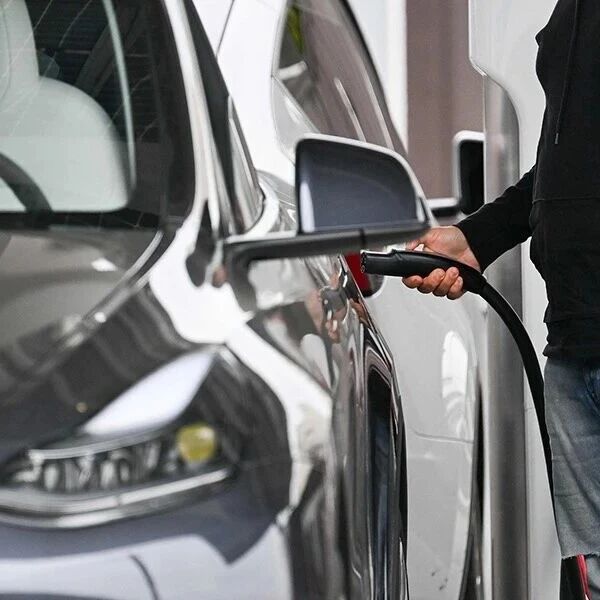
55岁供应链管理教授去年豪赌一把:购入一辆电动汽车
财富FORTUNE· 2026-03-17 13:08
Core Viewpoint - The ongoing conflict in Iran has led to a surge in oil prices, which may increase consumer interest in electric vehicles (EVs) as they seek to avoid the volatility associated with fuel costs [1][3]. Group 1: Impact of Oil Prices on Electric Vehicle Demand - High oil prices are expected to boost the demand for electric vehicles, especially if consumers believe that electricity prices will not be significantly affected by the current crisis [1][6]. - The American Automobile Association (AAA) reported that the average gasoline price in the U.S. rose to $3.57 per gallon, up from $2.94 in February [3]. - Experts suggest that electric vehicle owners are less impacted by oil price fluctuations due to regulated electricity prices, which tend to be more stable than oil prices [3][4]. Group 2: Factors Influencing Electricity Prices - Electricity costs for electric vehicle owners largely depend on the local energy grid's structure, with various energy sources including natural gas, coal, nuclear, and renewables [4][5]. - While natural gas prices can influence electricity generation costs, recent increases in natural gas prices have been less severe than those for oil [4][6]. - The ongoing conflict may indirectly affect electricity prices, highlighting the need for a transition to cleaner energy sources [6]. Group 3: Consumer Behavior and Market Trends - Data from Edmunds indicates that the search volume for hybrid, plug-in hybrid, and electric vehicles increased to 22.4% of all vehicle searches during the week following the outbreak of the Iran conflict, up from 20.7% the previous week [7]. - The ability of this increased interest to translate into actual sales will depend on consumer expectations regarding future cost savings from electric vehicles [7][8]. - Experts warn that a sudden spike in demand for electric vehicles could lead to higher prices, complicating the market dynamics [8]. Group 4: Cost Savings and Economic Considerations - Electric vehicle owners can save thousands of dollars in fuel costs over the vehicle's lifetime, especially as oil prices rise [10]. - The average price of new electric vehicles was reported at $55,300, compared to $49,353 for all new vehicles, indicating a higher initial investment for consumers [10]. - The cancellation of various government incentives for electric vehicles has raised concerns about the competitiveness of the U.S. in the global market, particularly in light of supply chain dependencies on China [10].

1个半月狂买189笔,特朗普买入5100万美元债券,其中包括CoreWeave债券
Hua Er Jie Jian Wen· 2026-01-16 00:26
Core Insights - Trump expanded his investment portfolio significantly at the end of last year, executing 189 buy transactions worth at least $51 million in municipal and corporate bonds, including those from cloud computing service provider CoreWeave [1] - The transactions occurred between November 14 and December 29, with a total of at least $261 million in trades since returning to the White House in January 2025, raising concerns about potential conflicts of interest [1] - The investments involve companies directly affected by current government policies, prompting scrutiny over the intersection of personal finances and public office [1] Transaction Details - According to Bloomberg, the report approved by White House ethics officials on January 15 indicates Trump conducted 189 buy and 2 sell transactions, with the sell amount being at least $1.3 million [2] - The new bond purchases totaled at least $51 million, and Trump amended a previous report to adjust the value of four transactions [2] - Since returning to the White House, Trump has reported a total of 690 transactions worth at least $104 million, with subsequent disclosures adding up to $106 million [2] Companies and Policy Intersection - The latest bond purchases include companies closely tied to federal policies, such as Netflix, which is involved in a competitive merger battle that tests the government's antitrust stance [3] - Trump has expressed intentions to personally review the merger outcomes, indicating a direct involvement in corporate matters [3] - In the automotive sector, Trump highlighted General Motors' plans to move production back to the U.S. as a success of his tariff policies during a visit to a Ford factory [3] Asset Management Structure - Unlike previous presidents, Trump has not divested assets or placed them in a blind trust; his business empire is managed by his two sons, with operations intersecting various presidential policy areas [5] - A senior White House official stated that Trump and his family members do not participate in specific investment decisions, with purchases managed by independent financial managers following recognized index replication strategies [5] - The latest disclosures reaffirm that the same management structure applies, with ethics office approval for the transactions [5]
豪掷千金 美最大车企要“更美国”
Zhong Guo Qi Che Bao Wang· 2025-06-25 01:31
Group 1 - General Motors (GM) plans to invest approximately $4 billion in three U.S. factories located in Michigan, Kansas, and Tennessee over the next two years to expand production of its best-selling models in the domestic market [2][5] - The investment reflects a trend among multinational automakers to increase investments in the U.S. to avoid automotive tariffs [2][3] - GM's CEO, Mary Barra, emphasized the company's commitment to manufacturing in the U.S. and supporting American jobs, aiming to provide consumers with a diverse product lineup [2][3] Group 2 - Despite being the largest automaker in the U.S., GM's localization rate is lower than that of competitors like Tesla and Ford, with only about 52% of vehicles sold in the U.S. being assembled domestically [3][4] - In 2024, GM is projected to sell 2.6893 million vehicles in the U.S., a year-on-year increase of 4.3%, maintaining its position as the sales leader in the U.S. automotive market [3][4] Group 3 - The investment will involve relocating the assembly of gasoline versions of the Chevrolet Blazer and Equinox from Mexico to the U.S. and repurposing a large idle factory in Michigan to produce fuel SUVs and pickups by 2027 [5][6] - GM's strategy includes shifting some production capacity from Mexico back to the U.S. due to the impact of U.S. automotive tariffs [6][7] Group 4 - The U.S. government has imposed a 25% tariff on imported vehicles and key components, which has significantly affected automakers' profits, with GM estimating a loss of $4 billion to $5 billion due to these tariffs [4][6] - GM plans to offset at least 30% of the tariff impact by increasing domestic production [4][6] Group 5 - The focus of GM's new investment is primarily on fuel vehicles, with plans to produce fuel full-size SUVs and light pickups in Michigan, rather than electric vehicles as previously planned [9][11] - GM's electric vehicle sales saw a significant increase of 94% in Q1 2025, selling approximately 32,000 electric vehicles, ranking second in the U.S. electric vehicle market [11]

