非金融企业股票

Search documents
2025年金融数据出炉:社融、M2高增长
Shang Hai Zheng Quan Bao· 2026-01-19 22:28
Core Insights - The financial data for 2025 indicates a steady growth in monetary credit and an optimized structure, reflecting the effectiveness of financial supply-side structural reforms [1][2] Group 1: Monetary and Credit Growth - As of the end of 2025, the total social financing scale reached 442.12 trillion yuan, a year-on-year increase of 8.3% [1] - The balance of RMB loans was 271.91 trillion yuan, growing by 6.4% year-on-year [8] - The broad money (M2) balance stood at 340.29 trillion yuan, with a year-on-year growth of 8.5% [1][7] Group 2: Direct Financing and Structural Optimization - Direct financing accounted for 46.9% of the social financing scale increment, with an increase of 16.7 trillion yuan, marking a 7.8 percentage point rise compared to 2020 [4][5] - Government bond financing contributed nearly 40% to the new social financing, highlighting the collaboration between fiscal and monetary policies [2][6] Group 3: Cost of Financing - The overall financing cost for society has decreased, with the average interest rate for newly issued corporate loans and personal housing loans around 3.1%, down by 2.5 and 2.6 percentage points respectively since the second half of 2018 [10] - The financing costs in key areas such as technology and digital economy have also seen significant reductions, with new loans in these sectors showing lower interest rates compared to the previous year [11] Group 4: Deposit Growth - In 2025, RMB deposits increased by 26.41 trillion yuan, with household deposits growing steadily by 14.6 trillion yuan [12] - Non-financial corporate deposits rose significantly, increasing by 2.3 trillion yuan, while deposits from non-bank financial institutions also saw a notable rise of 6.4 trillion yuan [12]
2025年金融数据出炉:社融、M2高增长 直接融资占比显著上升
Shang Hai Zheng Quan Bao· 2026-01-15 18:01
Core Insights - The financial data for 2025 indicates a steady growth in monetary credit and an optimized structure, reflecting the effectiveness of financial supply-side structural reforms [1][2] Group 1: Monetary and Credit Growth - By the end of 2025, the total social financing scale reached 442.12 trillion yuan, a year-on-year increase of 8.3% [1] - The balance of RMB loans was 271.91 trillion yuan, growing by 6.4% year-on-year [4] - The broad money (M2) balance stood at 340.29 trillion yuan, with an annual growth rate of 8.5% [1] Group 2: Support for the Real Economy - The growth rates of social financing and M2 were significantly higher than the economic growth target set at the beginning of the year, providing strong support for economic growth [2] - Government bond financing contributed nearly 40% to the new social financing, highlighting the collaboration between fiscal and monetary policies [2] - Direct financing accounted for 46.9% of the social financing scale increment, a rise of 7.8 percentage points compared to 2020 [2][3] Group 3: Financing Structure and Costs - In 2025, direct financing increased by 16.7 trillion yuan, with corporate bond net financing reaching 2.39 trillion yuan, up by 482.5 billion yuan year-on-year [3] - The average interest rates for newly issued corporate loans and personal housing loans were around 3.1%, marking a decline of 2.5 and 2.6 percentage points since the second half of 2018 [4][5] - The financing costs in key sectors such as technology and digital economy saw significant reductions, with new loan rates for technology at 2.81%, down 0.32 percentage points year-on-year [5] Group 4: Deposit Growth - In 2025, RMB deposits increased by 26.41 trillion yuan, with household deposits growing by 14.6 trillion yuan, an increase of 381.2 billion yuan year-on-year [5] - Non-financial corporate deposits rose by 2.3 trillion yuan, up by 2.6 trillion yuan compared to the previous year [5] - Deposits from non-bank financial institutions also saw a significant increase, adding 6.4 trillion yuan, which is 3.8 trillion yuan more than the previous year [5]
鲁政委:资金继续活化——评2025年8月金融数据
Sou Hu Cai Jing· 2025-09-14 06:47
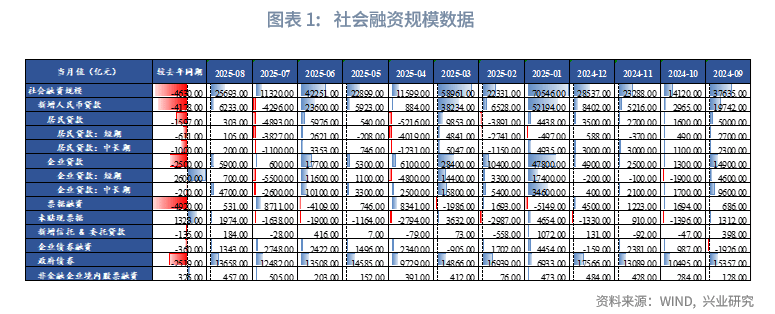
Group 1: Social Financing and Credit - In August 2025, the new social financing scale reached 2.57 trillion yuan, a year-on-year decrease of 463 billion yuan, with a growth rate of 8.8%, down 0.2 percentage points from the previous month [1][4] - The new RMB loans in August amounted to 590 billion yuan, a decrease of 310 billion yuan year-on-year, with the credit growth rate falling to 6.8% [11] - Government bonds saw a net financing of over 1 trillion yuan in August, but the issuance rhythm led to a year-on-year decrease of 2.52 trillion yuan in government bonds for the month [4][11] Group 2: Loan Structure and Demand - The demand for residential loans remains weak, with short-term and medium-to-long-term loans decreasing by 611 billion yuan and 1 trillion yuan respectively [11] - Corporate loans also showed a decline, with short-term loans increasing by 700 billion yuan and medium-to-long-term loans decreasing by 200 billion yuan [12] - The financing needs of industrial enterprises are still in need of stimulation, as profitability continues to slightly decline [12] Group 3: Monetary Aggregates - M1 recorded a year-on-year growth of 6.0% in August, up 0.4 percentage points from the previous month, indicating a continued activation of funds [15] - M2 remained stable at a year-on-year growth of 8.8%, with a slight decrease in fiscal deposits indicating a small increase in fiscal spending [15] - The growth rate of resident deposits fell to 9.8%, while non-bank deposits rose to 16.7%, reflecting a shift in residents' fund allocation towards the stock market [15]