
飞天系统

Search documents
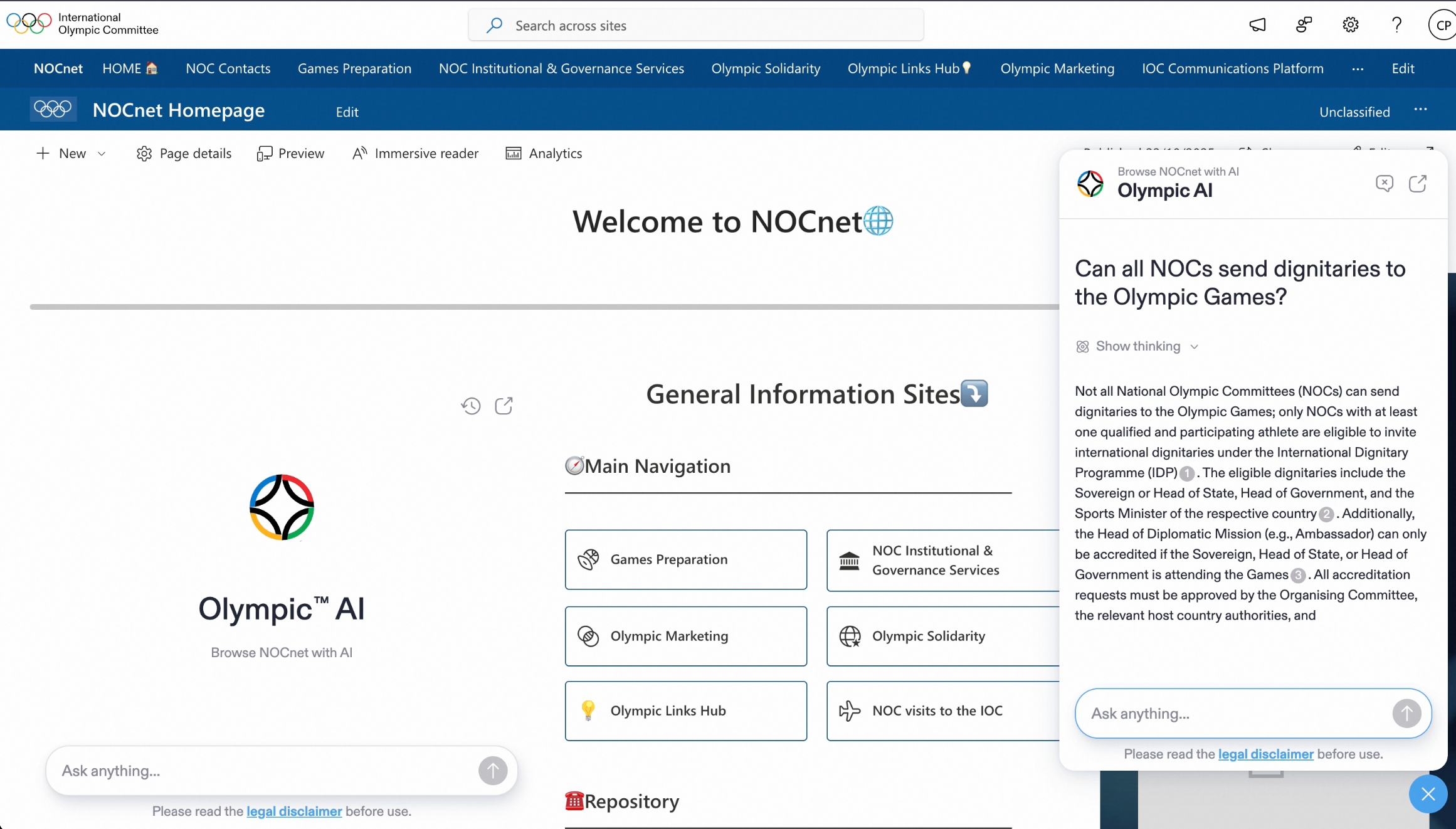
刚刚官宣!奥运史上首个官方AI交给阿里千问
Zhong Guo Jing Ji Wang· 2026-02-05 11:48
Core Insights - The International Olympic Committee (IOC) announced a partnership with Alibaba to create the first official AI model for the Olympics, marking a significant technological advancement for the Milan Winter Olympics [2][4] - This collaboration signifies a shift from traditional satellite communication to cloud computing and AI technology, positioning Chinese tech as a core driver for global sporting events [2][5] Group 1: Technological Advancements - The partnership is built on nine years of trust and technological validation, evolving from "Cloud Olympics" to "AI Olympics" [3][4] - Alibaba's journey began in 2017, leading to milestones such as the launch of OBS Cloud in 2018, global cloud broadcasting in 2021, and full cloud integration of core systems by 2022 [4] - The Milan Winter Olympics will integrate AI deeply with cloud technology, enhancing the operational backbone of the event [4] Group 2: AI Applications - The AI model, known as the "National Olympic Committee AI Assistant," has been deployed in 11 countries, improving operational efficiency by providing multilingual support for various inquiries [8] - AI technology addresses challenges in broadcasting, such as capturing high-speed actions against a snowy backdrop, enhancing viewer experience with clearer visuals [9] - A new energy tracking system, "Energy Treasure," contributes to the sustainability goals of the Milan Winter Olympics, reflecting a commitment to resource efficiency [9] Group 3: Global Positioning - The IOC's choice of Alibaba represents a shift towards recognizing Chinese technological capabilities, moving from reliance on foreign IT infrastructure to self-developed solutions [10][12] - The Qwen model has surpassed Meta's Llama in downloads, showcasing China's leadership in the global AI open-source market [12] - The 2026 Winter Olympics symbolizes a milestone in China's digital economy infrastructure, demonstrating the country's technological prowess across various industries [15]


硅谷认证!Meta新模型暗含Qwen血统,周靖人带飞团队成阿里新晋合伙人
AI前线· 2025-12-11 07:28
Core Viewpoint - Alibaba has appointed Zhou Jingren, the CTO of Alibaba Cloud and head of Tongyi Lab, as a new partner, marking a significant shift in the company's decision-making structure during a critical technological transition towards AI and cloud computing [3][6]. Group 1: Appointment of Zhou Jingren - Zhou Jingren's promotion to partner is seen as a strategic move to enhance technical leadership within Alibaba's highest decision-making body, especially as the company pivots towards AI as a core growth driver [6][7]. - The partner team at Alibaba has been reduced from 26 to 17 members earlier this year, making Zhou's appointment the first addition since this restructuring [5][6]. - Zhou has been recognized for his leadership in ensuring the competitive edge of the Qwen model, which has been pivotal in Alibaba's AI strategy [6][7]. Group 2: AI Strategy and Investment - Alibaba plans to invest at least 380 billion yuan (approximately 53 billion USD) over the next three years in cloud computing and AI infrastructure, surpassing the total investment in these areas over the past decade [7]. - The company aims to transition its AI strategy from a "technical narrative" to a "lifeline" by 2025, emphasizing the importance of AI models as a primary variable in its growth [7][8]. - Zhou's role is critical as Alibaba seeks to integrate AI capabilities with its cloud services, positioning itself as a leader in both AI model development and cloud computing [20][21]. Group 3: Achievements and Innovations - Under Zhou's leadership, the Tongyi Lab has developed the Qwen series, which has achieved significant milestones, including a full-scale technical layout from 0.5 billion to 480 billion parameters and a comprehensive multimodal open-source matrix [17][18]. - The Qwen model family has gained substantial traction, with over 700 million downloads and 180,000 derivative models, establishing itself as one of the most influential model families globally [18][26]. - Zhou has also emphasized the importance of continuous learning mechanisms for models, aiming for them to evolve beyond traditional training processes [21][22]. Group 4: Future Directions - Alibaba's future goals include enhancing the synergy between models and cloud infrastructure, focusing on the evolution of reasoning models to better align with human cognitive processes [21][22]. - The company is exploring new learning mechanisms that allow models to learn continuously and autonomously, moving away from offline training methods [21][22]. - Zhou's leadership is expected to drive Alibaba's AI initiatives forward, particularly in the competitive landscape of AI cloud services, where the company claims to lead in market share [20][21].

站上风口!国产操作系统概念股飙涨
Shen Zhen Shang Bao· 2025-08-28 23:01
Group 1 - The release of the Galaxy Kirin Operating System V11 has led to significant stock price increases for several related companies, with Qi Anxin rising by 18% and Huasheng Tiancheng by 6.4% [1] - The Chinese government plans to invest 10 billion yuan during the 14th Five-Year Plan to enhance the capabilities of domestic operating systems, focusing on AI applications and ecosystem development [1] - The stock prices of several operating system concept stocks have shown remarkable growth this year, with Huasheng Tiancheng up 260.83% and other companies like Zheda Wanzheng and Qi Anxin also seeing substantial increases [1] Group 2 - The global operating system market has been dominated by Windows, macOS, and Android, but domestic systems are beginning to disrupt this concentration, with Harmony OS achieving over 12 million installations [2] - The Chinese operating system market is expected to reach a scale of 25 billion yuan by 2025, driven by strong market demand and the integration of emerging technologies like AI [2] - The software industry in China is projected to grow at a compound annual growth rate of 12% to 15%, with the market size expected to exceed 15 trillion yuan by 2025 and 20 trillion yuan by 2028 [3]


