
食神AI烹饪大模型

Search documents
当AI长出了「眼睛」和「手」,做饭这件事会变成什么样?
36氪· 2026-03-16 09:22
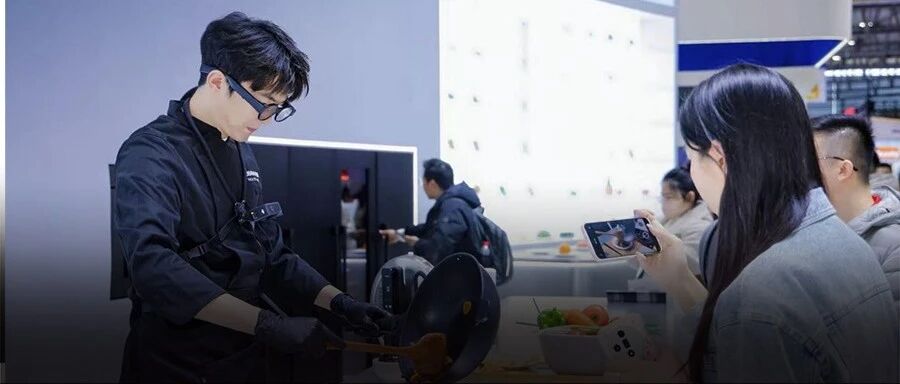
Core Viewpoint - The article discusses the emergence of OpenClaw, an open-source AI framework that has sparked a widespread interest in AI-driven cooking solutions, highlighting a shift from conversational AI to practical, task-executing AI agents that can assist users in real-world scenarios [4][5]. Group 1: AI in Cooking - OpenClaw represents a paradigm shift in AI, moving from chat-based interactions to executing practical tasks, addressing the limitations of traditional AI that only engages in conversation [5]. - The article emphasizes the challenges AI faces in physical environments, particularly in complex settings like kitchens, where traditional AI struggles to provide meaningful assistance [7][9]. - The evolution of AI in kitchen appliances has been marked by initial stages of basic functionality, followed by passive assistance, leading to a need for a comprehensive solution that integrates perception, decision-making, and action [8][11]. Group 2: Overcoming Physical Barriers - To create value in cooking, AI must bridge the "physical gap," transitioning from cloud-based computation to real-world execution, necessitating a complete solution that encompasses the entire cooking process [11][12]. - The article outlines a vision for an "invisible chef" that combines AI cooking glasses for perception, a central AI model for decision-making, and smart kitchen appliances for execution, creating a seamless integration of hardware and software [13][18]. - AI cooking glasses are designed to capture real-time data, enabling the AI to understand the kitchen environment and provide tailored cooking instructions to users [15][16]. Group 3: Industry Insights - The article highlights the importance of traditional manufacturing companies adapting to AI advancements by leveraging their deep industry knowledge and data, rather than merely following tech trends [22][24]. - It points out that successful entities in the manufacturing sector focus on enhancing their unique value propositions through AI, rather than competing directly with tech giants on model parameters [24][25]. - The narrative emphasizes that the ultimate goal of AI in cooking is not to replace human involvement but to enhance the cooking experience, allowing users to enjoy the creative aspects of cooking without the burdens of tedious tasks [27].


老板电器四十七年:厨房里的“第三次进化”
Jing Ji Guan Cha Wang· 2026-01-15 10:15
Core Insights - The article emphasizes the shift in the tech industry from computational power to the physical application of AI, particularly in the kitchen, highlighting the need for AI to solve real-world problems rather than just generating images or data [2][3] - The kitchen appliance industry is facing challenges as traditional hardware competition based on parameters like suction power and firepower is becoming less effective, leading to a need for innovation that addresses user experience and cooking capabilities [3][4][5] Industry Trends - The competition in the kitchen appliance sector has been primarily focused on hardware specifications, which has led to a lack of innovation that addresses the actual needs of users [3][4] - Young consumers face challenges not just in cleaning up smoke but also in deciding what to cook and mastering cooking techniques, indicating a shift in consumer needs [4][5] Company Strategy - Boss Electric is positioning itself to "leapfrog" the competition by developing the "Shishen" AI cooking model, which elevates the competition from hardware to software and algorithms [6][8] - The "Shishen" model is the first AI cooking model in China, trained on 47 years of culinary data, and is designed to assist users in meal preparation by integrating with kitchen appliances [8][9] Business Performance - In Q3 2025, Boss Electric reported significant growth, with digital kitchen appliance sales increasing by 55%, demonstrating a clear consumer willingness to pay for enhanced user experiences [9][10] - The user base for the Shishen app exceeded 6 million by the end of 2025, with a 30% increase in monthly active users in Q3 alone [10] Data and Innovation - Boss Electric has secured seven data property registration certificates, marking a significant milestone in the kitchen appliance industry by treating data as a core asset rather than a byproduct [14][15] - The company has applied for 9,448 patents, with a leading number of patents related to the AI cooking model, establishing a strong technological barrier in the industry [15] Market Expansion - Boss Electric is expanding into the commercial kitchen sector with a strategic investment of 100 million yuan in Youte Smart Kitchen, leveraging the Shishen model to enhance cooking standards in commercial settings [18][19] - The Shishen model's capabilities are being utilized to standardize cooking processes in commercial kitchens, demonstrating its versatility beyond home use [19] Cultural Engagement - In 2025, Boss Electric partnered with the Michelin Guide to democratize culinary skills, allowing users to replicate Michelin-level dishes at home through the Shishen app [21][24] - The company is also focusing on cultural initiatives, such as the "Xunxianji" IP activity, to reconnect people with cooking and fresh ingredients, enhancing the brand's presence and relevance in the culinary space [27][28]
老板电器2025:寻找扣动厨电行业“iPhone时刻”的扳机
Hua Er Jie Jian Wen· 2025-12-29 10:39
Core Insights - The kitchen appliance industry is at a pivotal moment, akin to the smartphone revolution initiated by the iPhone in 2007, but has yet to experience its own transformative breakthrough [1][2] - The current competition in the kitchen appliance market remains focused on hardware specifications rather than innovative applications of AI technology [2][16] - The complexity of cooking, especially in Chinese cuisine, presents significant challenges for AI integration, as it requires understanding individual preferences and experiences [4][5] Industry Trends - The kitchen appliance market in China saw a retail sales growth of 6.1% in the first half of 2025, driven by government subsidies, but faced a downturn during the "Double Eleven" shopping festival with significant declines in sales for various appliance categories [11][13] - A new wave of government policies aimed at boosting domestic consumption is expected to stabilize the kitchen appliance market in 2026, moving away from the fluctuations experienced in 2025 [15][18] Company Developments - Robam Appliances is attempting to redefine kitchen appliances by introducing the "Shishen" AI cooking model, which aims to transform traditional appliances into interactive partners rather than mere tools [6][19] - The "Shishen" model has been developed with a comprehensive knowledge base and has already seen significant user engagement, with over 600,000 users and a 30% increase in monthly active users in the third quarter [25][27] - Robam Appliances has established several research institutes to support ongoing AI development, positioning itself as a leader in the kitchen appliance sector [19][23] Consumer Engagement - The shift towards AI in kitchen appliances is changing the consumer experience from a one-time purchase to a long-term interactive relationship, enhancing user satisfaction and engagement [20][22] - The integration of AI allows for personalized cooking experiences, enabling users to recreate complex recipes and fostering a deeper emotional connection with cooking [20][30] - Robam's approach combines technology with cultural insights, aiming to redefine the kitchen as a space for creativity and emotional connection rather than just a functional area [31]
老板电器:二季度营收净利环比双增 中期分红比例66%凸显稳健本色
Zheng Quan Shi Bao Wang· 2025-08-28 05:39
Core Insights - Company reported a slight decline in revenue and net profit for the first half of 2025, but showed significant improvement in Q2 with both revenue and net profit increasing quarter-on-quarter, indicating strong resilience in performance [1] - The company maintains the highest market share in key categories such as range hoods, gas stoves, and integrated stoves, while new product categories like dishwashers and integrated machines have also seen growth [2] - A high dividend payout ratio of 66% reflects the company's commitment to returning value to shareholders, supported by robust cash flow from operations [2] Financial Performance - For the first half of 2025, the company achieved revenue of 4.608 billion yuan, a year-on-year decrease of 2.58%, and a net profit of 712 million yuan, down 6.28% year-on-year [1] - Q2 performance showed a revenue increase of 21.97% to 2.532 billion yuan and a net profit increase of 9.29% to 371 million yuan compared to Q1 [1] - The net cash flow from operating activities reached 511 million yuan, a significant year-on-year increase of 23.48%, indicating improved cash flow conditions [1] Product and Market Strategy - The company exhibits a strategy of stabilizing core categories while breaking into new categories, with integrated stoves holding a market share of 38.2% in offline retail [2] - New product categories like dishwashers and integrated machines have shown promising growth, with dishwashers generating revenue of 338 million yuan (up 6.03% year-on-year) and integrated machines generating 300 million yuan (up 6.27% year-on-year) [2] - The company continues to dominate in traditional categories, with offline market shares of 31.2% for range hoods and 31.4% for gas stoves, maintaining a leading position across all channels [2] R&D and Digital Transformation - The company emphasizes long-term growth through technological research and digital transformation, with its AI cooking model "Shishen" reaching over 5.4 million users [3] - The establishment of the Hangzhou AI Research Institute aims to enhance capabilities in machine vision and voice interaction, accelerating AI applications in the kitchen appliance sector [3] - The company holds 6,325 valid patents, including 602 invention patents, and has a leading rate of technology conversion in the industry, further enhancing its competitive edge [3] Future Outlook - The company plans to continue positioning itself as a provider of comprehensive cooking solutions while promoting new product categories and leveraging various retail strategies to address market challenges [3] - The focus will remain on consolidating advantages in core categories while expanding into new markets and channels, including overseas [3]