吸油烟机

Search documents
从春晚舞台看中国智能生态科技品牌新飞跃
Ren Min Wang· 2026-02-18 01:45
Core Insights - The transformation of the Spring Festival Gala stage reflects the shift towards "hard technology" as a central theme in China's economic development, showcasing the evolution from consumer goods to platform enterprises and now to an integrated "smart technology ecosystem" [2][5] - The emergence of multiple hard technology brands at the gala indicates a rapid development of industry clusters and a shift from selling individual products to offering comprehensive smart solutions that enhance future lifestyles [2][3] Industry Trends - The smart hardware industry is undergoing a significant change from "single function" products to "full-scene intelligence," with a focus on ecosystem competition rather than individual product competition [3] - The competitive logic is shifting from pursuing blockbuster products to building "technological compounding" and "ecosystem premium," as outlined in the "14th Five-Year Plan" [3] Technological Advancements - Companies are increasingly focusing on core underlying technologies, enhancing China's position in the global high-end market, exemplified by the development of high-speed digital motor technology by companies like追觅科技 [4] - The market for whole-home smart systems is projected to reach 280 billion yuan by 2026, with a penetration rate exceeding 35%, indicating a rapid acceleration in smart technology adoption [4] Global Market Position - A number of Chinese technology companies are establishing a presence in the global high-end market, transitioning from simple product exports to a more systematic approach involving technology standards and brand recognition [4] - Chinese brands in the high-end segment of the global market, particularly in robotic vacuum cleaners, are gaining market share, demonstrating their capability to build high-end brand images through hard technology [4]
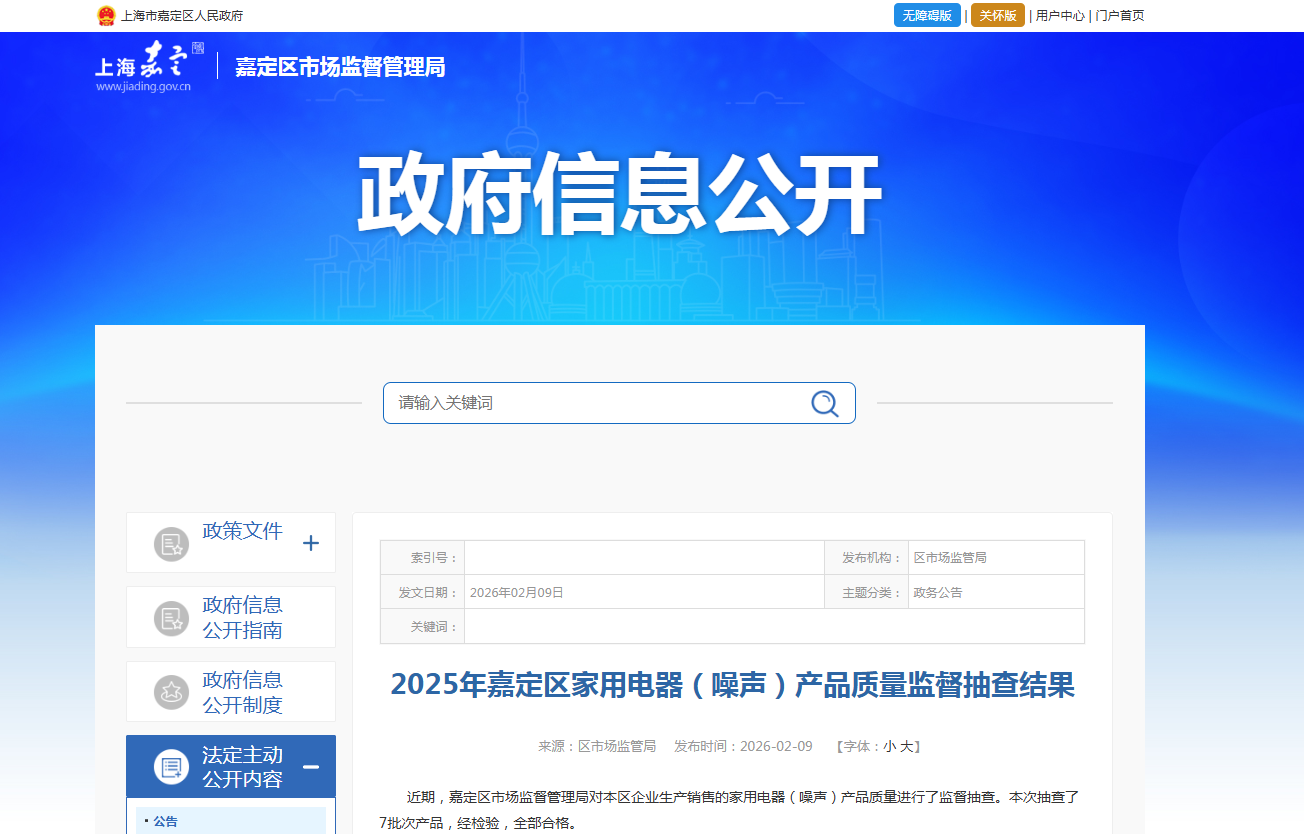
2025年上海市嘉定区家用电器(噪声)产品质量监督抽查结果公布
Zhong Guo Zhi Liang Xin Wen Wang· 2026-02-14 04:23
Core Viewpoint - The recent quality supervision inspection results for household electrical appliances (noise) in Jiading District, Shanghai, indicate that all sampled products passed the quality tests, reflecting positively on the local manufacturing standards and compliance with regulations [4]. Group 1: Inspection Results - The Jiading District Market Supervision Administration conducted a quality inspection on household electrical appliances (noise) and tested a total of 7 batches of products, all of which were found to be compliant [4]. - The inspection was based on the implementation guidelines SHJDSSXZ0004-2025 for quality supervision of household electrical appliances (noise) in Shanghai's Jiading District [4]. Group 2: Sampled Products - The inspected products included various types of household appliances such as fans, washing machines, range hoods, and microwaves, with notable brands like Midea and Vatti represented [5]. - Specific products that passed the inspection include: - Table fan from Wenzhou Jiayou Electric Factory - Floor fan from Shanghai Jingteng Electric Co., Ltd. - Fully automatic washing machines from Wuxi Little Swan Electric Co., Ltd. and Hefei Midea Washing Machine Co., Ltd. - Range hoods from Vatti and Guangdong Vanward Electric Co., Ltd. - Microwave from Guangdong Midea Kitchen Appliances Manufacturing Co., Ltd. [5].

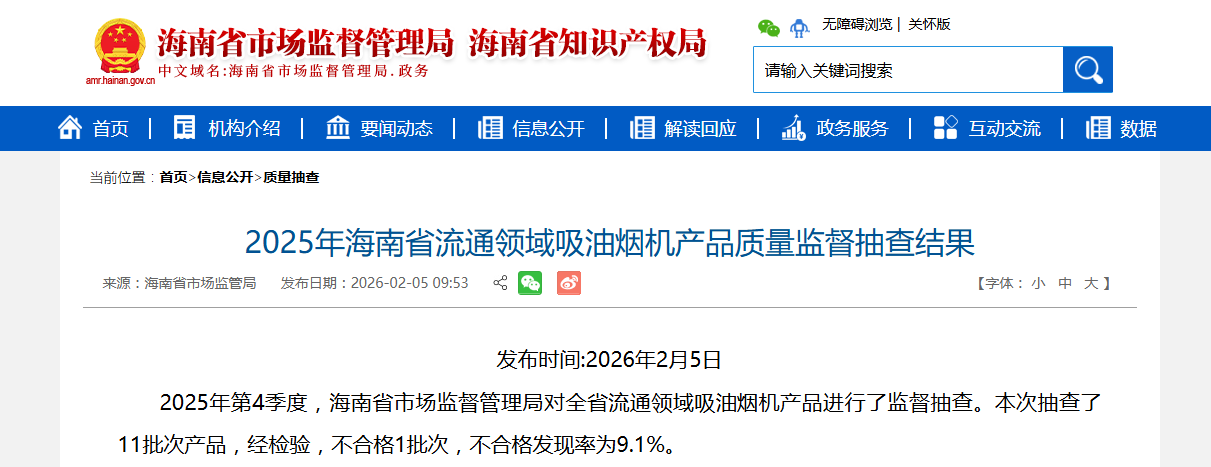
2025年海南省流通领域吸油烟机产品质量监督抽查结果公布
Xin Lang Cai Jing· 2026-02-06 08:35
Core Viewpoint - The quality supervision and inspection results for range hood products in Hainan Province for Q4 2025 indicate a non-compliance rate of 9.1%, with one out of eleven batches failing to meet safety and energy efficiency standards [2][3]. Group 1: Inspection Results - The inspection was conducted based on multiple national standards, including GB 4706.1-2005 and GB 29539-2013, focusing on various safety and performance criteria [3][4]. - One batch of range hoods was found non-compliant, specifically failing in the areas of protection against live parts, power connection and external wiring, and full pressure efficiency [3][4]. - The non-compliant product poses a risk of electric shock due to inadequate insulation and may lead to energy waste due to low motor efficiency [4]. Group 2: Non-Compliant Products - The non-compliant product identified was a household range hood with a model number CXW-298-A2162, produced on October 18, 2025, and sold by a local retailer [4]. - The specific non-compliance issues included protection against live parts, power connection, and full pressure efficiency, indicating serious safety hazards [4]. Group 3: Compliant Products - Several range hood products passed the inspection, including models from well-known brands such as Haier and Vatti, with specifications indicating compliance with the required standards [5][6]. - The compliant products demonstrated adequate performance metrics, including power ratings and energy efficiency, contributing to their market viability [5][6].
市场监管总局通报2025年童鞋等21种产品质量国家监督抽查情况
Yang Shi Wang· 2026-02-04 09:59
Core Viewpoint - The recent quality supervision inspection by the State Administration for Market Regulation revealed that out of 2107 batches of 21 product types tested, 282 batches were found to be non-compliant, indicating significant quality issues in various consumer products [1][11]. Group 1: Inspection Overview - A total of 2107 batches were inspected across 21 product types, with 282 batches identified as non-compliant [1]. - The inspection covered 14 platforms and 544 sales units, as well as 19 provinces involving 173 sales units and 29 provinces with 1289 production units [1]. Group 2: Non-compliance Details - Among the 282 non-compliant batches, 4 batches were illegal products, including 2 children's watches and 1 range hood [1]. - The majority of non-compliant products were related to safety standards, including children's shoes, travel bags, and various electrical appliances [1][3][4][5][6]. Group 3: Specific Product Findings - Children's shoes had 25 non-compliant batches, primarily due to issues with phthalates, heavy metals, and formaldehyde [3]. - Travel bags showed 19 non-compliant batches, all related to impact performance [3]. - For children's watches, 3 batches were non-compliant, with 2 batches lacking the required CCC certification [3]. - The inspection of range hoods revealed 18 non-compliant batches, with issues related to electrical safety and energy efficiency [4]. - Other products like reading lamps, skin and hair care devices, and electric water heaters also had significant non-compliance rates [5][6]. Group 4: Follow-up Actions - The market regulatory authorities have taken measures against non-compliant products, including removal from shelves and strict enforcement of corrective actions for manufacturers [11]. - Continuous non-compliance will lead to severe penalties, including legal actions against violators [11].
2025年上半年老板电器多个产品品类营收同比下滑
Guo Ji Jin Rong Bao· 2026-01-30 02:37
Core Viewpoint - The company, Robam Appliances, is facing revenue decline in its core products and is investing in smart kitchen appliances to seek new growth opportunities [1][3][4]. Group 1: Investment and Strategic Moves - Robam Appliances signed an investment cooperation letter with Utec Smart Kitchen International Holdings, planning to invest 100 million RMB to enhance its presence in the smart cooking robot market [1]. - The company is also utilizing up to 6.5 billion RMB of idle funds to purchase high-security, liquid financial products, indicating a strategy to manage cash effectively while seeking new revenue streams [3]. Group 2: Financial Performance - For the first three quarters of 2025, Robam Appliances reported a revenue of 7.312 billion RMB, a year-on-year decline of 1.14%, and a net profit of 1.157 billion RMB, down 3.73% [3][4]. - The company's flagship products, range hoods and gas stoves, saw revenue declines of 2.36% and 1.11% respectively, contributing to over 70% of total revenue [4]. Group 3: Market Challenges - The real estate market downturn has significantly impacted the demand for Robam's products, as the company is heavily reliant on the renovation channel, which has seen a 31.8% decrease in new projects [5][6]. - The company faces increased collection periods and rising bad debt risks, with accounts receivable reaching 1.721 billion RMB and notes receivable at 736 million RMB [6]. Group 4: Technological Transition - Robam Appliances is transitioning towards AI and digital kitchen appliances, having launched the AI cooking model "Shishen," which has gained over 5.4 million users [6]. - Despite the shift towards AI, the company has shown a tendency to prioritize marketing over research and development, with R&D spending decreasing by 11.23% to 245 million RMB, while sales expenses increased by 6.43% [7].

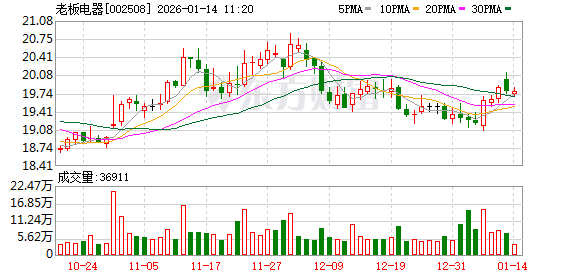
老板电器股价涨5.03%,南方基金旗下1只基金位居十大流通股东,持有685.57万股浮盈赚取692.42万元
Xin Lang Cai Jing· 2026-01-29 03:34
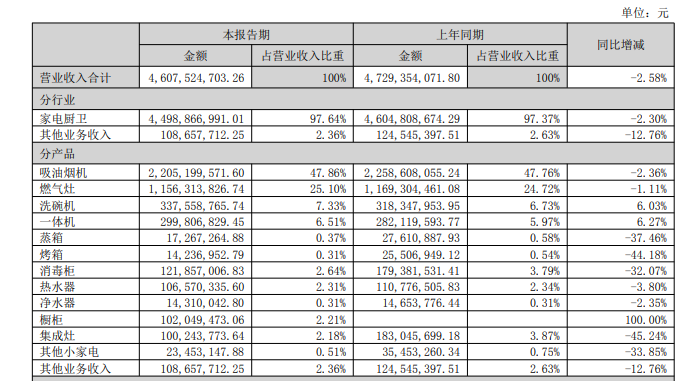
Group 1 - The stock price of Boss Electric increased by 5.03%, reaching 21.10 CNY per share, with a trading volume of 214 million CNY and a turnover rate of 1.11%, resulting in a total market capitalization of 19.938 billion CNY [1] - Boss Electric, established on November 7, 2000, and listed on November 23, 2010, is located in Yuhang District, Hangzhou, Zhejiang Province. The company specializes in the research, production, and sales of kitchen appliances, including range hoods, gas stoves, disinfection cabinets, and food processors [1] - The revenue composition of Boss Electric's main business includes: range hoods 47.86%, gas stoves 25.10%, dishwashers 7.33%, integrated machines 6.51%, disinfection cabinets 2.64%, and other kitchen appliances [1] Group 2 - Among the top ten circulating shareholders of Boss Electric, a fund under Southern Fund holds a position. The Southern CSI 500 ETF (510500) reduced its holdings by 183,300 shares in the third quarter, now holding 6.8557 million shares, which accounts for 0.73% of the circulating shares [2] - The Southern CSI 500 ETF (510500) was established on February 6, 2013, with a latest scale of 144.69 billion CNY. Year-to-date returns are 15.26%, ranking 552 out of 5,551 in its category; the one-year return is 56.56%, ranking 1,089 out of 4,285; and since inception, the return is 190.06% [2]
年销170亿,方太超过老板电器一半多?
Xin Lang Cai Jing· 2026-01-27 02:28
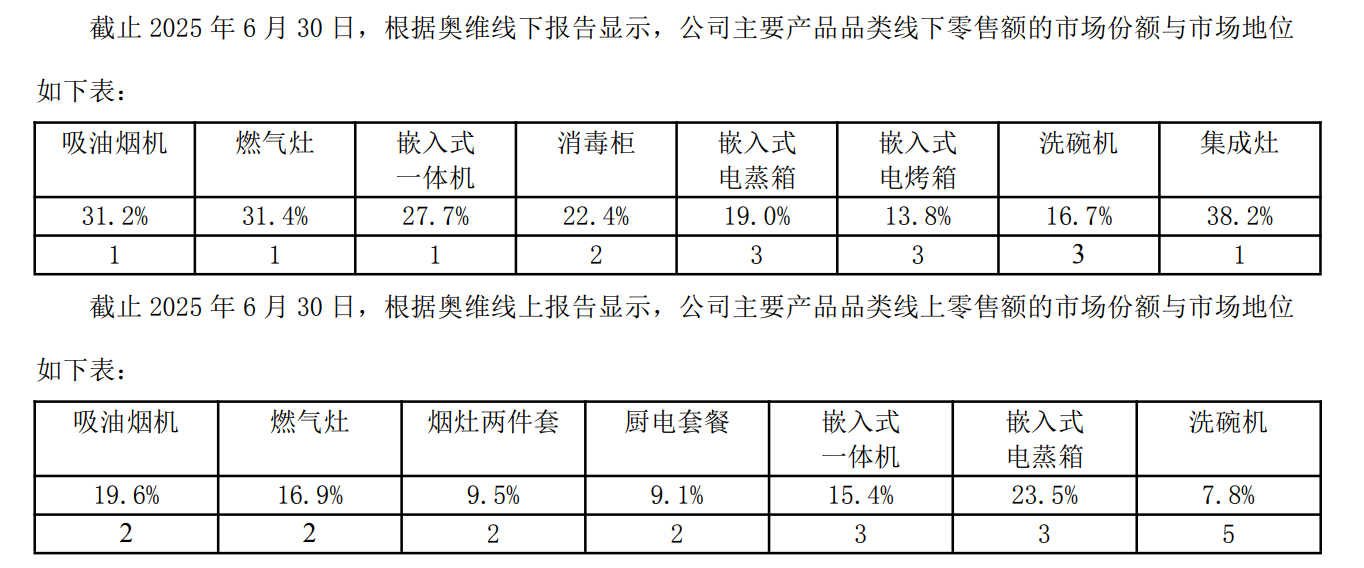
Core Viewpoint - The competition between Fotile and Boss Electric in the kitchen appliance sector is highlighted, with Fotile's revenue surpassing Boss Electric's by a significant margin, indicating a shift in market dynamics and strategies between the two companies [1][2][10]. Revenue Performance - Fotile reported a revenue of over 17 billion yuan in 2025, showing a slight increase compared to previous years, while Boss Electric's revenue for the same period is projected to be around 11.2 billion yuan, indicating that Fotile's revenue is 1.5 times that of Boss Electric [1][2][7]. - Boss Electric's revenue from 2019 to 2024 shows a gradual increase, but the first three quarters of 2024 saw a decline of 1.14% year-on-year, suggesting challenges in maintaining growth [2][6]. Market Share Insights - In the first half of 2025, Boss Electric held a market share of 31.2% for range hoods and 31.4% for gas stoves, while Fotile led the online market for range hoods with a 17.28% share, closely followed by Boss Electric at 17.27% [3][4]. - The overall market for integrated stoves has declined significantly, with Boss Electric's integrated stove revenue dropping by 45% year-on-year in the first half of 2025 [2][3]. Strategic Directions - Fotile is focusing on brand enhancement and high-end product offerings, aiming for a "professional, high-end, and boutique" strategy, while Boss Electric is adopting a channel-driven approach, targeting younger demographics and diversifying its product range [10][11][15]. - Both companies are navigating a challenging market environment, with Fotile emphasizing brand value and Boss Electric exploring new channels and product lines to attract consumers [12][16]. Future Outlook - The introduction of national subsidies in late 2024 is expected to provide temporary relief to the kitchen appliance market, but the long-term trend indicates continued challenges, especially with certain product categories excluded from future subsidies [7][8][9]. - The differing strategies of Fotile and Boss Electric will determine their ability to adapt and thrive in the evolving kitchen appliance landscape [17].
老板电器拟亿元涉足智能机器人 累计分红68亿货币资金加理财达87亿
Chang Jiang Shang Bao· 2026-01-15 23:58
Core Viewpoint - Boss Electric, a leading kitchen appliance manufacturer, is venturing into the smart robot sector by investing 100 million yuan in Utcook Intelligence International Holdings Limited to explore the smart cooking robot niche market [1][2][5]. Company Overview - Boss Electric specializes in the research, production, and sales of kitchen appliances and has a strong influence in the industry [3]. - The company has demonstrated robust profitability since its listing in 2010, achieving annual profits exceeding 1 billion yuan each year, with net profits consistently above 1 billion yuan since 2016 [3][9]. - As of the third quarter of 2025, Boss Electric reported a net profit of 1.157 billion yuan [3][10]. Financial Performance - Since its IPO, Boss Electric has accumulated profits of 17.144 billion yuan and distributed cash dividends totaling 6.847 billion yuan [4][12]. - The company has maintained a healthy financial status, with a debt-to-asset ratio of 31.40% as of September 2025, and has not engaged in equity refinancing since its listing [4][13]. - The operating revenue for 2025 was reported at 7.312 billion yuan, reflecting a year-on-year decrease of 1.14%, while the net profit showed a decline of 3.73% [10]. Strategic Move into Smart Robotics - The investment in Utcook is aimed at fostering technological innovation and ecological integration within the smart kitchen appliance sector, particularly in the smart cooking robot market [5][6]. - Utcook, established in 2024, focuses on providing commercial smart cooking robot solutions and has developed a range of products supported by over 1,000 patents [6][7]. - The collaboration is expected to leverage Boss Electric's leadership in the kitchen appliance industry and Utcook's expertise in smart cooking technology to explore new market opportunities [7][8].
猛砸1个亿,盯上炒菜机器人,厨电巨头“杀”入餐厅后厨
Xin Lang Cai Jing· 2026-01-15 06:18
Core Viewpoint - The investment by Boss Electric in Yout Intelligent Kitchen signifies a strategic move into the commercial kitchen sector, particularly focusing on the development of smart cooking technology and the growing market for cooking robots [1][2][3]. Company Summary - Boss Electric announced a strategic investment of 100 million RMB in Yout Intelligent Kitchen to enhance collaboration in smart cooking technology [1]. - The investment reflects Boss Electric's intention to expand from consumer kitchen appliances to the B2B commercial kitchen equipment market [2]. - Yout Intelligent Kitchen, based in Zhuhai, specializes in providing automated solutions for the restaurant industry, targeting chains, school cafeterias, and central kitchens [2][8]. Financial Performance - Boss Electric's financial reports indicate a challenging growth environment, with a slight revenue increase of 0.10% to 11.213 billion RMB in 2024, while net profit decreased by 8.97% to 1.577 billion RMB [4]. - In the first half of 2025, revenue fell by 2.58% to 4.608 billion RMB, and net profit dropped by 6.28% to 712 million RMB [4][6]. - The company has faced declining sales across major product lines, with significant drops in revenue for several categories, including a 44.18% decline in ovens and a 45.24% decline in integrated stoves [6][7]. Market Trends - The cooking robot market is gaining traction as restaurants seek to standardize food production with fewer, more stable staff, making cooking robots a viable solution [2][14]. - The increasing chain restaurant rate in China is projected to reach 25% by 2025, driven by rising labor costs and a shortage of skilled workers [14]. - The value of cooking robots is being reassessed as they offer stable, controllable, and predictable production capabilities, addressing the challenges of high labor costs [14][18]. Competitive Landscape - The cooking robot market is becoming increasingly competitive, evolving from simple device comparisons to an ecosystem that integrates supply chains, scenarios, and data [19][22]. - Recent investments in cooking robot companies indicate a growing interest in the sector, with multiple firms securing funding to enhance their technological capabilities [11][13]. - The establishment of national standards for commercial smart cooking machines is expected to drive product standardization and quality improvement in the industry [21].

老板电器战略投资优特智厨,加码AI炒菜机器人赛道
2 1 Shi Ji Jing Ji Bao Dao· 2026-01-14 03:21
Core Insights - The company is transforming its future by investing 100 million yuan in the smart cooking robot company Utcook Intelligence International Holdings Limited, establishing commercial kitchens as its second growth curve [2] - As a leader in the Chinese kitchen appliance industry for 47 years, the company is seeking high-potential new markets amid challenges in the real estate cycle and intensified competition in home appliances [2] Group 1: Strategic Investment and Market Positioning - The investment in Utcook is seen as a strategic move to penetrate the commercial kitchen market, which is valued at over 1 trillion yuan and has a smart penetration rate of less than 10% [2] - The company aims to leverage its core technology and extensive cooking data to create a replicable and evolving smart cooking capability rather than just selling cooking equipment [3] Group 2: Technological Development - The AI model "Shishen," developed by the company's research institute, is based on 50 million real cooking data points and boasts an accuracy rate of over 98% for dish recognition and health management [3] - The integration of precise temperature control and patented algorithms with the AI system addresses key pain points in the restaurant industry, such as chef shortages and inconsistent flavors [3] Group 3: Ecosystem Collaboration - The company is deepening strategic collaborations with leading platforms, transitioning from traditional government and enterprise clients to chain restaurant channels [4] - Partnerships with Baidu and JD Qixian Xiaochu are aimed at providing integrated AI cooking terminals and standardized kitchen equipment to support rapid expansion in the restaurant network starting in 2026 [6] Group 4: Growth Metrics - In 2025, the company's commercial kitchen business is expected to experience explosive growth, with significant increases in contract amounts, invoicing, and payment collections, alongside a 70% growth in new customer acquisition [7] - The collaboration with Utcook is anticipated to enhance the company's market presence and create a comprehensive solution for commercial kitchen hardware and digital solutions [7] Group 5: Future Outlook - The partnership is set to reshape the kitchen ecosystem, combining smart cooking robots with the company's AI products to create a more complete solution [8] - A more intelligent and responsive commercial cooking service network is being constructed, driven by shared cooking data that will continuously inform technological iterations [9] - The company's transition from a home appliance manufacturer to a smart cooking service provider marks a significant evolution, positioning it to capitalize on the historical turning point in the commercial kitchen sector [10]