马瑞重质原油

Search documents
美国封锁委内瑞拉海路,想逼中国高价买委石油,中国拒绝接盘!
Sou Hu Cai Jing· 2026-01-11 11:22
Group 1 - The U.S. government is implementing a "petroleum quarantine" that effectively acts as a blockade against Venezuela, aiming to control oil prices and disrupt the Venezuelan economy [3][5] - Venezuela's oil prices are surging due to U.S. interference, leading to increased transportation costs and a global supply crunch, affecting major oil importers like China [3][5] - The U.S. strategy appears to be aimed at forcing Venezuela to capitulate economically while simultaneously pressuring China into a position of oil scarcity [5] Group 2 - Venezuela's "Merey" heavy crude oil has been popular among refineries, but U.S. sanctions have increased risks and costs for buyers, leading to a price increase of $2 per barrel [7] - China has rejected the higher prices for Venezuelan oil, reducing its purchases significantly, which undermines U.S. efforts to manipulate the market [7][9] - China's oil reserves and reduced demand due to slowing infrastructure growth have allowed it to avoid purchasing expensive Venezuelan oil, highlighting the potential long-term consequences of U.S. actions on global energy supply chains [9]

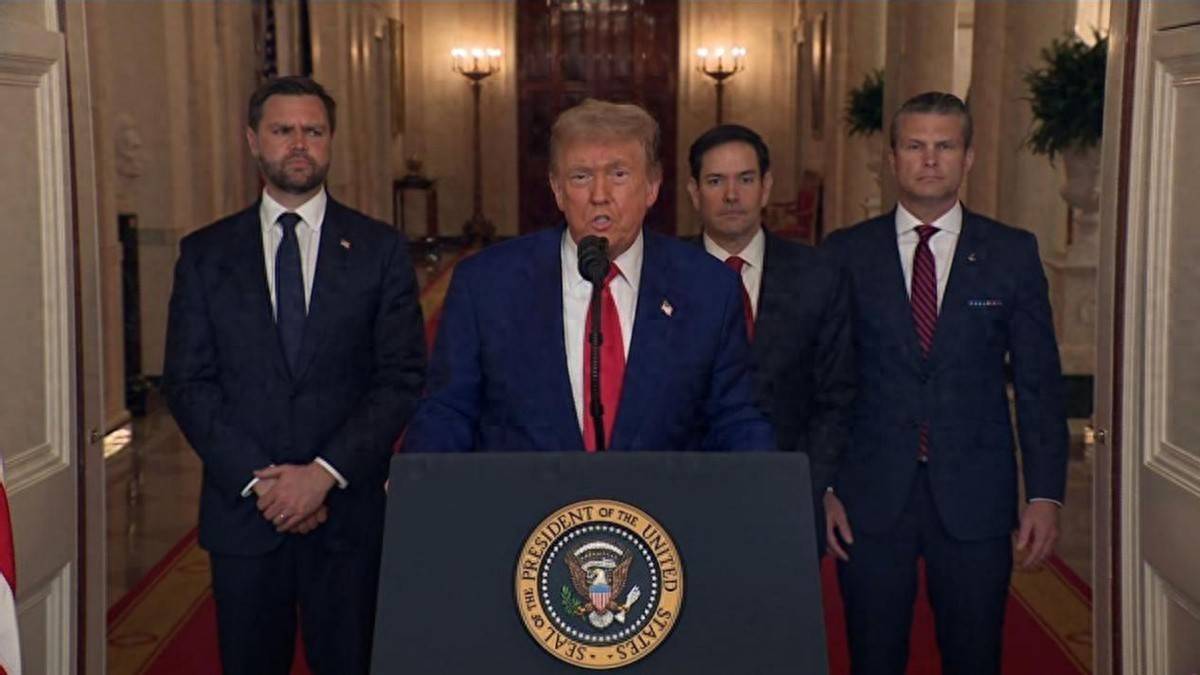
霸气!特朗普硬夺5000万桶石油,特朗普转头才发现:中国连一桶都不肯买了
Sou Hu Cai Jing· 2026-01-11 09:43
Core Viewpoint - The article discusses China's response to Venezuela's attempt to raise oil prices amid U.S. maritime blockades, highlighting China's market-driven approach and its ability to refuse unfavorable deals [2][4]. Group 1: China's Oil Supply and Reserves - China's oil reserves have reached a level sufficient to support 90 days of consumption, indicating a significant improvement from previous years [4][9]. - There are currently 82 million barrels of crude oil stored on supertankers in the South China Sea and near Malaysia, equivalent to over a day's global oil consumption [4]. - The diversification of China's oil import sources has reduced reliance on any single region, enhancing energy security [5][6]. Group 2: Market Dynamics and Pricing - Venezuela's attempt to reduce discounts from $15 to $13 per barrel was met with a firm refusal from Chinese buyers, who deemed the price too high [2][5]. - The demand for heavy crude oil suitable for asphalt production has decreased due to a shift in China's domestic policy focus from large-scale infrastructure to industrial upgrading [6][7]. - Increased risks and costs associated with transporting oil from Venezuela due to U.S. sanctions have made the deal less attractive for Chinese buyers [7][9]. Group 3: Strategic Energy Policy - China's energy strategy has evolved over the past two decades, focusing on increasing domestic oil production and building a robust strategic petroleum reserve of 2 billion barrels [9]. - The article emphasizes that the U.S. misjudged China's energy independence and its ability to respond to market conditions, as China can now choose not to engage in unfavorable transactions [9].
美媒,特朗普的算盘空了,委内瑞拉的高价油,中国凭啥不接招?
Sou Hu Cai Jing· 2026-01-10 08:24
Core Insights - The Trump administration's decision to impose a comprehensive oil blockade on Venezuela in December 2025 was primarily aimed at curbing China's access to Venezuelan heavy crude oil, which is crucial for China's refining industry [1][3] - The blockade was intended to disrupt Venezuela's economy, which heavily relies on oil exports for government revenue, but it underestimated Venezuela's vast oil reserves and China's reduced dependency on Venezuelan oil [3][10] Group 1: U.S. Strategy and Objectives - The U.S. has a historical pattern of intervening in countries to control their oil resources, as seen in the Iraq War, and the blockade against Venezuela is framed under the guise of anti-drug and anti-terrorism efforts [3] - Venezuela possesses the largest proven oil reserves globally, totaling 303 billion barrels, despite current production being only 1 million barrels per day [3][10] - The blockade led to 17 million barrels of oil stranded at sea, originally intended for China, highlighting the blockade's ineffectiveness [3][7] Group 2: China's Response and Adaptation - China has significantly reduced its reliance on Venezuelan oil, with imports dropping to less than 0.1% of its total oil imports by 2025, demonstrating its ability to adapt to supply disruptions [3][4] - China's strategic oil reserves are sufficient to cover several months of supply, allowing it to manage short-term disruptions effectively [4] - The diversification of China's energy procurement channels has reduced its dependency on any single country, with stable suppliers including Saudi Arabia, Russia, and Iran [5] Group 3: Market Reactions and Implications - The initial rise in Brent crude oil prices following the blockade was short-lived, as the market recognized that other countries were hesitant to purchase Venezuelan oil due to U.S. sanctions [7] - U.S. oil companies are reluctant to invest in Venezuela due to fears of not recouping their investments, indicating a shift in the global energy landscape [9] - The blockade's failure reflects a broader misjudgment by the U.S. regarding China's current energy security capabilities, which are now built on a stable and diversified energy system [10]
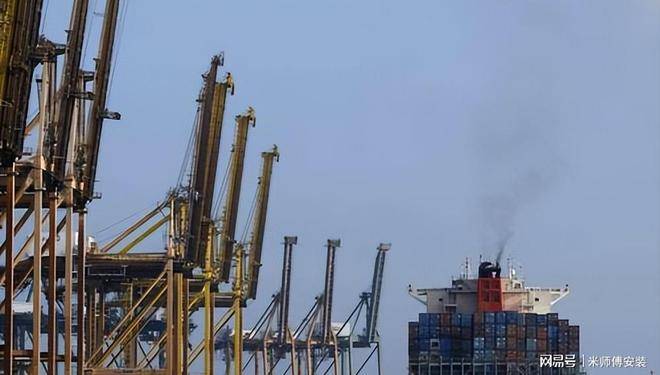
美媒:特朗普的算盘落空,委内瑞拉的高价油,中国未购买一滴
Sou Hu Cai Jing· 2026-01-08 22:30
Group 1 - The core geopolitical strategy of the U.S. aimed to cut off Venezuela's oil exports, thereby suffocating its economy and facilitating a takeover by U.S. oil companies, ultimately raising oil prices for China [3][10] - Venezuela possesses the largest proven oil reserves globally, totaling 303 billion barrels, yet its daily production is only 1 million barrels, representing less than 1% of global output [1][4] - The U.S. blockade has led to a significant drop in Venezuela's oil exports, with over 17 million barrels stranded at sea due to sanctions and operational challenges [1][5] Group 2 - The market response to the U.S. blockade was muted, with Brent crude oil prices briefly rising but then falling back, as global supply from other countries like Canada and Iraq filled the gap [5][10] - China's refusal to purchase high-priced oil is based on a risk-reward analysis, with the $2 discount insufficient to cover potential losses from U.S. sanctions [8][12] - China's oil imports from Venezuela have drastically decreased to 0.07% of total imports, as it diversifies its supply sources from countries like Saudi Arabia, Russia, and Iran [8][12] Group 3 - The geopolitical maneuvering by the U.S. has revealed strategic shortsightedness, as market realities have led to a backlog of Venezuelan oil and hesitance from U.S. refiners to invest in the region [10][12] - China's approach to oil transactions is characterized by a rational and calculated decision-making process, emphasizing the need for reasonable pricing in the face of geopolitical pressures [12]
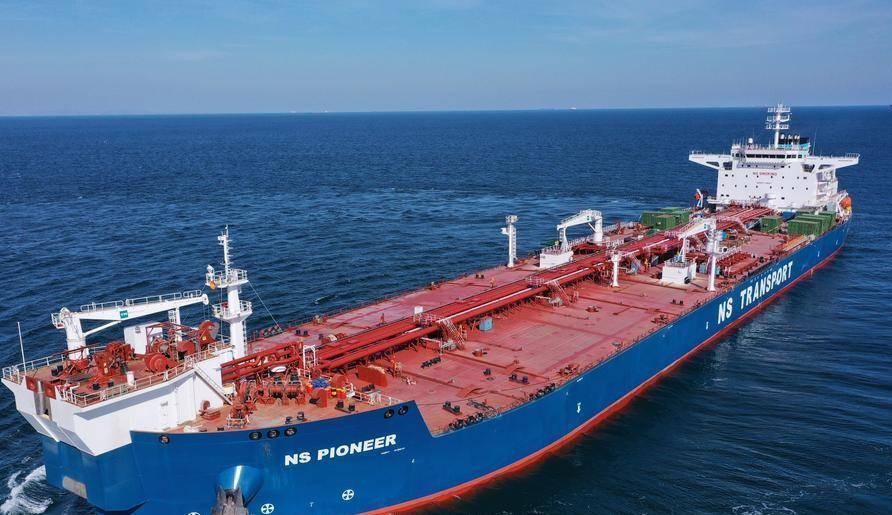
华泰期货:委内瑞拉局势对石油市场是利多还是利空?
Xin Lang Cai Jing· 2026-01-05 02:12
Core Viewpoint - The recent escalation in Venezuela's political situation, including a U.S. airstrike and the capture of President Maduro, is expected to have limited direct impact on oil prices in the short term, but may lead to bearish trends in the medium term due to changes in oil export dynamics and refinery operations [3][11]. Group 1: Oil Export Dynamics - Venezuela's oil export capacity is relatively small, approximately 700,000 to 800,000 barrels per day, with production around 1 million barrels per day. About 75% of this is exported to teapot refineries, primarily as heavy crude oil for asphalt production [3][11]. - Following the political upheaval, it is anticipated that U.S. exports will increase while teapot refinery exports will decline significantly. However, these refineries may not shift to compliant oil due to profit considerations, potentially increasing demand for fuel oil instead [3][11]. - Currently, around 24 million barrels of Venezuelan oil are in floating storage due to U.S. sanctions. If these sanctions are lifted, exports could resume, but trade flows would need to be redirected [3][11]. Group 2: Refinery and Market Impacts - Teapot refineries may face reduced profitability, while Gulf Coast refineries could benefit from increased access to heavy crude oil, potentially raising the operating rates of secondary units like cokers and improving diesel yield [3][11]. - The heavy quality of Venezuelan crude requires diluents such as naphtha for transportation. With the U.S. regaining control, the entry of Russian and Iranian diluents into Venezuela may be hindered, affecting upstream production [3][11]. - The medium-term outlook suggests that U.S. oil companies may return to Venezuela to invest in infrastructure, which could unlock significant production potential, but this process will take time and depend on the lifting of sanctions [3][11]. Group 3: Asphalt and Fuel Oil Market - The tightening supply of Venezuelan heavy crude, which accounts for about 40% of domestic asphalt production, is expected to have a direct bullish effect on the asphalt market [4][12]. - Refineries may increase procurement of high-sulfur fuel oil to compensate for the shortage of diluents needed for asphalt production, leading to an indirect bullish impact on the fuel oil market [5][12].