高合HiPhi Y

Search documents
完成3.85亿债务偿还,众泰汽车还能翻身吗?
Xin Lang Cai Jing· 2026-02-11 09:12
Core Viewpoint - Zotye Auto, once a popular car brand in China, is struggling to recover from significant financial losses and market decline, with a projected net loss of 281 million to 417 million yuan for the year, although this represents a substantial reduction from previous losses [3][5] Financial Performance - The company announced a projected net loss of 281 million to 417 million yuan for the current fiscal year, a significant improvement from a loss of 1 billion yuan in the same period last year, indicating a reduction of 58.32% to 71.91% [3][5] - The expected net profit loss after excluding non-recurring gains and losses is between 286 million and 425 million yuan, down from 1.47 billion yuan the previous year, reflecting a decrease of 71.08% to 80.54% [3][5] - Revenue is projected to be between 454 million and 680 million yuan, compared to 558 million yuan in the previous year [5] Market Position and Challenges - Zotye's sales have plummeted from a peak of 323,000 units in 2016 to virtually zero production in 2024, with only 14 units sold [6][16] - The company has faced severe quality issues and a lack of core technology, leading to a significant decline in consumer trust and market presence [15][23] - The competitive landscape has shifted dramatically, with new players like Li Auto, NIO, and Xpeng entering the market with advanced technology and substantial capital, leaving Zotye at a disadvantage [18][20] Historical Context - Zotye's rise was characterized by a "copycat" strategy, successfully mimicking popular luxury car designs at affordable prices, which initially attracted consumers [6][8] - However, this strategy led to long-term vulnerabilities, as quality issues emerged and consumer preferences evolved towards originality and technological innovation [10][11] - The company's decline began around 2018, coinciding with a shift in consumer expectations and a series of quality complaints [12][14] Industry Trends - The automotive market is transitioning from a focus on price competition to value competition, emphasizing technology, brand uniqueness, and customer experience [22] - The penetration rate of new energy vehicles is expected to exceed 50% by 2025, while Zotye's core production capabilities remain focused on traditional fuel vehicles, making it difficult to compete in the evolving market [20][21] - The need for substantial investment in new energy technology and a robust supply chain is critical for any former players like Zotye to re-enter the market successfully [22][32]


新势力车企死亡报告
3 6 Ke· 2025-10-30 08:07
Core Insights - The article discusses the rise and fall of several new energy vehicle companies in China, particularly focusing on Neta, WM Motor, and HiPhi, highlighting their initial successes and subsequent failures due to strategic missteps and market competition. Group 1: Neta's Rise and Fall - Neta achieved remarkable success in 2022, selling 152,000 vehicles and becoming the top-selling new energy vehicle brand, leveraging its "high value for money" strategy with models like Neta V and Neta U [1][40]. - The Neta V, priced between 70,000 to 90,000 yuan, offered significant space and features compared to competitors, which were mostly microcars [4][10]. - However, Neta's reliance on low pricing and high volume led to low profit margins, and its sales strategy heavily depended on dealers, resulting in inflated sales figures that did not reflect actual consumer demand [41][40]. Group 2: Strategic Errors - Neta faced critical strategic errors in 2023, particularly during a price war initiated by Tesla, which led to a significant drop in sales, with a year-on-year decline of over 30% starting in June 2023 [42][46]. - Instead of adjusting prices to remain competitive, Neta launched a new model, the Neta S, at a higher price point, which failed to attract consumers in a highly competitive market [47][48]. - The company continued to pursue a "brand upgrade" strategy with the introduction of the Neta GT, which diverted resources from more viable projects and ultimately led to a decline in overall sales [50][55]. Group 3: WM Motor's Challenges - WM Motor, founded by industry veteran Shen Hui, initially gained traction with its EX5 model, but failed to establish a strong brand identity compared to competitors like NIO and Xpeng [14][60]. - The company struggled with quality issues, including multiple recalls and incidents of vehicle fires, which undermined its reputation for reliability [80][87]. - WM Motor's lack of a distinctive market position and reliance on traditional automotive strategies contributed to its decline, as it could not compete effectively against brands with clearer identities [88][62]. Group 4: HiPhi's Strategy and Market Position - HiPhi attempted to replicate Tesla's high-end strategy with its HiPhi X and HiPhi Z models, but faced challenges due to overlapping market segments and increased competition [28][32]. - The company invested heavily in marketing and infrastructure but failed to achieve significant sales, leading to financial difficulties and a lack of market presence [38][39]. - HiPhi's inability to adapt to the rapidly changing market dynamics and its reliance on a narrow product strategy ultimately led to its downfall [36][55]. Group 5: Market Dynamics and Conclusion - The article emphasizes that the new energy vehicle market in China is highly competitive, with companies needing to adapt quickly to changing consumer preferences and pricing pressures [44][45]. - The ability to secure funding and successfully navigate the IPO process has proven crucial for survival, as seen with companies like NIO and Xpeng, which managed to leverage market conditions to their advantage [92][93]. - In contrast, Neta, WM Motor, and HiPhi's failures highlight the importance of strategic flexibility and the risks of adhering to outdated business models in a fast-evolving industry [55][94].


高合汽车死而复生!200亿的商业奇迹,还是10美元的金融骗局?
电动车公社· 2025-05-23 17:39
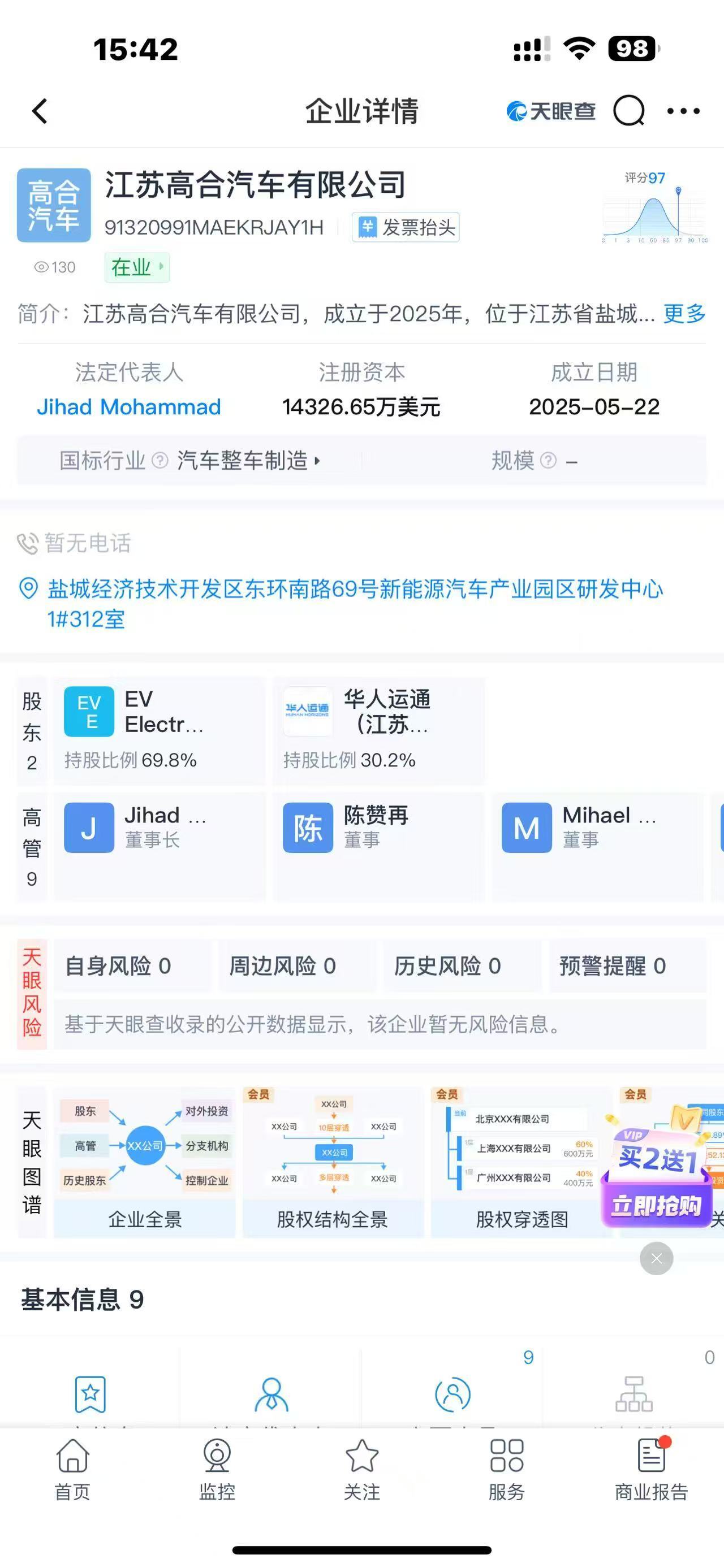
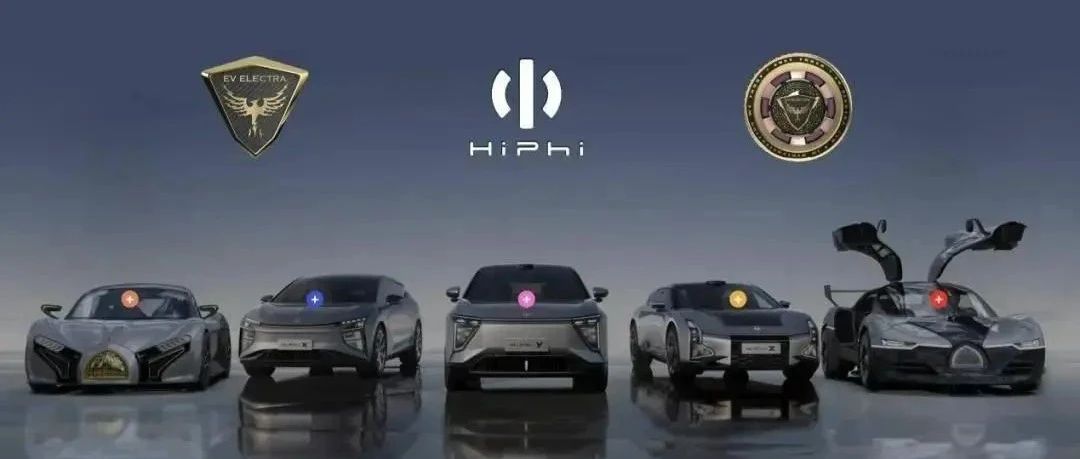
Core Viewpoint - The article discusses the recent investment in HiPhi by a Middle Eastern investor, highlighting the potential for revitalization and the associated risks of this partnership [1][4][36]. Group 1: Investment and Partnership - A Middle Eastern investor announced a $1 billion investment to restructure HiPhi, along with a commitment for overseas orders totaling $3 billion over three years [1][4]. - A new company was established with a registered capital of approximately 1.029 billion RMB, where Huaren Yuntong holds 30.2% and the investor holds 69.8% [2]. - The new company's legal representative is Jihad Mohanmmad, indicating a significant financial backing from the Middle East [4][9]. Group 2: Historical Context and Previous Investments - Previous interest from Middle Eastern capital, particularly from the Saudi Investment Ministry, aimed to establish a joint venture with HiPhi, which was touted as the largest financing in the history of Chinese new energy vehicle companies, valued at 210 billion Saudi Riyals (approximately 40 billion RMB) [5]. - Other Chinese electric vehicle companies, such as NIO, received actual investments, while HiPhi and others failed to secure substantial funding previously [7]. Group 3: Company Background and Challenges - HiPhi, founded by Huaren Yuntong, faced significant challenges, including a decline in sales from over 1,000 units per month at its peak to single digits by 2023 [26][29]. - The company launched the HiPhi Y at a price range of 339,000 to 449,000 RMB, but subsequently raised prices, which may have exacerbated its financial struggles [31][32]. - As of August 31, 2024, Huaren Yuntong's consolidated assets were 5.983 billion RMB, with liabilities totaling 15.781 billion RMB, indicating a severe financial crisis [34]. Group 4: Future Prospects and Risks - The partnership with the Middle Eastern investor is seen as a potential lifeline for HiPhi, with hopes for production resumption by October 2024 if funding is secured [36]. - However, there are concerns about the legitimacy of the investor's intentions, particularly regarding the issuance of blockchain tokens and the potential for financial mismanagement [21][22][25].
中东资本入局,高合汽车要“重出江湖”?
Zhong Guo Jing Ji Wang· 2025-05-22 13:33
Group 1 - Jiangsu HiPhi Automotive Co., Ltd. was officially established with a registered capital of approximately $143 million (about 1.03 billion RMB) [3] - The equity structure of the new company includes EV Electra Ltd. from Lebanon holding 69.8% with an investment of $100 million, and Huaren Yuntong (Jiangsu) Technology Co., Ltd. holding 30.2% with an investment of approximately $43.27 million [3] - HiPhi Automotive aims to pursue a high-end market strategy, with its first model, HiPhi X, priced between 680,000 RMB and 800,000 RMB, followed by HiPhi Z and HiPhi Y with prices ranging from 510,000 RMB to 639,000 RMB and 339,000 RMB to 459,000 RMB respectively [5] Group 2 - Despite the high-end positioning, HiPhi Automotive has faced challenges, including reports of production halts and a lack of brand stability, leading to a crisis situation [5][6] - The founder, Ding Lei, indicated that the company has a window for self-rescue lasting about three months, with potential interest from external investors for capital or acquisition [5] - Recent developments include a lawsuit from Faraday Future against Ding Lei for alleged trade secret infringement, and a denial from Avita Technology regarding acquisition rumors, further complicating HiPhi's situation [6] Group 3 - HiPhi Automotive has received support from EV Electra Ltd., which is investing $10 million to aid in the company's revival [8] - EV Electra Ltd. is a Lebanese startup focused on electric vehicle manufacturing and has previously attempted to expand its automotive investments, though with mixed results [8]