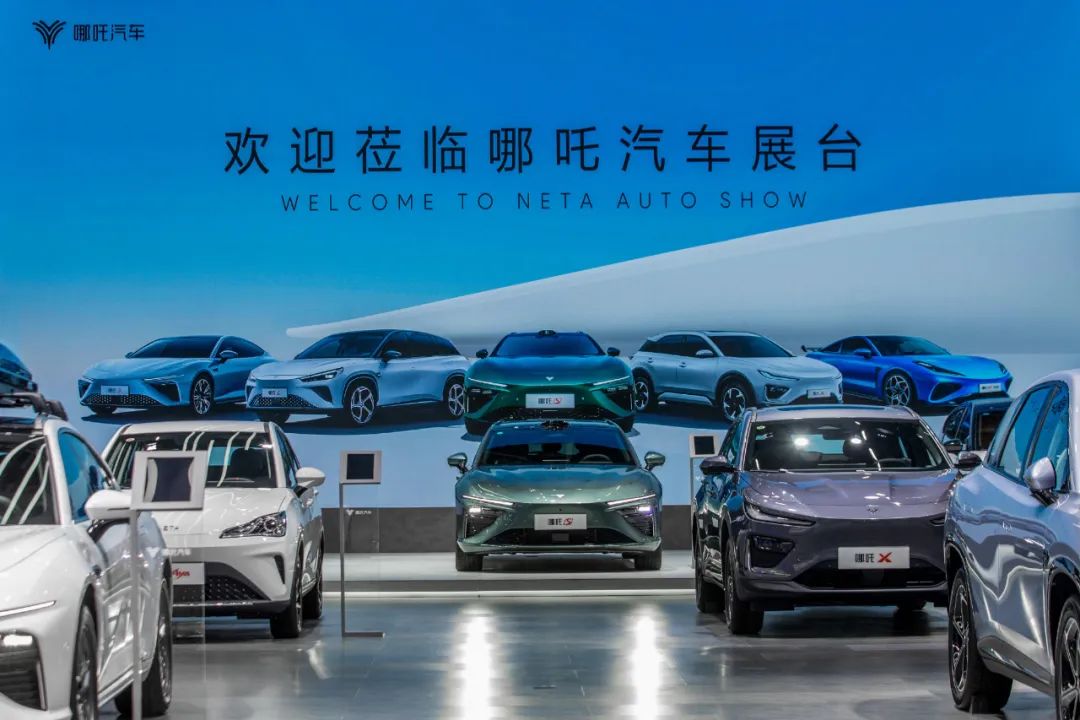
哪吒V

Search documents
第一批抄底烂尾车的人,已经开始后悔了
第一财经· 2026-03-14 02:14
Core Viewpoint - The article discusses the emerging trend of young consumers purchasing "abandoned cars" from brands like Neta, Jiayue, and HiPhi, highlighting both the appeal of low prices and the challenges related to maintenance and parts availability [3][4][8]. Group 1: Market Dynamics - There is a growing interest among young consumers aged 25 to 35 in acquiring abandoned cars due to their low prices and perceived value [3][5]. - The resale market for these vehicles is active, with examples such as a 2021 Neta V being sold for 38,800 yuan, significantly lower than its original price of 69,900 yuan, indicating a discount of 45.6% [6]. - The low resale value of electric vehicles (EVs) contributes to this trend, with only 7 out of 100 EV models retaining over 75% of their value after one year [7]. Group 2: Consumer Sentiment - Consumers are motivated by the desire for high-quality components at lower prices, as many abandoned cars still feature premium parts like batteries from CATL and chips from Qualcomm [7][8]. - The phenomenon is seen as a form of consumption downgrade, where consumers seek to balance quality and affordability [7]. Group 3: Maintenance Challenges - Owners of abandoned cars face significant challenges in obtaining parts and timely repairs, with reports of waiting times for parts extending to several months [10][11]. - Complaints regarding the lack of available parts and service issues have been prevalent, with over 50 complaints logged since 2025 across various platforms [10]. - Legal experts suggest that consumers should carefully assess the financial stability of car manufacturers before purchasing, as post-bankruptcy service guarantees may not be honored [11]. Group 4: Recommendations - Potential buyers of abandoned cars should consider their willingness to accept the risks associated with limited after-sales support and the possibility of vehicle obsolescence [10][11]. - The establishment of a vehicle maintenance guarantee fund is proposed to protect consumers in the event of manufacturer bankruptcy, ensuring some level of support for repairs [11].

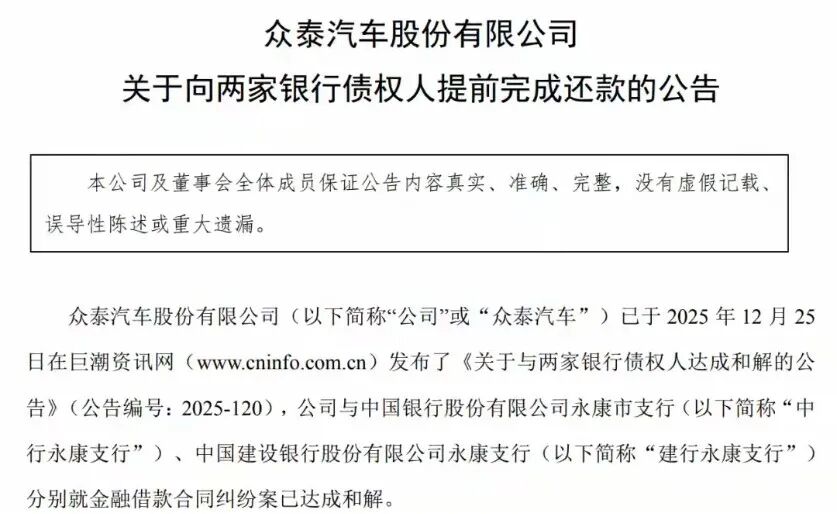
完成3.85亿债务偿还,众泰汽车还能翻身吗?
Xin Lang Cai Jing· 2026-02-11 09:12
Core Viewpoint - Zotye Auto, once a popular car brand in China, is struggling to recover from significant financial losses and market decline, with a projected net loss of 281 million to 417 million yuan for the year, although this represents a substantial reduction from previous losses [3][5] Financial Performance - The company announced a projected net loss of 281 million to 417 million yuan for the current fiscal year, a significant improvement from a loss of 1 billion yuan in the same period last year, indicating a reduction of 58.32% to 71.91% [3][5] - The expected net profit loss after excluding non-recurring gains and losses is between 286 million and 425 million yuan, down from 1.47 billion yuan the previous year, reflecting a decrease of 71.08% to 80.54% [3][5] - Revenue is projected to be between 454 million and 680 million yuan, compared to 558 million yuan in the previous year [5] Market Position and Challenges - Zotye's sales have plummeted from a peak of 323,000 units in 2016 to virtually zero production in 2024, with only 14 units sold [6][16] - The company has faced severe quality issues and a lack of core technology, leading to a significant decline in consumer trust and market presence [15][23] - The competitive landscape has shifted dramatically, with new players like Li Auto, NIO, and Xpeng entering the market with advanced technology and substantial capital, leaving Zotye at a disadvantage [18][20] Historical Context - Zotye's rise was characterized by a "copycat" strategy, successfully mimicking popular luxury car designs at affordable prices, which initially attracted consumers [6][8] - However, this strategy led to long-term vulnerabilities, as quality issues emerged and consumer preferences evolved towards originality and technological innovation [10][11] - The company's decline began around 2018, coinciding with a shift in consumer expectations and a series of quality complaints [12][14] Industry Trends - The automotive market is transitioning from a focus on price competition to value competition, emphasizing technology, brand uniqueness, and customer experience [22] - The penetration rate of new energy vehicles is expected to exceed 50% by 2025, while Zotye's core production capabilities remain focused on traditional fuel vehicles, making it difficult to compete in the evolving market [20][21] - The need for substantial investment in new energy technology and a robust supply chain is critical for any former players like Zotye to re-enter the market successfully [22][32]

本地化生产未兑现,泰国政府拟冻结哪吒在泰资产
Sou Hu Cai Jing· 2026-01-13 09:42
Core Viewpoint - The Thai government plans to sue Neta Auto's Thai subsidiary to recover over 2 billion Thai Baht (approximately 400 million RMB) in electric vehicle subsidies due to the company's failure to meet localization production commitments since 2022 [1][8] Group 1: Legal and Financial Issues - The lawsuit is a response to Neta Auto's non-compliance with subsidy policies, which may lead to asset freezing or seizure in Thailand [1][8] - Neta Auto's parent company, Hozon New Energy, is undergoing judicial restructuring in China, adding pressure on its Thai operations [2] - The company has faced significant financial losses, with cumulative net losses reaching approximately 18.37 billion RMB from 2021 to 2023 [2] Group 2: Market Performance - Neta Auto entered the Thai market in 2022 and achieved a market share of 11.4% in 2023, ranking second in the local electric vehicle market [3] - Despite initial success, the company's sales in Thailand have significantly declined, with only 1,067 vehicles registered in the first four months of 2025, a 37.3% year-on-year drop [7] Group 3: Operational Challenges - Neta Auto's dealer network has shrunk from over 10 to just 3 operational dealers, raising concerns about after-sales service stability [6] - Complaints from Thai customers have increased, focusing on slow repair times and parts availability, leading to some insurance companies refusing to cover Neta vehicles [6] - The company attempted to sell its Thai operations for 1.2 to 2 billion Thai Baht (approximately 265 million to 442 million RMB), but potential investors deemed the brand too risky [7]
新能源“烂尾车”逆袭二手车市场
Zhong Guo Qi Che Bao Wang· 2025-12-08 14:32
Core Insights - The second-hand electric vehicle market is witnessing a surge in demand for "abandoned cars" from young consumers, who are attracted by their high cost-performance ratio despite potential safety risks [2][4][11] - The emergence of a grassroots ecosystem around these "abandoned cars" is helping to alleviate concerns regarding maintenance and repair, as consumers adopt a digital product mindset [5][12] Group 1: Consumer Behavior - Young consumers view purchasing "abandoned cars" as a practical decision, focusing on the durability of the battery and the stability of the chassis rather than brand reputation [3][4] - The significant price reduction, with vehicles that once cost 200,000-300,000 yuan now available for 50,000-60,000 yuan, is a major factor driving interest among budget-conscious buyers [5][11] - Social media discussions around topics like "picking up abandoned electric vehicles" have gained immense traction, indicating a shift in consumer perception towards these vehicles [5][12] Group 2: Market Dynamics - The number of electric vehicle brands in China has drastically decreased from over 400 in 2018 to about 40, with many brands like Weima and Neta going bankrupt, resulting in approximately 1 million "abandoned cars" in circulation [11][12] - The rise of specialized repair shops and online communities for "abandoned cars" reflects a growing acceptance and adaptation among consumers, who are willing to engage in DIY repairs and modifications [8][10] - Despite the active consumer engagement, the lack of official after-sales service and insurance challenges remains a significant concern that needs to be addressed by regulatory bodies [11][12] Group 3: Regulatory Considerations - The need for enhanced regulatory oversight is emphasized, particularly regarding after-sales service for the large number of "abandoned cars" currently in use, to protect consumer rights [11][12] - Industry experts stress the importance of ensuring that the management of electric vehicles keeps pace with rapid technological advancements and market changes [11]

新势力车企死亡报告
3 6 Ke· 2025-10-30 08:07
Core Insights - The article discusses the rise and fall of several new energy vehicle companies in China, particularly focusing on Neta, WM Motor, and HiPhi, highlighting their initial successes and subsequent failures due to strategic missteps and market competition. Group 1: Neta's Rise and Fall - Neta achieved remarkable success in 2022, selling 152,000 vehicles and becoming the top-selling new energy vehicle brand, leveraging its "high value for money" strategy with models like Neta V and Neta U [1][40]. - The Neta V, priced between 70,000 to 90,000 yuan, offered significant space and features compared to competitors, which were mostly microcars [4][10]. - However, Neta's reliance on low pricing and high volume led to low profit margins, and its sales strategy heavily depended on dealers, resulting in inflated sales figures that did not reflect actual consumer demand [41][40]. Group 2: Strategic Errors - Neta faced critical strategic errors in 2023, particularly during a price war initiated by Tesla, which led to a significant drop in sales, with a year-on-year decline of over 30% starting in June 2023 [42][46]. - Instead of adjusting prices to remain competitive, Neta launched a new model, the Neta S, at a higher price point, which failed to attract consumers in a highly competitive market [47][48]. - The company continued to pursue a "brand upgrade" strategy with the introduction of the Neta GT, which diverted resources from more viable projects and ultimately led to a decline in overall sales [50][55]. Group 3: WM Motor's Challenges - WM Motor, founded by industry veteran Shen Hui, initially gained traction with its EX5 model, but failed to establish a strong brand identity compared to competitors like NIO and Xpeng [14][60]. - The company struggled with quality issues, including multiple recalls and incidents of vehicle fires, which undermined its reputation for reliability [80][87]. - WM Motor's lack of a distinctive market position and reliance on traditional automotive strategies contributed to its decline, as it could not compete effectively against brands with clearer identities [88][62]. Group 4: HiPhi's Strategy and Market Position - HiPhi attempted to replicate Tesla's high-end strategy with its HiPhi X and HiPhi Z models, but faced challenges due to overlapping market segments and increased competition [28][32]. - The company invested heavily in marketing and infrastructure but failed to achieve significant sales, leading to financial difficulties and a lack of market presence [38][39]. - HiPhi's inability to adapt to the rapidly changing market dynamics and its reliance on a narrow product strategy ultimately led to its downfall [36][55]. Group 5: Market Dynamics and Conclusion - The article emphasizes that the new energy vehicle market in China is highly competitive, with companies needing to adapt quickly to changing consumer preferences and pricing pressures [44][45]. - The ability to secure funding and successfully navigate the IPO process has proven crucial for survival, as seen with companies like NIO and Xpeng, which managed to leverage market conditions to their advantage [92][93]. - In contrast, Neta, WM Motor, and HiPhi's failures highlight the importance of strategic flexibility and the risks of adhering to outdated business models in a fast-evolving industry [55][94].


40多万车主惨遭断网!又一国产车企凉凉?
商业洞察· 2025-10-03 09:24
Core Viewpoint - The article discusses the financial crisis faced by Nezha Automobile, highlighting the company's inability to maintain its promised services and the severe implications of its financial mismanagement [3][5][10]. Financial Situation - Nezha Automobile's parent company, Hozon New Energy, revealed at a creditors' meeting that it has only 15 million yuan in available funds while facing confirmed debts of 5.1 billion yuan and additional claims totaling approximately 26 billion yuan [7][9]. - Over 5,000 employees are owed a total of 460 million yuan in unpaid wages and compensation, leading to significant talent loss [8]. - The company has 9.3 billion yuan in accounts receivable, but recovery is challenging due to many partners being on the brink of bankruptcy [9][12]. Service Disruption - Starting September 10, 460,000 Nezha car owners experienced service disruptions, including offline navigation and malfunctioning Bluetooth, due to a service cut by Lenovo Communications over unpaid bills [4][5]. - The promise of "lifetime free data" has turned into a monthly fee of 5.9 yuan, which many owners now feel is a "ransom" [5]. Market Position and Sales Decline - Nezha's sales peaked in 2022 with 152,000 units sold, but the company has since faced a drastic decline, with sales plummeting by 97.76% to just 110 units in January 2025 [10][11]. - The company's strategy of focusing on low-end markets has eroded its brand value, making it difficult to compete in higher-end segments [11]. Potential for Recovery - Despite the challenges, there is a possibility for recovery through bankruptcy restructuring, with management indicating that they have resumed full salaries for remaining employees and are negotiating with suppliers to restore services [12]. - The existing customer base of 460,000 domestic and 25,000 overseas users is viewed as a potential asset for future investment opportunities [12].
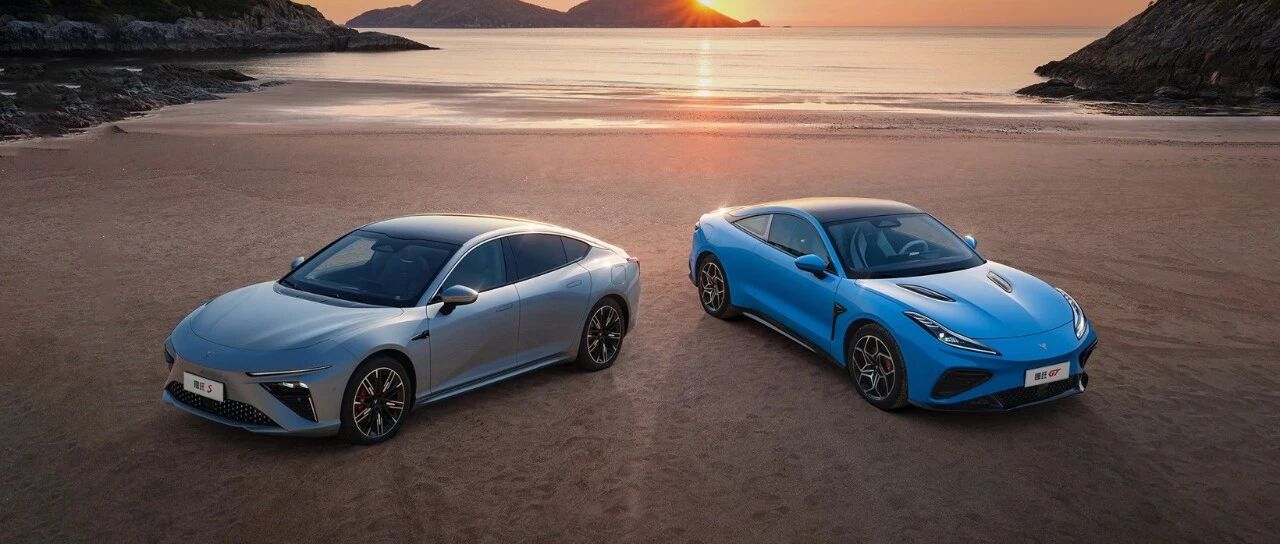
威马复产、哪吒重整,新造车竞速“复活赛”
Bei Jing Shang Bao· 2025-09-28 13:05
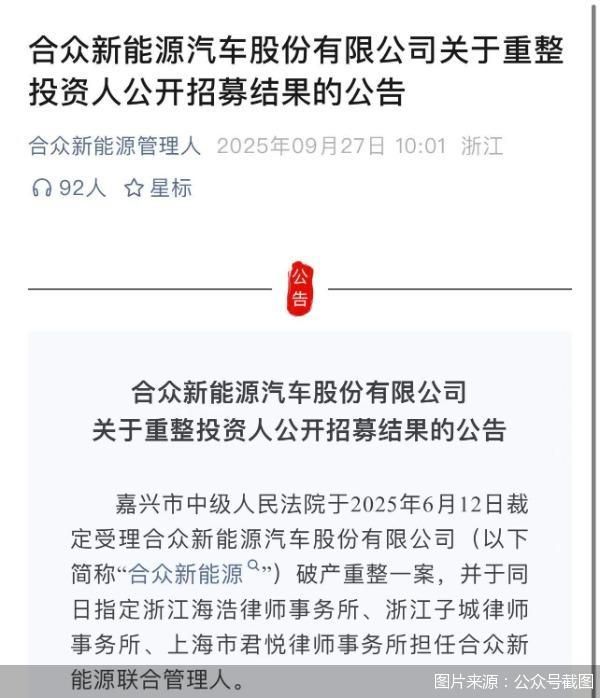
Group 1 - The new energy vehicle companies are accelerating self-rescue efforts to return to the market, with Hozon New Energy announcing the results of its restructuring investor recruitment, indicating only one investor has submitted complete materials and a deposit of 50 million yuan [3] - Hozon New Energy was established in 2014 and launched the Neta N01 in 2018, achieving sales growth in the mid-to-low-end market with models like Neta V and Neta U, but faced a crisis starting in 2024, leading to bankruptcy restructuring proceedings [3] - The restructuring process is being managed by a consortium of law firms, and the company is seeking a viable restructuring plan from the interested investor to be recognized as the final investor [3] Group 2 - In contrast to Hozon, WM Motor has entered the production phase, with a white paper released by Shenzhen Xiangfei Automotive Sales Co., indicating the resumption of production for models EX5 and E.5 [4][5] - High-end electric vehicle company HiPhi has also attracted investment, with a registered capital of approximately 143 million USD, although there are concerns about the major shareholder's funding not being in place [5] - The new energy vehicle market has seen significant growth, with production and sales reaching 9.625 million units each in the first eight months of the year, marking a year-on-year increase of 37.3% and 36.7% respectively, and new energy vehicles accounting for 45.5% of total new car sales [5] Group 3 - The competition in the new energy vehicle market is intensifying, with revived brands facing not only established competitors but also new entrants like Xiaomi and Hongmeng Intelligent [6] - The market is entering a淘汰赛 (elimination round), with leading brands rapidly capturing market share, which further squeezes the survival space for smaller companies [6] - The ability of these companies to attract external capital and successfully expand their market presence will depend on their product market performance and innovation capabilities [6]
一位新能源车企高管的泰国往事
3 6 Ke· 2025-09-19 09:50
Core Viewpoint - The article discusses the emotional journey of Chen Yinbin, the former deputy general manager of Neta Auto's Thailand branch, as he reflects on the company's decline and his departure amidst its bankruptcy crisis. Despite the challenges faced by the company, he expresses a desire for the brand to succeed and highlights the contrasting performance of the Thailand branch compared to the struggling headquarters in China. Group 1: Company Performance - Neta Auto's Thailand branch was established in 2022 and became a significant player in the Southeast Asian market, achieving sales of approximately 7,969 vehicles in 2024, ranking third in the local electric vehicle market [7][10][26]. - In 2024, Neta Auto's sales in Thailand generated an estimated revenue of around 1.2 billion RMB, which could support substantial operational investments [7][10]. - The company faced a dramatic decline in sales in China, leading to bankruptcy rumors and operational challenges, while the Thailand branch maintained a relatively strong performance until late 2024 [10][28]. Group 2: Emotional and Personal Reflections - Chen Yinbin joined Neta Auto in 2018 and expressed a deep emotional connection to the brand, feeling a mix of disappointment and hope as he witnessed its decline [2][3]. - He aimed to support the Thailand branch during the crisis, believing it could provide financial assistance to the struggling headquarters [3][12]. - Despite his efforts, he ultimately had to leave the company, feeling a sense of loss and unfulfilled hope for the brand's future [4][17][56]. Group 3: Market Strategy and Challenges - The Thailand branch successfully launched the Neta X model, which received over 1,000 orders within 72 hours of its release, showcasing effective marketing strategies [26][27]. - However, the company faced significant operational issues, including delayed vehicle deliveries and internal management conflicts, which contributed to its overall decline [44][49]. - Chen Yinbin noted that the company's rapid expansion and product launches were not aligned with its production capabilities, leading to a loss of customer trust [46][48]. Group 4: Future Prospects and Legacy - Despite the challenges, Chen Yinbin remains hopeful for Neta Auto's potential revival, emphasizing the brand's existing resources and market presence [57][59]. - He continues to monitor developments related to the company, indicating a lasting commitment to its success even after his departure [58][59].
哪吒汽车变成“烂尾楼”,40万车主苦不堪言
3 6 Ke· 2025-09-12 12:42
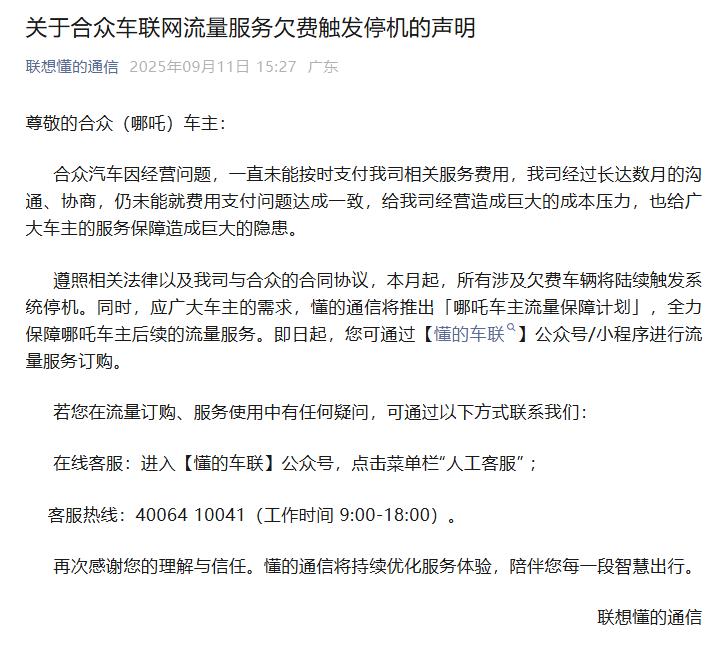
Core Viewpoint - Nezha Auto faces a crisis as 400,000 vehicle owners are at risk of having their cars shut down due to unpaid service fees, leading to a loss of connectivity and essential features [1][3][4]. Group 1: Service Disruption - A statement from Lenovo Dongde Communication indicated that the service interruption was due to Nezha Auto's parent company, Hozon Auto, failing to pay service fees after months of communication [4]. - The service shutdown means that features like remote control, real-time navigation, and app monitoring will be unavailable, which contradicts the initial appeal of purchasing electric vehicles [3][4]. - Nezha Auto responded by claiming that Lenovo Dongde unilaterally terminated the service without prior notice and suggested that owners carry physical keys to avoid inconvenience [5][8]. Group 2: Financial Troubles - Hozon Auto is undergoing bankruptcy restructuring, with over 10 billion yuan in equity frozen and a total debt claim of over 26 billion yuan from 1,631 creditors [12][16]. - As of August 31, the recognized debt amounts to approximately 5.1 billion yuan, with additional liabilities including 460 million yuan owed to over 5,000 employees [16]. - The company has a cash balance of about 15.5 million yuan, indicating severe financial distress [17]. Group 3: Market Position and Future Outlook - Nezha Auto's situation reflects broader challenges in the new energy vehicle market, where competition is intensifying and many companies are struggling to survive [21][26]. - The company has over 400,000 car owners, raising concerns about how to address their needs if the company cannot recover [17]. - The market is witnessing a divide, with some new energy vehicle companies like Leap Motor and Xpeng performing well, while others, including Nezha Auto, are facing significant challenges [22][23].
从B端之痛到流量陷阱,谁来“救赎”哪吒汽车?
3 6 Ke· 2025-08-15 12:21
Core Viewpoint - Neta Auto, once a promising player in the new energy vehicle market, is facing significant challenges, including a sharp decline in sales and internal management issues, leading to its current status as a "dishonest executor" in the eyes of the Guangzhou Haizhu District Court [1][2][4]. Group 1: Historical Context and Initial Success - Neta Auto was founded in 2017 and quickly gained traction, achieving the title of "domestic new force car company annual sales champion" in 2022, surpassing competitors like "Weilai" and "Xiaopeng" [1][4]. - The company initially focused on B-end markets, securing significant orders from ride-hailing and car rental companies, which helped it survive early financial difficulties [6][7]. Group 2: Financial Struggles and Capital Dependency - After losing interest from its major investor, Neta Auto faced survival challenges, leading to a reliance on local government funding, which provided 3 billion yuan to stabilize operations [7][8]. - The company underwent multiple rounds of financing from various state-owned enterprises, but this created a fragmented shareholding structure that hindered decision-making [8][9]. Group 3: Strategic Missteps and Market Positioning - Neta Auto's shift towards high-end models, such as the Neta S and Neta GT, was seen as a strategic error, as it lost touch with its original market of affordable vehicles [12][14]. - The company struggled to compete with established brands like BYD and Tesla, leading to significant financial losses and a decline in market share [12][15]. Group 4: Internal Management Issues - Frequent changes in management and internal conflicts led to a lack of coherent strategy, resulting in missed opportunities and inefficient resource allocation [16][17]. - The company's decision-making process was criticized for being overly centralized under CEO Zhang Yong, which raised concerns about the sustainability of its strategies [17][19]. Group 5: Recent Developments and Future Outlook - Despite a brief resurgence in interest due to marketing efforts led by major shareholder Zhou Hongyi, Neta Auto's internal issues continued to plague its operations, leading to layoffs and executive turnover [20][21]. - As of August 2023, Neta Auto is seeking new investors to restructure, indicating that while the company faces significant challenges, there remains interest from potential investors [22][23].