
高空无人机灭火消防车

Search documents
海伦哲:聚焦细分赛道谋突破
Shang Hai Zheng Quan Bao· 2026-01-09 18:34
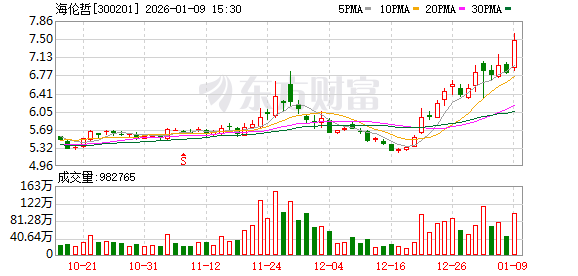
Core Insights - The article highlights the differentiated growth path of the company, Helen Zhe, focusing on high-value niche markets in emergency rescue, military support, and aerial work vehicles, rather than pursuing large-scale operations [2][3] - The company has successfully transformed its strategy over three years, achieving significant revenue growth and expanding its international presence [3][4] Group 1: Financial Performance - For the first three quarters of 2025, the company reported a revenue of 1.29 billion yuan, representing a year-on-year increase of 28.75%, and a net profit attributable to shareholders of 176 million yuan, up 32.57% [3] - The company's R&D expenses for the first three quarters of 2025 amounted to 41.719 million yuan, an increase of 4.098 million yuan year-on-year [6] Group 2: Market Strategy - The company adopts a "multi-variety, small-batch" customization strategy to meet personalized customer needs, enhancing product premium capabilities [3] - Helen Zhe is expanding its international footprint, with overseas orders reaching 30 million yuan in the first half of the year, surpassing the total for the previous year [3][4] Group 3: Technological Innovation - The company emphasizes technological breakthroughs, with products like the high-altitude drone fire truck and liquid nitrogen fire truck showcasing its commitment to innovation [5][6] - Helen Zhe has developed a glass fiber insulated arm for aerial work vehicles, achieving performance levels that meet or exceed imported products [6] Group 4: Future Directions - The company aims to deepen its core business while exploring new opportunities in related fields, focusing on the development of new products that adapt to diverse scenarios [8] - Intelligentization is a key driver for achieving strategic goals, with ongoing efforts in smart manufacturing and product development [9][10]


消防无人机“缺位”背后:市场需求巨大 技术尚存瓶颈
Huan Qiu Wang· 2025-12-04 02:17
Core Viewpoint - The emergence of the H400 hydrogen-powered drone, capable of carrying 200 kilograms, is set to play a crucial role in firefighting operations for high-rise buildings, addressing the urgent need for effective firefighting solutions in complex urban environments [1][9]. Group 1: Current State of Firefighting Drones - Firefighting drones specifically designed for high-rise buildings are still in the development phase, with existing products primarily focused on reconnaissance rather than direct firefighting [2][3]. - The current market for high-rise firefighting drones has grown from 8 billion yuan in 2020 to 20.2 billion yuan in 2023, with projections suggesting it could reach 50 billion yuan by 2025 [4]. - The industry is facing a supply-demand mismatch, with a pressing need for efficient and safe firefighting solutions, yet existing products are not fully mature for complex operational environments [4][5]. Group 2: Technological Challenges - The main technical challenges for firefighting drones include the need for high payload capacity to sustain long-duration, high-volume water spraying operations, which requires tethered power and liquid supply systems [3][7]. - Current battery technologies limit operational time to about 15 minutes under full load, which is insufficient for sustained firefighting efforts [3]. - The lack of established standards, rules, and mechanisms for drone firefighting operations hinders the development and deployment of these technologies [3][5]. Group 3: Future Prospects and Innovations - The industry is expected to transition from early-stage technology exploration to market promotion within the next 3-5 years, focusing on product validation and technological iteration [6]. - Companies are developing innovative solutions, such as the integration of drones with firefighting vehicles for tethered operations, which could significantly reduce costs compared to traditional firefighting equipment [7][8]. - The introduction of hydrogen-powered drones, like the H400, aims to overcome current limitations in endurance and payload capacity, potentially revolutionizing firefighting capabilities in high-rise scenarios [8][9].
消防无人机“缺位”背后:市场需求巨大 技术尚存瓶颈
证券时报· 2025-12-03 00:07
Core Viewpoint - The article discusses the current state and future potential of firefighting drones, highlighting that while the technology is still in development, there is a pressing demand for such solutions in complex fire scenarios, particularly in high-rise buildings [1][3][6]. Group 1: Current State of Firefighting Drones - Firefighting drones suitable for practical use are still in the research and development phase, with existing products primarily focused on market promotion and commercial validation [1][3]. - The current prevalent drones in firefighting are reconnaissance types, which assist in assessing disaster situations rather than directly extinguishing fires [3][4]. - There is a lack of specialized firefighting drones designed for high-rise buildings, with existing solutions being general-purpose drones temporarily equipped with firefighting devices [3][4]. Group 2: Technical Challenges - The main technical bottleneck for firefighting drones is their payload capacity, which directly affects their water discharge capabilities [4]. - Firefighting requires sustained high-volume water discharge, necessitating a tethered power and liquid supply system, which imposes significant weight and operational challenges on the drones [4][5]. - Current drones have not yet achieved large-scale application due to the absence of established standards, rules, and operational experience in firefighting scenarios [5]. Group 3: Market Potential and Future Outlook - The market for high-rise firefighting drones in China is rapidly growing, with the market size increasing from 8 billion yuan in 2020 to 20.2 billion yuan in 2023, and projected to reach 50 billion yuan by 2025 [7]. - There is a strong demand for efficient and safe intelligent firefighting methods, driven by the complexities of high-rise rescue scenarios [7]. - The industry is expected to undergo significant changes due to recent events, potentially leading to the establishment of industry standards and increased integration of drones into firefighting systems [7][8]. Group 4: Innovations and Developments - Companies are moving towards market validation, with several firms developing products that have passed technical verification and are ready for commercialization [10]. - Innovations such as the high-altitude tethered firefighting drone system are being developed, which can significantly reduce costs compared to traditional firefighting vehicles [11]. - The integration of hydrogen power systems in drones is being explored to overcome current limitations in operational endurance, with some models achieving up to 2 hours of flight time under load [12][13].
消防无人机“缺位”背后: 市场需求巨大技术尚存瓶颈
Zheng Quan Shi Bao· 2025-12-02 18:18
Core Insights - The absence of drones in recent firefighting efforts highlights the current immaturity of firefighting drones, which are still in the development phase and not yet ready for practical application [1][2][3] Industry Development - The firefighting drone market is projected to grow significantly, with the market size for high-rise firefighting drones increasing from 8 billion yuan in 2020 to 20.2 billion yuan in 2023, and expected to reach 50 billion yuan by 2025 [5] - The industry is currently in the early stages of commercialization, with a pressing demand for efficient and safe firefighting solutions in complex high-rise scenarios [5][6] Technological Challenges - Technical bottlenecks hinder the development of specialized firefighting drones, particularly in terms of payload capacity and sustained operation under high-pressure conditions [3][4] - Existing drones primarily serve reconnaissance purposes, with few capable of direct firefighting, and those that are available often lack a mature business model and supporting standards [2][3] Future Prospects - The next 3-5 years are critical for the commercialization and market validation of firefighting drones, with industry players focusing on product promotion and technological iteration [7] - The integration of drones with firefighting vehicles for tethered power and liquid supply is seen as a potential solution for sustained firefighting operations [8][9] Innovations and Applications - Companies are developing advanced drone systems, such as the RS150E, which can adapt to various scenarios including firefighting and personnel evacuation [9] - Hydrogen-powered drones are being explored to overcome endurance limitations, with models like the H100 capable of carrying 50 kg for up to 2 hours, significantly enhancing operational capabilities [9]
消防无人机“缺位”背后:市场需求巨大技术尚存瓶颈
Zheng Quan Shi Bao· 2025-12-02 18:07
Core Insights - The absence of drones in recent firefighting efforts highlights the current immaturity of firefighting drones, which are still in the research and development phase, with market-ready products undergoing commercial validation [1][2] - The demand for firefighting drones, especially for high-rise buildings, is urgent, and industry experts predict that policy and standard development will accelerate in the coming years [1][3] Industry Development - The firefighting drone market is projected to grow significantly, with the market size for high-rise firefighting drones increasing from 8 billion yuan in 2020 to 20.2 billion yuan in 2023, and expected to reach 50 billion yuan by 2025 [3][4] - The industry is currently in the early stages of commercialization, with a mismatch between supply and demand, as the need for efficient and safe firefighting solutions is pressing [3][4] Technological Challenges - The main challenges for firefighting drones include technical bottlenecks related to payload capacity and the need for tethered power and liquid supply systems to sustain long-duration firefighting operations [2][5] - Current firefighting drones are primarily reconnaissance drones, with few capable of direct firefighting, particularly in complex urban environments [1][2] Future Prospects - The industry is expected to undergo significant changes due to recent events, potentially leading to the establishment of standards and the integration of drones into firefighting systems [4][5] - By 2030, the drone industry in China is anticipated to exceed 1 trillion yuan, with the firefighting segment expected to surpass 100 billion yuan [4][5] Market Validation - Companies are transitioning from technology exploration to market promotion, with several firms already launching products that have undergone technical validation [5][6] - Innovations such as the high-altitude tethered firefighting drone system are being developed, which could significantly reduce costs compared to traditional firefighting vehicles [6][7] Product Development - Companies like 海伦哲 and 天津卓跃翼航 are developing advanced firefighting drones, with capabilities for various emergency scenarios, including personnel evacuation and firefighting [5][7] - The integration of hydrogen power systems is being explored to enhance the operational endurance of drones in firefighting applications, with products like the H100 and H400 models showing promising capabilities [7][8]
海伦哲:公司全资子公司上海格拉曼国际消防装备有限公司研制高空无人机灭火消防车
Xin Lang Cai Jing· 2025-12-02 12:05
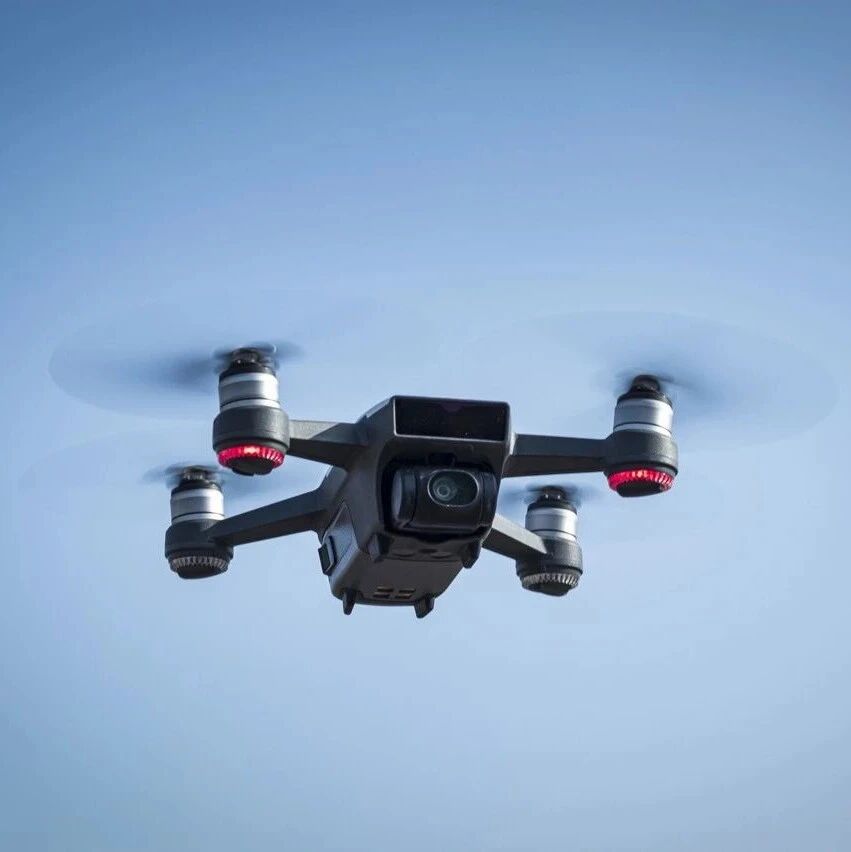
Core Viewpoint - The company has developed a high-altitude drone fire truck aimed at addressing fires in urban high-rise and super high-rise buildings, featuring modular design and advanced technology [3][4]. Group 1: Product Features - The drone fire truck is designed for rapid deployment, with a firefighting operation time of approximately 5 minutes [3][4]. - It utilizes an independent engine-driven micro-structure foam CAFS firefighting system, compatible with 1% to 6% A/B class foam liquids [3][4]. - The vehicle is equipped with a tethered drone capable of reaching a firefighting height of 155 meters, allowing for extended aerial firefighting operations through a tethered power supply [3][4]. Group 2: Market Position and Recognition - The drone fire truck is among the first products to receive certification from the Ministry of Industry and Information Technology and has been fully launched in the market, receiving high recognition from customers in Jiangsu province [3][4]. Group 3: Future Developments - The company has successfully developed a second-generation high-altitude drone fire truck, which is currently undergoing testing and certification, with an expected market launch in 2026 [3][4]. - The second-generation model will feature two drones, one for primary operations and the other for various auxiliary functions such as material delivery, window breaking, lighting, communication, and reconnaissance [3][4]. - Enhancements in operational height and spray flow rate are expected in the second-generation drone fire truck [3][4].
最新!香港火灾已致65人遇难,16楼楼梯间救出1名生还者!无人机为何不参与高楼灭火?多家上市公司回应
Mei Ri Jing Ji Xin Wen· 2025-11-27 14:45
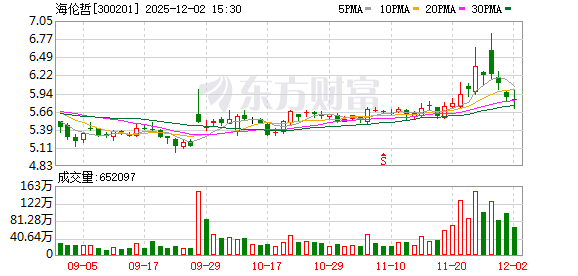
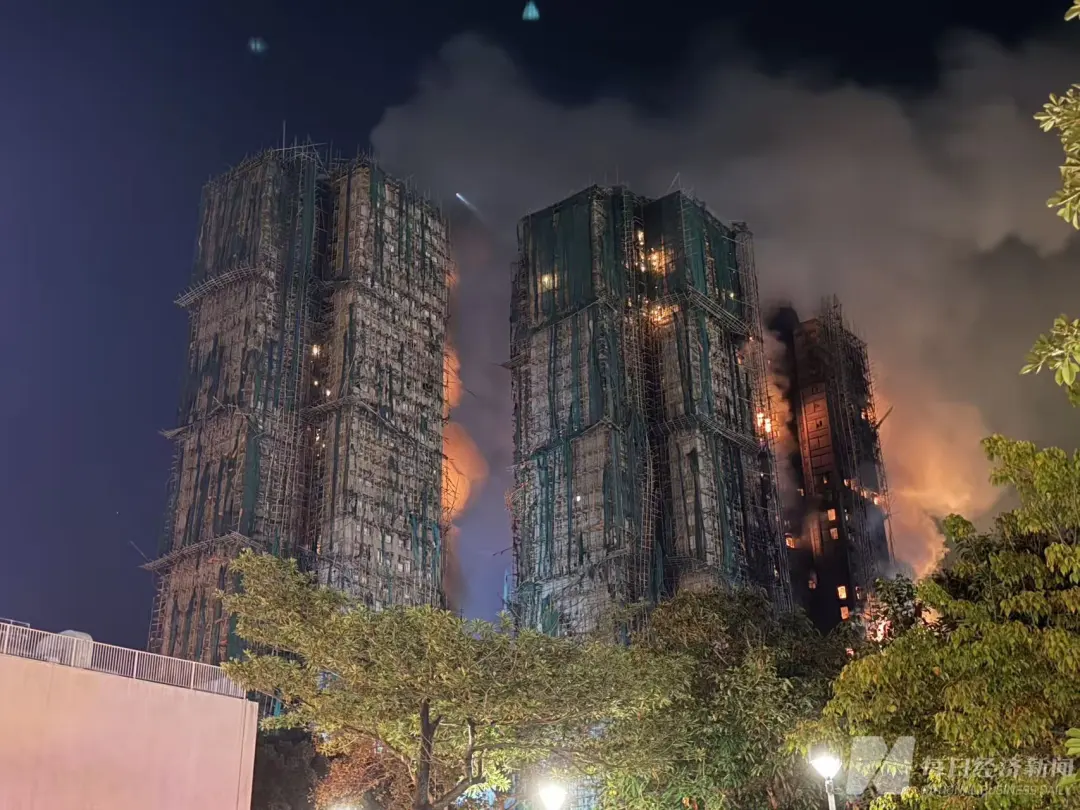
Core Points - A major fire occurred in Hong Kong's Tai Po district, resulting in 65 fatalities and 70 injuries, including firefighters [1][5] - The Hong Kong government has established a relief fund of 300 million HKD for affected residents and is providing emergency assistance [5][6] - Insurance claims related to the fire are expected to exceed 2 billion HKD, with significant payouts anticipated from China Taiping Insurance [9][11][13] Government Response - The Hong Kong government has opened nine shelters for over 500 residents affected by the fire [5] - A series of memorial activities and the cancellation of public events have been announced in response to the tragedy [5] - Emergency relief funds of 10,000 HKD per household are being distributed to affected families [5] Donations and Support - The Ho Ying Tung Foundation and Ho Kwan Sing have pledged 30 million HKD to support the residents of the affected area [6] - Nongfu Spring has donated 10 million HKD in cash and 5 million HKD worth of supplies for emergency relief efforts [7] Insurance Implications - The Tai Po estate has comprehensive insurance coverage, including property and public liability insurance, with a total insured amount of approximately 2 billion HKD [9][10] - Analysts predict that the fire may trigger one of the largest collective insurance claims in Hong Kong's history, with potential full payouts expected [11][13] Firefighting Technology - The use of drones for firefighting was highlighted, with current technology showing limitations in effectively combating high-rise fires [21][26] - Companies involved in drone technology for firefighting reported minimal contributions to their overall revenue, indicating a nascent market [23][24] Market Reaction - Following the fire incident, stocks of companies involved in firefighting technology experienced significant fluctuations, with some reaching daily limits [24]

以创新装备彰显中国智造力量 中国国际消防展在京开幕
Zhong Guo Qi Che Bao Wang· 2025-10-14 07:46
Group 1 - The 21st China International Fire Equipment Technology Exchange Exhibition was held in Beijing, showcasing a record number of exhibitors and products from both domestic and international sources [1][3] - Over 1,200 exhibitors from more than 40 countries and regions participated, with a significant increase in international guests and buyer groups [3] - The exhibition covered the entire fire rescue industry chain, featuring the latest technologies in fire monitoring, firefighting, emergency rescue, and smart fire safety management, including innovative equipment like drones and robots developed in China [5][10] Group 2 - Shanghai Greman Systems showcased a "5+1" product matrix, highlighting innovations in firefighting, rescue, and emergency command scenarios [6] - Notable products included the M180GD four-wheel drive firefighting robot, high-altitude drone firefighting vehicles, and multifunctional fire trucks, all designed to address specific challenges in high-risk environments [8][10] - The exhibition served as a platform for industry experts to exchange ideas and promote the integration of innovative equipment into practical rescue operations, enhancing China's emergency response capabilities [10][12]
