高通骁龙8 Gen 4

Search documents
三星制定芯片新战略
半导体芯闻· 2025-12-16 10:57
Core Viewpoint - Samsung Electronics is focusing on expanding its role in the artificial intelligence supply chain and enhancing its semiconductor business, particularly in high-bandwidth memory and wafer foundry services, as part of its strategic plan for 2026 [1][2]. Group 1: Strategic Developments - Samsung held a global strategy meeting to outline its development roadmap for 2026, following significant leadership changes [1]. - The company plans to allocate 60% of its high-bandwidth memory (HBM) capacity to ASIC customers by 2026, with its latest HBM4 chips undergoing quality certification by NVIDIA [2]. - Samsung is preparing to launch its $37 billion factory in Taylor, Texas, in 2026, which will utilize advanced 2nm technology, marking a critical component of its foundry strategy [2]. Group 2: Competitive Positioning - Samsung's wafer foundry division is under scrutiny as it aims to close the technology gap with TSMC, which holds over 70% of the global foundry market share, while Samsung currently has an 8% market share [2]. - The upcoming Galaxy S26 series is set to feature the new Exynos 2600 processor, developed using Samsung's 2nm process, although production yield remains a concern [3]. - Samsung's consumer electronics division is increasing investments in AI-driven features to maintain competitiveness against rising pressure from Chinese brands [3]. Group 3: Partnerships and Collaborations - Samsung's leadership, including Chairman Lee Jae-Yong, is engaging with key industry figures like Elon Musk and AMD's CEO to discuss semiconductor collaborations and enhance Samsung's position as a critical chip supplier in the U.S. [1].


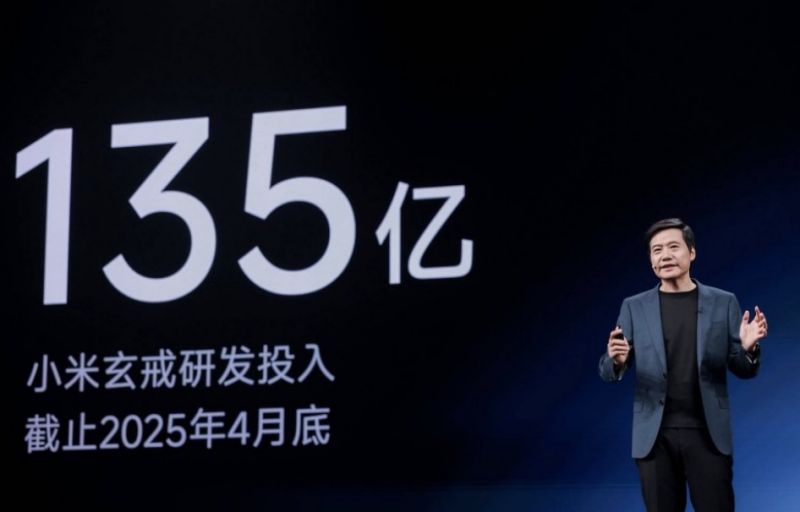
雷军谈“芯”路历程:十年500亿元豪赌SoC,玄戒O1量产背后,手机巨头上演“烧钱马拉松”
Hua Xia Shi Bao· 2025-05-23 13:08
Core Viewpoint - Xiaomi has unveiled its self-developed 3nm mobile SoC chip, Xuanjie O1, marking its entry into the competitive chip market alongside major players like Apple and Qualcomm. The company aims to establish itself in the semiconductor industry despite the challenges and scrutiny it faces as a newcomer [2][3]. Group 1: Chip Development and Technology - The Xuanjie O1 features a "2+4+2+2" ten-core architecture, with the dual super-large cores utilizing ARM's latest X925, which offers a 36% performance increase over the previous generation [3]. - The chip does not integrate a communication module but uses MediaTek's 5G baseband, raising questions about the extent of Xiaomi's self-research capabilities [3][4]. - Xiaomi is the fourth global smartphone manufacturer to develop its own SoC, following Apple, Huawei, and Samsung [2]. Group 2: Industry Context and Competition - The semiconductor industry is characterized by high costs and long development cycles, with Xiaomi committing to invest over 50 billion yuan (approximately $7 billion) over the next decade [6]. - The company faces significant competition, as many predecessors in the chip industry have failed, highlighting the challenges of entering this market [6]. - Xiaomi's previous attempts at chip development, such as the 28nm Pinecone S1, faced issues that led to a shift in strategy towards larger chips [6]. Group 3: Market Strategy and Sales - Xiaomi aims to achieve significant sales volume for the Xuanjie O1, estimating that it needs to sell at least 10 million units within one to two years to remain viable [7]. - The chip is already being used in the newly launched Xiaomi 15S Pro and Xiaomi Pad 7 Ultra, with the company having shipped approximately 168 million smartphones last year, positioning it well for achieving the necessary sales volume [7][8]. - Despite the introduction of its own SoC, Xiaomi will continue to rely on Qualcomm and MediaTek for mid-range and low-end products, indicating a dual-sourcing strategy [8]. Group 4: Financial Performance - As of May 23, Xiaomi's stock closed at 53 HKD, with a market capitalization nearing 1.4 trillion HKD, reflecting investor sentiment amidst its strategic shifts in the semiconductor space [9].