鸿蒙智能体框架(HMAF)

Search documents
跳出超级 App 之争,鸿蒙系统级智能如何改写 AI 赛道规则?
AI科技大本营· 2025-12-23 05:53
Core Viewpoint - The article discusses the transition of AI from a competitive landscape dominated by "hundred model battles" to a focus on practical applications, highlighting Huawei's unique approach in the AI race through its HarmonyOS and intelligent terminal systems [1]. Group 1: Smart Terminal's "True Intelligence" Turning Point - Huawei's executive, Jia Yongli, asserts that the terminal industry is at a pivotal moment, moving from "single product intelligence" to "seamless interconnected intelligent experiences" [3]. - The current industry faces an "AI feature stacking" dilemma, where AI is merely an embellishment within apps rather than a cohesive service coordinator [3]. - HarmonyOS 6 aims to shift this paradigm by managing "user intent" and "service distribution," positioning AI as a fundamental connector in human-computer interaction [3]. Group 2: Technical Deconstruction of HMAF - The Harmony Intelligent Agent Framework (HMAF), set to launch in mid-2025, will redefine the relationship between applications and systems through a three-layer architecture [5]. - The A2A (Agent to Agent) collaboration feature has been commercially launched on Huawei Mate X7, supporting various intelligent agents across finance, shopping, travel, and entertainment [5][6]. - This framework allows users to complete complex tasks with simple commands, transforming the traditional "user finds service" model into a "service finds user" approach [7]. Group 3: Strategic Differentiation in AI Approaches - Major players in the AI sector have distinct strategies: Alibaba focuses on a "B to C" model, while ByteDance follows a "C to B" approach, both facing limitations in breaking through "single product intelligence" [10]. - In contrast, Huawei adopts a "C+B" strategy, integrating AI capabilities at the system level rather than through a single super app, leveraging its hardware ecosystem [11]. - Huawei's system-level entry points provide new traffic sources for developers, allowing for decentralized service distribution that benefits long-tail applications [11]. Group 4: Ecosystem Development and Developer Support - The success of AI operating systems hinges on ecosystem prosperity, with over 32 million devices running HarmonyOS 5 and 6, and 80+ intelligent agents launched across various high-frequency scenarios [12]. - To encourage developer participation, Huawei has introduced the Xiaoyi Intelligent Agent Open Platform and the "Tiangong Plan," investing 1 billion RMB to support AI ecosystem innovation [13]. - The DevEco toolchain facilitates AI development by enabling developers to generate code frameworks through dialogue, significantly lowering entry barriers [13]. Group 5: Future of Terminal Intelligence - Huawei's AI terminal white paper categorizes AI terminal intelligence into levels, with HarmonyOS advancing from L1 (tool-level) to L3 (collaborative autonomy) [15]. - The evolution of the terminal operating system towards an "intention-centered" intelligent assistant is driven by Xiaoyi's transformation from a simple dialogue interface to a central decision-making system [15]. - The ultimate goal is to create a new era in human-computer interaction, freeing users from cumbersome digital operations while unlocking new technological and commercial value for developers [19].


手机AI智能体生态升温:厂商全面押注 实用性与隐私保护待升级
Xin Jing Bao· 2025-10-01 07:20
Core Insights - The mobile industry is accelerating the development of AI agents, with Huawei investing 1 billion yuan in the "Tian Gong Plan" and Qualcomm collaborating with major Android manufacturers on the "AI Acceleration Plan" [1][2] - AI agents are becoming standard features in smartphones, enhancing ecosystem competition through integration with third-party apps and other AI agents [1][2] Group 1: AI Agent Development - Major Chinese smartphone manufacturers are transitioning from traditional voice assistants to AI agents with autonomous decision-making and execution capabilities [2][3] - Huawei's new Harmony AI Agent Framework (HMAF) aims to create a collaborative AI ecosystem where all agents work together, supported by a 1 billion yuan investment to enhance the AI ecosystem [2][3] - Honor's AI agent YOYO, based on the MagicGUI open-source model, has developed multi-modal AI perception and cross-application execution capabilities [3] Group 2: Industry Collaboration - Qualcomm, in partnership with GTI and major telecom operators, has launched the "AI Acceleration Plan" to expand edge intelligence applications across various devices [3] - The industry is strengthening collaboration across the supply chain to enhance the capabilities of AI agents and their integration into smartphones [3][6] Group 3: Challenges and Limitations - Current AI agents face challenges in practical usability and privacy protection, with limitations in accurately interpreting complex app interfaces [4][5] - Many AI agents can only perform basic tasks, often relying on "screen reading and simulated clicking" methods, which are seen as transitional solutions [4] - Privacy concerns arise from the need for AI agents to access personal data, leading to calls for user verification of AI actions to prevent errors [5] Group 4: Future Directions - The establishment of the "IIFAA Intelligent Agent Trusted Interconnection Working Group" aims to create industry standards for secure interactions between AI agents [6] - Future developments may see AI agents expanding from smartphones to tablets, PCs, and other devices, enhancing their functionality and integration [6] - Qualcomm emphasizes the need for innovative memory architectures and low-power processors to support the growing demands of AI agents [7]

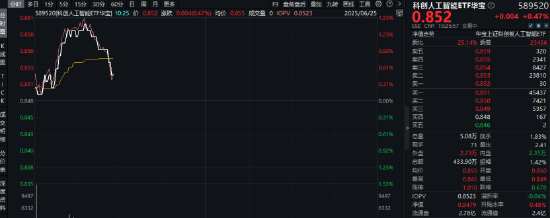
央行等六部门联合印发!消费电子有望受益!重点布局国产AI产业链的589520盘中涨逾1.4%
Xin Lang Ji Jin· 2025-06-25 02:43
Group 1 - The core focus is on the active development of the domestic AI industry chain, with the Huabao AI ETF (589520) showing a price increase of over 1.4% at one point, currently up 0.47%, indicating a positive market sentiment [1] - Key stocks in the AI sector include Stone Technology, which rose over 4%, and Lexin Technology, which increased by more than 2%, along with Daotong Technology, Lingyun Light, and Fudan Microelectronics, all rising over 1% [1] - The People's Bank of China and six other departments issued guidelines to enhance financial support for consumption, aiming to stimulate high-quality consumption supply and meet diverse financing needs [3] Group 2 - The semiconductor industry is expected to maintain high growth, with May's integrated circuit production and export volumes increasing, and Q2 retail sales of communication equipment showing sustained growth [3] - The emergence of the Harmony Smart Body Framework (HMAF) enhances the native support capabilities of Harmony OS, promoting the integration of AI capabilities into operating systems and driving upgrades in edge AI applications [3] - Investment opportunities are recommended in the Huawei terminal industry chain due to the anticipated growth in AI applications and hardware upgrades [3] Group 3 - Guojin Securities suggests focusing on sectors with confirmed growth in the first half of the year, including AI-PCB, computing power hardware, and the semiconductor industry [4] - The Huabao AI ETF (589520) is positioned to benefit from the acceleration of AI integration in edge chips and software, with a balanced index covering application software, terminal applications, terminal chips, and cloud chips [5] - The electronic ETF (515260) tracks the electronic 50 index, heavily investing in the semiconductor and consumer electronics sectors, covering popular industries such as AI chips, automotive electronics, 5G, and cloud computing [6]
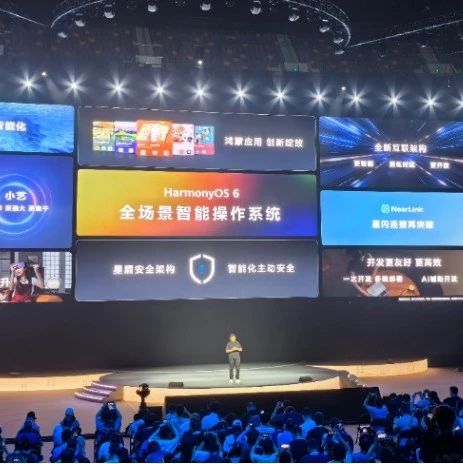
鸿蒙6,首次亮相!余承东:正式启动
券商中国· 2025-06-20 09:28
Core Viewpoint - Huawei's HarmonyOS 6 is accelerating the development of the Harmony ecosystem, with significant advancements in AI capabilities and a growing demand for developers and talent in various industries [2][3][7]. Group 1: HarmonyOS 6 Launch - HarmonyOS 6 was officially launched at the Huawei Developer Conference 2025, with a Beta version available for developers [2][4]. - The new operating system promises enhanced connectivity and intelligent experiences, making it easier to use across various scenarios [3][5]. Group 2: AI and Intelligent Framework - HarmonyOS 6 introduces the Harmony Agent Framework (HMAF), which shifts applications from a user-command-centric model to a user-intent-centric model, enhancing proactive service capabilities [5][6]. - The integration of a comprehensive "soft-hard-cloud" ecosystem allows for better understanding of user preferences and supports AI decision-making [6]. Group 3: Ecosystem Growth - The Harmony ecosystem has transitioned to a phase of exponential growth, with over 30,000 applications and services in development across nearly 20 industries, including government, healthcare, and industrial sectors [3][9]. - The number of registered developers has surpassed 8 million, indicating a robust community contributing to the ecosystem [3][10]. Group 4: Talent Demand and Education - There is a significant talent gap in the Harmony ecosystem, with reports indicating a need for over 1 million skilled professionals, as the average salary for Harmony developers is projected to rise by 43.1% in 2024, outpacing Android's 22.7% [10]. - Huawei is collaborating with industries and educational institutions to cultivate Harmony talent, with over 7.32 million individuals having engaged in Harmony development training [10].