
黄金猕猴桃

Search documents
字节英伟达都在给员工发这个“最有面的中产水果”?
虎嗅APP· 2026-02-10 09:28
Core Viewpoint - The article discusses the rise of "Crispy Honey Kumquat" as a new luxury fruit, particularly popular among middle-class consumers, and its significant market presence, especially in tech companies like ByteDance and NVIDIA [5][20]. Group 1: Market Trends - The "Crispy Honey Kumquat" has gained immense popularity, with discussions on social media platforms exceeding 100 million and over 800 million views on Douyin [5]. - The fruit is being marketed as a premium product, with prices reaching up to 15 yuan per piece, making it more expensive than Ferrero chocolates [7][12]. - Sales of the kumquat have increased significantly, with a reported 25% growth in sales from the previous year [14]. Group 2: Product Characteristics - The "Crispy Honey Kumquat" is characterized by its thin skin, large size, and high sweetness, with a sugar content exceeding that of typical fruits like watermelon and strawberries [14][22]. - The fruit's unique breeding process has led to a product that is 100% edible, with a long shelf life, making it suitable for both domestic and international markets [22][23]. Group 3: Economic Impact - The production area for "Crispy Honey Kumquat" in Guangxi has expanded to 231,000 acres, with an expected total output of 287,000 tons and a market value of approximately 5.6 billion yuan [23]. - The brand value of Guangxi kumquat has increased from 4.54 billion yuan to 5.92 billion yuan, marking it as one of the fastest-growing geographical indication brands in the region [23]. Group 4: Consumer Behavior - The kumquat has become a status symbol among middle-class consumers, often used as a gift due to its perceived quality and auspicious connotations [16]. - The fruit's high price point has led to a phenomenon where consumers are willing to pay a premium for perceived quality, with some consumers expressing surprise at the taste compared to traditional kumquats [11][17]. Group 5: Future Outlook - The article suggests that while the current trend is positive, there are concerns about maintaining quality and price stability as production scales up, drawing parallels to other fruits that have experienced market saturation [29][37]. - The commercialization of "Crispy Honey Kumquat" is still in its early stages, with expectations that it may reach its peak in the coming years [36].


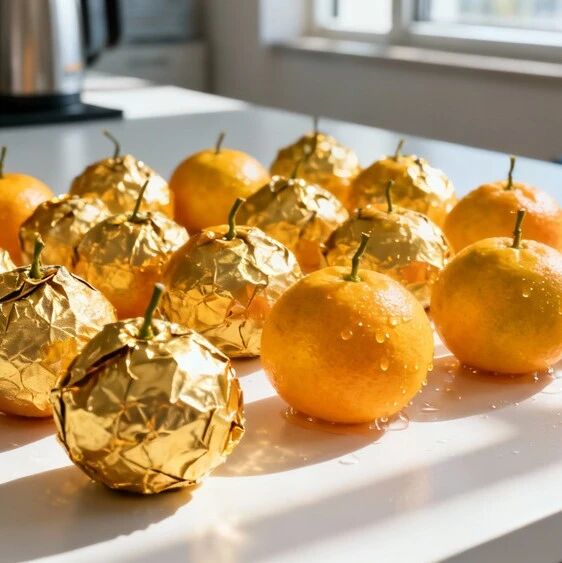
字节英伟达都在给员工发这个“最有面的中产水果”?“cos成费列罗比6J车厘子贵多了”
3 6 Ke· 2026-02-05 11:09
Core Insights - The article discusses the rise of "Crispy Honey Kumquat" from Guangxi, which has gained immense popularity as a premium fruit, surpassing previous high-end fruits like cherries and grapes in terms of taste and market demand [1][10][16]. Group 1: Product Characteristics - The "Crispy Honey Kumquat" is characterized by its thin skin, large size, and high sweetness, with a sugar content exceeding that of common fruits like watermelon and strawberries [6][11]. - The fruit has a unique appearance, often packaged in gold foil, resembling luxury chocolates, which contributes to its premium pricing [8][10]. - The kumquat's evolution from a less desirable fruit to a sought-after delicacy is attributed to its genetic mutation, resulting in a sweeter and larger variety [18][20]. Group 2: Market Dynamics - The price of the "Crispy Honey Kumquat" can reach up to 15 yuan per piece, making it more expensive than traditional luxury items like Ferrero chocolates [3][15]. - Sales channels for the fruit have expanded to include major supermarkets catering to middle-class consumers, with packaging designed to appeal to gift buyers [13][15]. - The fruit's popularity has led to a significant increase in production in Guangxi, with an expected output of 287,000 tons by 2025, contributing to a total industry value of nearly 10 billion yuan [20][22]. Group 3: Consumer Reception - Consumers, particularly in corporate settings, have expressed surprise and delight at the taste of the "Crispy Honey Kumquat," leading to its rapid adoption as a popular snack [5][10]. - The fruit has been featured in corporate events and has become a status symbol among employees, indicating its successful branding and market positioning [11][13]. - The kumquat's appeal has extended beyond local markets, with exports to countries like the United States and Canada, where prices can reach as high as 160 yuan per pound [15][22]. Group 4: Future Outlook - The article highlights concerns about maintaining the quality and exclusivity of the "Crispy Honey Kumquat" as it gains popularity, drawing parallels to other fruits that have lost their premium status due to overproduction [28][32]. - The industry is currently in a growth phase, with expectations that the market for "Crispy Honey Kumquat" will peak in the coming years, emphasizing the need for careful management of production and quality [32].

澳媒:榴莲推动中国和东南亚的“食品丝绸之路”
Xin Lang Cai Jing· 2025-12-24 22:54
Group 1 - The article discusses how the rising popularity of durian in China has turned this tropical fruit into a diplomatic tool, with China being the largest importer and consumer, accounting for approximately 95% of global demand [1] - In 2024, China's durian imports are expected to reach a record high, with a total value nearing $7 billion [1] - Southeast Asian countries are leveraging durian exports to strengthen political and economic ties with China, using high-quality durians as gifts to foster friendly relations [1] Group 2 - The demand for durian in China is driving economic growth in Southeast Asia, transforming previously impoverished agricultural regions into prosperous areas [2] - Malaysian durian farmers report significant improvements in their livelihoods, enabling them to rebuild homes and afford education for their children abroad [2] - The Malaysian government views durian exports as a means to attract Chinese investment and enhance trade relations, emphasizing the importance of collaboration with Chinese businesses [2] Group 3 - Durian trade is part of a larger strategy for China to ensure food security, contributing to a new network termed the "Food Silk Road," which aims to diversify food imports from various regions [2] - The overall agricultural trade between China and ASEAN countries is growing, with imports expected to reach nearly $7.5 billion in the first quarter of 2025, marking a 14% increase from the same period in 2024 [3] - Southeast Asian countries face challenges in managing their durian industries while capitalizing on the growing demand from China amidst global economic uncertainties [3]