055大驱

Search documents
美国造船业只剩0.1%?军舰越造越贵,中国却能拿下全球一半订单!
Sou Hu Cai Jing· 2026-01-11 13:22
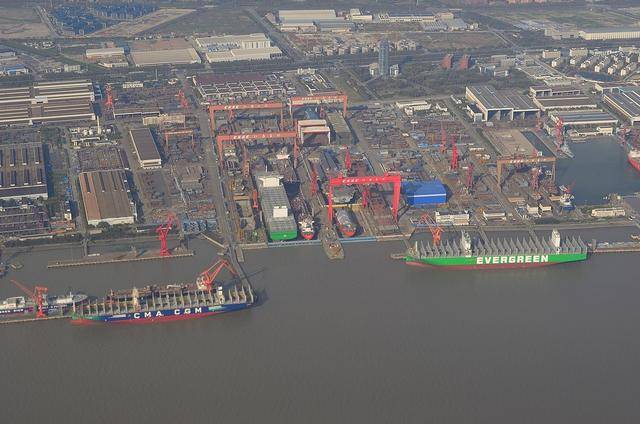
Core Viewpoint - The strength of a country's navy cannot be solely determined by the number of vessels; it relies on a robust shipbuilding industry that is active, has orders, and skilled workers to support it [1][3]. Shipbuilding Industry Status - The U.S. shipbuilding industry has significantly declined, with only 0.1% of new ships globally being built in the U.S. in 2024, while over half are produced in China, and Korea and Japan account for 40% [3][5]. - The U.S. once had a thriving shipbuilding industry capable of launching thousands of vessels annually during WWII, but now struggles to deliver even a single patrol boat in a timely manner [5]. Current Shipyards - Only four shipyards in the U.S. are still capable of building military vessels: Newport News, Bath Iron Works, Ingalls, and General Dynamics Electric Boat [6]. - These shipyards rely entirely on military contracts, with no orders from the civilian market, leading to a loss of skilled labor as younger workers opt for other careers [8]. Challenges in Production - The U.S. Navy faces delays and cost overruns in new destroyer construction due to issues like excessive rework in welding [8]. - The Biden administration's "301 investigation" into China's shipbuilding practices highlights the competitive pressures faced by the U.S. industry, despite the reality of China's efficiency and delivery capabilities [10][11]. Comparison with China - China's shipbuilding industry benefits from a model of "military-civilian integration," allowing for dual-use of labor and facilities, which keeps costs down and maintains technical skills [13][15]. - Civilian ship orders serve as both an economic support during peacetime and a strategic reserve during wartime, providing flexibility that purely military shipyards lack [17][21]. Historical Context - The U.S. ability to rapidly produce ships during WWII was rooted in a strong civilian shipbuilding industry, which is now lacking [22]. - China's current capability to quickly deploy advanced naval vessels is supported by substantial civilian ship orders, demonstrating the importance of a robust shipbuilding base [24]. Conclusion - A true maritime power is built not just on military might but on a vibrant shipbuilding industry that can sustain itself through civilian orders, ensuring readiness and resilience in the face of future challenges [24].

180万桶原油被扣!三航母集结,中国反制美“能源劫掠”要拼血本?
Sou Hu Cai Jing· 2025-12-25 16:28
Core Viewpoint - The recent seizure of the "Century" oil tanker by the Trump administration highlights the strategic maneuvering in global energy markets, revealing the U.S. intent to disrupt China's energy supply routes and the potential military implications of such actions [1][3]. Group 1: U.S. Energy Strategy - The seizure of 1.8 million barrels of oil, while only 1.3% of China's daily consumption, signals a targeted effort by the U.S. to undermine China's overseas energy channels, reminiscent of the "Malacca Dilemma" [3]. - China's crude oil imports reached 423 million tons in the first nine months of 2025, with daily consumption exceeding 11 million barrels, indicating a heavy reliance on stable energy supplies [3]. - The strategic location of the seizure near Cuba, 15,000 kilometers from China, coupled with U.S. military advantages in the region, poses significant challenges for China's naval response [3]. Group 2: Chinese Naval Capabilities - The Chinese Navy currently operates three aircraft carriers, with the Liaoning and Shandong being 60,000-ton ski-jump carriers, while the Fujian is an 80,000-ton electromagnetic catapult carrier, enhancing its operational capabilities [5]. - The U.S. Navy has 11 aircraft carriers, with 3-4 potentially deployable to the Caribbean, significantly outnumbering China's naval assets in the region [5]. - Although the Chinese naval fleet can theoretically engage with U.S. forces, the logistical challenges and time required for deployment highlight the risks involved in a direct military confrontation [5]. Group 3: Strategic Alternatives for China - The Chinese Navy's current operations focus on the Indian Ocean and Red Sea, which are critical for securing energy imports, rather than engaging in direct confrontations in the Caribbean [7]. - China is diversifying its energy sources, with over 40 countries supplying crude oil, and the top five sources accounting for less than 40% of imports, reducing vulnerability to single-point disruptions [7]. - Initiatives like the Belt and Road energy cooperation projects are creating land-based energy corridors, further decreasing reliance on maritime routes and enhancing energy security [7]. Group 4: Broader Implications of Energy as a Weapon - The incident underscores the importance of both hard and soft power in international relations, with a focus on strategic reserves and diversified channels as key to energy security [9]. - The narrative emphasizes that true security comes from building cooperative frameworks rather than engaging in direct confrontations, suggesting a need for a more nuanced approach to geopolitical challenges [9]. - The overarching message is that the costs of obstructing energy routes will outweigh the benefits, advocating for a strategy that prioritizes collaboration and strategic foresight [11].

印度老哥掀桌子:“我跟300亿,能梭哈中国造船业吗?” 牌友们都笑了
Sou Hu Cai Jing· 2025-07-06 16:58
Core Viewpoint - The article discusses the competitive landscape of the global shipbuilding industry, highlighting the disparity between the capabilities of China, the U.S., and India, and emphasizing the importance of industrial strength and efficiency over mere financial investment [3][8][10]. Group 1: Market Dynamics - The U.S. plans to invest $300 billion to revitalize its shipbuilding industry, aiming to challenge China's dominance [3]. - Current global shipbuilding market shares are as follows: China holds 53%, the U.S. has 0.1%, and India has 0.05% [3]. - The article illustrates the stark contrast in shipbuilding output, with China launching 250 ships in a year compared to the U.S.'s 5 and India's few small boats [6]. Group 2: Competitive Analysis - South Korean shipyards are experiencing a surge in orders due to U.S. actions, but they are struggling with capacity and technological limitations [6]. - A German expert suggests that the U.S. investment is insufficient to compete with China, indicating that India might be a more realistic competitor for the U.S. [6][10]. - The article critiques the U.S. spending as potentially benefiting wealthy friends rather than effectively enhancing shipbuilding capabilities [6]. Group 3: Strategic Insights - The true competitive advantage lies not in financial resources alone but in a country's industrial ecosystem, including technology, cost control, and efficiency [8][10]. - The article suggests that India should focus on strengthening its industrial base before attempting to compete on the global stage [10].