
5G NR

Search documents
歌华有线:公司已就5G NR在应急广播场景进行系统联调和场景测试
Zheng Quan Ri Bao Wang· 2026-02-25 10:41
Group 1 - The company, Gehua Cable (600037), has conducted system integration and scenario testing for 5G NR in emergency broadcasting scenarios [1] - Currently, the company has not received any commercial plans for 5G NR broadcasting from China Broadcasting Network [1]

芦哲:高质量发展孕育“创新牛”
Sou Hu Cai Jing· 2025-08-19 21:09
Group 1 - The Shanghai Composite Index broke the high point of October 8, 2024, and stabilized above 3700 points, with a year-to-date increase of 10.29%, outperforming the S&P 500 and Dow Jones Industrial Average [2] - The current market is characterized by a "slow bull" pattern, driven by a combination of macro policies, capital market policies, funding structure, and technological industry innovations, indicating a transition towards high-quality economic development [2][3] - The "KOT" valuation system has been recognized as a leader in developing new productive forces, with the technology sector becoming a primary focus for capital, evidenced by a 27.21% increase in the Sci-Tech Innovation Index year-to-date [3][26] Group 2 - Macro policies have been innovatively adjusted to support new productive forces, with structural tools being emphasized to stabilize the economy while promoting technological innovation and consumption upgrades [4][10] - The capital market has undergone significant reforms, including the introduction of the "KOT" valuation system, which aims to provide reasonable valuations for high-tech enterprises and enhance their funding support [5][13] - Long-term capital inflow has been facilitated by new policies, with the scale of equity ETFs surpassing 3 trillion yuan, indicating a strong influx of long-term institutional investors into the market [6][17] Group 3 - The Chinese technology industry is experiencing significant breakthroughs, with advancements in humanoid robots, consumer electronics, new energy, and communication sectors, positioning China as a global leader in technology patents and product sales [7][23] - The "KOT" system has led to a notable increase in the number of listed companies and their market capitalization, particularly in the "hard technology" sector, reflecting the effectiveness of the valuation system's restructuring [3][25] - The market is witnessing a positive cycle of liquidity and valuation improvements, with trading volumes exceeding 2 trillion yuan, indicating a favorable market sentiment and the potential for a comprehensive bull market [8][35]






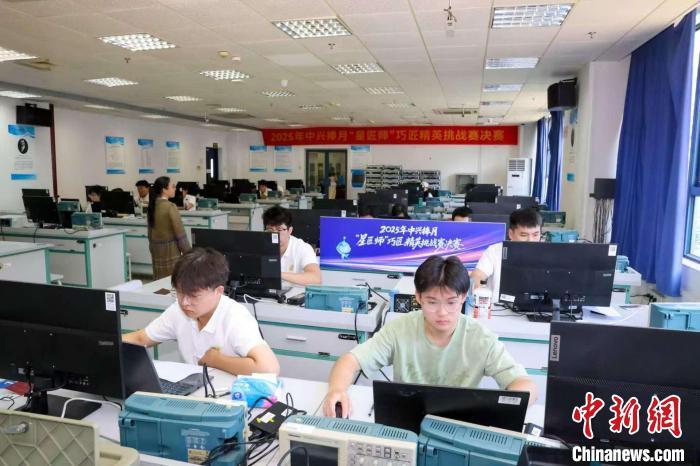
全国信息通信技术能手南京角逐“星匠师”大赛
Zhong Guo Xin Wen Wang· 2025-07-07 08:37
Group 1 - The 15th "Star Craftsman" Challenge attracted 2,327 teams from 201 universities across China, with winners from Heyuan Vocational Technology College and Jiangxi Software Vocational Technology University [1][2] - The competition featured three tracks, focusing on 5G and data communication, with an emphasis on artificial intelligence this year, including an AI training innovation design competition for teachers [1][2] - The event is recognized as a model for industry-education integration, fostering collaboration among leading enterprises, universities, and research institutions to enhance talent development [2][4] Group 2 - Winners received certificates and cash prizes, along with ZTE's "5G NR" and "Routing & Switching" certification, promoting skill enhancement and career development [4] - ZTE plans to deepen strategic cooperation with universities through joint laboratories and customized courses, aiming to create a comprehensive talent development loop [4] - The digital economy in China is projected to exceed 60 trillion yuan by 2025, highlighting the need for collaborative efforts among industries, enterprises, and educational institutions to address talent shortages [2]

新动能驱动“科特估”为资本市场“排头兵”
Soochow Securities· 2025-05-12 06:06
Group 1: Economic Context - The ongoing tariff war is characterized as a "protracted battle," significantly impacting global demand and economic growth trajectories for various countries[1] - The trade conflict between China and the U.S. is expected to persist until internal economic issues in the U.S. and global growth concerns are resolved[1] - The tariff war has profound implications for global economic structures, suppressing investment and consumer demand[1] Group 2: Technology and Domestic Demand - By the end of 2024, the core value added of the digital economy is projected to account for approximately 10% of China's GDP[2] - China's KTI manufacturing output has more than doubled from 2012 to 2022, increasing its global share from 22% to 34%[2] - The domestic market for "localization" is expected to expand significantly, particularly in high-tech and agricultural products, as U.S. tariffs reduce the competitiveness of American goods[2] Group 3: Infrastructure and Innovation - The construction of technological infrastructure is essential for enhancing national competitiveness and driving digital economic growth[3] - A robust data-sharing and computing power framework is critical for the advancement of the digital economy and mitigating geopolitical risks[3] - China's technological products are gaining global competitiveness through sustained R&D investment and policy support, leading to a comprehensive lead in patents, sales, and standards in various high-tech fields[3] Group 4: Capital Market Dynamics - Foreign investment institutions are increasingly optimistic about Chinese technology companies, with many raising their holdings in Chinese stocks[5] - The valuation logic for technology stocks is shifting from "penetration rate-driven" to "market share and localization rate support," indicating a need for more rigorous evaluation criteria[7] - The potential for technology consumption to become a "second growth curve" for Chinese enterprises is significant, driven by a large domestic market and advancements in AI and digital payment systems[6]