AI翻译卡

Search documents
越南拟推《人工智能法》 中企出海可在合规框架下聚焦三大优势领域
Xin Hua Cai Jing· 2025-11-30 07:55
Core Viewpoint - Vietnam's draft Artificial Intelligence Law aims to establish a balanced regulatory framework that emphasizes human-centric principles while managing risks and encouraging innovation. This will be Vietnam's first dedicated law for the AI sector, expected to take effect in March 2026 if approved [1][2]. Regulatory Framework - The draft law encompasses a broad regulatory scope, covering both domestic and foreign entities operating AI in Vietnam, as well as systems developed abroad that serve Vietnamese users, ensuring accountability for foreign tech suppliers [2]. - A four-tier risk classification system is proposed, categorizing AI systems into: - Prohibited: Systems that pose severe threats to national security, human dignity, and social order [2]. - High-risk: Systems in critical sectors like finance and healthcare, requiring government compliance assessment before market entry [2]. - Medium-risk: Systems that interact directly with users or generate content, necessitating clear AI attribute labeling [3]. - Low-risk: Systems with minimal socio-economic impact, subject to voluntary regulation and post-monitoring [4]. Incentive Policies - The draft law introduces several incentive measures to foster a healthy AI industry ecosystem: - Establishment of a national AI database for enterprise registration and monitoring, offering infrastructure support and tax incentives for participating companies [5]. - Encouragement of public-private partnerships in AI infrastructure, recognizing digital assets as legitimate contributions for financing [5]. - Planning for AI clusters in high-tech parks and universities, providing shared facilities and tax incentives [5]. - Introduction of a sandbox testing mechanism for SMEs and innovative startups to test new AI products in a controlled environment [5]. Market Opportunities for Chinese Companies - Chinese AI companies are encouraged to focus on three key areas in Vietnam: AI infrastructure, technology applications, and end products, while adhering to compliance requirements [6]. - In AI infrastructure, Vietnam is emerging as a hotspot for investments, with significant cost advantages compared to other ASEAN countries, making it attractive for data center development [7]. - In AI technology applications, there is a strong demand in sectors like smart cities and transportation, with several Chinese firms already establishing partnerships in Vietnam [8]. - In the end products sector, Chinese companies are deepening their presence, particularly in commercial smart devices and consumer electronics, with ongoing collaborations in Vietnam [9].
全球感知|越南拟推《人工智能法》 中企出海可在合规框架下聚焦三大优势领域
Xin Hua Cai Jing· 2025-11-30 06:50
Core Points - Vietnam's National Assembly is discussing the draft of the "Artificial Intelligence Law," which aims to establish a human-centered approach to AI activities, balancing risk management and innovation incentives. If approved, the law is expected to take effect in March 2026 [1][2]. Regulatory Framework - The draft law includes a comprehensive regulatory scope covering both domestic and foreign entities engaged in AI activities in Vietnam, as well as systems developed abroad that serve Vietnamese users, ensuring that foreign technology providers cannot evade regulatory responsibilities [2]. - A four-tier risk classification system is proposed, categorizing AI systems into four risk levels: - Prohibited: Systems that pose severe threats to national security, human dignity, and social order [2]. - High Risk: Systems in critical sectors like finance, healthcare, and education that require government compliance assessment before market entry [3]. - Medium Risk: Systems that interact directly with users or generate content, which must clearly indicate their AI nature and ensure user awareness [4]. - Low Risk: Systems with minimal socio-economic impact, subject to voluntary regulation and post-monitoring [5]. Incentive Policies - The draft law introduces several incentive policies to foster a healthy AI industry ecosystem: - Establishment of a national AI database for enterprise registration and monitoring, with priority support for companies that participate in data sharing [6]. - Encouragement of public-private partnerships in AI infrastructure, recognizing digital assets as legitimate contributions for financing [6]. - Planning for AI clusters in high-tech parks and research institutions, providing shared facilities and tax incentives [6]. - Introduction of a sandbox testing mechanism for SMEs and innovative startups to test new AI products in a controlled environment [6]. Market Opportunities for Chinese Companies - Chinese AI companies looking to enter the Vietnamese market should focus on three key areas: AI infrastructure, technology applications, and end products, while adhering to compliance requirements [7]. - Vietnam is emerging as a hotspot for AI data center investments, with significant cost advantages compared to other ASEAN countries, making it an attractive market for infrastructure development [7]. - There is a strong demand for AI technology applications in smart cities, smart tourism, and smart transportation, with several Chinese companies already establishing partnerships in these areas [8]. Challenges and Considerations - Companies must be aware of the increased compliance thresholds and operational costs associated with the new law, particularly for high-risk AI systems that require prior assessments [9]. - The requirement for foreign suppliers to designate a legal representative in Vietnam adds complexity to operations and resource integration [9]. - Despite rapid market growth, challenges remain in talent availability, data flow standards, and industry ecosystem maturity, necessitating long-term investment and localization efforts [9].


“多快好省”数南A
Guang Xi Ri Bao· 2025-11-12 01:40
Core Insights - The Nanning AI Center is rapidly developing as a key hub for AI collaboration between China and ASEAN countries, with significant investments and partnerships being established to enhance its infrastructure and service offerings [1][3][7]. Group 1: Investment and Infrastructure - The Nanning AI Center has received approval for 111 million yuan in policy financial tools to strengthen its computing power infrastructure [1]. - A strategic cooperation agreement was signed with Century Internet to provide data transmission support for the Nanning AI Center [1]. - The center has attracted 61 domestic and 14 overseas enterprises this year, establishing 73 application scenarios, leading the region [1]. Group 2: Technological Development and Services - The center features a comprehensive AI ecosystem, including hardware, large models, and intelligent agents, making it one of the few centers in the country with such completeness [2]. - A one-stop international AI industry service platform has been established, facilitating cooperation between Chinese and ASEAN enterprises [2]. - The center integrates key resources such as computing power, data, technology, and talent to provide comprehensive AI application services [3]. Group 3: Strategic Goals and Regional Impact - Nanning aims to become a gateway for Chinese AI enterprises to enter ASEAN markets, leveraging its advantages in connectivity and service quality [4]. - The center is positioned as a public service portal for AI application cooperation between China and ASEAN, with a focus on resource aggregation and collaborative development [7]. - The center has signed 24 new industrial cooperation projects during the 22nd China-ASEAN Expo, covering various sectors including smart logistics and agriculture [7]. Group 4: Future Plans and Policy Support - Nanning is committed to enhancing its AI development by optimizing the business environment and implementing 22 special policies to attract enterprises from multiple ASEAN countries [8]. - Future initiatives include accelerating the construction of a trusted data zone and expanding application scenarios in manufacturing and digital transformation [8].
迈越科技(02501.HK)携手网易有道布局AI翻译技术 深化中国-东盟语言解决方案合作
Ge Long Hui· 2025-09-22 08:42
Group 1 - The core viewpoint of the articles is that the company is establishing strategic partnerships to enhance its AI-driven language solutions in the China-ASEAN market [1][2] - The company signed a strategic cooperation framework agreement with NetEase Youdao to develop and apply AI translation technology, aiming to strengthen language solutions in the China-ASEAN region [1] - The board believes that this framework agreement aligns with the company's strategic goal of expanding its AI-driven language solutions in the China-ASEAN market, expecting to enhance technical capabilities and market coverage [1] Group 2 - The company entered a non-binding strategic cooperation agreement with Ferry International to promote AI device applications in Cambodia, planning to supply 2,000 sets of AI language products [2] - Ferry International is a Cambodian company that provides professional services including market research and project planning, and is involved in various sectors such as commercial complex development and supply chain management [2] - The company may consider granting Ferry International distribution rights for its AI language products in Cambodia upon request [2]

迈越科技分别与网易有道、Ferry International订立战略合作协议
Zhi Tong Cai Jing· 2025-09-22 08:41
Core Viewpoint - The company has entered into strategic partnerships with NetEase Youdao and Ferry International to enhance its AI-driven language solutions in the China-ASEAN market, aiming to improve technology capabilities and expand market reach [1][2][3] Group 1: Partnership with NetEase Youdao - A strategic cooperation framework agreement was signed with NetEase Youdao to develop and apply AI translation technology, focusing on language solutions for the China-ASEAN region [1] - The initial cooperation includes technology integration, where both companies will share access to their respective language models to enhance translation accuracy and cultural context [1] - NetEase Youdao plans to purchase 10,000 portable translation devices from the company, which will incorporate the integrated technology for improved real-time and offline translation [1] Group 2: Partnership with Ferry International - A non-binding strategic cooperation agreement was established with Ferry International to promote AI device applications in Cambodia [2] - The company will supply 2,000 sets of AI language products, including AI translation glasses and cards, to Ferry International [2] - This partnership is part of the company's strategy to explore opportunities for growth and maximize shareholder value in global markets [2][3] Group 3: Strategic Goals and Market Expansion - The board believes that these partnerships align with the company's strategic goals of expanding its AI-driven language solutions in the China-ASEAN market [2] - The collaboration with NetEase Youdao is expected to enhance the company's technological capabilities and create revenue growth opportunities through hardware sales and joint applications [2] - The partnership with Ferry International is anticipated to further strengthen the company's overall competitiveness and solidify its leading position in the industry [3]
迈越科技(02501)分别与网易有道、Ferry International订立战略合作协议
智通财经网· 2025-09-22 08:38
Group 1 - The core viewpoint of the articles is that the company, Maiyue Technology, has entered into strategic partnerships with NetEase Youdao and Ferry International to enhance its AI-driven language solutions in the China-ASEAN market [1][2][3] - The strategic cooperation framework with NetEase Youdao aims to develop and apply AI translation technology, focusing on improving language solutions in the China-ASEAN region [1] - The initial cooperation scope includes technology integration, hardware procurement, and application development for various sectors such as cross-border e-commerce, international exhibitions, business, cultural tourism, and education [1] Group 2 - The board believes that the framework agreement aligns with the company's strategic goals for expanding its AI-driven language solutions in the China-ASEAN market, enhancing technical capabilities, and increasing market coverage [2] - The partnership with Ferry International involves supplying 2,000 sets of AI language products, including AI translation glasses and cards, to promote AI device applications in Cambodia [2] - The collaboration with Ferry International is expected to further enhance the company's overall competitiveness and solidify its leading position in the industry [3]
迈越科技(02501) - 自愿性公告 -(1)与网易有道信息技术(北京)有限公司订立战略合作框架协...
2025-09-22 08:30
— 1 — 香港交易及結算所有限公司及香港聯合交易所有限公司對本公告的內容概不負責,對其 準確性或完整性亦不發表任何聲明,並明確表示,概不對因本公告全部或任何部分內容 而產生或因倚賴該等內容而引致的任何損失承擔任何責任。 MAIYUE TECHNOLOGY LIMITED 邁越科技股份有限公司 ( ) 於 開 曼 群 島 註 冊 成 立 之 有 限 公 司 (股份代號:2501) 自願性公告 - (1)與網易有道信息技術(北京)有限公司訂立 戰略合作框架協議及 (2)與FERRY INTERNATIONAL CONSULTING CO., LTD.訂立 不具法律約束力的戰略合作協議 本公告由邁越科技股份有限公司(「本公司」,連同其附屬公司統稱「本集團」)自願作出, 以向股東及本公司潛在投資者提供有關本集團最新業務發展的最新資料。 (1) 戰略合作框架協議 本公司董事(「董事」)會(「董事會」)欣然宣佈,於2025年9月19日,本公司與網易有道 信息技術(北京)有限公司(「網易有道」)(一間於中華人民共和國註冊成立並於紐約 證券交易所上市的公司(股份代號:DAO))訂立戰略合作框架協議(「框架協議」)。 框架協 ...

南A中心何以“A”
Guang Xi Ri Bao· 2025-09-15 02:02
Core Viewpoint - The establishment of the China-ASEAN Artificial Intelligence Innovation Cooperation Center (referred to as "NAC") in Nanning, Guangxi, aims to position Guangxi as a key player in the global AI landscape, facilitating digital cooperation between China and ASEAN countries [6][7][9]. Group 1: NAC's Development and Achievements - The NAC's construction began on April 3 and was completed within 90 days, with 51 AI projects signed and 40 already operational by the end of August [6][8]. - The center serves as a "super hub" for gathering high-quality AI resources domestically and internationally, and as a "digital engine" for promoting digital cooperation between China and ASEAN [6][7]. - The center's strategic positioning is based on the "North-South R&D + Guangxi Integration + ASEAN Application" approach, emphasizing its role in integrating AI resources [6][9]. Group 2: Market Opportunities and Strategic Importance - The NAC is seen as a response to the growing demand for AI technologies in ASEAN, where there is a gap in software technology compared to China, presenting a market opportunity [10]. - Guangxi's geographical advantage, being at the intersection of over 1.4 billion people in China and 700 million in ASEAN, enhances its potential for AI development and collaboration [12][13]. - The center aims to strengthen the digital economy cooperation between China and ASEAN, contributing to the construction of a closer community of shared future [7][13]. Group 3: Supportive Policies and Infrastructure - The Guangxi government has introduced various policies to support AI development, including financial incentives and resource allocation to foster a conducive environment for AI enterprises [26][35]. - The NAC has established a robust infrastructure, including a data processing area and a dedicated communication circuit to enhance data transmission efficiency [29][30]. - The center has deployed a computing power scale of 5000 PFlops, making it a preferred location for training AI models in ASEAN [29]. Group 4: Collaborative Ecosystem and Future Plans - The NAC is focused on building a collaborative ecosystem that integrates policies, funding, and research resources to support AI enterprises [26][37]. - Plans are in place to establish a multilingual AI model training platform and a corpus database to support the development of sovereign AI models for ASEAN countries [31][33]. - The center aims to create a network of sub-centers across ASEAN countries to enhance regional cooperation and resource sharing [39].
广西南宁构建面向东盟人工智能创新合作枢纽
Zhong Guo Xin Wen Wang· 2025-08-27 14:06
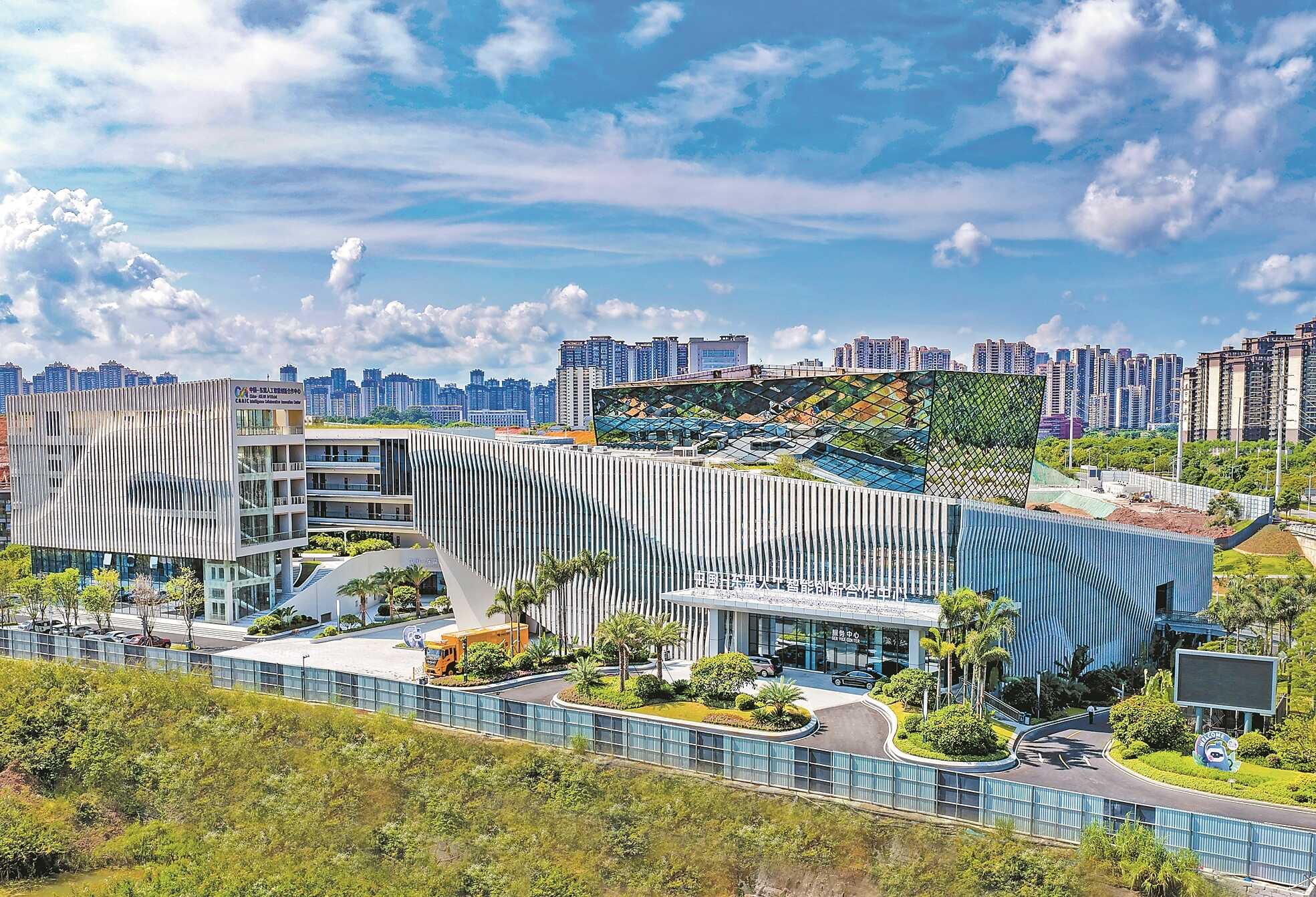
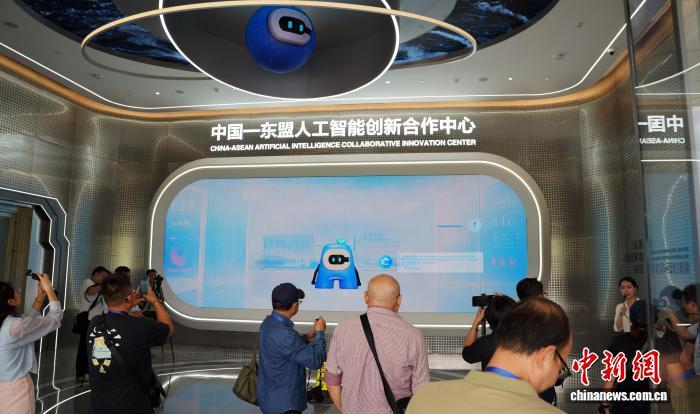
Group 1 - The China-ASEAN Artificial Intelligence Innovation Cooperation Center (NAA Center) in Nanning, Guangxi, aims to integrate future technology with ASEAN cultural characteristics, showcasing the potential of AI technology and applications [1][3] - The NAA Center has completed its first phase and is now in trial operation, hosting 16 ASEAN enterprises, and aims to serve as a comprehensive platform for exhibition, industry connection, and cross-border collaboration in the AI sector [3][5] - The AI exhibition hall utilizes advanced technologies such as AI-guided systems and holographic projections to present China's AI achievements and cooperation with ASEAN [5] Group 2 - Nanning is accelerating the development of emerging industries like AI, establishing itself as a new hub for AI industry targeting ASEAN, with plans for the China-ASEAN cloud computing cluster [6] - Runjian Co., a leading AI enterprise in Nanning, has completed the construction of 24 data centers in several ASEAN countries, applying AI solutions in urban governance, energy management, smart education, and agriculture [6] - Maiyue Technology Co. has developed over 50 AI products and is expanding its business into ASEAN markets, including partnerships in Vietnam and plans for Malaysia and Cambodia [8]
产业转型,AI赋能,跨境合作升级——广西南宁经济发展“跑”起来
Xin Hua Wang· 2025-08-13 10:30
Economic Development in Nanning - Nanning's industrial output value increased by 32.2%, leading the city [1] - The city achieved a 14.8% year-on-year growth in industrial output value and a 17.8% increase in industrial added value in the first half of 2025 [1][3] - Industrial investment grew by 12.4%, reflecting a systematic restructuring of the industrial park space [1] Industrial Transformation and New Growth Drivers - Nanning's industrial structure is shifting towards high-end, intelligent, and green development, with significant growth in the new energy sector [3] - The electronic information industry saw a 25.8% increase in added value, while the aluminum processing industry is moving towards high value-added areas [3] - The optical module business of Chenrui Optics is expected to see a revenue increase of over 50% year-on-year in 2024 [3] Artificial Intelligence Integration - The China-ASEAN AI Innovation Cooperation Center is facilitating AI applications in various industries, including tourism [4][7] - Nanning has signed 51 domestic AI projects and 16 agreements with ASEAN companies, establishing an international innovation matrix [7] - The city is focusing on integrating AI with traditional industries, enhancing the digital economy and AI collaboration with ASEAN [7][8] Cross-Border Trade and Logistics - Nanning launched its first "land-air intermodal" transport route, significantly reducing delivery times by over 70% compared to traditional sea transport [11] - The city is enhancing its transportation network to meet growing cross-border logistics demands, facilitating trade with ASEAN countries [13] - The international railway port in Nanning is actively supporting the transport of goods to Vietnam, boosting regional trade [13] Market Opportunities and International Cooperation - Nanning is attracting AI companies to meet the substantial demand from ASEAN markets, with a focus on smart education, agriculture, logistics, and healthcare [8][10] - The city is positioning itself as a hub for digital transformation in Southeast Asia, leveraging AI technology for local market needs [10] - Nanning's automotive industry, particularly in new energy vehicles, is expanding its international market presence, with sales increasing by over 40% year-on-year [16]