AI芯片Vera Rubin

Search documents
全球最大科技公司和最大药企,宣布合作
Di Yi Cai Jing Zi Xun· 2026-01-13 02:45
Core Insights - Nvidia and Eli Lilly announced a partnership to invest $1 billion over five years to establish a joint research lab in the San Francisco Bay Area, aimed at accelerating AI drug development [2][5] - Nvidia's market capitalization stands at $4.5 trillion, making it the largest company globally, while Eli Lilly maintains a market cap above $1 trillion, solidifying its position as the largest pharmaceutical company [4] Group 1: Partnership and Investment - The new lab will utilize Nvidia's latest AI chip, Vera Rubin, and Eli Lilly is currently building a supercomputer using over 1,000 of Nvidia's previous generation AI chips, Grace Blackwell [5] - The collaboration aims to merge Eli Lilly's pharmaceutical expertise with Nvidia's advanced AI and computational capabilities to fundamentally reshape drug discovery [5][6] Group 2: AI in Drug Development - The use of AI models for drug design and discovery is a strategic focus for major pharmaceutical companies, with the goal of reducing the time required for new drug development [5] - A report by McKinsey describes AI as a "once-in-a-century opportunity" for the pharmaceutical industry, with numerous AI drug companies emerging in the U.S. [6] - Research from Boston Consulting indicates that by 2025, the success rate of AI-generated drug molecules in Phase I clinical trials could reach 80-90%, significantly higher than the historical average of 50% [6] Group 3: Market Growth and Trends - The global AI drug market surpassed $1 billion in 2022 and is projected to approach $3 billion by 2026 [6] - Major pharmaceutical companies, including Novo Nordisk, AbbVie, Merck, and AstraZeneca, are entering the AI drug development space, driven by the fear of missing out on this emerging trend [6] - Chinese biopharmaceutical companies are also expected to lead in AI drug development, with research teams demonstrating the ability to discover new targets and design new molecules using generative AI [7]



全球最大科技公司英伟达和最大药企礼来,宣布合作
Xin Lang Cai Jing· 2026-01-13 02:43
Core Insights - Nvidia and Eli Lilly announced a strategic partnership to invest $1 billion over five years to establish a joint research lab in the San Francisco Bay Area, aimed at accelerating AI drug development [1][3][7] Group 1: Company Developments - Nvidia's market capitalization is currently $4.5 trillion, making it the largest company globally, while Eli Lilly's market cap is above $1 trillion, solidifying its position as the largest pharmaceutical company [3][7] - The new lab will utilize Nvidia's latest AI chip, Vera Rubin, and Eli Lilly is already using over 1,000 of Nvidia's previous generation AI chips, Grace Blackwell, to build a supercomputer [3][7] - Nvidia is focusing on providing open-source AI models and software for pharmaceutical companies to build their drug development platforms based on Nvidia's hardware [3][7] Group 2: Industry Trends - The use of AI models for drug design and discovery is becoming a key strategy for pharmaceutical giants to shorten the time required for new drug development [3][7] - A report by Boston Consulting indicates that by 2025, the success rate of AI-generated drug molecules in Phase I clinical trials could reach 80% to 90%, significantly higher than the historical average of 50% [4][8] - Major pharmaceutical companies, including Novo Nordisk, AbbVie, Merck, and AstraZeneca, are increasingly investing in AI drug development due to the fear of missing out on this emerging field [9] Group 3: Market Potential - The global AI drug development market exceeded $1 billion in 2022 and is projected to approach $3 billion by 2026 [9] - Chinese biopharmaceutical companies are expected to lead in AI drug development, with recent research demonstrating the ability to discover new targets and design new molecules using generative AI [9]
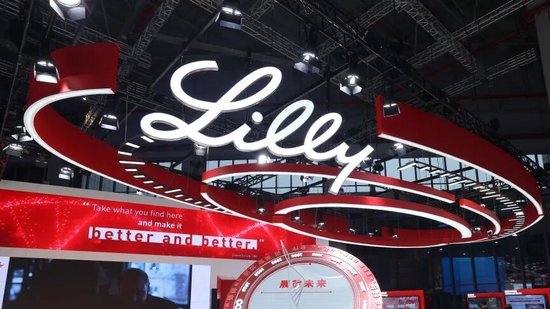
全球最大科技公司和最大药企联手 10亿美元欲砸出AI“超级药厂”
Di Yi Cai Jing· 2026-01-13 02:19
波士顿咨询的一份研究显示,到2025年,AI生成的药物分子在一期临床试验中的成功率已经高达80%至 90%,高于50%的历史平均水平。这意味着,AI发现的药物正在突破临床一期的瓶颈,展现出进入后期 临床验证阶段的潜力。 随着英伟达加速渗透生物技术市场,该公司采取的战略是提供开源人工智能模型和软件,以便制药商可 以基于英伟达的硬件,并利用这些模型和软件构建自己的药物开发平台。 英伟达当天还发布了一系列新模型,其中包括一个可用于确保使用人工智能工具设计的药物在真实世界 实验室中合成的更新模型。 对此,花旗分析师在一份发给投资人的报告中写道:"英伟达与礼来结成战略联盟,旨在通过将礼来公 司的制药专业知识与英伟达的尖端人工智能、加速计算和基础设施能力相融合,从根本上重塑药物发 现,并将顶尖科学家和人工智能工程师集中在一起,共同应对复杂的新药研发挑战。" 咨询公司麦肯锡在去年发布的一份报告中称,人工智能是制药业"百年难得的历史性机会"。在美国,已 经诞生了一大批AI制药公司,它们通过建设大型实验室,生成信息来帮助训练人工智能,从而加速实 验进程,识别预测可能有效的药物分子,并通过生成式人工智能将药物分子的设计数字化。 ...
无惧调整,布局十一月
格隆汇APP· 2025-10-22 12:46
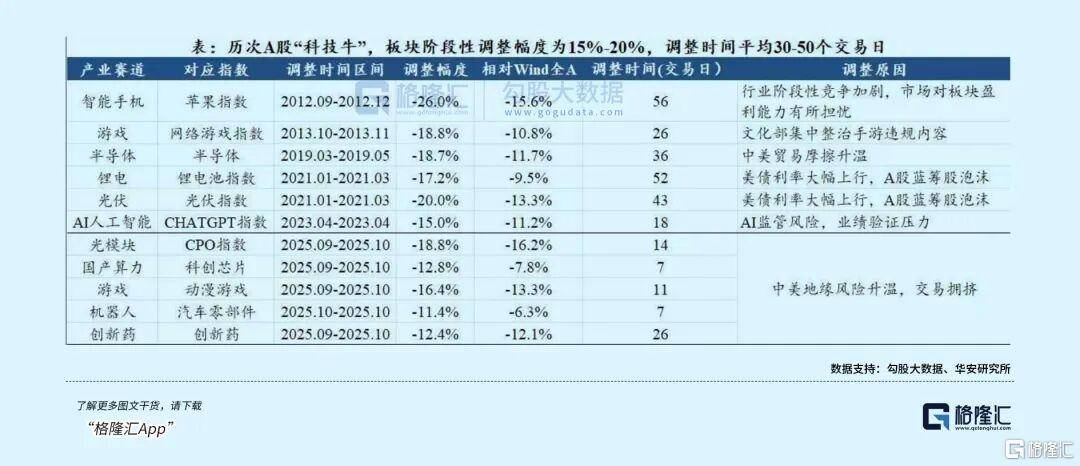
Core Viewpoint - The A-share market is currently undergoing a healthy adjustment within the growth industry cycle, indicating that the adjustment has entered its later stage, with November being a critical verification window for the next phase of growth opportunities [2][3]. Historical Adjustment Patterns - Historical data shows that typical adjustments in growth sectors have a maximum decline of 15%-20% and last 1-2 months, with stronger sectors experiencing shallower and quicker corrections [3][4]. - The current adjustment has seen the ChiNext index decline by only 9.1% over 8 days, while the AI computing sector has dropped 10.4% over 22 days, both remaining below historical adjustment limits [3][4]. Upcoming Catalysts - Two key events in late October to early November will influence the market's next phase: the completion of Q3 earnings reports and the outcomes of the APEC summit regarding US-China relations [5][6]. - The Q3 earnings reports are expected to highlight the performance of growth sectors, with AI computing chains showing an average net profit growth of over 30% [6]. - A potential easing of tensions in US-China relations could positively impact sectors like semiconductors and wind energy, enhancing market sentiment [6][7]. Policy and Liquidity Factors - Ongoing discussions about the next five-year plan are expected to boost policy support for technology and high-end manufacturing sectors, which has already begun to influence market risk appetite [8]. - The anticipated interest rate cut by the Federal Reserve is likely to create more room for domestic monetary policy, which historically benefits growth sectors more than value sectors [8]. Investment Focus - The current adjustment phase is seen as an opportunity to focus on growth sectors with strong performance support, particularly in AI computing and applications [9]. - The AI industry is still in a strong upward trajectory, with significant capital expenditure expected in data centers and related infrastructure [9][10]. - The power equipment sector is poised for growth driven by high domestic investment and expanding international markets [13]. - The machinery sector is also expected to benefit from overseas demand, particularly in high-end and intelligent equipment [14]. Conclusion - The current market adjustment is viewed as a temporary phase, with November's earnings and policy signals likely to open new opportunities for growth investments [15].
无惧调整,布局十一月
Sou Hu Cai Jing· 2025-10-22 12:36
Core Viewpoint - The A-share market is currently undergoing a healthy adjustment within the growth industry cycle, indicating that the adjustment has entered its later stage, with November being a critical verification window for a potential market shift [1] Historical Context - Historical patterns show that typical growth market adjustments have a maximum decline of 15%-20% and last 1-2 months, with strong sectors experiencing shallower and quicker corrections [2] - The current adjustment has seen the ChiNext index decline by only 9.1% over 8 days, while the AI computing sector has seen a maximum decline of 10.4% over 22 days, both remaining below historical adjustment averages [2][3] Upcoming Catalysts - Two key events in late October to early November will influence the market's next phase: the completion of Q3 earnings reports and the APEC summit, which may provide signals regarding US-China relations [4] - The Q3 earnings reports are expected to show strong performance in growth sectors, with AI computing chains reporting an average net profit growth of over 30% [4] - A potential easing of tensions in US-China relations could positively impact sectors like semiconductors and wind power, enhancing market sentiment [4] Policy and Liquidity Factors - Ongoing discussions about the next five-year plan are expected to boost policy support for technology and high-end manufacturing sectors, which is already reflected in increased capital inflows [5] - The anticipated interest rate cut by the Federal Reserve may create more room for domestic monetary policy, potentially leading to a reduction in reserve requirements or targeted rate cuts in November [5] Investment Focus - The current adjustment phase presents an opportunity to focus on "growth prosperity" and "earnings support" as key investment themes [6] - The AI computing sector remains a core engine for growth, with significant opportunities in hardware and application development as demand for data center investments rises [7] - The power equipment sector is poised for growth driven by high domestic investment and increasing exports, particularly in advanced technologies [8][9] - The machinery sector is also expected to benefit from overseas market expansion, with strong demand for electric and environmentally friendly equipment [10] Conclusion - The current market adjustment is viewed as an opportunity for long-term investment, with November's earnings and policy signals likely to unlock new market potential [11]