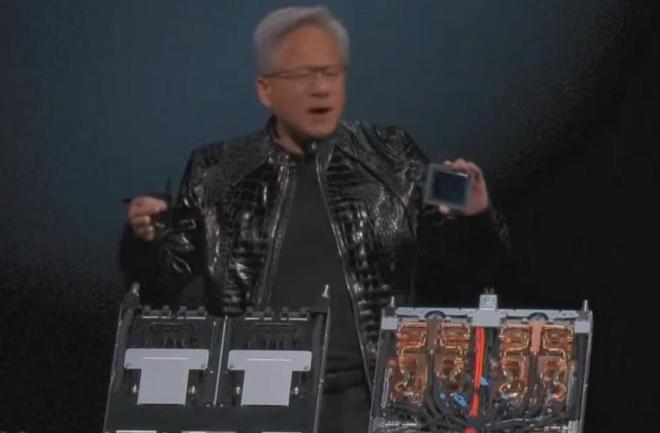
AMD MI325X芯片

Search documents
腾讯研究院AI速递 20260116
腾讯研究院· 2026-01-15 16:06
Group 1: AI Chip Regulations - The U.S. has imposed a 25% tariff on advanced AI chips like Nvidia's H200 and AMD's MI325X, with export licenses now subject to case-by-case review instead of presumed denial [1] - New regulations stipulate that the number of chips exported to China cannot exceed half of the total quantity for U.S. customers and must meet specific safety standards [1] - The U.S. House of Representatives has passed the Remote Access Security Act to restrict China's access to AI chips via cloud computing services [1] Group 2: Google AI Developments - Google has launched the Personal Intelligence feature powered by the Gemini3 model, integrating data across Gmail, Photos, YouTube, and Search for contextual understanding [2] - This feature includes a natural language correction mechanism, allowing users to correct AI errors in real-time, thus lowering the management threshold for data models [2] - Currently in beta testing, it is available to paid users and will eventually be accessible to free users across multiple platforms [2] Group 3: Nvidia's Autonomous Driving - Nvidia's new L2++ level driving system in the Mercedes CLA has successfully completed a 40-minute test in San Francisco, demonstrating capabilities comparable to Tesla's FSD [3] - Nvidia plans to launch L2 highway and city driving features by mid-2026, with a goal to expand Robotaxi deployment by 2027 and achieve L3 highway driving by 2028 [3] - The company has achieved city autonomous driving functionality in just one year, utilizing the Drive AGX Thor chip, which costs approximately $3,500 [3] Group 4: AI Shopping Innovations - The Qianwen App has introduced over 400 service functions, enabling AI-driven shopping experiences across various Alibaba ecosystem services [4] - New features include AI food ordering, shopping, restaurant reservations, and direct access to 50 government services, enhancing user convenience [4] - The app's "Task Assistant" function leverages breakthroughs in AI coding and multimodal understanding for various applications [4] Group 5: Didi's AI Assistant - Didi has launched an AI assistant named "Xiao Di," allowing users to specify vehicle preferences through simple phrases, including vague requests like "for large luggage" [6] - The assistant prioritizes user needs into categories such as "necessary," "priority," and "preferable," enhancing the personalization of service [6] - After three months of iterations, the AI has improved user experience by remembering habits and preferences [6] Group 6: Step-Audio-R1 Model - The Step-Audio-R1.1 model has topped the Artificial Analysis Speech Reasoning leaderboard with a 96.4% accuracy rate, surpassing other leading models [7] - It is the first open-source native speech reasoning model capable of end-to-end understanding and real-time responses without added latency [7] - The model will have a complete real-time speech API available by February, with current chat modes supporting fluid reasoning [7] Group 7: GPT-5.2 Browser Development - The CEO of Cursor has utilized GPT-5.2 to autonomously write 3 million lines of code over a week, creating a complete browser from scratch [8] - The project employed a multi-agent system with planners and executors to ensure efficient task completion with minimal conflicts [8] - Results indicate that GPT-5.2 can maintain focus and follow instructions effectively over extended periods, outperforming other models in planning capabilities [8] Group 8: Robot Rental Platform - The world's first robot rental platform, "Qingtian Rent," has completed seed funding, led by Hillhouse Capital and supported by several other investors [9] - Within three weeks of launch, the platform has registered over 200,000 users and maintains an average of over 200 rental orders daily [9] - The platform employs a shared rental and scheduling model, with rental prices ranging from 200 yuan per day for long-term rentals to over 1,000 yuan for daily rentals [9] Group 9: AI in Robotics - A research project from Columbia University has been featured on the cover of Science Robotics, showcasing a humanoid robot capable of synchronized lip movements using deep learning [10] - The robot's facial structure contains over 20 micro-motors hidden beneath flexible silicone skin, utilizing self-supervised learning to control expressions [11] - It can convert sound signals into natural lip movements across various languages and environments, demonstrating robust cross-linguistic capabilities [11]



美国对部分进口半导体加征25%关税,涉及英伟达H200
第一财经· 2026-01-15 04:16
Core Viewpoint - The U.S. government has announced a 25% import tariff on certain semiconductor products, including NVIDIA's AI chip H200 and AMD's MI325X, while some products that support the U.S. technology supply chain are exempted [3]. Group 1: U.S. Tariff Announcement - The U.S. will impose a 25% tariff on a small portion of imported semiconductors and related equipment starting January 15 [3]. - Exemptions apply to products that aid in building the U.S. technology supply chain, such as those used in data centers or by U.S. startups [3]. Group 2: Domestic Semiconductor Manufacturing - The U.S. has been pushing for domestic semiconductor manufacturing due to insufficient local production capacity to meet growing demand [3]. - The U.S. consumes about 25% of the world's semiconductors but only produces around 10% domestically [3]. Group 3: NVIDIA and TSMC Collaboration - NVIDIA, despite being a leading AI chip company, still relies on overseas supply chains, particularly TSMC, which has been a partner for over 25 years [4]. - NVIDIA's CEO announced the launch of the new Rubin chip architecture, which significantly improves performance due to a 60% increase in transistor count [4]. Group 4: TSMC's Expansion Plans - TSMC is expanding its manufacturing capabilities in Arizona, USA, and is also investing in a second wafer fab in Japan while continuing investments in Taiwan [5]. - The first U.S.-made NVIDIA Blackwell chip was produced at TSMC's Arizona facility, but there is no confirmation yet for the production of the new Rubin architecture chips in the U.S. [5]. Group 5: Market Reactions - Following the tariff announcement, NVIDIA's stock fell by 1.44%, while AMD's stock rose by 1.19%, and TSMC's stock decreased by 1.24% [6].

美国对部分进口半导体加征25%关税,涉及英伟达H200
Di Yi Cai Jing· 2026-01-15 03:49
Core Viewpoint - The U.S. government is imposing a 25% import tariff on certain semiconductor products, including NVIDIA's AI chips, while simultaneously pushing for domestic semiconductor manufacturing to meet growing industry demands [1][4]. Group 1: Tariff and Import Regulations - Starting January 15, the U.S. will impose a 25% import tariff on select semiconductor products, including NVIDIA's H200 AI chip and AMD's MI325X [1]. - Some products that support the U.S. technology supply chain will be exempt from these tariffs, such as those used in U.S. data centers or by U.S. startups [1]. Group 2: Domestic Manufacturing Efforts - The U.S. consumes about 25% of the world's semiconductors but only produces around 10% domestically, indicating a significant gap in manufacturing capacity [1]. - The White House has acknowledged the insufficient domestic semiconductor manufacturing capabilities to meet the increasing commercial demand [1]. Group 3: NVIDIA and TSMC Collaboration - NVIDIA's CEO Jensen Huang highlighted the long-standing partnership with TSMC, which has lasted over 25 years, emphasizing the importance of solid manufacturing for chip production [2]. - TSMC is actively producing NVIDIA's new Rubin architecture chips, which have a 60% increase in transistor count compared to the previous Blackwell architecture [2]. - TSMC is expanding its manufacturing capabilities in the U.S., particularly in Arizona, while also investing in facilities in Japan and Taiwan [2][3]. Group 4: Market Reactions - On January 14, NVIDIA's stock fell by 1.44%, while AMD's stock rose by 1.19%, and TSMC's stock decreased by 1.24% [4].
美国批准英伟达H200卖给中国,但有条件
Guan Cha Zhe Wang· 2026-01-14 00:32
Core Viewpoint - The U.S. government has approved NVIDIA's export of H200 AI chips to China, with specific conditions and restrictions in place to ensure national security and compliance with export regulations [1][6]. Group 1: Export Approval and Conditions - The U.S. Department of Commerce has revised its export licensing policy for certain semiconductors to China, shifting from a presumption of denial to case-by-case reviews [1]. - The export of H200 chips is contingent upon the availability of sufficient supply in the U.S. market and the recipient demonstrating adequate security protocols [1]. - Companies exporting these chips must adhere to strict "know your customer" procedures to prevent unauthorized use of technology [1]. Group 2: Market Demand and Company Strategy - NVIDIA's CEO Jensen Huang indicated strong demand for the H200 chip in the Chinese market during the Consumer Electronics Show [3]. - NVIDIA has reportedly imposed stringent terms on Chinese customers, requiring full payment upfront for H200 chip purchases to mitigate sales uncertainties [4]. - The H200 chip is designed to significantly outperform its predecessor, the H100, with performance nearly six times greater, potentially enabling Chinese AI labs to build supercomputers comparable to top U.S. models [6]. Group 3: Competitive Landscape and Responses - Chinese companies are actively working on developing domestic AI chips to reduce reliance on NVIDIA, with firms like Huawei and major internet companies increasing their investment in chip R&D [7]. - The Chinese government has expressed a preference for cooperation and mutual benefit in U.S.-China relations, despite the complexities surrounding the H200 chip export [7][8].