AUV

Search documents
Oceaneering International(OII) - 2025 Q4 - Earnings Call Transcript
2026-02-19 17:00
Financial Data and Key Metrics Changes - The company closed 2025 with a cash balance of $689 million, a 38% increase compared to the end of 2024 [9] - Consolidated revenue for 2025 increased by 5% to $2.8 billion, marking the fifth consecutive year of revenue growth [14] - Consolidated operating income improved by $58 million, or 24%, to $305 million [15] - Adjusted EBITDA for 2025 was $401 million, an increase of $54 million or 16% compared to 2024 [15] - Free cash flow for 2025 was $208 million, compared to $96.1 million in 2024 [16] Business Line Data and Key Metrics Changes - Aerospace and Defense Technologies (AdTech) saw a 29% increase in revenue, with operating income up 43% [14][13] - Subsea Robotics (SSR) operating income increased by 7% on relatively flat revenue, with EBITDA margins improving to 38% from 36% [10] - Manufactured Products revenue decreased by 7% year-over-year, but operating income margin increased to 15% due to high-margin backlog conversion [12] - Offshore Projects Group (OPG) revenue decreased by 29% compared to the same quarter last year, primarily due to the absence of large international projects [13] Market Data and Key Metrics Changes - The company generated order intake of $3.7 billion in 2025, resulting in a book-to-bill ratio of 1.33, up from 1.1 in 2024 [4] - The U.S. defense environment is expected to remain well-funded, with increased spending anticipated in subsea critical infrastructure protection and unmanned systems [17] - Global oil market conditions are expected to remain oversupplied early in 2026, with gradual tightening anticipated later in the year [18] Company Strategy and Development Direction - The company aims to leverage its offshore knowledge and capabilities to grow the AdTech segment, which is expected to be the primary growth driver in 2026 [17] - The focus will be on expanding digital and engineering services within the Integrity Management and Digital Solutions (IMDS) segment [27] - The company is open to pursuing bolt-on acquisitions that enhance technology and market participation, while maintaining a focus on free cash flow generation [47][49] Management's Comments on Operating Environment and Future Outlook - Management expressed confidence in the growth of AdTech due to increased defense spending and a strong backlog [17] - The company anticipates a flat offshore activity level in the first half of 2026, with improvements expected in the second half [18] - Management highlighted the importance of final investment decisions (FIDs) for deepwater projects as key indicators for future offshore activity [19] Other Important Information - The company repurchased approximately 1.8 million shares for $40 million during the year [5] - A record-low total recordable incident rate (TRIR) of 0.22 was achieved in 2025, emphasizing the company's commitment to safety [5] Q&A Session Summary Question: What is the typical lead time for government services projects? - Management indicated that lead times vary significantly depending on the nature of the project, with some ramping up quickly while others require extensive engineering and prototyping [35] Question: How do other segments support AdTech growth? - Management noted that expertise in offshore operations and mechanical hull repair contributes to AdTech's growth, leveraging skills from various segments [36][37] Question: What is the future outlook for IMDS and digital offerings? - Management highlighted the integration of machine learning and AI in IMDS, which enhances inspection capabilities and creates demand for ROVs [43][44] Question: Any changes in M&A strategy? - Management remains cautious about large industry consolidation but is open to bolt-on acquisitions that enhance technology and market presence [47][49] Question: Is there traction on the autonomous forklift side? - Management reported high interest in autonomous forklifts, with ongoing efforts to improve capabilities for various applications [56][58]

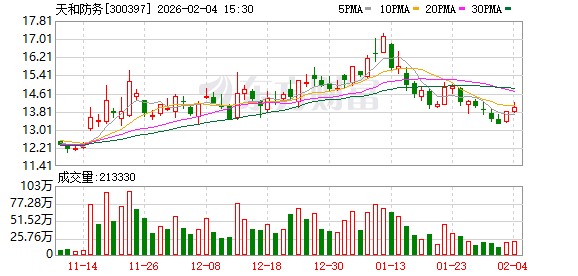
天和防务:AUV相关业务主要由公司子公司天和海防开展
Zheng Quan Ri Bao· 2026-02-04 13:41
Core Viewpoint - Tianhe Defense positions itself as a high-end AUV (Autonomous Underwater Vehicle) supplier through its subsidiary Tianhe Haifang, emphasizing its industrial capabilities and experience in national projects [2] Group 1: Product Advantages - The company has transformed previously high-cost research equipment into industrialized products, significantly reducing production costs and enabling mass supply [2] - Tianhe Defense has experience in undertaking national projects, specifically as a leading unit in the National 863 Program, collaborating with universities and holding relevant intellectual property in the field [2] - The AUV product line from Tianhe Haifang covers various specifications, catering to multiple mission requirements such as reconnaissance and detection, showcasing core competitiveness in system integration and specific task payloads [2]

国产 MPV,为何会在东南亚市场受挫?
3 6 Ke· 2025-12-15 11:53
Core Viewpoint - The Chinese MPV market is experiencing a decline in market share, currently at 3.8%, which is significantly lower than Southeast Asian countries like Indonesia, where the market share is much higher, highlighting a disparity in consumer preferences and market dynamics [1][18]. Group 1: Market Comparison - The market share of MPVs in China has shrunk to 3.8%, which is about one-eighth of Indonesia's share [1]. - In Southeast Asia, the Toyota Avanza represents a popular low-end MPV that meets essential transportation needs, contrasting with China's focus on high-end MPVs like the GL8 [3][5]. - The automotive ownership rate in China is approximately 3.19 billion vehicles, significantly higher than that of Indonesia and other Southeast Asian countries, indicating a more mature consumer structure [3][22]. Group 2: Consumer Preferences - In China, MPVs are often seen as status symbols, with high expectations for luxury and functionality, particularly in business contexts [6][40]. - The perception of MPVs in China differs from that in Southeast Asia, where practicality and affordability are prioritized over luxury [9][40]. - The demand for high-end MPVs in China is growing, driven by a shift in consumer attitudes towards viewing cars as essential goods rather than luxury items [51][53]. Group 3: Historical Context - The rise of the Wuling Hongguang in China, which sold 1.6 million units in three years, reflects a shift in consumer preferences towards more affordable and practical vehicles [16]. - The historical context of MPVs in Southeast Asia shows that Japanese automakers adapted to local needs by creating the AUV category, which became popular due to its affordability and utility [15][18]. - The evolution of the automotive market in China has been rapid, with a significant transition from luxury vehicles to more accessible options for the general public [47][56]. Group 4: Global Trends - The global MPV market is characterized by a paradox where poorer countries cannot afford them, and wealthier countries show less interest, with Hong Kong being a notable exception [29][39]. - In the U.S., MPV sales peaked in 2000 but have since declined significantly, with current market share around 3% due to changing consumer preferences towards SUVs [32][40]. - Japan's automotive market is dominated by compact vehicles, limiting the appeal of MPVs, which contrasts with the high demand for MPVs in Hong Kong [34][39]. Group 5: Future Outlook - The future of the MPV market in China is expected to evolve rapidly, with a focus on high-end models that cater to changing consumer demands and preferences [53][57]. - The integration of supply chain capabilities and innovation will play a crucial role in shaping the competitive landscape of the MPV market in China [54][58].


中金 | 水下机器人:开启深海经济新时代
中金点睛· 2025-11-11 23:41
Core Viewpoint - The underwater robotics market in China is expected to experience rapid growth driven by government policies and technological advancements, with the market projected to reach $14 billion by 2024 and $140 billion by 2030, reflecting a CAGR of approximately 46.27% [5][15]. Market Overview - The global underwater robotics market is anticipated to grow from $9.4 billion in 2024 to over $60 billion by 2030, with a CAGR of around 36.30% [5][13]. - In 2024, the application structure of China's underwater robotics market will be dominated by marine engineering (35%), aquaculture (20%), scientific research (10%), and underwater entertainment (10%) [5]. Technology Development - Underwater robots are categorized into ROVs, AUVs, and ARVs, with AUVs expected to account for 51% of the global market by 2024 [5][8]. - The technology barriers for underwater robots are high, with a trend towards lightweight, integrated, and intelligent designs [6][27]. Industry Participants - Key players in China's underwater robotics sector include research institutions like the Shanghai Jiao Tong University Underwater Engineering Research Institute and private companies such as Deep Blue and Boya Engineering [5][41]. - The industrial-grade underwater robots dominate the market, accounting for about 90% of the total market share in China [19]. Product Classification - Underwater robots can be divided into industrial-grade and consumer-grade categories, with industrial-grade robots used for tasks like underwater inspections and scientific research, while consumer-grade robots cater to recreational activities [11][22]. Special Applications - Special underwater unmanned vehicles are emerging as crucial components in marine defense, with advancements in long-endurance and deep-sea capabilities [24]. Material and Design - The materials used in underwater robots are evolving to meet high demands for corrosion resistance, lightweight, and structural integrity, with titanium alloys and composite materials being preferred [28][32]. Power and Propulsion Systems - The propulsion systems of underwater robots are critical for operational efficiency, with various technologies such as propellers, hydraulic systems, and magnetic fluid propulsion being utilized [34]. Communication and Navigation - Sonar systems are essential for underwater robots, facilitating communication, navigation, and detection tasks [35].