五菱宏光

Search documents
国产 MPV,为何会在东南亚市场受挫?
3 6 Ke· 2025-12-15 11:53
Core Viewpoint - The Chinese MPV market is experiencing a decline in market share, currently at 3.8%, which is significantly lower than Southeast Asian countries like Indonesia, where the market share is much higher, highlighting a disparity in consumer preferences and market dynamics [1][18]. Group 1: Market Comparison - The market share of MPVs in China has shrunk to 3.8%, which is about one-eighth of Indonesia's share [1]. - In Southeast Asia, the Toyota Avanza represents a popular low-end MPV that meets essential transportation needs, contrasting with China's focus on high-end MPVs like the GL8 [3][5]. - The automotive ownership rate in China is approximately 3.19 billion vehicles, significantly higher than that of Indonesia and other Southeast Asian countries, indicating a more mature consumer structure [3][22]. Group 2: Consumer Preferences - In China, MPVs are often seen as status symbols, with high expectations for luxury and functionality, particularly in business contexts [6][40]. - The perception of MPVs in China differs from that in Southeast Asia, where practicality and affordability are prioritized over luxury [9][40]. - The demand for high-end MPVs in China is growing, driven by a shift in consumer attitudes towards viewing cars as essential goods rather than luxury items [51][53]. Group 3: Historical Context - The rise of the Wuling Hongguang in China, which sold 1.6 million units in three years, reflects a shift in consumer preferences towards more affordable and practical vehicles [16]. - The historical context of MPVs in Southeast Asia shows that Japanese automakers adapted to local needs by creating the AUV category, which became popular due to its affordability and utility [15][18]. - The evolution of the automotive market in China has been rapid, with a significant transition from luxury vehicles to more accessible options for the general public [47][56]. Group 4: Global Trends - The global MPV market is characterized by a paradox where poorer countries cannot afford them, and wealthier countries show less interest, with Hong Kong being a notable exception [29][39]. - In the U.S., MPV sales peaked in 2000 but have since declined significantly, with current market share around 3% due to changing consumer preferences towards SUVs [32][40]. - Japan's automotive market is dominated by compact vehicles, limiting the appeal of MPVs, which contrasts with the high demand for MPVs in Hong Kong [34][39]. Group 5: Future Outlook - The future of the MPV market in China is expected to evolve rapidly, with a focus on high-end models that cater to changing consumer demands and preferences [53][57]. - The integration of supply chain capabilities and innovation will play a crucial role in shaping the competitive landscape of the MPV market in China [54][58].


上汽不与比亚迪争销冠
虎嗅APP· 2025-12-09 00:08
Core Viewpoint - The article discusses the challenges and transformations faced by SAIC Motor Corporation, particularly in the context of its declining sales and the competitive landscape with BYD. It emphasizes the need for SAIC to focus on resolving deeper issues rather than merely chasing the title of annual sales champion [5][7][22]. Group 1: Sales Performance - In the first 11 months of 2025, SAIC's sales reached 4.108 million units, reflecting a year-on-year growth of 16.4%, equivalent to an increase of 580,000 units [6][11]. - Despite this growth, the likelihood of reclaiming the annual sales champion title is low, as internal and external challenges persist, including the rise of domestic brands and the decline of joint ventures [7][18]. - In 2025, SAIC's sales closely trailed BYD, with a difference of only 5.5 million units by the end of October [16]. Group 2: Competitive Landscape - BYD's sales have surged from 740,000 units in 2021 to 4.272 million units in 2024, overtaking SAIC, which has held the title for 18 years [14]. - The competition between SAIC and BYD has intensified, with both companies achieving annual sales exceeding 4 million units [19][20]. Group 3: Transformation Challenges - SAIC is undergoing a dual transformation: shifting from joint venture vehicles to self-owned brands and transitioning from a fuel vehicle-dominated structure to one focused on new energy vehicles (NEVs) [23]. - By 2025, NEV sales accounted for 36.5% of SAIC's total sales, up from 20.2% in 2022 [24]. Group 4: Product Structure Issues - SAIC's NEV product structure has weaknesses, with low-end products dominating the market, while higher-end brands have not achieved significant scale [26]. - In the first half of 2025, SAIC's high-end brand, Zhiji, reported a loss rate of 51.3%, indicating challenges in profitability [28]. Group 5: Financial Performance of Joint Ventures - SAIC's joint ventures have seen a significant decline in revenue and profitability since 2018, with SAIC Volkswagen's revenue dropping by 47.7% by 2024 compared to 2018 [50]. - The net profit of SAIC Volkswagen and SAIC General has plummeted, with SAIC Volkswagen's net profit falling to only 8.8 billion in the first half of 2025 [54]. Group 6: Investment and Cash Flow - The article highlights the importance of cash dividends from joint ventures, which have significantly decreased from 87 billion in 2018 to 44 billion in 2024 [60]. - The reliance on these dividends has raised concerns about SAIC's financial stability and future investment capabilities [61].

四十年坚守初心,与奋斗者共赴新程,五菱以科技自立点燃千万奋斗者创富引擎
Zhong Guo Qi Che Bao Wang· 2025-11-20 05:34
Core Insights - Wuling celebrates its 40th anniversary in 2025, marking its evolution from a provider of basic transportation tools to a partner in wealth creation, aligning with the needs of grassroots entrepreneurs in China [1][2][19] - The launch of the "Striver Special Plan" with a fund of 15 million yuan aims to support entrepreneurs through a comprehensive ecosystem, enhancing Wuling's strategic upgrade [1][15] Historical Context - Wuling's journey began in the 1980s, becoming known for its durable and economical vehicles that served as essential tools for individual and small business owners [2][4] - The brand has achieved significant milestones, including over 21 million units sold in the red label series and maintaining the title of the world's largest rear-drive MPV with the Hongguang family [4][13] Market Adaptation - As China's economy transitions to high-quality development, the needs of entrepreneurs have shifted from merely having access to vehicles to seeking high-quality vehicles that enhance wealth creation [6][19] - The "Hongguang Index," set to reach 121.45 in 2025, reflects a 9.23% year-on-year increase, indicating a trend among entrepreneurs towards lower operational costs and higher efficiency [6][19] Product Innovation - The Wuling Rongguang EV, a key product in the red label new energy strategy, showcases Wuling's commitment to innovation, featuring a versatile power system suitable for various business needs [9][11] - The Rongguang EV offers significant advantages, including a range of over 1,000 kilometers for the extended range version and rapid charging capabilities, addressing core challenges in the commercial vehicle sector [11][13] Ecosystem Development - The "Striver Special Plan" includes initiatives for risk protection, support for micro-entrepreneurship, and recognition of outstanding contributors, creating a supportive environment for entrepreneurs [15][17] - Wuling's collaboration with the China Red Cross Foundation enhances its commitment to community support, providing emergency assistance and funding for innovative business projects [15][17] Strategic Transformation - Wuling's dual approach of product innovation and ecosystem support signifies its transition from a mere tool provider to a reliable partner for wealth creation [19] - The brand's focus on user-centered strategies and comprehensive support systems positions it as a leader in the new energy commercial vehicle market, reflecting the vitality of grassroots economies [19]

秦PLUS DM-i:最高优惠一万二,替代神车成为大爷的心头好
车fans· 2025-11-06 00:30
Core Insights - The article discusses the sales performance and customer demographics of the BYD Qin PLUS DM-i, highlighting a significant increase in sales and changes in buyer profiles [2][3][5]. Sales Performance - In October, the store experienced a 30% increase in foot traffic and over a 50% increase in sales compared to September, with an average of 8-9 groups visiting daily, one of which was specifically interested in the Qin PLUS [2]. - The Qin PLUS sold 9 units in October, with the salesperson only selling 1 unit, indicating a competitive sales environment [2]. - The current available models are the 128KM entry-level and the 55KM leading version, with sales evenly split between the two [2]. Customer Demographics - The customer profile has shifted from urban commuters to older individuals and rural families seeking improved transportation options [3][5]. - Previously, the primary vehicle choice in rural areas was the Wuling Hongguang, but now customers are more focused on vehicles like the Qin PLUS for basic commuting needs [5]. Competitive Landscape - The main competitors for the Qin PLUS have shifted from various joint venture models to primarily the Volkswagen Lavida and Nissan Sylphy, with customers opting for the Qin PLUS due to perceived deficiencies in the competitors' offerings [7][8]. - The article notes that older customers, who are generally skeptical of new energy vehicles, are increasingly considering the Qin PLUS after test drives [8]. Pricing and Discounts - The Qin PLUS has maintained its starting price of 79,800 yuan since the introduction of the DM 5.0, but discounts have increased, with the 55KM leading version now available at a discount of 12,000 yuan [10]. - A financial plan offering two years of interest-free payments is available, providing additional incentives for buyers [12]. Customer Feedback - Customer complaints have been minimal, with the main concern being the short electric range of the 55KM leading version. However, the introduction of the 128KM version at the same price point has been well-received [15]. - Regular maintenance costs are approximately 275 yuan per service, with variations based on location [16]. Additional Considerations - BYD is offering promotional maintenance services for fuel vehicles over four years old, which includes discounted service rates [17].

【乘联分会论坛】前三季度MPV市场走势与启示
乘联分会· 2025-10-31 08:39
Core Insights - The article highlights the rapid growth and increasing market acceptance of high-end MPVs in China, driven by their comfort, spaciousness, and suitability for various travel needs [2][14] - The domestic MPV market has shown significant growth, with a total of 878,597 units sold in the first three quarters of 2025, representing a year-on-year increase of 26.3% [3][14] Market Overview - In the first three quarters of 2025, the cumulative sales of domestic MPVs reached 879,000 units, with a year-on-year growth of 26.3%, and exports accounted for 57,000 units, up 16.7% [2][3] - The top 15 MPV models accounted for 78.5% of the market share, indicating a trend towards market concentration [3][4] Top Models Performance - The top-selling model, SAIC-GM Wuling Hongguang, achieved sales of 98,820 units, a staggering increase of 163.6% year-on-year [4][5] - Buick GL8 ranked second with sales of 88,239 units, reflecting a growth of 104.4% [4][6] - BYD's Tengshi D9, ranked third, sold 81,760 units, marking a modest increase of 2.9% [4][7] - The newly launched BYD Xia, positioned below Tengshi D9, sold 61,834 units, showcasing strong market entry [4][8] Emerging Trends - The article notes a shift towards hybrid and electric models, with the Buick GL8's PHEV sales surpassing those of traditional fuel vehicles, indicating a successful transition to new energy vehicles [6][7] - The increasing popularity of high-end MPVs is attributed to changing consumer preferences, particularly among younger families seeking comfort and versatility [14] Competitive Landscape - The competitive landscape is characterized by a mix of established brands and new entrants, with companies like GAC Toyota and Lantu Automotive also making significant strides in the MPV segment [9][10][11] - BYD is expanding its product lineup with models like the M9, aimed at international markets, further enhancing its competitive position [12] Future Outlook - The article concludes that the high-end MPV market is poised for rapid growth, driven by consumer demand for quality travel experiences and the increasing availability of new energy models [14]


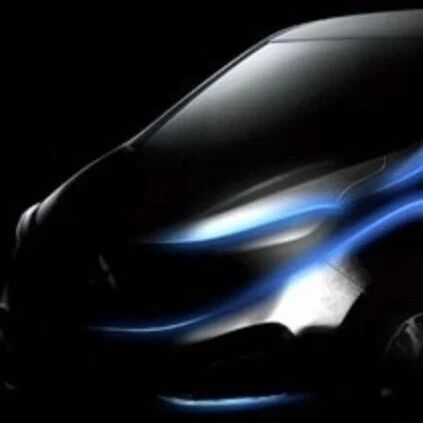
长城汽车魏牌高山入局MPV市场 家庭需求能否撬动行业新格局?
Zheng Quan Ri Bao· 2025-05-15 10:42
Core Viewpoint - The launch of Great Wall Motor's WEY brand Gaoshan MPV is set to disrupt the high-end MPV market in China, targeting family users and leveraging extensive market research and investment in a dedicated platform [2][3][4]. Group 1: Market Dynamics - The high-end MPV market in China is experiencing rapid growth, with the top ten MPV manufacturers selling 221,000 units in the first quarter of 2025, accounting for 80.1% of total MPV sales [3]. - Great Wall Motor's WEY brand is entering the market with two models priced at 309,800 yuan and 353,800 yuan, directly competing with established players like BYD and GAC [3][4]. - The MPV segment has historically been polarized, with high-end models like Buick GL8 dominating and budget options like Wuling Hongguang capturing the low end, leaving a gap for family-oriented vehicles [5]. Group 2: Product Features and Innovations - The WEY Gaoshan MPV features Great Wall's third-generation intelligent driving assistance system, CoffeePilot Ultra, enabling comprehensive driving and parking capabilities [4]. - The vehicle is designed based on extensive research involving over 3,000 families, focusing on comfort, safety, and health, with a development investment of 500 million yuan over four years [5]. Group 3: Strategic Implications - The entry of WEY Gaoshan may pressure the profit margins of joint venture brands in the mid-to-high-end MPV market, potentially accelerating technological advancements among competitors [4]. - The shift towards family-oriented MPVs is seen as a critical transition point, with the market's performance reflecting the true demand for family vehicles in the context of changing family structures and policies [5].