AXON引擎

Search documents
传媒行业:程序化广告专题:从头部平台发展路径理解程序化广告,关注数据与AI算法的飞轮
GF SECURITIES· 2026-02-13 08:12
Investment Rating - The industry investment rating is "Buy" [2] Core Insights - The report emphasizes the rapid growth of programmatic advertising platforms, particularly focusing on the role of data and AI algorithms in driving efficiency and market expansion [1][6][19] - The global online advertising market is projected to grow from $716.2 billion in 2023 to $790.3 billion in 2024, with a compound annual growth rate (CAGR) of approximately 10.3% [15] - The top two players, Google and Meta, currently hold around 50% of the market share in online advertising, while programmatic platforms like Applovin, Mintegral, and Unity Ads are gaining traction in the mid-tail segment [14][15] Summary by Sections 1. Online Advertising Landscape - The report outlines the concentration of revenue among top media platforms, with Google and Meta accounting for nearly 50% of the market share, and highlights the rapid growth of third-party programmatic advertising platforms [14][15] - The share of programmatic platforms in the mid-tail advertising market has increased from 1.8% in 2021 to an estimated 5.1% in 2024, with Applovin capturing nearly 3% [14][15] 2. Applovin - Applovin's advertising product ecosystem includes MAX for supply-side management and AXON for innovative bidding strategies, which have significantly enhanced revenue and EBITDA margins [31][41] - The company has undergone a transformation from a mobile app developer to a comprehensive advertising platform, with two major revenue growth phases: the integration of MAX and the launch of AXON 2.0 [41][45] - Applovin is now focusing on expanding into e-commerce, leveraging its extensive user base of over 1 billion daily active users [59][62] 3. Mintegral (汇量科技) - Mintegral's programmatic advertising platform integrates DSP, SSP, and ADX, enhancing its algorithmic capabilities and client retention [63][64] - The revenue model is based on performance metrics, charging clients based on user acquisition and engagement outcomes [64][65] 4. Other Players in Programmatic Advertising - Unity Ads and Liftoff are also highlighted as significant players in the programmatic advertising space, with Unity focusing on game developers and Liftoff leveraging machine learning for performance marketing [19][20] - The competitive landscape shows Applovin leading, with Mintegral and Unity Ads following closely behind [20][19]
产业精炼:AI应用终结泡沫论,谷歌阿里系持续暴涨
3 6 Ke· 2025-11-24 10:25
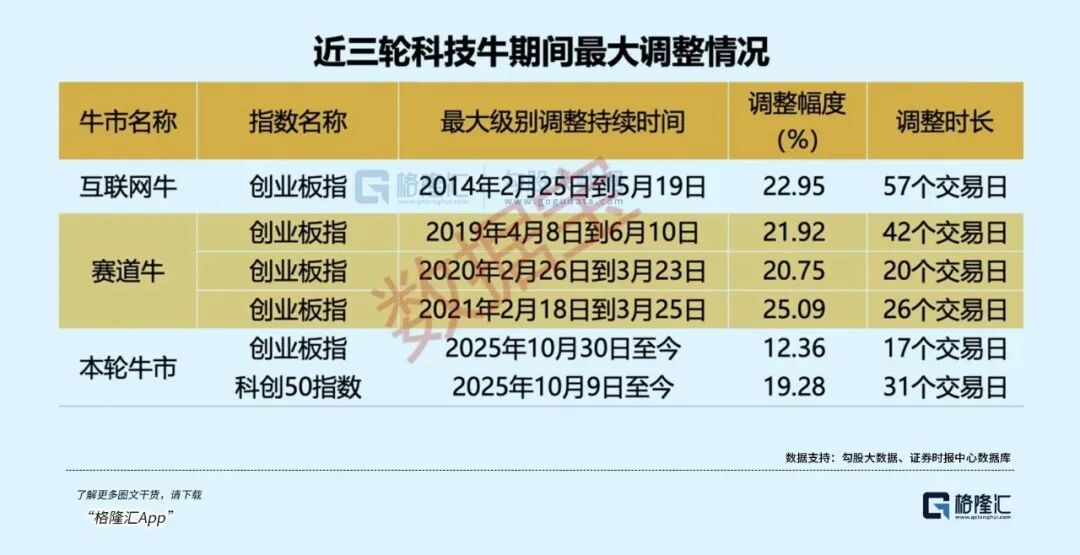
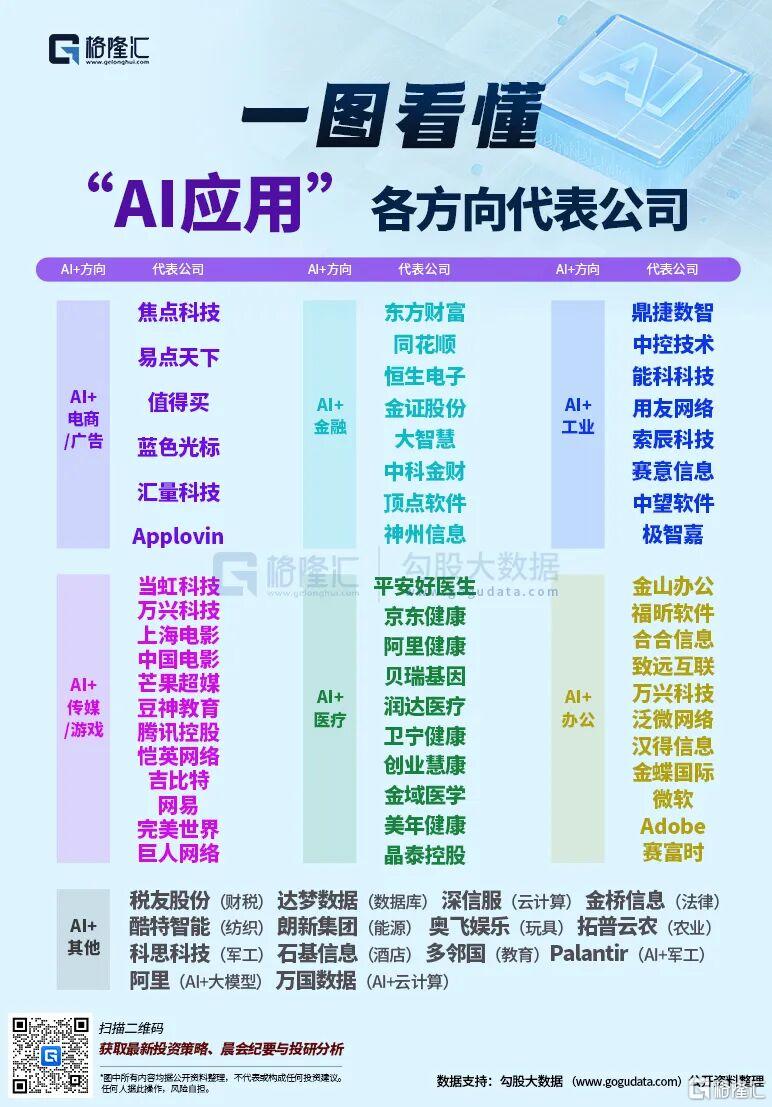
Core Viewpoint - The ongoing debate about the AI bubble has escalated to questioning the tech bull market, with contrasting opinions on whether AI is a genuine productivity revolution or merely a capital-driven concept lacking profitable business models [1][4]. Group 1: AI Bubble Debate - The core of the AI bubble controversy lies in the imbalance between investment and output, with significant capital expenditures on infrastructure not translating into immediate revenue [6][18]. - The narrative has shifted from focusing on building infrastructure to emphasizing the need for AI applications that generate real income [6][20]. Group 2: Major Players and Strategies - Google and Alibaba are leading the charge in AI applications, with Google's Gemini 3 Pro and Alibaba's Qwen3 series models representing significant advancements in the industry [5][9]. - Google's strategy focuses on integrating AI into its existing ecosystem, enhancing user experience and driving advertising revenue through its comprehensive product suite [7][8]. - Alibaba's approach emphasizes open-source models and creating a super app, aiming to connect various services and provide a seamless user experience [11][13]. Group 3: Market Opportunities - The global AI industry is projected to exceed $215 billion by 2025, with 88% of enterprises utilizing AI, although few have generated substantial profits [6][22]. - Investment opportunities are emerging around companies that can effectively implement AI applications, with a focus on those that can monetize their offerings [20][24]. - Specific companies identified as potential beneficiaries include Stone Base Information, Worth Buying, and Data Port, which are positioned to capitalize on the growing demand for AI services [16][17].



产业精炼:AI应用终结泡沫论,谷歌阿里系持续暴涨!
格隆汇APP· 2025-11-24 09:57
Core Viewpoint - The ongoing debate about the AI bubble has escalated to questioning the validity of the current tech bull market, with contrasting opinions on whether AI is a genuine productivity revolution or merely a capital-driven concept lacking profitable business models [2][4]. Group 1: Market Dynamics - The core of the AI bubble controversy lies in the imbalance between investment and output, with significant capital expenditures in infrastructure not translating into immediate revenue [7]. - The current market shift indicates a transition from heavy investment in infrastructure to focusing on monetizable AI applications, which are essential for proving the viability of AI technologies [8][28]. Group 2: Key Players and Strategies - Google and Alibaba are leading the charge in AI applications, with Google focusing on integrating AI into existing products and Alibaba aiming to create a comprehensive AI ecosystem through open-source models and applications [9][12]. - Google's Gemini 3 Pro has achieved a high Elo score of 1501, showcasing its advanced reasoning capabilities, and is integrated into various Google services to enhance user experience and drive revenue [9][11]. - Alibaba's Qwen3 series models are open-sourced, significantly lowering deployment costs and enabling small businesses to access top-tier AI technology, while the launch of the Qianwen APP aims to connect various services into a single AI-driven platform [12][15]. Group 3: Investment Opportunities - Investment opportunities are emerging from companies that can leverage the ecosystems created by Google and Alibaba, focusing on those that can integrate AI into their services and generate revenue [18]. - Key domestic players benefiting from Alibaba's ecosystem include Shiji Information, which provides AI solutions for hotels, and Zhidema, which supports e-commerce with structured data [21][22]. - The investment logic has shifted from betting on infrastructure to focusing on companies that can effectively monetize AI applications, with a clear distinction between those that can generate cash flow and those that cannot [25][28].


标普500新宠!AI广告龙头开启“第二春”
Ge Long Hui· 2025-11-08 08:01
Group 1: Company Overview - AppLovin, founded in 2012 and headquartered in Palo Alto, California, is a leading mobile advertising technology and game publishing platform, listed on NASDAQ under the ticker APP [3] - The company provides a full-chain solution driven by AI technology, covering user acquisition, ad monetization, and data analysis, while also developing and publishing over 350 mobile games through its Lion Studios [3] - AppLovin holds a 28% share of the mobile game advertising market, leading with a 43% share on the iOS platform, showcasing its technological advantage post-Apple's privacy policy adjustments [3] Group 2: Financial Performance - In Q3 2025, AppLovin reported a revenue of $1.405 billion, exceeding expectations of $1.34 billion, with a year-over-year growth of 68% [4] - The adjusted EBITDA reached $1.16 billion, surpassing the expected $1.09 billion, with a profit margin of 82%, indicating strong profitability in the ad tech sector [4] - Free cash flow surged to $1.049 billion, a 92% increase year-over-year, with total cash and equivalents reaching $1.7 billion [5] Group 3: Growth Drivers - AppLovin's core gaming business remains robust, while e-commerce advertising has emerged as a second growth engine, contributing to a dual growth trajectory [7] - The launch of the AxonAds self-service platform has led to a 50% increase in weekly spending from self-service advertisers, indicating strong demand from non-gaming sectors [7] - The company anticipates over 1,000 non-gaming advertisers by the end of the year, with an expected revenue growth rate exceeding 65% [7] Group 4: Technological Edge - AppLovin's growth is attributed to its 13 years of accumulated technological expertise, particularly through its AXON engine, which optimizes ad targeting using machine learning [9] - The AI-driven full-chain advertising ecosystem enhances efficiency and reduces customer acquisition costs, providing a competitive advantage that is difficult for rivals to replicate [9] - Future plans include testing generative AI for ad creative and optimizing the onboarding process for new advertisers, further solidifying its market position [9] Group 5: Market Recognition - AppLovin was included in the S&P 500 index on September 6, 2025, marking a significant milestone and reflecting its scale and industry position [11] - The company's impressive financial metrics, including a 68% revenue growth and 82% profit margin, have dispelled previous market doubts regarding its business diversification and growth sustainability [11] Group 6: Future Outlook - AppLovin's growth story is supported by three main drivers: a solid gaming advertising base, rapid expansion in e-commerce advertising, and ongoing technological advancements [13] - The company is poised for international expansion, targeting markets like Japan and South Korea, which are expected to become new growth areas [13] - With a projected 68% revenue growth rate, AppLovin's market capitalization potential remains promising [15]

标普500新宠!AI广告龙头开启“第二春”
格隆汇APP· 2025-11-08 07:49
Core Viewpoint - AppLovin ($APP) is emerging as a leading player in the global AI application sector, demonstrating significant growth and market recognition, particularly with a 68% revenue increase in Q3 2025, which has surpassed market expectations [2][6][12]. Company Overview - AppLovin, founded in 2012 and headquartered in Palo Alto, California, is a leading mobile advertising technology and game publishing platform, listed on NASDAQ in 2021 [4]. - The company provides a comprehensive AI-driven ecosystem for developers, covering user acquisition, ad monetization, and data analytics, while also developing and publishing over 350 mobile games through its Lion Studios [4]. Market Position - AppLovin holds a 28% share of the mobile game advertising market, with a dominant 43% share on the iOS platform, showcasing its technological advantages post-Apple's privacy policy adjustments [5]. - The company plans to launch non-gaming self-service advertising and expand into e-commerce and CTV sectors, expecting to exceed 1,000 non-gaming advertisers by year-end with a revenue growth rate exceeding 65% [5]. Financial Performance - In Q3 2025, AppLovin reported a record revenue of $1.405 billion, a 68% year-over-year increase, and provided a strong Q4 guidance of $1.57-1.6 billion, indicating a 12%-14% sequential growth [6]. - Adjusted EBITDA reached $1.16 billion with an 82% profit margin, and free cash flow surged by 92% to $1.049 billion, reflecting robust financial health [6]. Growth Drivers - AppLovin has diversified its revenue streams, with its core gaming business remaining stable while e-commerce advertising emerges as a second growth engine, supported by a self-service platform that saw a 50% increase in weekly spending from advertisers [7][8]. - The company’s AXON engine, developed over 13 years, optimizes ad targeting using machine learning, covering 1.4 billion daily active users, and is positioned to enhance ad performance amid changing privacy regulations [10]. Future Outlook - AppLovin's growth trajectory is supported by a solid gaming advertising base, expansion into e-commerce, and ongoing technological advancements, with significant potential for international market penetration and further client acquisition [14]. - The company is expected to maintain high growth rates, with a projected 68% revenue increase for 2025, indicating substantial market capitalization potential [15].