
Atom人形机器人

Search documents
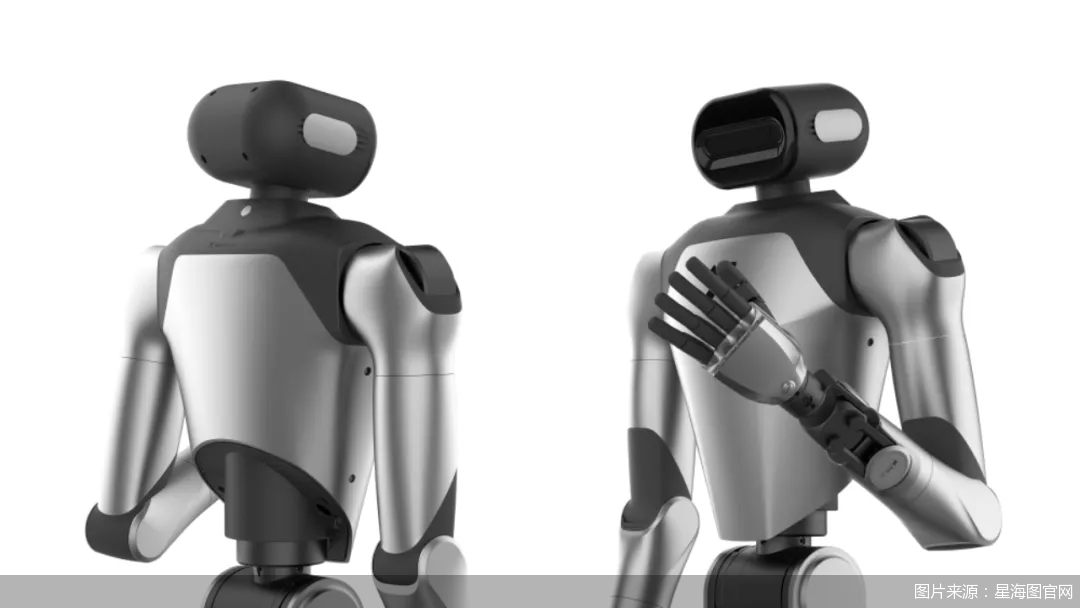
人形机器人百亿新贵再添3家
Bei Jing Shang Bao· 2026-02-24 17:03
Core Insights - The humanoid robot sector is experiencing a significant surge in investment, with multiple companies securing large funding rounds during the 2026 Spring Festival, indicating strong market interest and confidence in the technology [1][3][4] Investment Trends - Starry Sky Technology completed a 1 billion yuan Series B financing on February 11, 2026, joining the "billion-dollar valuation club" alongside five other companies [1][3] - Other notable funding includes Zhi Ping's over 1 billion yuan Series B financing and Qian Xun's nearly 2 billion yuan in recent rounds, highlighting a robust investment climate in the humanoid robot industry [1][4] - The influx of capital from various sources, including state-owned funds and private equity, reflects a strong belief in the commercial potential of humanoid robots [1][4] Market Dynamics - The Spring Festival's national exposure for humanoid robots has elevated public awareness and interest, which is expected to accelerate the industry's growth and attract more investment [3][8] - The "Matthew Effect" is anticipated, where resources will increasingly concentrate on leading companies with core technologies and clear commercialization paths [3][9] Company Developments - Starry Sky Technology plans to use its recent funding for iterative development of foundational models and data systems, while also preparing for long-term competition in computing power and high-quality data [3][4] - Qian Xun is transitioning from merely selling hardware to providing comprehensive capabilities in perception, decision-making, and execution, aiming for global scalability [5] Industry Outlook - The humanoid robot sector is projected to benefit from the ongoing technological advancements in AI, which are driving new opportunities for commercialization [9] - The overall shipment of humanoid robots reached 17,700 units in 2025, with leading companies like Zhi Yuan Robotics and Yu Shu Technology at the forefront [8][9] - The industry is moving from a phase of hype to one of tangible value realization, with a focus on practical applications and technological maturity [9]



人形机器人开年:春晚“路演”出圈,“百亿俱乐部”增员
Bei Jing Shang Bao· 2026-02-24 14:05
Group 1 - The core viewpoint of the articles highlights the significant growth and investment in the humanoid robot sector, particularly following the exposure during the 2026 Spring Festival Gala, which has led to increased public interest and capital inflow [2][3][7] - The "unicorn club" of humanoid robots has expanded, with six companies now valued at over 10 billion yuan, including Star Sea Map, Zhi Ping Fang, and Qian Xun Intelligent, indicating a strong market presence and investor confidence [3][4][7] - Star Sea Map's recent 1 billion yuan Series B financing is aimed at enhancing its foundational model development and data system, reflecting a strategic focus on technological advancement and competitive positioning in the market [3][4] Group 2 - The rise in public interest due to the Spring Festival Gala is seen as a catalyst for the industry, enhancing the willingness of capital to invest in companies with core competencies, which in turn supports further research and development [7][8] - Companies like Zhi Ping Fang and Qian Xun Intelligent have also reported substantial financing rounds, with Zhi Ping Fang completing 12 rounds of financing in a year, showcasing its rapid growth in a cautious investment environment [4][6] - The overall humanoid robot market is experiencing a shift from being perceived merely as industrial tools to becoming practical products for various applications, as demonstrated by the successful deployment of robots in real-world scenarios [5][6]
具身机器人频现亿元大单
21世纪经济报道· 2025-10-30 06:17
Core Insights - The embodied intelligent robot industry is transitioning from "concept hype" to tangible commercial orders, with significant order volumes emerging as proof of accelerated commercialization [1][4] - The industry is experiencing a shift from "technology-driven" to "market-driven," marking a critical turning point as large orders are being secured [2][4] Group 1: Major Orders and Market Trends - In October, major companies like UBTECH and Yujian Technology secured large orders, with UBTECH winning a 126 million yuan project, bringing its total orders for the year to 630 million yuan [2][5] - Yujian Technology signed a procurement contract worth over 80.5 million yuan, becoming the first in the industry to introduce embodied intelligent robots into the core scenarios of new energy precision manufacturing [4][5] - Startups are also seeing significant orders, with Zhifang reaching a strategic cooperation worth over 400 million yuan in the global semiconductor display field [6][7] Group 2: Price Reduction and Market Accessibility - The price of humanoid robots is rapidly decreasing, transitioning from hundreds of thousands to the "ten-thousand yuan era," with products like the R1 humanoid robot priced at 39,990 yuan and the Bumi robot at 9,998 yuan [7][8] - Sales channels are expanding from B2B to direct-to-consumer platforms like Tmall and JD.com, lowering the entry barrier for potential users and paving the way for future large-scale applications [7][8] Group 3: Industry Challenges and Future Outlook - The industry is entering a phase where delivery capabilities and product quality will be critical, as companies face challenges in supply chain management, mass production, and after-sales support [10][11] - The focus is shifting from showcasing technology to efficiently delivering products, with a competitive landscape emerging based on the ability to fulfill orders reliably [10][11] - Companies that can successfully navigate this "delivery test" will be positioned to lead the next phase of product iteration and ecosystem development in the embodied robot industry [11]
上半年产量同比增长38.0% 深圳工业机器人释放高产能
Shen Zhen Shang Bao· 2025-08-05 17:24
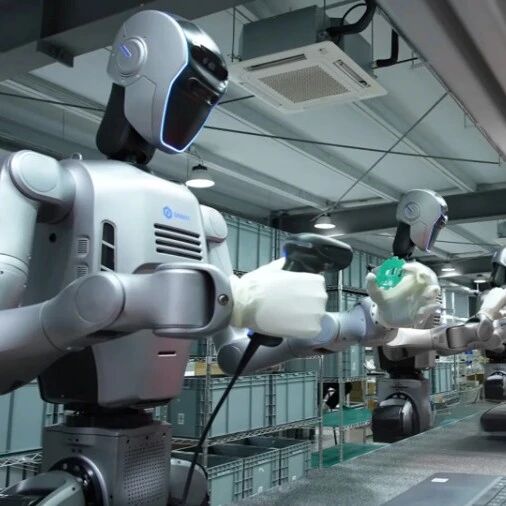
Core Insights - The production of industrial robots in Shenzhen has increased by 38.0% year-on-year, signaling a recovery in manufacturing and industrial upgrades [1] - Shenzhen's robot industry is rapidly developing into a trillion-level industrial cluster, with a total output value of 179.7 billion yuan in 2023, ranking first in the country [1] - The number of robot companies in Shenzhen reached 74,000 in 2024, with the total output value of the industry exceeding 200 billion yuan for the first time [1] Industry Development - The "Robot Valley" in Nanshan District is home to rapidly growing tech companies like Youjiang, Zhongqing, and Zhifang, expanding their product application scenarios [1] - Companies are achieving significant milestones, such as robots performing complex tasks and securing large orders for humanoid robots [1] - The supply chain in Shenzhen is highly interconnected, facilitating the rapid assembly of robots with components sourced from nearby enterprises [2] Technological Advancements - Humanoid robots are transitioning from being mere technological spectacles to practical industrial applications, with companies leveraging core technologies to secure large orders [2] - The first coverage report by JPMorgan on the humanoid robot company UBTECH rated it as "overweight" with a target price of 135 HKD, highlighting its stable customer base and significant procurement orders [2] Product Innovation - Shenzhen companies are maintaining high-speed innovation, with UBTECH's Walker S2 humanoid robot featuring a self-replacing battery function for continuous operation [3] - The Atom humanoid robot from Youjiang demonstrates remote operation capabilities, completing tasks from a distance of 1,800 kilometers [3] Policy Support - Shenzhen is enhancing its support for the AI and robotics industry, including the launch of 100 application scenarios and a special fund of 10 billion yuan [3] - The city's initiatives aim to strengthen industrial momentum and foster high-quality development in manufacturing [3]
具身智能,正在抢滩数据高地
2 1 Shi Ji Jing Ji Bao Dao· 2025-07-04 06:46
Core Insights - The Shenzhen robotics sector is making significant advancements in "remote control + high-fidelity data" to overcome the precision operation bottleneck of humanoid robots and seize the embodied intelligence data advantage [1] Group 1: Technological Breakthroughs - The company, Yuejiang Technology, has achieved a breakthrough in remote control technology, allowing operators to remotely and precisely control the "Atom" humanoid robot located 1800 kilometers away to perform complex kitchen tasks like frying steak [1] - The self-developed shaking control system of the company has achieved a spatial trajectory overlap rate of over 99% with millimeter-level precision, effectively avoiding the "drift" problem caused by small errors in traditional remote control [1] - The Atom robot exhibits human-like full-body coordination, enabling it to perform multi-step tasks that require continuous adjustments, significantly expanding its application boundaries [1] Group 2: Data Collection and Utilization - The operator's actions, environmental interaction information, task objectives, and results are recorded with an impressive effective data rate exceeding 99%, which is crucial for training and optimizing robotic AI models [2] - The establishment of a super data factory by Pashini Perception Technology in Tianjin aims to produce nearly 200 million high-dimensional training data annually, enhancing the cross-model generalization capabilities of different robot designs [2] - Leju Robotics has initiated a smart robot training center in Jiangsu, expected to generate over 200,000 data entries annually across eight different scenarios [2] Group 3: Government Initiatives - Local governments are also promoting the construction of embodied intelligence data collection bases, such as the establishment of an AI and robotics data aggregation service center in Longgang District [3] - The Longgang District aims to integrate resources to enhance data precision and activate data value, providing robust support for AI development across various industries [3]